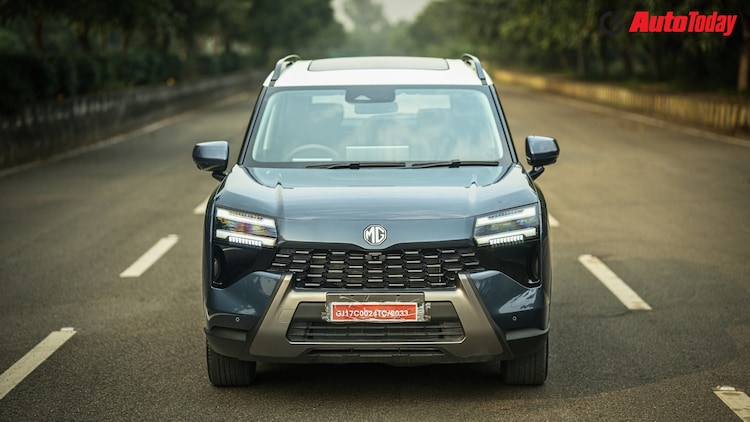
MG Hector Tomahawk PHEV review, first drive: 1,000km range put to the test

Can a plug-in hybrid make range anxiety a thing of the past without compromising the everyday driving experience? The Hector Tomahawk PHEV takes a promising first step, but needs polishing.
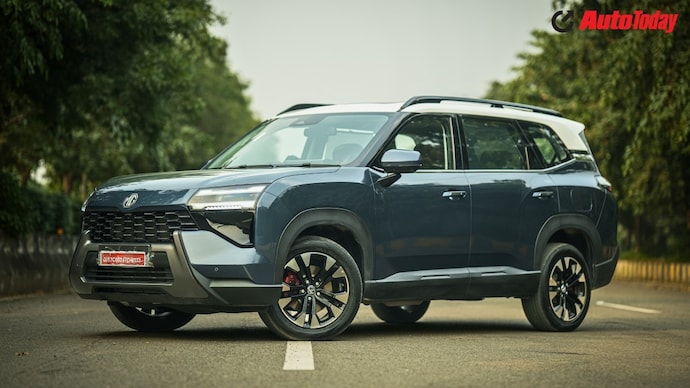
MG Hector Tomahawk PHEV.
Nov 27, 2026 13:30 IST Last UpdatedNov 27, 2026 13:30 IST
 Published by
Last UpdatedNov 27, 2026 13:30 IST Published byAbhinav Jakhar
Nov 27, 2026 13:22 ISTA plug-in hybrid promises the best of both worlds. The MG Hector Tomahawk PHEV backs that idea with a claimed electric-only range of 115km and a combined range of 1,100km. The numbers are attention-grabbing, but the real question is whether the technology feels at home in an SUV built around space, comfort and covering distances. After an early drive, the Tomahawk makes a convincing case, even if some areas need work.
The most telling part of our first outing was not an acceleration run or feature demonstration. MG set us a challenge: drive from Ahmedabad to Gurugram with a full tank and battery, with the fuel filler and charging port sealed. No refuelling, no plugging in. The Tomahawk covered 1,000km. That is a compelling real-world talking point for a plug-in hybrid and an immediate answer to range anxiety. One run cannot establish what every owner will achieve across different routes, temperatures and driving styles. But the distance covered is difficult to dismiss.
Design language
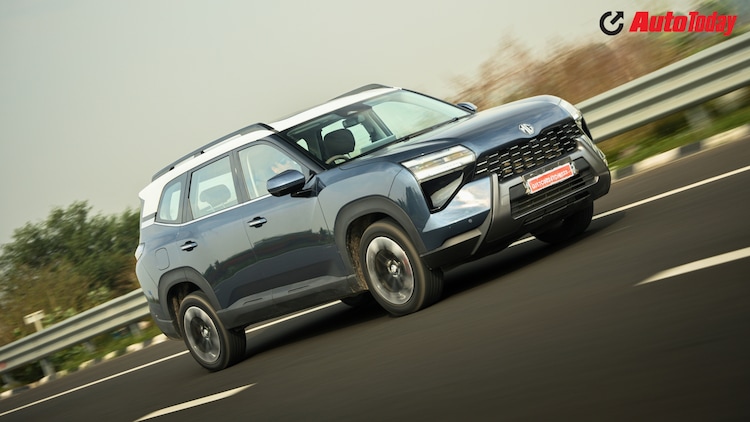
The Tomahawk PHEV has substantial road presence, and I prefer its looks to the all-electric Hector. The proportions are familiar, but the details give it a purposeful appearance. A prominent grille, split lighting elements and broad stance lend the front end visual width, while the upright bonnet and squared-off surfaces help it look like a proper SUV. On the whole though, the overall proportions are more akin to an MPV rather than an SUV.
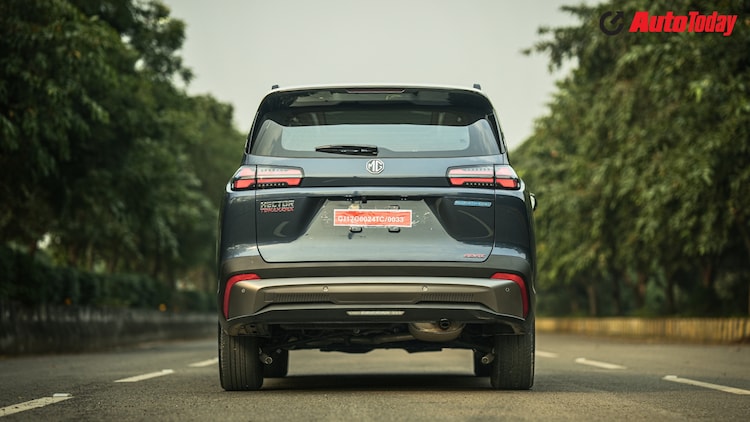
It is not a radical departure from the Hector’s established shape, nor does it need to be. The PHEV retains the familiar silhouette while gaining a distinct identity. The Tomahawk name adds some theatre, but the design is not overdone. More importantly, the car looks well put together. That impression continues inside, where cabin quality is a strong point. Materials, fit and finish give the interior a robust feel, and the presentation is suitably upmarket. It feels designed for long hours on the road, not just to impress in a showroom.
Underpinnings and technology
The defining change is under the skin. The Tomahawk uses a 1.5-litre dedicated hybrid engine, a 20.5kWh battery and an electric motor producing 140kW (190bhp). MG claims an electric-only range of more than 115km, a combined range of around 1,100km and a 0-100kmph time of 9 seconds. The idea is straightforward: use electric power for everyday commuting, while the petrol engine gives the car the flexibility to cover longer distances without depending on charging infrastructure.
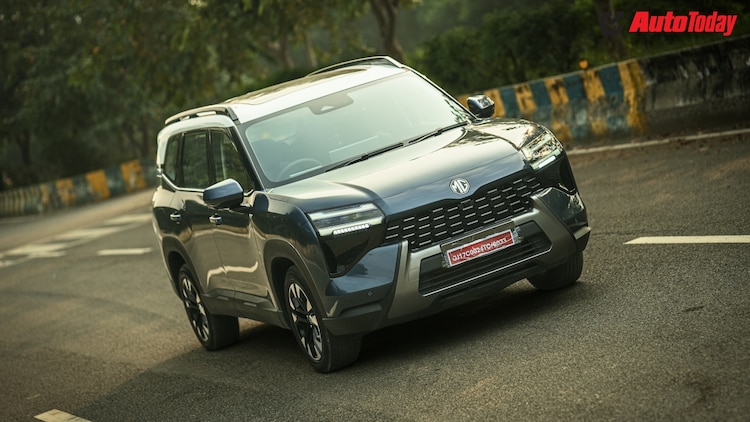
The Hector Tomahawk is the first model to be built on MG’s new ADAPT (Advanced Drive Architecture Platform Technology), a modular architecture designed to accommodate multiple forms of electrification. It is India’s first multi-new-energy vehicle platform and has been developed to support pure electric (EV), hybrid (HEV), plug-in hybrid (PHEV) and range-extender electric (REEV) powertrains. The PHEV is built around four core components: a Dedicated Hybrid Engine (DHE), dedicated battery systems, a 10-in-1 electric drive unit and an Electromagnetic Dedicated Hybrid Transmission (DHT).
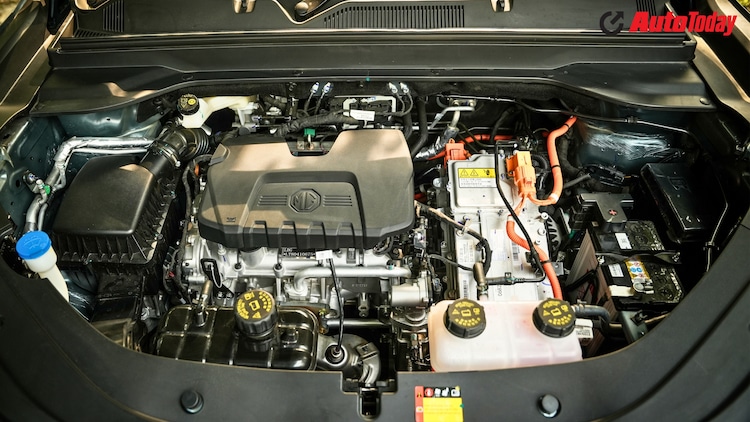
MG claims the 1.5-litre hybrid engine delivers 43.2 per cent thermal efficiency, with 92 per cent of its operation in the high-efficiency zone. The DHT is particularly interesting, featuring an electromagnetic clutch that MG claims is a world-first, with a response time of 0.1 seconds, 97.3 per cent driving motor efficiency and 98 per cent clutch transfer efficiency. Together, these components are designed to manage the interaction between electric and petrol power more intelligently, allowing the SUV to prioritise electric driving where possible while retaining the flexibility of its combustion engine for longer journeys. It is an elaborate engineering package, and understanding how seamlessly it works in real-world conditions will be an important part of our longer-term evaluation.
That combination makes a plug-in hybrid relevant in India. A claimed 115km of electric range should cover much of the daily urban commute for many owners, provided they charge regularly. On longer journeys, the engine and motor can work together, reducing the need to plan around charging stops. Our 1,000km drive lends some credibility to the 1,100km combined-range claim, although a more varied evaluation is needed before concluding efficiency. MG also talks about its ‘MAGIC’ battery architecture: a multifunctional unitised structure, advanced cell safety, greater performance, intelligent management and a combustion-free design. The company highlights needle penetration, thermal shock, short-circuit and deformation tests. These are reassuring claims, but battery safety must be backed by engineering, validation and long-term performance. The real test is how seamlessly the hardware works in everyday use.
Driving experience
On the road, the Tomahawk’s biggest strength is the flexibility of its plug-in hybrid layout. Electric power for shorter journeys and a petrol engine for longer ones remove some compromises associated with a pure EV. The car feels robust, which suits its substantial proportions. The performance isn't brisk or immediate, rather a gradual build-up of speed using the intelligent systems at work. In fact, the real appeal is not outright pace; it is the freedom to travel without making charging the centre of every plan.
Some areas need attention. The steering feels dull and communicates little about what the front wheels are doing. That takes away confidence when pressing on and makes the experience less involving. The brakes are a bigger concern. The pedal feels spongy, lacking the reassuring bite and progression expected of a family SUV. It takes time to get used to the response, and braking needs to be anticipated until the driver becomes familiar with it.
Ride quality is better than in the all-electric Hector Tomahawk, which is welcome. However, there is room to make the suspension more composed, especially for second-row passengers. The rear-seat ride can feel unsettled over uneven surfaces, an important consideration in a family SUV expected to cover distances. The front occupants fare better, but the rear passenger experience needs polishing before the Tomahawk can be called a comfortable long-distance SUV.
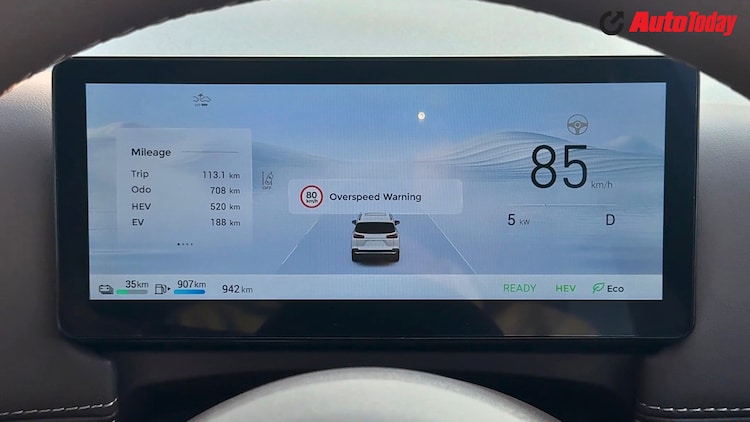
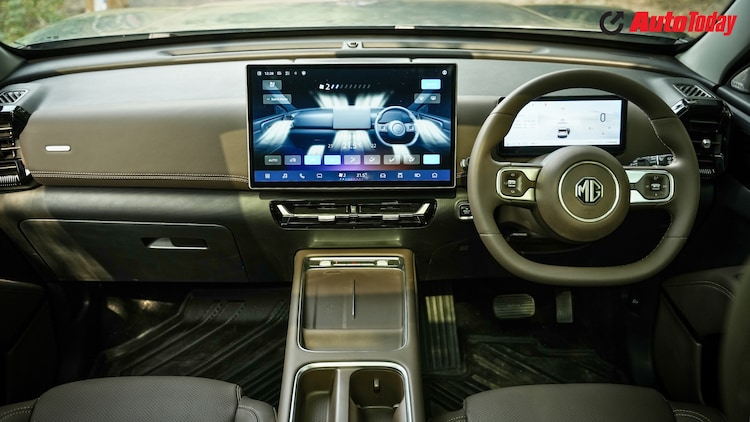
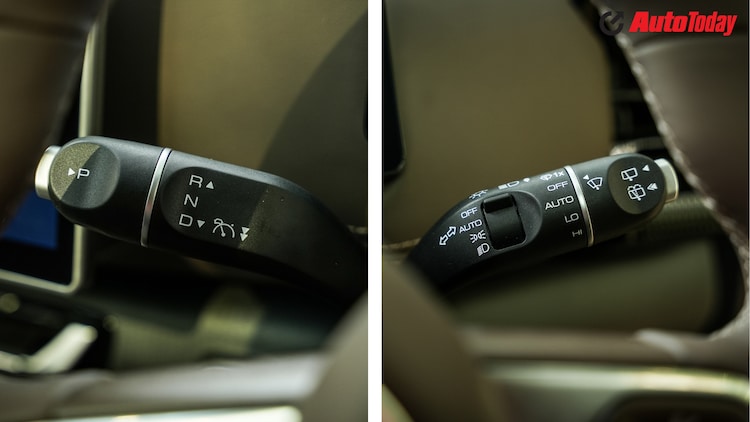
The cabin is a mixed experience. Interior quality is impressive, but the interface relies too heavily on the touchscreen. There are only a handful of physical buttons at the bottom, so everyday functions require a detour through the display. A large screen can modernise a cabin, but should not make basic controls harder to use. Camera quality also falls short. In a vehicle of this size, clear feeds are useful when negotiating tight parking spaces and busy urban roads.
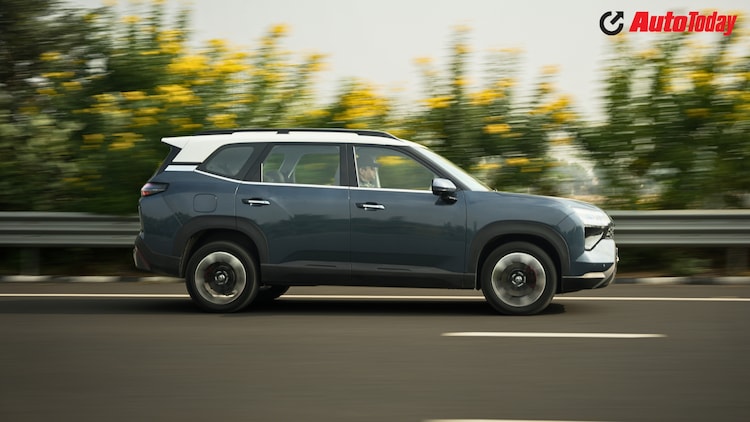
First impressions-wise, the Hector Tomahawk PHEV gets the big idea right. It looks good, feels solid, offers useful electric range on paper and has demonstrated that it can cover 1,000km on a single full tank and charge. The steering, brakes, rear ride and screen-heavy interface stop it from being a complete package. But the foundation is promising. We look forward to spending more time with the Tomahawk, understanding its hybrid system in greater depth and assessing how well it balances electric commuting with long-distance freedom.
Verdict
The MG Hector Tomahawk PHEV makes a strong first impression with its substantial looks, well-finished cabin and impressive long-distance showing. Covering 1,000km on a full tank and charge gives its plug-in hybrid proposition real weight. Its claimed electric range makes everyday commuting on battery power realistic for many users.
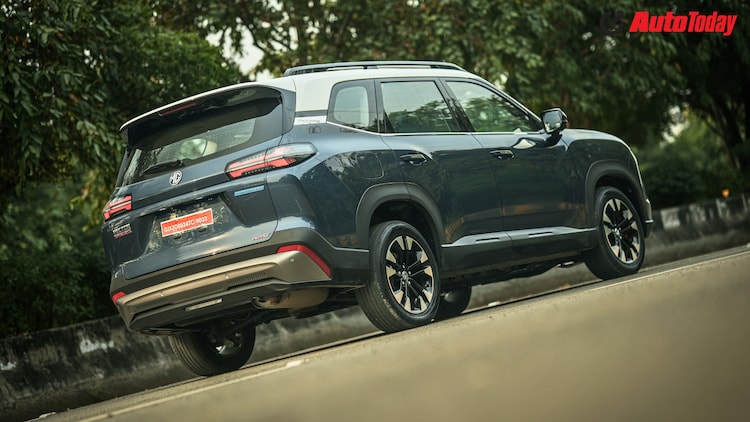
However, spongy brakes, dull steering, an unsettled rear ride, and excessive reliance on the touchscreen keep it from feeling fully sorted. Camera quality needs improvement, too. All in all, the concept is promising; a longer evaluation will reveal how complete it really is in practice. The bigger picture is the exciting world of PHEVs coming to the market. Since the JSW Combat launch is just around the corner, we're excited to explore this new technology for the more budget-conscious buyer in India.
Subscribe to Auto Today Magazine
- Ends