

Mood of the Nation: Why the young are angsty

The India Today MOTN survey finds the youth anxious about their future and wondering if the government is doing enough
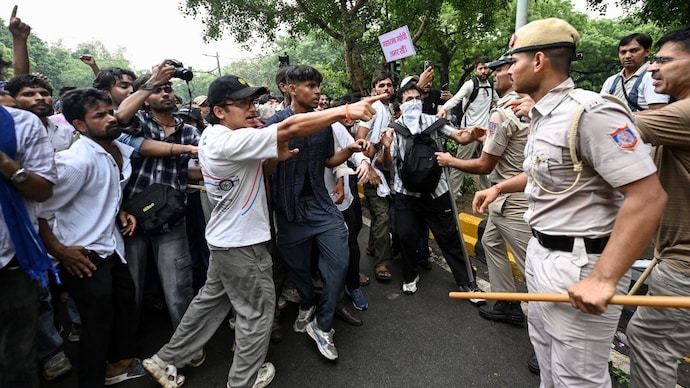
Photo: Arun Kumar

UPDATED: Sep 4, 2026 20:25 IST
Edited By: Ashish Mukherjee
 (NOTE: This article was originally published in the India Today issue dated September 7, 2026)
India’s Gen Z is no longer a demographic that political parties can take lightly. Born between 1997 and 2012, they now constitute around 30 per cent of the country’s voting population, giving them the heft to influence the political agenda and electoral outcomes. The exclusive india today-CVoter Gen Z survey, part of our biannual Mood of the Nation (MOTN) poll, reveals a generation that is ambitious but anxious, impatient with the status quo and worried whether the system will deliver the opportunities promised. Livelihood issues preoccupy them: 53 per cent say jobs and employment is the issue that matters most, ahead of education and examination fairness at 22 per cent, and of inflation at 12 per cent.

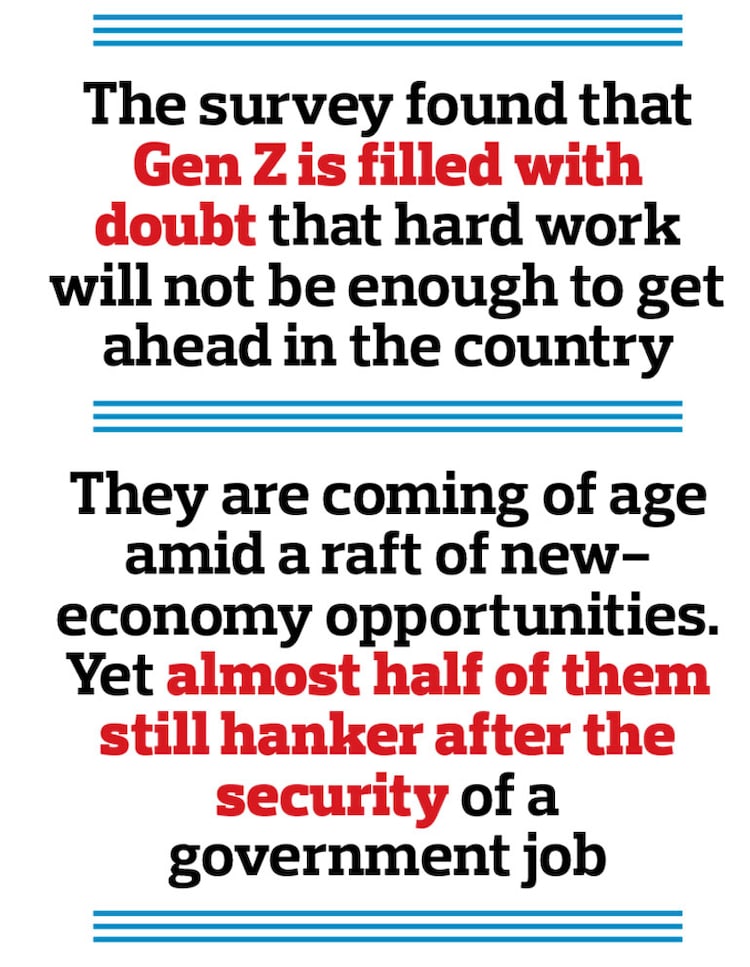
Every Indian should consider the implications of these survey findings, especially the fact that Gen Z is now filled with doubt that hard work will not be enough to get ahead in the country. Only 32 per cent believe merit and hard work matter most, while 26 per cent say money, connections and privilege count for more. Another 22 per cent believe there are just too few opportunities regardless of merit. In fact, 32 per cent cite the sheer shortage of jobs as the biggest problem, while 18 per cent complain of low salaries and 17 per cent say available jobs do not match their qualifications. Almost half—48 per cent—believe the Modi government’s initiatives have not helped create more jobs.
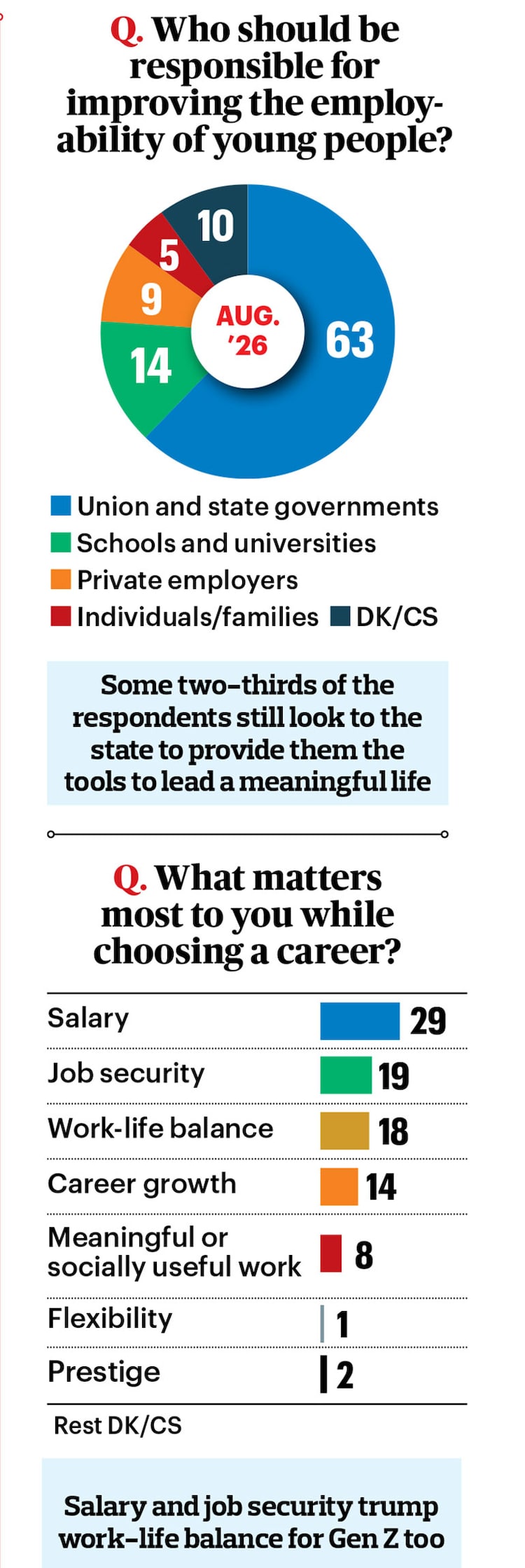
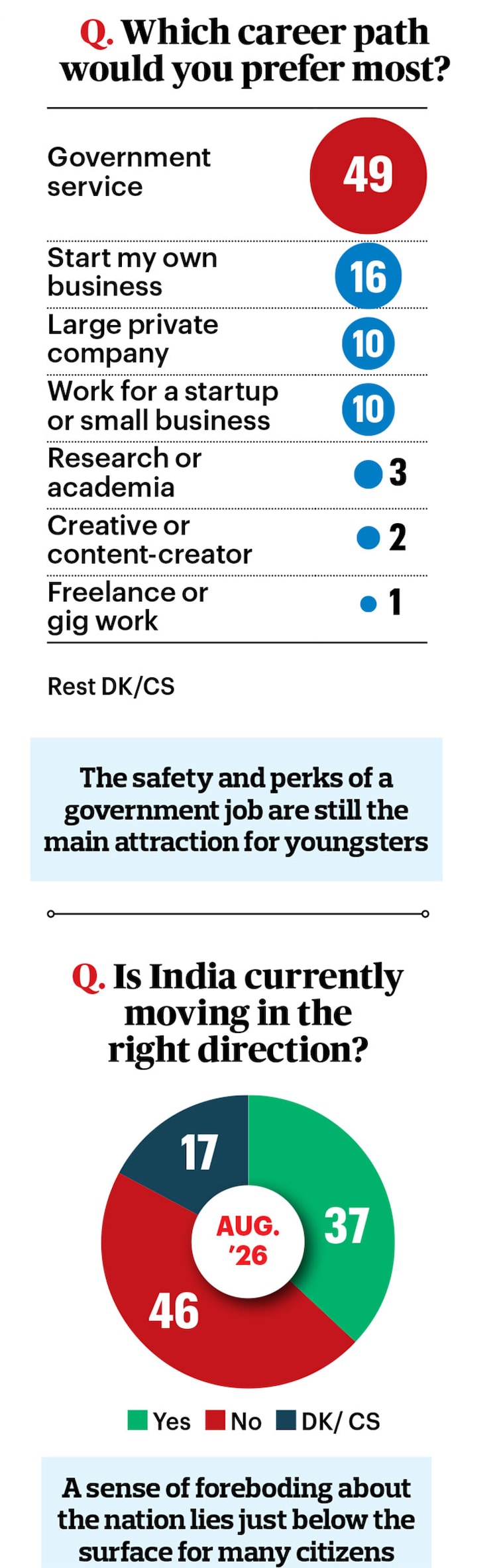
Their aspirations tell a revealing story. Salary is the single most important consideration in choosing a career for 29 per cent, followed by job security at 19 per cent and work-life balance at 18 per cent. But the big downer is the continuing allure of a sarkari naukri: 49 per cent prefer government service, compared with just 16 per cent who want to start their own business, or the 10 per cent each who prefer a large private company or a start-up or small business.
This is a paradox because this is India’s most digitally connected and entrepreneurial generation, coming of age amid Start-up India, Digital India and a raft of new-economy opportunities. Yet, almost half of them still hanker after the security of a government job. Moreover, 63 per cent place the primary responsibility for providing jobs on the Union and state governments. Governments, no doubt, have a responsibility to improve the quality of education and expand opportunities. But Gen Z should also realise that it is dangerous to expect the state to be the principal provider of secure employment and not look at entrepreneurship, private enterprise, new skills and emerging sectors as routes to shaping one’s own future.


Policymakers should take note that the sense of insecurity extends to whether their future lies in India at all. Only 37 per cent believe the country is moving in the right direction against 46 per cent who think otherwise. As many as 38 per cent would prefer to work abroad if a good opportunity arose; another 34 per cent would go abroad temporarily before returning. Better salaries and career prospects are by far the biggest attraction, cited by 36 per cent, followed by better education at 16 per cent and more merit-based opportunities at 13 per cent.
It is on education and exams that anxiety turns into anger. A striking 67 per cent have either little or no confidence in the fairness of India’s entrance and government recruitment exams, with 40 per cent saying they have zero trust. The NEET paper leaks have clearly deepened this crisis of faith. Fifty-three per cent feel that the Union government’s handling of the controversy was ‘poor’ or ‘very poor’, while 65 per cent believe the education minister’s resignation was needed or should have come earlier.
That frustration is spilling into politics, and a search for alternatives outside the established parties like the Bharatiya Janata Party or the Congress. In fact, only 15 per cent believe existing political parties represent the concerns of young Indians adequately; 56 per cent say they do very little or nothing at all. That explains why its report card on the newly minted Cockroach Janta Party (CJP) is positive but far from an electoral endorsement. As many as 42 per cent believe the CJP should remain a pressure group, compared with only 30 per cent who want it to become a political party and contest elections. And if the CJP did contest, only 40 per cent say they would consider voting for it, while an equal share say they would not. Gen Z, in other words, is not prepared to hand a blank cheque to the CJP and want it to first to demonstrate clear policies, credible leadership and a record of providing solutions. That is indeed a sensible approach.


Subscribe to India Today Magazine
- Ends