
After Operation Sindoor, India advances plan for 5 more S-400s from Russia

Russia has sent India a proposal for five more S-400 squadrons worth over ₹50,000 crore. The offer could expand the air-defence network further, with talks also covering local production and support facilities.
 Last UpdatedAug 31, 2026 14:37 IST
  Published byEdited byRitaban Misra
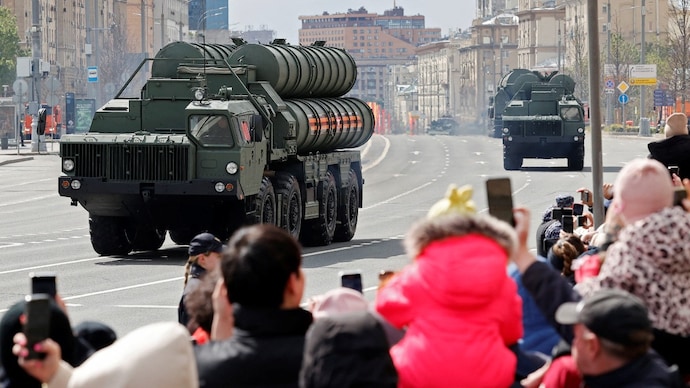
Russia has submitted a detailed proposal to India’s Defence Ministry for the acquisition of five additional squadrons of the S-400 Triumf long-range air defence system for the Indian Air Force, with the proposed project estimated to cost more than 50,000 crore.
Defence sources said the Russian response to India’s tender has been received and is currently being processed.
The proposal comes months after the Defence Acquisition Council (DAC) cleared the procurement of five additional S-400 squadrons in March 2026.
The decision followed the system’s reported performance during Operation Sindoor in May 2025, when India used its air-defence network against Pakistani aerial threats.
The additional systems are expected to strengthen India’s layered air-defence capabilities on both its western and eastern fronts.
INDIA ALREADY HAS 4 OF 5 S-400 SQUADRONS
India had signed a $5.43-billion (Rs 51,838 crore) agreement with Russia in 2018 for five S-400 squadrons. Four of those systems have now been received, while the fifth and final squadron is expected to be delivered by November 2026, according to defence sources.
The first three squadrons have been deployed across key sectors, including areas along the western and northern borders. The S-400 is designed to detect and engage a range of aerial threats, including aircraft, drones and missiles, at different ranges and altitudes.
The proposed procurement would effectively double India's planned S-400 inventory to 10 squadrons if the new deal is concluded.
The system gained particular attention following Operation Sindoor.
Western Air Command chief Air Marshal Jeetendra Mishra recently said the S-400 achieved what was possibly the longest recorded surface-to-air missile kill, destroying a Pakistani surveillance aircraft at a range of 314 km.
He also credited the system with engaging several Pakistani fighter aircraft.
NEW DEAL MAY INCLUDE TECHNOLOGY TRANSFER
Deliveries under the proposed contract are expected to begin around three years after the agreement is signed. Discussions are also understood to include establishing a maintenance, repair and overhaul (MRO) facility in India.
The proposal reportedly involves greater domestic participation, including the possibility of joint production of two units in India by the private sector under a technology-transfer arrangement, while three squadrons would be acquired directly from Russia.
The additional S-400 systems are expected to operate alongside India's indigenous long-range air-defence programme, Project Kusha, as New Delhi seeks to build a more comprehensive multi-layered air-defence network.
India is also separately pursuing additional S-400 interceptor missiles to replenish stocks and strengthen its inventory following Operation Sindoor. Reports have put the planned missile procurement at more than 280 missiles.
With the Russian proposal now under examination, the next stage will involve evaluation and negotiations before a final contract can be concluded.

Born in Pauri district of Uttarakhand, Manjeet Negi did his early schooling from his village school near Rishikesh and then moved to the town for secondary education. Later, he did his graduation from Hemavati Nandan Bahuguna University. In the year 2000, he did his journalism diploma from Kurukshetra University and started his career with Doordarshan News and started reporting on defence forces from the 2001 Bhuj earthquake. In his career as a defence correspondent, Negi has had the opportunity to report exclusives from world's highest battlefield Siachen Glacier in the north to the Andamans in the South and from the Rann of Kutch in the west to the Arunachal Pradesh border with China in the East.
A regular news-breaker on matters of national security and military affairs, Negi considers the coverage of he Kedarnath tragedy of 2013 as the highest point of his career. During the grave disaster at Kedarnath in June 2013, Manjeet Negi was the first and only TV reporter who walked for 55 Kms on the hilly track to reach the Kedarnath shrine. Spending his first night in the complex amidst several hundred dead bodies around him, Negi says he saw Lord Kedar in his dream. After the Kedarnath disaster, the writer got another opportunity to cover another disaster in the Nepal earthquake in 2015 for the Aaj Tak channel. During the reporting of that disaster for about 10 days, the writer got an opportunity to witness and report the large scale relief and rescue operations undertaken by the Indian Army and the Indian Air Force.
Besides reporting, he is also a skilled mountaineer. With Nehru Institute of Mountaineering and Garhwal Regiment, he has undertaken mountaineering expedition to Satopanth via Gomukh. Accompanying the Mount Manaslu mountaineering expedition of a Garhwal Regiment unit, he also reported about the expedition. He has also scaled the Dronagiri mountain near Joshimath in Uttarakhand. Manjeet Negi has also been honoured with a special award by the Union Home Minister, Shri Rajnath Singh for his reporting of Kedarnath disaster. He was awarded the best reporter award for his coverage of Nepal earthquake by India Today Group. At present, the writer has been working as Editor with Aajtak Channel of India Today Group.
READ MORE