
Isro chief reaffirms maiden Gaganyaan uncrewed launch by end of 2026

India's space agency is racing ahead with NavIC, Earth observation and human-spaceflight preparations, marking the beginning of a phase that promises to be testing and busy.

The successful launch of EOS-05 has given the Indian Space Research Organisation (Isro) more than just a new satellite in space. It has also set the stage for a busy period ahead for India's space programme.
Speaking after the GSLV-F17 rocket successfully placed EOS-05 into its designated sub-geosynchronous transfer orbit on September 4, Isro Chairman V Narayanan outlined the work ahead.
Isro has targeted six more launches during the current financial year, including the NVS-03 navigation satellite.
At the same time, the agency is pushing ahead with the first uncrewed mission of the Gaganyaan programme, which is targeted for launch during 2026.
“Reward for hard work is more work,” Narayanan said after the EOS-05 mission, noting that there is little time for the agency to pause.
SIX MORE LAUNCHES AHEAD
NVS-03 will be part of India's NavIC navigation system, which provides positioning, navigation and timing services throughout India and the surrounding region.
Isro's annual report had earlier identified NVS-03 as the third satellite in the NVS series, designed to replace or strengthen the existing NavIC constellation.
The announcement comes after a difficult start to the year for Isro.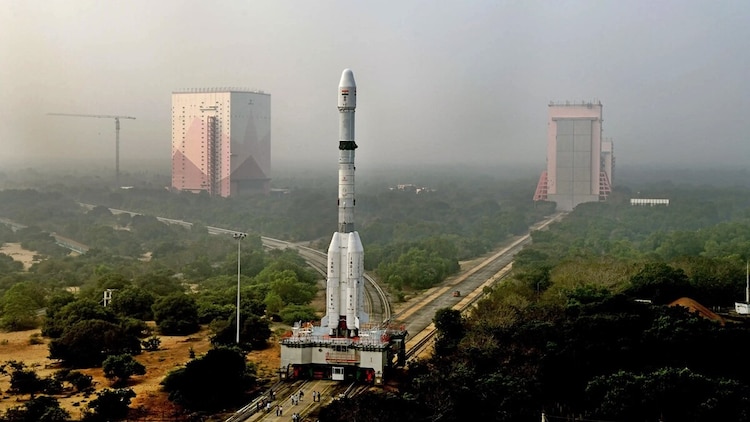
The January 12 PSLV-C62/EOS-N1 mission failed following an anomaly during the rocket's third-stage flight.
EOS-05, therefore, became Isro's first successful orbital mission of the current financial year.
EOS-05 itself marks an important milestone, with Isro describing it as India's first imaging satellite from geosynchronous orbit.
From roughly 36,000 km above Earth, its position will allow it to maintain a broad and persistent view of areas of interest.
GAGANYAAN: THE BIGGEST TEST
The most important mission ahead, however, is Gaganyaan.
Narayanan said “vigorous, systematic work” is underway for the programme's first uncrewed mission, G1, with a launch targeted during this calendar year.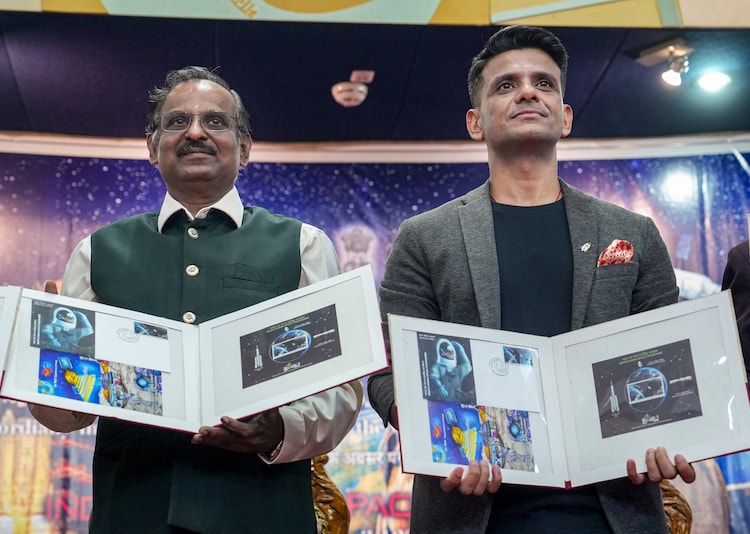
G1 will carry no astronauts.
Instead, it is designed to test the systems needed to eventually take humans to space and bring them safely back to Earth.
Isro is already conducting extensive testing for the mission.
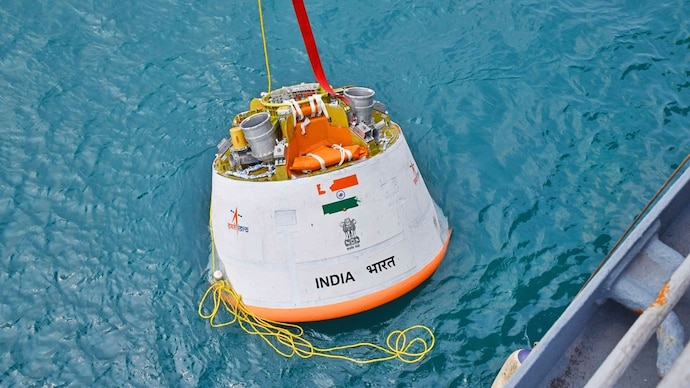
In April, it successfully completed the second Integrated Air Drop Test, using a simulated crew module weighing about 5.7 tonnes.
In July, it conducted the fifth Integrated Main Parachute Air Drop Test to further qualify the parachute system for G1.
Gaganyaan's first uncrewed flight is one of three planned uncrewed missions, named G1, G2 and G3, that will precede the eventual crewed mission.
For Isro, the EOS-05 success is therefore less a finishing line than a fresh starting point.
With six more launches targeted in the financial year and Gaganyaan preparations moving ahead, the pressure is now firmly on to turn a successful mission into a sustained run of launches.