

Monsoon is back, but India is 21% short. How much rain will fix the deficit?
India's monsoon has revived, yet the season is still 21 per cent below normal, which tips it into IMD's deficient category. Here is the arithmetic of how much rain would actually rescue the season, and why simply normal rain from here would do more than most people assume.

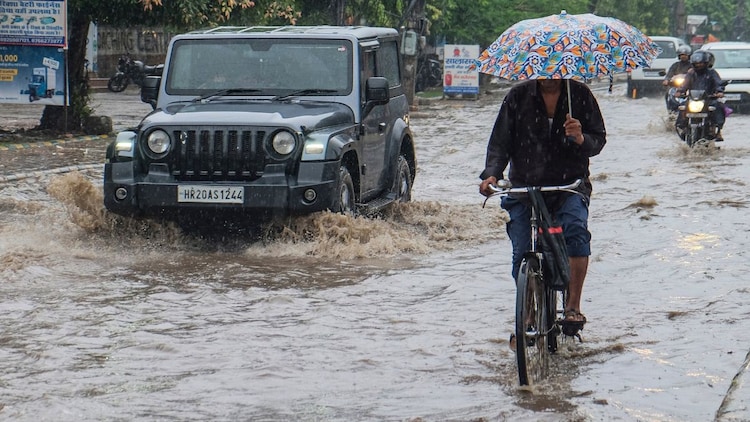
Monsoon clouds return over India even as cumulative rainfall for the season runs 21 per cent below the long period average, tipping the country into IMD's deficient category. (Photo: PTI)

India's monsoon has come back to life. Satellite images this week showed cloud over almost the whole country, and the IMD logged very heavy rain across a dozen subdivisions in a single day.
The season is still 21 per cent short.
Both things are true at once. Here is how that works, and what it would actually take to fix it.
WHAT DOES A 21 PER CENT MONSOON DEFICIT MEAN?
IMD sorts rainfall into bands. A shortfall of 20 to 59 per cent is deficient.
At 21 per cent, India has just stepped from one box into the next.
The long period average, or LPA, is simply the rain a place usually gets, worked out over decades. For the whole country from June to September, it is 868.6 mm.
HOW MUCH RAIN DOES INDIA NEED TO FIX THE DEFICIT?
About 15 per cent more than normal, every week, until the end of September.
Picture the season as a rain jar the country fills from June to September. Filled properly, it holds 868.6 mm. Right now the level is about 76 mm below where it should be for late July.
Roughly 500 mm of normal rain is still to come before September 30. To top the jar right up, the sky would have to pour in that 500 mm and the missing 76 mm on top. That is about a seventh more than usual, sustained for ten weeks.
WHY CAN A BIG DEFICIT SHRINK SO FAST?
Because it is a percentage, and percentages have a bottom half that keeps growing.
Think of a shortfall in a bank account measured against a target that rises every day. You need not repay a rupee for the gap to look smaller.
Say the rest of the season is merely normal. Nothing heroic. India still ends on roughly 792 mm, or 91 per cent of average.
It swings the other way too. The figure was near 40 per cent at the end of June and 14 per cent by July 9. It has widened again since, because July carries the heaviest daily normals of the year and a quiet week in July is expensive.
WHY IS AUGUST CALLED THE RECOVERY MONTH?
Because monsoon rain does not trickle in. It arrives in bursts.
The heavy lifting is done by low pressure areas that form over the Bay of Bengal, drifting west across the country and raining in several states for days at a time. A handful of these in August can move the national number to more than a fortnight of scattered showers.
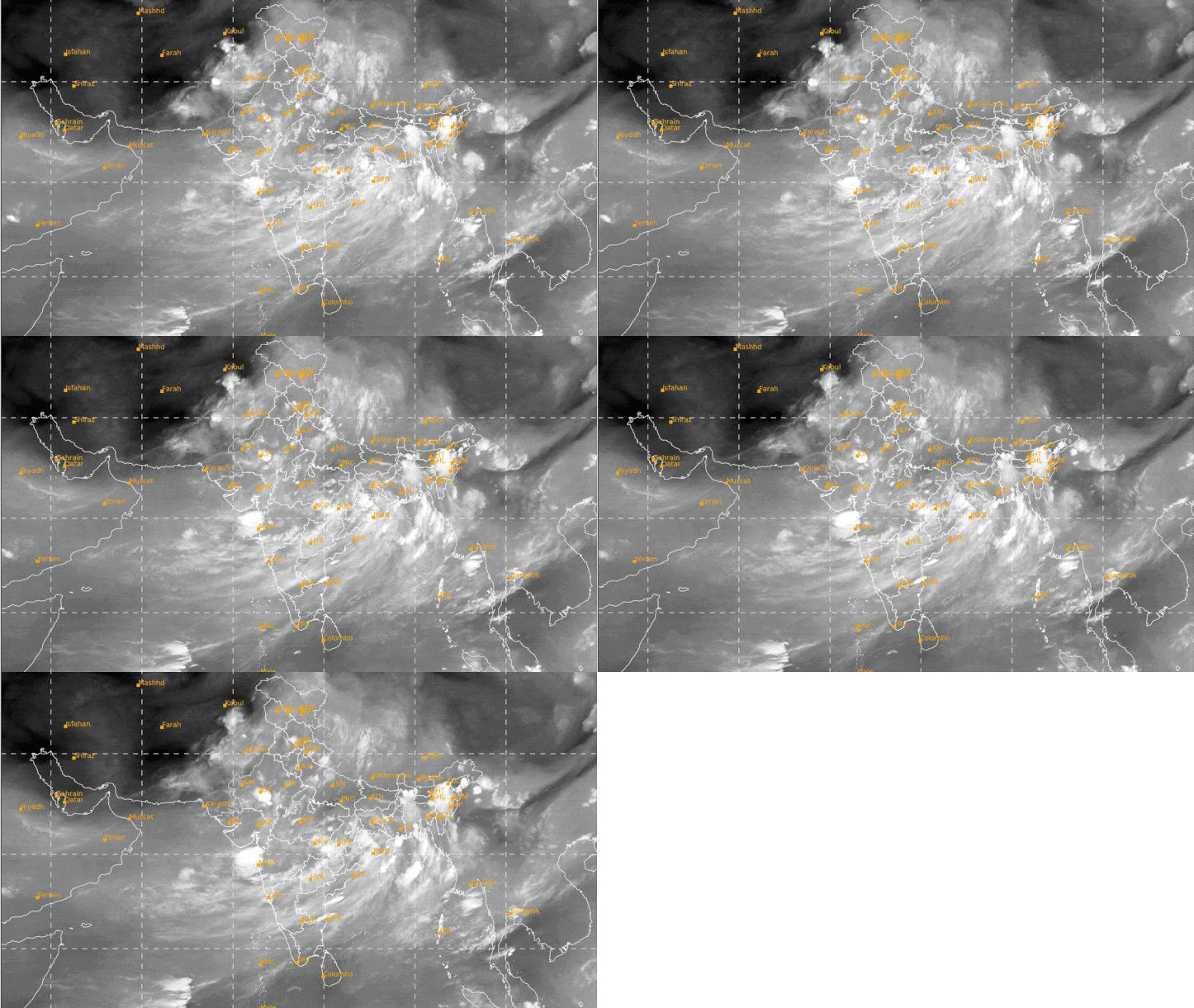
August is when they are most likely.
WHY IS EL NINO A PROBLEM?
El Nino is an unusual warming of the central and eastern Pacific. It nudges the vast loops of rising and sinking air that link the two oceans, and the sinking half tends to sit over India. Sinking air does not rain. IMD's forecast already accounted for it, putting 2026 at 90 per cent of the LPA.
And no, the national figure is not the one that matters. Roughly 52 per cent of India's cultivated land has no irrigation. A cloudburst over a hillside runs off. Rain in Meghalaya does nothing for a dry field in Vidarbha.
The season is still savable. Just not by one good week.
- Ends