
Trump once tried to shut Roman telescope. Now, he calls Nasa to congratulate

The newly launched observatory survived years of uncertainty on Earth before finally beginning its journey into deep space.
 Last UpdatedAug 31, 2026 11:05 IST
  Published by
It was a moment both celebratory and obviously ironic at Nasa's post-launch press conference after the space agency sent to orbit its latest space observatory, the Nancy Grace Roman Space Telescope, to study and reveal the secrets of the universe.
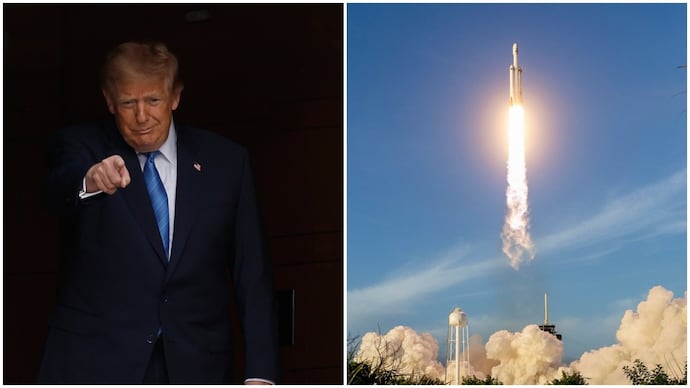
As officials were discussing the successful launch of the Roman telescope, Nasa Administrator Jared Isaacman received a phone call from US President Donald Trump.
Moments later, Trump was addressing the room, congratulating the Roman team and praising the mission. But the irony prevailed.
The Trump administration, led by the same president dishing out compliments and crediting a globally renowned agency on call, had previously proposed cutting or cancelling funding for the very telescope whose launch it was now celebrating.
THREATENED MISSION TO A SUCCESSFUL LAUNCH
Roman lifted off at 4:56 pm IST on August 30 aboard a SpaceX Falcon Heavy from Launch Complex 39A at Nasa's Kennedy Space Center in Florida, US.
The observatory has now begun its journey towards the second Sun-Earth Lagrange point, or L2, roughly 15 lakh km from Earth.
The telescope is one of Nasa's most important new observatories.
It boasts a 2.4-metre primary mirror, which is similar in size to Hubble's, and it also possesses a Wide Field Instrument that can see an area of sky at least 100 times larger than Hubble's field of view in a single observation.
Roman will survey enormous stretches of the universe, helping scientists investigate dark energy and dark matter, study how galaxies evolved and search for planets beyond our solar system.
Its wide surveys will also create a vast pool of data that can be used for many other areas of astronomy.
WHEN TRUMP TRIED TO KILL ROMAN TELESCOPE
Trump's relationship with the Nancy Grace Roman telescope goes back much further than Sunday's congratulatory call.
During his first presidency, his administration proposed cancelling the mission in three separate budget requests between 2019 and 2021.
Congress had rejected those proposals and continued funding Roman.
The mission faced another serious threat during Trump's second term.
In 2025, proposed White House budget documents called for the slashing of Nasa's science spending, raising concerns that Roman could be cancelled.
Those proposed cuts could have put more than 50 Nasa missions at risk, including the launch of the Nancy Grace Roman Space Telescope.
Congress ultimately rejected those cuts and approved about $24.4 billion for Nasa for fiscal year 2026, allowing Roman and other major science missions to continue.
That decision, evidently, proved fruitful.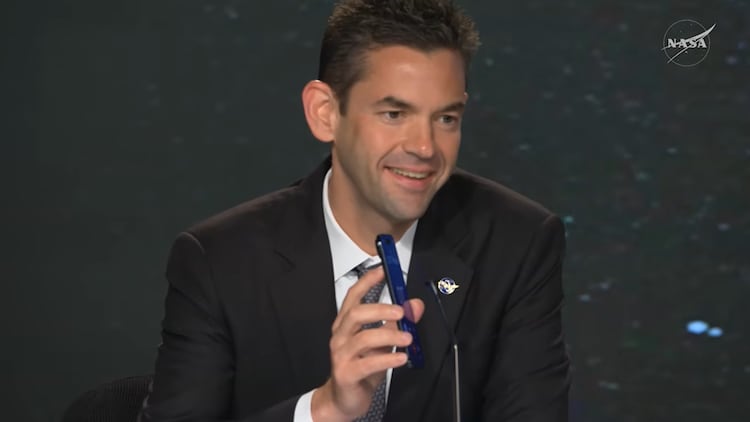
Instead of being cancelled or indefinitely delayed, Roman reached the launch pad and is now on its way to space.
For a telescope designed to give humanity a much wider view of the universe, its journey has already been nothing short of eventful; from repeated funding threats on Earth to finally beginning its scientific journey beyond it.
But the journey, nonetheless, has only just begun.