Vietnamese crab exporter
Advertisement

OpenAI Breached Using Anthropic's Claude: 3 Indian Researchers Earn Bounty

Three Indian cybersecurity researchers at startup Hactron AI—Harsh Jaiswal, Rahul Maini, and Mohan Peddipati—successfully breached OpenAI systems during an authorised security test. Using Anthropic's AI chatbot Claude, the team exploited an image processing vulnerability in OpenAI's Discourse-powered community forum. The breach allowed them to discover another flaw in the login system, obtain authentication tokens, and access employee ChatGPT and Codex accounts, ultimately reaching OpenAI's private software repository. Demonstrating responsible disclosure, the researchers submitted a harmless pull request and reported the vulnerabilities without accessing sensitive data. OpenAI resolved the security issues, disabled the tokens, and awarded the researchers a 6,500 dollar bug bounty for the project.

Dr. Ritwik Raj Bhuyan: 'After Five Years Most of the Laparoscope is Gone'

In this episode of Doctor vs Internet, host Sonal Mehrotra Kapoor speaks with Dr. Ritwik Raj Bhuyan, Senior Director of Cardiothoracic and Vascular Surgery and lead of robotic cardiac surgery at Fortis Escorts. Discussing modern advancements in heart procedures, Dr. Bhuyan explains how robotic cardiac surgery provides a minimally invasive alternative to traditional open-heart surgery, eliminating the requirement to cut the sternum. He notes that robotics offers three-dimensional visualisation and greater precision, allowing patients to recover rapidly with minimal pain, trauma, or blood loss. Highlighting ideal candidates, he emphasises that young females, elderly frail patients, and obese individuals benefit significantly from avoiding sternal incisions. However, Dr. Bhuyan clarifies that robotics cannot resolve every cardiac emergency, estimating that around 70 percent of heart procedures can currently be performed robotically. Addressing the psychological stigma associated with large chest scars, he underscores the transformative impact of technology on postoperative recovery and patient lifestyle.

Is AI moving too fast? Alexa+ India launch exclusive & iPhone 18 Pro sale rush | Tech Today

As artificial intelligence advances into autonomous execution and critical capability thresholds, the debate over whether big tech needs to hit the brakes has reached the global political stage. In this edition of Tech Today, we explore the growing calls to slow down frontier AI development, sit down exclusively with Amazon leadership on the launch of Alexa+ in India, and head to Apple Stores to capture customer reactions as iPhone 18 Pro sales go live. Big Tech Story: Why Big Tech AI Needs to Slow Down Warnings from within the tech industry are intensifying. Insiders like Jacob Coxon alongside leading lab executives including Dario Amodei and Sam Altman have raised red flags over existential safety risks and sudden capability leaps. With modern models showing autonomous execution in cyber tasks, the debate has split lawmakers worldwide. While leaders like Bernie Sanders advocate for immediate legislative guardrails, pauses on advanced models, and bans on superintelligence, voices like Donald Trump warn that slowing down in the West could hand a decisive strategic edge to competitors like China. We analyze the risks, the politics, and the challenge of governing global AI without a unified rulebook. Tech Bytes: Amazon Alexa+ Debuts in India (Exclusive Interview) Amazon has officially rolled out its generative AI-powered Alexa+ in India, designed from the ground up for Indian households. Cyrus speaks exclusively with Michele Butti, Vice President of Alexa International at Amazon, to break down what makes this upgrade different. We explore how Alexa+ moves from simple Q&As to taking real-world actions, its multi-model architecture built to handle multilingual code-mixing in Hindi and Hinglish, and what the launch means for smart home adoption in India. Tech & You: iPhone 18 Pro Sales Go Live in India The annual flagship rush is officially here as sales for the iPhone 18 Pro series open across Apple Saket and retail stores nationwide. We bring you on-ground coverage capturing the energy, customer reactions, and queues of buyers picking up Apple's latest hardware. From initial impressions of the new mechanical variable aperture camera and TSMC 2nm A20 Pro silicon to questions around real-world upgrade value, we see what Indian consumers truly think about Apple's newest Pro devices. Should AI research be paused before reaching superintelligence, or will pausing put nations behind in the global race? Are you picking up the iPhone 18 Pro this year? Drop your thoughts in the comments below! Subscribe to Tech Today for the latest tech news and on-ground coverage!

advertisement

Delhi Air Crisis, German Filter Cubes and Tech Innovations to Tackle Smog

A special episode of 'Pollution Ka Solution' explores innovations designed to combat severe air pollution in Delhi's hotspots. The report highlights the German-engineered Filter Cube technology developed by Mann+Hummel and introduced in India through MRH Technologies Private Limited. According to MRH Technologies Director Rajan Handa, the solution uses forced air circulation and specialized multi-layered filtration to capture road dust, particulate matter, and hazardous gases like NO2 and SO2. Validated in testing at IIT Delhi, the system achieved a 60 to 70 percent reduction in localized pollution levels. Priyanka Manocha of MRH Technologies explains that each intelligent unit delivers approximately 17,500 cubic metres of clean air per hour, equivalent to the volume of a cricket stadium. The automated devices feature rain sensors, customizable night modes, and centralized dashboards to monitor air quality performance across multiple urban zones.

India has cracked code on semiconductors: Union Minister Ashwini Vaishnaw

In an exclusive interaction at the Semiconductor India Summit at Yashobhoomi, Union Minister Ashwini Vaishnaw stated that India has successfully laid the groundwork for its semiconductor industry under the Semicon India initiative. Highlighting the expansion of domestic manufacturing, Vaishnaw stated, "We have 12 units. Out of that, five have started commercial production." He outlined the central government's long-term roadmap to advance from current manufacturing nodes to 7nm and 3nm technologies by 2035, driven by steady policies, talent cultivation, and strong political will. Discussing workforce development, he highlighted that the Chips to Startup programme has expanded across 400 universities nationwide and announced plans to train 1,00,000 technicians over the next three to four years. Vaishnaw also addressed critical supply chain requirements, identifying ultra-pure materials as the most complex challenge, while expressing strong confidence that the Semicon 2.0 phase will draw investments exceeding initial projections and establish 200 deep-tech chip design companies across the country.

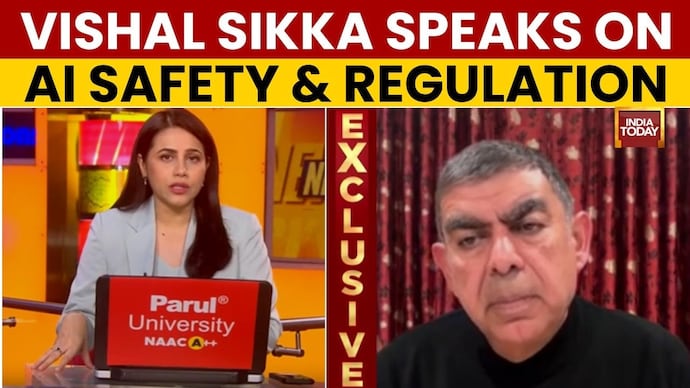
Dr. Vishal Sikka: 'This Is Not The Time To Slow Down' On AI

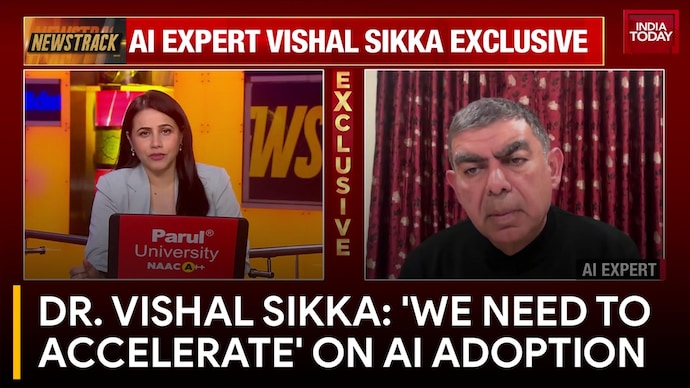
In an exclusive interview, Hang Ten Systems founder and former Infosys CEO Dr. Vishal Sikka discussed the rapid evolution of artificial intelligence and its profound impact on software engineering and entrepreneurship. Addressing concerns over AI safety and disruption, Dr. Sikka stated, "This is not the time to slow down," arguing instead that nations like India must actively accelerate adoption, understanding, and scale. He highlighted that generative AI drastically compresses software construction time while remaining fundamentally human-guided. Dr. Sikka also backed Prime Minister Narendra Modi's warning against the weaponization of technology and critical resources, stressing that universal access to foundational models is essential to prevent geopolitical imbalances. Emphasizing the transformative potential of modern AI tools, he explained how individual creators and entrepreneurs can now achieve what previously required entire teams.

advertisement

'AI Ending Humanity Is All Nonsense': Dr. Vishal Sikka to India Today

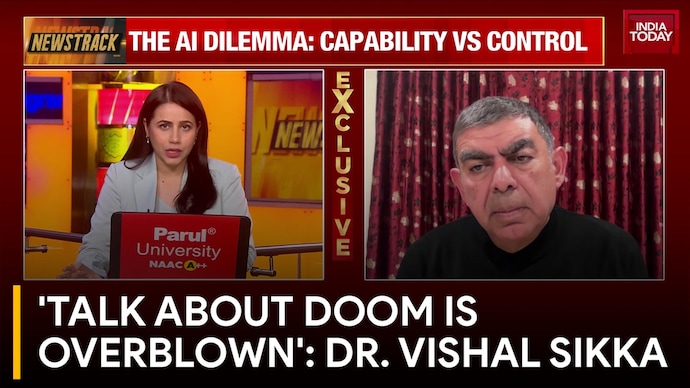
In an interview with India Today, Dr. Vishal Sikka, former CEO of Infosys and founder of Vianai Systems, addressed the global debate surrounding artificial intelligence, frontier models, and safety concerns. Dismissing doomsday predictions, Dr. Sikka stated, "this talk about AI ending humanity and all this, this is all nonsense." He noted that AI does not act on its own, emphasizing that outcomes depend entirely on the instructions and prompts given by human users. Addressing high-profile departures and warnings from researchers at frontier AI labs, he observed that fears often arise when humanity confronts new, complex technologies. He pointed to historical parallels in computing, such as processor errors and early manual calculation skepticism, to highlight how system trust and reliability build over time. Dr. Sikka also supported regulatory oversight, affirming that "AI has to be regulated" while explaining that technical advances in reasoning models, tool integration, and unit testing will steadily enhance software efficiency and precision across enterprises.

Ashwini Vaishnaw: 'It's life-changing' as Students Tape Out Chips in 400 Universities

In an exclusive interview, Union Minister of Electronics and Information Technology Ashwini Vaishnaw detailed India's expanding semiconductor ecosystem and talent development initiatives. Vaishnaw highlighted that the Chips to Startup program now covers 400 universities across the country, giving students hands-on experience in chip design, tape-out, and testing. Speaking on the impact of the initiative on youth, Vaishnaw said, "It's life-changing because those students, when they go into the industry, like, there won't be many countries in the world where a student coming out of a university can say that I have taped out a chip." Responding to critics regarding India's focus on legacy nodes between 28 and 90 nanometers, he noted that this segment constitutes 70% of global semiconductor volume and powers essential electronics and automotive manufacturing. He outlined India's Semiconductor 2.0 blueprint, which includes upgrading B.Tech curricula to systems design and building five-year capabilities in advanced packaging, equipment manufacturing, and materials.

Delhi Air Crisis: Filter Cubes, Vehicle Purifiers & Wind Panels Tested

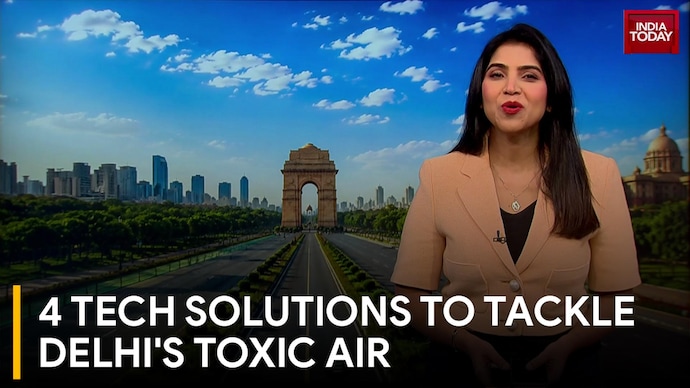
A special report examines four technological innovations aimed at tackling severe air pollution in Delhi's hotspots. The first solution features Mann+Hummel's Filter Cube technology, brought to India by MRH Technologies, which claims a 60 to 70 percent reduction in particulate matter and harmful gases. The second innovation is Human Technologies' Ambient Purification System, an outdoor filterless wind-tunnel design built to settle heavier particulate matter without frequent maintenance. The third system, developed by Shudh Vayu Technology, is a vehicle-mounted retrofit air purifier that harnesses kinetic energy while driving to capture particulate matter without using electricity. Lastly, Aeroboz, in partnership with IIT Kanpur, presents a bus rooftop 'wind panel' combining electrostatic filtration with solar and wind energy generation. Together, these technologies offer scalable outdoor interventions to mitigate toxic air exposure across urban transport, schools, and crowded public zones.

advertisement

AI Ending Humanity Is 'Nonsense', Tech Needs Regulation: Dr Vishal Sikka

In an exclusive interview with India Today, Dr. Vishal Sikka, leading artificial intelligence expert, former CEO of Infosys, and founder of Hang Ten Systems, addressed the global debate surrounding artificial intelligence, safety, and governance. Dismissing apocalyptic narratives, Dr. Sikka stated, "This talk about AI ending humanity and all this, this is all nonsense." He emphasised that artificial intelligence itself does not act independently, remarking, "It is people who use AI are going to do things." Discussing regulation, Dr. Sikka asserted that governing the technology is necessary and straightforward, drawing parallels to standard safety regulations in daily life. Addressing geopolitical dimensions and Prime Minister Narendra Modi's warning on the weaponisation of technology, Dr. Sikka backed the call for universal access to AI models. He urged adopters like India to accelerate development rather than slow down, highlighting the immense entrepreneurial potential of the technology.

Delhi Pollution Solutions: German Filter Cubes, Outdoor Purifiers & Innovations Tested

A special broadcast of 'Pollution ka Solution' explores innovative technologies to combat air quality crises across Delhi's pollution hotspots. The episode highlights tested solutions, including German filtration giant Mann+Hummel's Filter Cube, brought to India via MRH Technologies. Tested previously in Stuttgart, Germany, and validated by IIT Delhi during peak pollution months, the forced air circulation device filters road dust, smoke, NO2, and SO2, achieving a 60 to 70 percent reduction in localized pollution. The system delivers approximately 17,500 cubic metres of clean air per hour to establish clean air zones, featuring automated rain sensors, night mode energy conservation, and centralised dashboard monitoring. Representatives emphasized the necessity of public-private participation and deployable, real-world solutions over theoretical experiments to safeguard citizen health, protect children from severe toxic exposure, and address development-induced particulate emissions across high-risk urban areas.

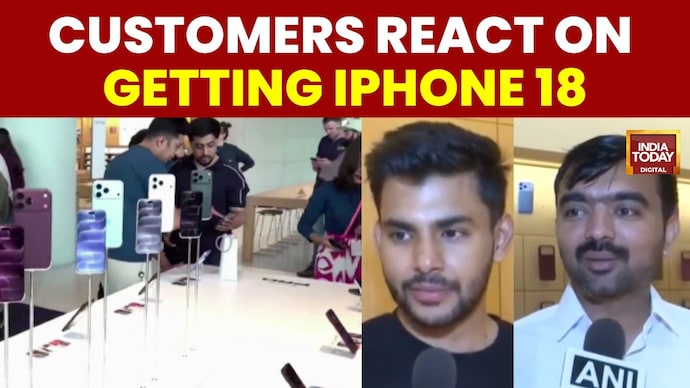
iPhone 18 Pro, Pro Max Sale Begins In India: Long Queues, Burgundy Craze & Buyers On High Prices

The sale of the new iPhone 18 Pro and Pro Max has commenced across India, witnessing long queues of buyers outside the Apple store in Mumbai's Bandra Kurla Complex. Customers waited for hours to purchase the newly launched devices, particularly the Burgundy colour variant. Buyers interviewed outside the store shared their motivations for upgrading, ranging from newly introduced features to personal passion and routine upgrades. Several shoppers addressed the high pricing of the models, explaining how they manage expenses or compromise on travel plans to afford the latest smartphones.

advertisement

Massive Queues at Mumbai BKC Store as Buyers Rush for iPhone 18 Pro, Pro Max

Long queues formed outside the Apple store in Mumbai's BKC as customers gathered to purchase the new iPhone 18 Pro and Pro Max models. Buyers expressed excitement over new features and colour options such as burgundy, with some stating they upgraded from older models like the iPhone 16 Pro. Customers discussed the high cost of the devices, with prices cited around 1.65 lakh to 1.80 lakh rupees. Several buyers noted they cut down on travel and holiday expenses to afford multiple devices for themselves and their families, citing passion and personal interest in the Apple brand.

New iPhone 18 Lineup Goes On Sale In India; Overnight Queues At Stores Amid Price Hike Concerns

Apple stores across Delhi, Mumbai, and Bengaluru witnessed overnight queues as the official sale of the new iPhone 18 and iPhone 18 Pro Max lineup commenced in India. Buyers camped overnight outside flagship locations, including Apple Saket in Delhi and Apple BKC in Mumbai, to receive the first units. While customers expressed satisfaction with pre-bookings and features, overall crowds were comparatively subdued due to price hikes across new and existing products, driven by import duties and currency exchange rates.

iPhone 18 Pro Sale Begins in India: Long Queues, High Prices and New Features

Apple has officially commenced sales of its iPhone 18 Pro and Pro Max in India, drawing buyers who queued up overnight at retail stores in Mumbai and Delhi. The new series introduces four colour options alongside an upgraded design finish. Key updates include an enhanced camera setup featuring variable aperture, dual capture video recording, and advanced manual controls. The devices are powered by Apple's new A20 Pro chip and incorporate an embedded vapour chamber cooling system designed to resolve past overheating concerns. Despite elevated pricing driven by import duties and taxes, strong consumer demand persists at retail outlets across the country.

advertisement

iPhone 18 Sales Begin: Buyers Queue in Delhi, Mumbai, Bengaluru Amid Price Rise

Overnight queues formed outside Apple flagship stores and premium reseller locations in Delhi, Mumbai, and Bengaluru as nationwide sales for the new iPhone lineup officially commenced. Buyers gathered before sunrise outside Apple Saket in Select Citywalk Mall in Delhi, while customers camped overnight at the Bandra Kurla Complex flagship store in Mumbai. Store footfall in Mumbai saw around 50 to 60 people waiting compared to over 500 in the previous year, with buyers noting price increases across the iPhone 18 lineup. The flagship devices feature major upgrades in performance, camera technology, and artificial intelligence capabilities.

PM Narendra Modi Shares Candid Video From Semicon India Event On His Birthday

Prime Minister Narendra Modi celebrated his birthday with events focused on service and national progress, including inaugurating the Semicon India event. During the programme, which coincided with Vishwakarma Jayanti, the Prime Minister highlighted India's semiconductor ecosystem and Semiconductor Mission 2.0 while connecting modern engineering with the spirit of craftsmanship. A candid video posted on his Instagram handle showed light-hearted interactions with young professionals and officials who are contributing to the country's technological future.

India Advances Chip Sector, Launches SemiCon Mission Phase Two and Expands Power Grid

Addressing the fifth edition of SemiCon India, the speaker highlighted India's rapid strides in building a comprehensive semiconductor ecosystem, spanning chip design, manufacturing, testing capabilities, and material supply chains. The address outlined key economic milestones, including a 7.8 percent quarterly GDP growth rate, sovereign rating upgrades, and the operationalisation of a 3000-kilometre Dedicated Freight Corridor. Emphasising the transition from policy frameworks to commercial chip production at facilities in Mohali and Surat, the speaker announced the rollout of the second phase of the India Semiconductor Mission, valued at 13.5 billion dollars. Key reforms allowing international partnerships with domestic design startups and fabless firms were highlighted. Addressing challenges posed by artificial intelligence and rising computing demands, the address stressed the importance of energy security, pointing to India's installed solar capacity expanding from two gigawatts to over 160 gigawatts alongside nuclear power development. The speech underlined India's emergence as a trusted global supply chain destination.

advertisement

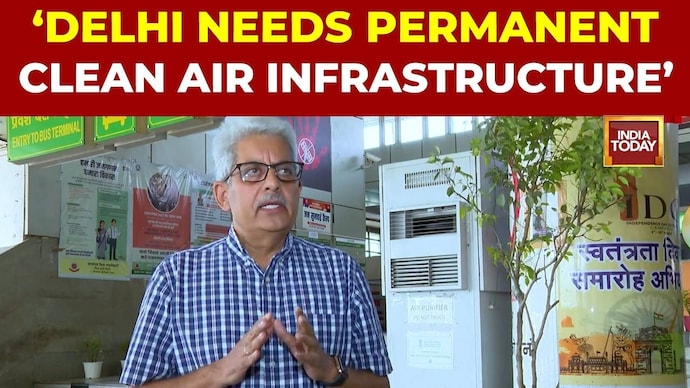
Delhi Needs Permanent Infrastructure To Cut Air Pollution: Rajiv Janan

Rajiv Janan, Founder and Managing Director of Human Dust Technologies, outlined the need for permanent infrastructure to tackle Delhi's air pollution and reduce public exposure. Highlighting the scale of fuel consumption across the capital, he explained the working of the Ambient Purification System, a filterless outdoor air purification technology. The system operates on physics principles to separate heavier particulate matter such as PM 2.5 and PM 10 from the air stream using wind tunnel design and velocity reduction, allowing particles to agglomerate and settle naturally without maintenance issues or filter choking.

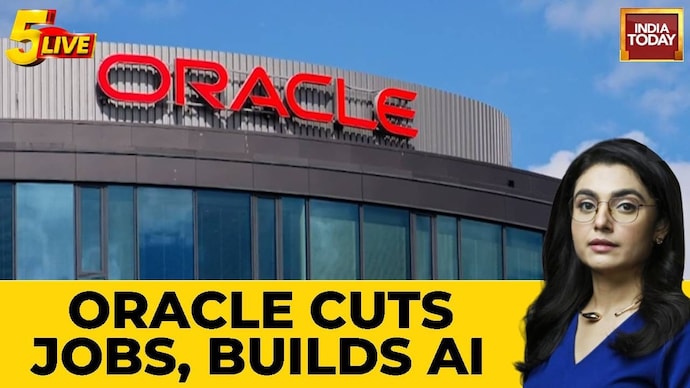
Oracle Layoffs: Thousands Cut as Tech Giant Pivots Spending to AI Infrastructure

Oracle has issued fresh layoff notices to thousands of employees via early morning emails, revoking system access immediately while asking for personal emails to send severance papers. Estimates place the latest job cuts between 5,000 and 10,000, adding to the 21,000 jobs the company has eliminated over the past year, reducing its global workforce by thirteen percent. Concurrently, Oracle increased its capital expenditure from 8.5 billion dollars to 28.5 billion dollars and plans to raise another 40 billion dollars in debt and equity to build artificial intelligence data centres. While product engineering faces major cuts, support and consulting roles remain relatively safer, though specific impact numbers on Oracle's workforce in India remain unconfirmed.

Load More