Vietnamese crab exporter

Topic

Advertisement
TOPIC

India-Pakistan

India and Pakistan, two nuclear-armed neighbors, share a complex relationship since their partition in 1947. The core issue fueling tensions is Pakistan's claim over India's Kashmir, which has led to three major wars (1947, 1965, and 1999) and persistent border skirmishes. Bilateral ties are also strained by cross-border terrorism sponspored by Pakistan.

  • ALL
  • STORIES
  • VIDEOS

STORIES

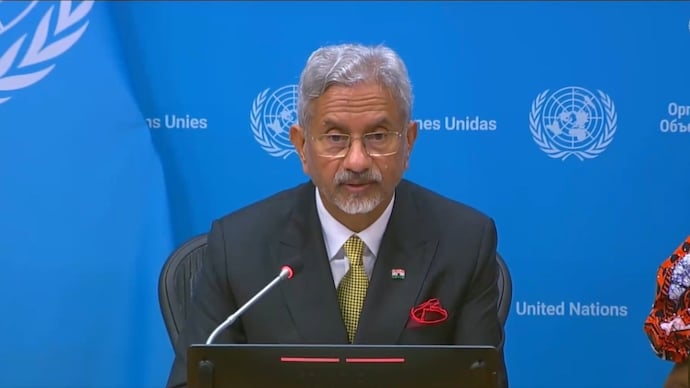
Jaishankar rejects BRICS-UN binary amid wider global shifts

At the UN, S Jaishankar rejected framing BRICS and the United Nations as rival choices as India held talks with Russia and Iran. The broader day underscored shifting alignments from stronger India-US ties and US-China engagement to fresh security shocks across South Asia.

Load More

VIDEOS

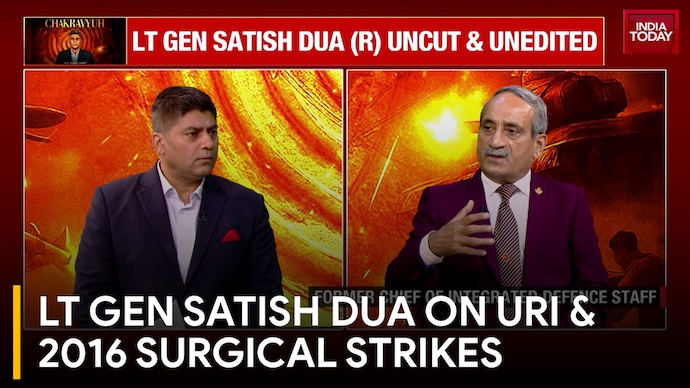
Lt Gen Satish Dua: 'Darkest Day Of My Life, Lost 18 Lives On My Watch'

In an interview with India Today, former Chinar Corps Commander Lieutenant General Satish Dua detailed the operational planning, strategic doctrine, and tactical execution of the 2016 cross-LoC surgical strikes following the Uri terror attack. Recalling the loss of 18 soldiers at Uri, Dua revealed that then Defence Minister Manohar Parrikar authorized the retaliatory mission during operational briefings in Srinagar. Indian Army Special Forces crossed the Line of Control to strike multiple terrorist launch pads simultaneously north and south of the Pir Panjal range at depths of four to five kilometers from stand-off positions. Intelligence assessments indicated between 40 and 60 terrorists were neutralized, while Indian forces suffered zero casualties. Dua emphasized that the operation combined tactical military action with diplomatic maneuvering at the United Nations General Assembly, establishing a precedent of proactive deterrence below the nuclear threshold that shaped subsequent responses, including the Balakot airstrikes.

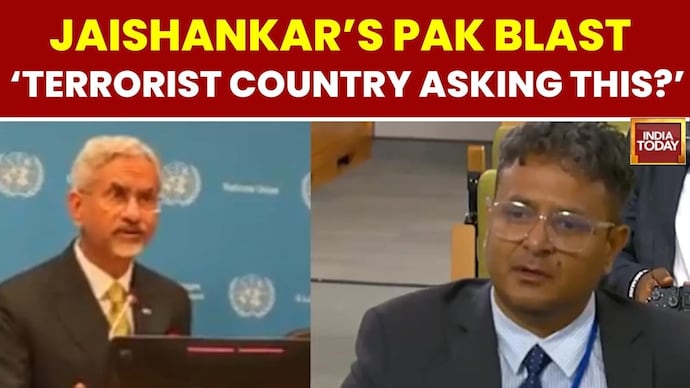
UNGA 81st Session: Jaishankar Address, Seafarer Safety Initiative & Rebuttal to Pakistan

External Affairs Minister Dr. S. Jaishankar is set to address the 81st session of the United Nations General Assembly in New York, where he is expected to address geopolitical conflicts, counter-terrorism, and Global South interests. On the sidelines of the UNGA, India and Liberia formed a group of friends on seafarer safety following attacks on commercial shipping in the Red Sea and Gulf. During a media interaction, Jaishankar rejected a Pakistani journalist's question regarding terrorism, calling Pakistan a terrorist country. The bulletin also highlighted Indian diplomatic responses to Pakistan at the UN concerning cross-border terrorism, safe havens for terrorists, and issues regarding the Indus Waters Treaty.

UNGA 2024: Jaishankar Hits Back At Pakistani Journalist, Raises Red Sea Attacks

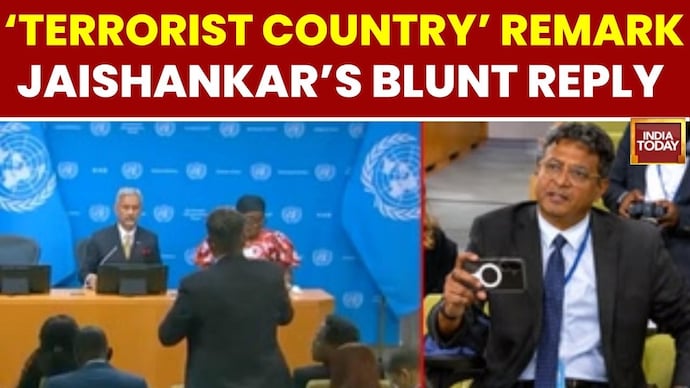
External Affairs Minister Dr S Jaishankar is set to address the United Nations General Assembly in New York, where he is expected to focus on counter-terrorism, geopolitical conflicts, and the interests of the Global South. During a briefing, Jaishankar dismissed a question on alleged cross-border terrorism posed by a Pakistani reporter, retorting that a terrorist country was asking him that question. The minister also voiced grave concern over repeated attacks on commercial shipping in the Gulf of Aden and the Red Sea. Announcing a group of friends with Liberia on seafarer safety, he stressed that violence against merchant mariners must end.

UNGA Sidelines: Jaishankar Rebuts Pakistani Journalist on Terrorism

External Affairs Minister Dr S. Jaishankar addressed the media in New York following the inaugural meeting of the Group of Friends on Safety and Security of Shipping and Seafarers, held on the sidelines of the United Nations General Assembly session. During the press interaction, a Pakistani journalist questioned the Indian government regarding allegations of sponsoring terrorism in Pakistan and referenced Gurpatwant Singh Pannun. Jaishankar dismissed the questioning by responding that a terrorist country was asking him that question.

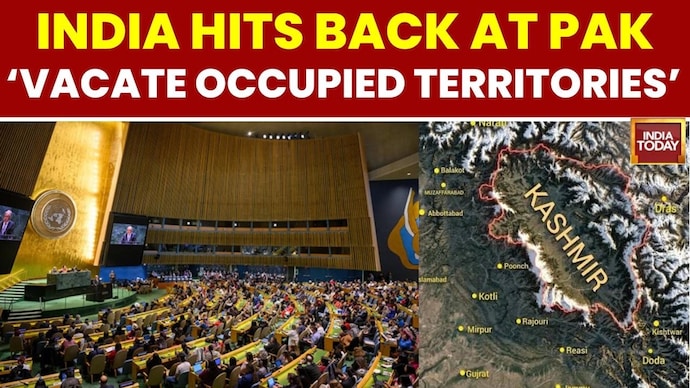
India Slams Pakistan At UNHRC Over Jammu & Kashmir, Minority Persecution & Terror

India delivered a sharp rebuke to Pakistan at the United Nations Human Rights Council, rejecting Islamabad's stance as historical revisionism, invented statistics, and sectarian insinuation. Addressing the council, the Indian representative reaffirmed that Jammu and Kashmir was, is, and will always remain an integral and inalienable part of India, calling on Pakistan to vacate the territories under its illegal foreign occupation. Highlighting cross-border terrorism, the statement pointed out that Pakistan-backed terrorists drove Kashmiri Pandits out in 1990. India also criticised Pakistan for persecuting its own minorities, urging it to focus on economic development rather than council theatrics and exporting terror.

'It Has Been My Great Honor to Settle Eight Wars': Donald Trump

Addressing the United Nations General Assembly and marking the 250th anniversary of American independence, United States President Donald Trump detailed his administration's domestic and international policy agenda. Domestically, Trump highlighted United States economic metrics, poverty reduction, and border security enforcement. In foreign affairs, Trump reiterated that Iran will not be permitted to obtain a nuclear weapon, referencing military strikes on Iranian nuclear sites, the destruction of Iranian naval vessels, and United States naval escorts in the Strait of Hormuz. Trump reviewed the cessation of hostilities in Gaza, the release of hostages, and the formation of a multilateral Board of Peace backed by the United Nations Security Council. He outlined diplomatic mediation across international disputes, including India and Pakistan, Cambodia and Thailand, Kosovo and Serbia, the Democratic Republic of the Congo and Rwanda, Armenia and Azerbaijan, as well as ongoing negotiations between Russia and Ukraine. Additionally, Trump detailed United States military operations in Venezuela, the apprehension of Nicolás Maduro, and an agreement involving 65 billion barrels of oil. He announced an accord with Denmark regarding Greenland to construct two military bases for Arctic defense. On technological policy, Trump stated that the United States government will prioritize super intelligence over traditional artificial intelligence terminology. The address concluded with calls for United Nations structural reforms, spending reductions, opposition to international carbon taxation, and the rejection of International Criminal Court jurisdiction.

Donald Trump on Deal or War: 'Do I Annihilate the Islamic Republic'

Speaking on global conflicts and foreign policy, Donald Trump outlined the United States' stance on Iran, maritime security, and peace initiatives across the Middle East and beyond. Trump noted that US naval escorts in the Strait of Hormuz have kept oil shipments flowing despite violations by Tehran. Weighing diplomatic engagement against military confrontation, Trump asked, 'Will a deal be made with Iran that lets them rebuild and create a far greater country than it ever was before? Maybe one of the greatest in the Middle East or even the world, or do I annihilate the Islamic Republic and do it quickly, never giving them a chance to kill and destroy people and countries again?' He called for total economic isolation until Iran ends its nuclear ambitions and attacks on commercial shipping. Trump also highlighted the United Nations Security Council's endorsement of the 20-point Gaza Peace Plan, the establishment of the Board of Peace, and his role in mediating numerous protracted international conflicts.

Naval Collision: Pakistan Summons Indian Envoy, MEA Highlights 1991 Pact Violation

Pakistan has summoned India's envoy in Islamabad to lodge a protest following a collision between Indian and Pakistani naval vessels. Pakistan claimed an Indian warship engaged in aggressive maneuvers during its biennial naval exercise Sea Spark 26, leading to contact between the ships. In response, India's Ministry of External Affairs highlighted that the Pakistani vessel failed to adhere to the 1991 bilateral agreement and did not observe professional conduct. The Pakistani ship sustained severe damages and was forced to return to harbor for repairs, while the Indian vessel continued its operational mission.

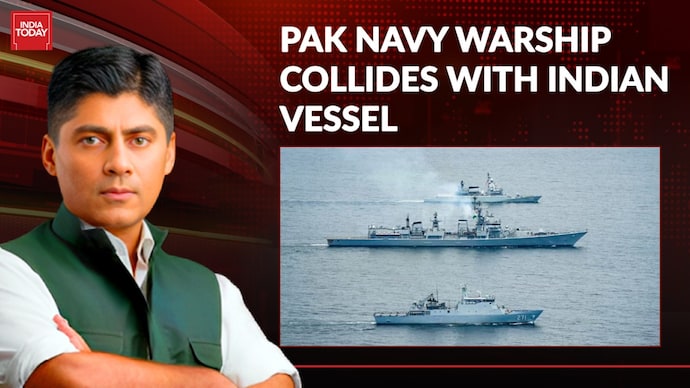
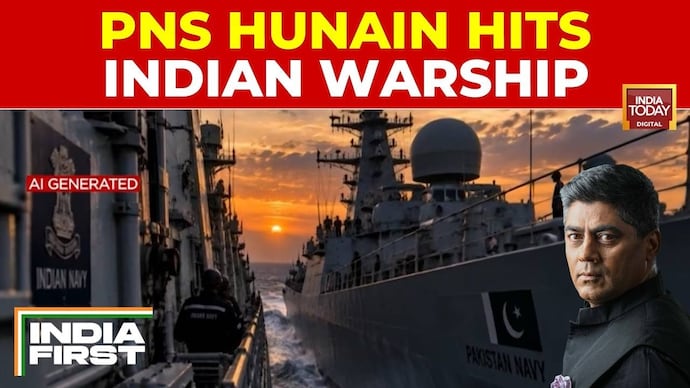
Pak Navy warship hits Indian vessel in Arabian Sea. Provocation or recklessness?

This special broadcast covers major national security, geopolitical, and cultural developments. The programme details the maritime incident in international waters near the Gulf of Oman, where Pakistan Navy offshore patrol vessel PNS Hunain executed an unsafe manoeuvre and collided with a frontline Indian Navy warship, prompting India to lodge formal diplomatic protests citing the 1991 bilateral military agreement.

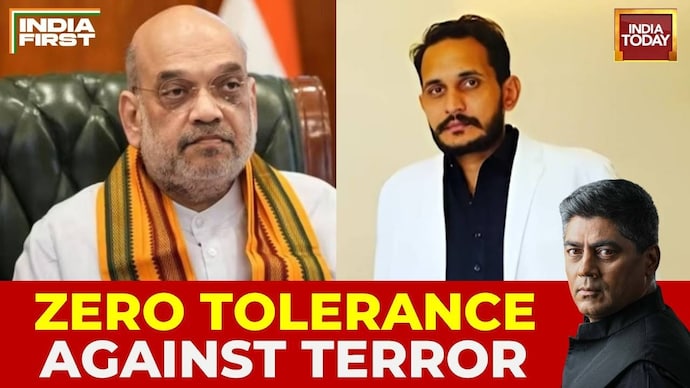
MHA Bans Pakistan-Based Shehzad Bhatti Terror Outfit Under UAPA, Cites Arms Smuggling

The Ministry of Home Affairs has designated the Pakistan-based Shehzad Bhatti network as a terrorist organisation under the Unlawful Activities (Prevention) Act. According to the government, the network led by gangster and terror handler Shehzad Bhatti is involved in cross-border smuggling of arms, explosives, narcotics, and recruiting Indian youth for terror activities, including IED attacks and targeted killings. Union Home Minister Amit Shah highlighted the action as part of the zero-tolerance policy against terrorism. This ban follows an extensive nationwide crackdown on 12 August across 14 states, where security forces detained 253 suspects, made over 200 arrests, and recovered explosives and weapons bearing Pakistan Ordnance Factory markings.

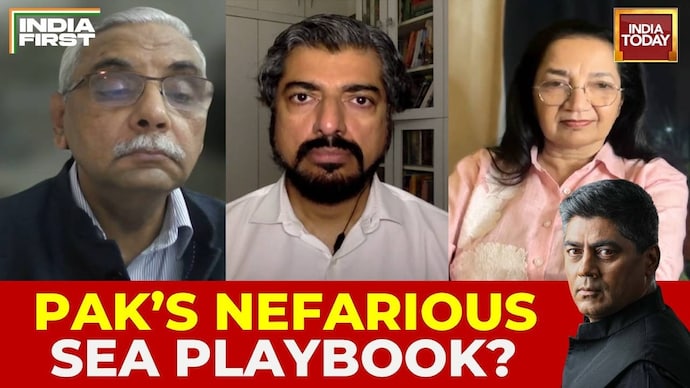
India First: 'This Was Quite An Unprovoked Attack By Pakistan Naval Warship'

On India First, anchor Gaurav Sawant discusses the recent maritime provocation by Pakistan Navy against an Indian warship with Commodore Anil Jai Singh, strategic affairs expert Dr Tara Kartha, and senior journalist Sandeep Unnithan. Experts evaluate the reckless shoulder tactic executed by Pakistan Navy's PNS Hunain near the Gulf of Oman, comparing it to maritime belligerence displayed by China's PLA Navy in the South China Sea. Analyzing the incident against international Regulations for Preventing Collisions at Sea, Commodore Anil Jai Singh observes, 'This was quite an unprovoked attack or an unprovoked action by the Pakistan naval warship.' The panel examines how deep-rooted radicalization and a terrorism mindset have infiltrated Pakistan's armed forces, recalling the 2014 PNS Zulfiquar incident. The discussion emphasizes the urgent requirement for the Indian Navy to remain fully vigilant and empowered to protect strategic sea lines of communication and vital energy security transit routes.

Pak Warship Collides With Indian Navy Vessel In High Seas, India Summons Diplomat

A Pakistan Navy offshore patrol vessel, PNS Hunain, collided with a frontline Indian Navy warship in international waters roughly 150 to 200 nautical miles off the coast of Oman in the Gulf of Oman. The incident occurred on the evening of 15 September when the Yarmook-class Pakistani vessel closed in at high speed from the starboard side and executed unsafe manoeuvres. PNS Hunain sustained damage and returned to harbour, whilst the Indian warship reported no major damage and continued its mission. Following the encounter, the Ministry of External Affairs summoned Pakistan's chargé d'affaires in New Delhi and instructed the Indian mission in Islamabad to lodge a protest. New Delhi stated that the action contravened Article 10 of the April 1991 bilateral military agreement, which mandates naval ships maintain a minimum distance of three nautical miles. The broadcast drew comparisons with a June 2011 maritime incident involving PNS Babur and INS Godavari in the Gulf of Aden.

Pak Warship Collides With Indian Navy Vessel In North Arabian Sea; MEA Summons Diplomat

A Pakistan Navy vessel, identified as the Yarmook-class corvette PNS Hunain, reportedly collided with an Indian Navy warship in the North Arabian Sea after executing an aggressive manoeuvre. The Indian warship and its crew suffered no major damage. Following the incident, India lodged a strong protest, with the Ministry of External Affairs summoning Pakistan's Chargé d'Affaires in New Delhi over the violation of the 1991 bilateral agreement. India's Chargé d'Affaires in Islamabad was also directed to lodge a formal complaint with the Pakistan Foreign Office.

Centre Bans Shehzad Bhatti Network Under UAPA, Unravels ISI Gangster Terror Syndicate

The Ministry of Home Affairs has declared the Pakistan-based Shehzad Bhatti network a terrorist organisation under the Unlawful Activities (Prevention) Act. Union Home Minister Amit Shah confirmed the decision, stating the syndicate was recruited by Pakistan's Inter-Services Intelligence to smuggle arms, explosives, and narcotics, incite youth, and publish hateful digital content. Investigations revealed that Shehzad Bhatti operated out of the United Arab Emirates as a social media influencer, paying local recruits to photograph military installations, railway stations, and convoys moving towards Jammu and Kashmir, besides orchestrating low-intensity attacks. Raids across 14 states led to multiple detentions. Operating under the banner of Tehreek-e-Taliban Hindustan to mask Pakistani involvement, the network aimed to destabilise Punjab ahead of elections by targeting police personnel, Rashtriya Swayamsevak Sangh functionaries, and political leaders. The ban enables India to coordinate with Gulf nations and international bodies to choke the syndicate's financial, hawala, and operational networks across West Asia.

Ashok Kantha to India Today: 'Not a new dawn in India-China relations'

Speaking to India Today, former Indian Ambassador to China Ashok Kantha analyzed the state of bilateral relations following official discussions and statements. He dismissed notions of a breakthrough, stating, "I will not characterize it as a new dawn in India-China relations or a reset of relations." Kantha highlighted key differences in the diplomatic readouts from New Delhi and Beijing, noting that India treats peace and tranquility at the border as an essential prerequisite for normalization, whereas China seeks to advance relations on parallel tracks. He pointed out unresolved operational realities on the ground, such as reports of Chinese transgressions in Arunachal Pradesh and an absence of de-escalation. Furthermore, Kantha cited structural hurdles, including widening trade imbalances, Chinese decrees restricting technology transfers, China-Pakistan battlefield coordination during Operation Sindoor in May 2025, and unilateral hydropower dam construction in seismically active Tibet.

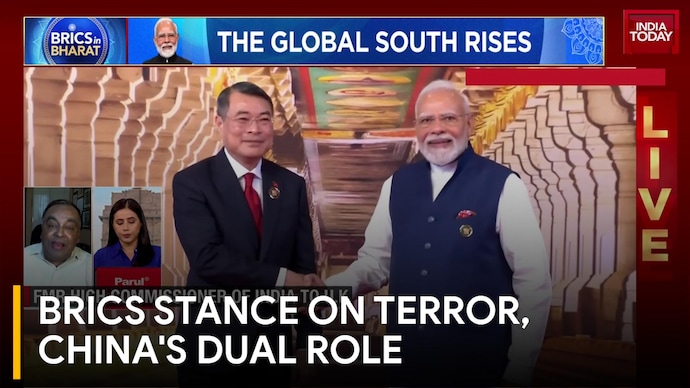
BRICS Summit Terrorism Stance, China's Stand On Pakistan & West Asia Crisis Decoded

A news bulletin discussion analyzes the outcomes of the BRICS summit, highlighting the joint declaration's strong stance on zero tolerance towards terrorism and the explicit condemnation of the April 22nd 2025 Pahalgam terror attack. The panel examines India's long-pending push for the UN Comprehensive Convention on International Terrorism and assesses China's consistent obstructionism regarding the listing of Pakistan-based terrorists under UN sanction regimes, noting that Beijing acts purely on perceived national interests rather than multilateral declarations. The discussion also evaluates Chinese President Xi Jinping's engagement with Prime Minister Narendra Modi, alongside China's diplomatic positioning regarding the ongoing West Asia crisis and ties with Iran. Experts assess the broader geopolitical landscape as President Xi prepares for talks in Washington amid US economic sanctions, retaliatory critical mineral supply policies, and evolving regional security conflicts in the Gulf region.

'We have to approach China in a very hard-headed manner': Ashok Kantha

In an interview with India Today, former Indian Ambassador to China Ashok Kantha analyzed the state of India-China relations following the meeting between Prime Minister Narendra Modi and President Xi Jinping on the margins of the BRICS summit in New Delhi. Kantha characterized the diplomatic interaction as an incremental and calibrated process, stating, "we cannot rush into any kind of reset in relations." He emphasized that any continued progress toward normalization remains dependent on maintaining peace and tranquility along the border areas. Kantha highlighted critical structural issues between both nations, including trade deficits, terms of economic engagement, Chinese support to Pakistan during Operation Sindoor, and the mega hydropower project at Medog in Tibet. He noted that summit diplomacy alone cannot serve as a panacea, asserting that India must approach Beijing in a realistic and hard-headed manner while addressing core bilateral disputes through perseverance.