Vietnamese crab exporter

Topic

Advertisement
TOPIC

Vande Mataram

It’s interesting how Vande Mataram wasn’t created as a political slogan at all. Bankim Chandra Chattopadhyay wrote it in the late 1800s, mostly as poetic praise for the land he loved. The lines written partly in Sanskrit describe India almost like a mother whose rivers, trees and fields keep her children alive. At that time, it was simply a beautiful piece inside his novel Anandamath.

But slowly, and almost naturally, people began to pick it up. By the early 1900s, especially around student groups and public meetings, the song started getting a different meaning. It offered comfort and courage when British rule felt suffocating. People sang it not because someone asked them to but because it helped them feel connected.

During the 1905 partition of Bengal, the song suddenly became everywhere processions, gatherings, local meetings. It turned into a kind of emotional glue for the Swadeshi movement. Leaders like Tagore and Aurobindo didn’t “promote” it the way we think today; they simply recognised how strongly it already resonated.

When India finally became independent, the Constituent Assembly decided to honour that long history. In 1950, Vande Mataram was declared the national song. Not the anthem, but something with a different kind of weight more cultural, more emotional.

  • ALL
  • STORIES
  • VIDEOS

STORIES

Not for equality, only to target Muslims: Owaisi on Amit Shah’s UCC push

AIMIM chief Asaduddin Owaisi hit out at Amit Shah’s plan to implement the Uniform Civil Code in 21 NDA-ruled states by 2029, alleging it was aimed at Muslims. He also questioned the government’s stand on the NRC, SIR, Vande Mataram, India-China ties, India-Pakistan cricket, BRICS and madrassa closures in West Bengal.

Karnataka limits Vande Mataram to 2 stanzas at state programmes

Karnataka has directed state government programmes to sing only the first two stanzas of Vande Mataram, except at events attended by the President, Vice-President, Prime Minister or Governor. The order puts the Congress-led state government at variance with the Centre's guidelines and sharpens the political dispute over the national song.

Load More

VIDEOS

Vande Mataram Row: Karnataka Governor Urges Reconsideration of Two-Stanza Order

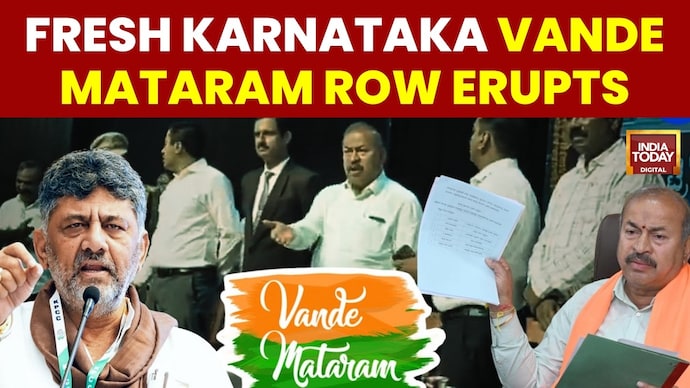
A political showdown continues in the Karnataka Assembly over the rendition of the national song, Vande Mataram. The ruling Congress government maintains that only the first two stanzas should be sung to uphold secular values and historical practice, while the BJP insists on singing all eleven stanzas. Amid this impasse, Karnataka Governor Thawar Chand Gehlot has written to Chief Minister DK Shivakumar, advising the state government to reconsider its decision restricting the rendition. Gehlot cited central government guidelines and a recent parliamentary Amendment Act granting statutory authority to the national song on par with the national anthem, calling on the state to revoke its order.

POCSO case against R Veeramani widens, Dharmasthala case back in spotlight

Police have widened their investigation into sexual offence allegations against industrialist R Veeramani and two of his associates after identifying multiple victims. Investigators are examining whether the alleged abuse dates back to 2003 and whether vulnerable girls were specifically targeted. The Supreme Court has ordered a fresh investigation into the 2012 rape and murder of a college student in Karnataka’s Dharmasthala, widely known as the Soujanya case. A political showdown also erupted in the Karnataka Assembly over the rendition of the national song, *Vande Mataram*, after the state government stopped its official playback following the first two stanzas. All this and more from the South on *Super 6* today with Akshita Nandagopal.

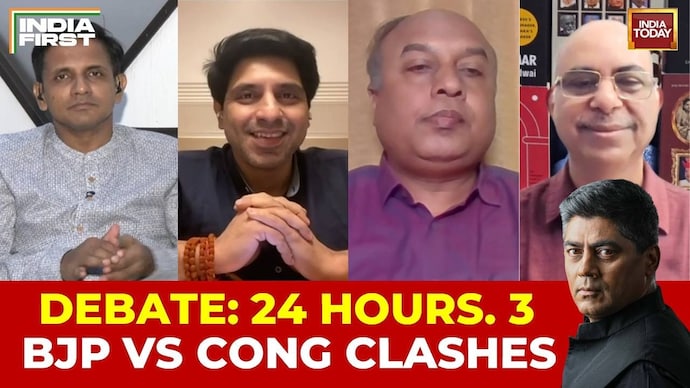
India First: Tuhin Sinha, Brijesh Kalappa, Shehzad Poonawalla on Vande Mataram Row

On India First with Gaurav Sawant, panellists debate major political rows surrounding national identity, secularism, and constitutional principles. The discussion examines the controversy over singing the national song, Vande Mataram, and the Karnataka legal dispute regarding legislative competence over limiting the song to two stanzas, with BJP national spokesperson Tuhin Sinha and Congress national spokesperson Brijesh Kalappa trading historical and political arguments alongside political analysts Shehzad Poonawalla and Rashid Kidwai. The broadcast also addresses the political fallout over remarks by former Vice President Hamid Ansari and Congress leader Rahul Gandhi concerning nationalism, religiosity, and Sharia courts. Panellists further analyse the ideological distinctions between Hinduism and Hindutva, the presence of religious figures in electoral politics, and allegations of minority appeasement versus secular governance under the Indian Constitution.

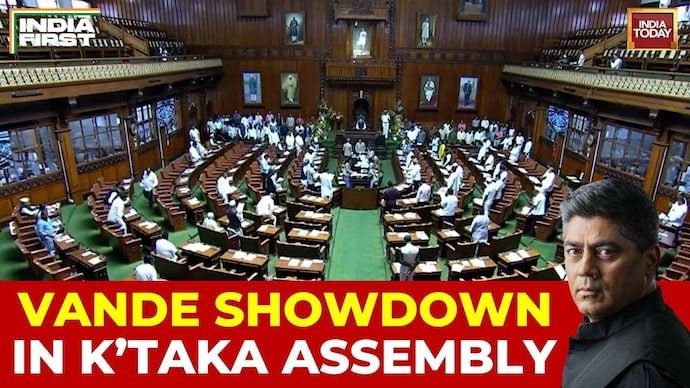
Row In Karnataka Assembly Over Vande Mataram As Congress & BJP Clash Over Full Song Rendition

The Karnataka Assembly witnessed a political showdown between the Congress government and the Bharatiya Janata Party over the rendition of Vande Mataram. The assembly opened its session with the national song, where the Congress opted to stop after the first two stanzas. However, BJP legislators continued singing the full song inside the house. The BJP accused the ruling Congress of engaging in appeasement politics and failing to accord full honour to the national song, citing central government directives. Defending its stance, Congress highlighted historical precedents regarding the shorter rendition and challenged opposition members over their knowledge of the lyrics.

Granite Baron Veeramani Arrested in POCSO Case: Cover-Up Allegations, Fresh Probe Ordered

This news broadcast covers key national and international developments, beginning with the widening POCSO investigation involving granite industrialist R. Veeramani in Chennai. Following the recovery of pen drive evidence regarding the alleged sexual assault of minors in Teynampet, the Special POCSO Court rejected a closure report and directed a reinvestigation, leading to the arrest of Veeramani, Shanthi, and Mahendra Simon. The development triggered political debates between TVK and DMK representatives alongside demands for a CBI probe into earlier police handling of the case. In Karnataka, tensions escalated in the Assembly over the rendition of Vande Mataram, leading to confrontations between the ruling Congress and the opposition BJP. Additionally, the Supreme Court ordered a fresh Special Investigation Team probe into the 2012 Dharmasthala Soujanya case. Internationally, Italian Prime Minister Giorgia Meloni proposed restrictions on burqas, niqabs, and classroom quotas for foreign students, while India's medal tally reached six at the Asian Games in Japan.

Row In Karnataka Assembly Over Vande Mataram; Congress Cuts Stanzas As BJP Sings Full Song

A political showdown erupted in the Karnataka Assembly between the Congress and the BJP over the rendition of Vande Mataram. When assembly proceedings commenced, the Congress government concluded the national song after two stanzas, opting for a shorter version. BJP legislators protested and continued singing the remaining verses inside the house. The BJP accused the ruling Congress of minority appeasement and insisted on playing the full version in accordance with central directives. Meanwhile, the Congress defended its stance by citing historical deliberations regarding the composition during the freedom movement.

Vande Mataram Row Triggers Showdown in Karnataka Assembly as BJP Sings Full Song

A political showdown erupted in the Karnataka Assembly over the rendition of the national song, Vande Mataram. The controversy began when the state government stopped the official playback of the song after just two stanzas, prompting Bharatiya Janata Party legislators to stand up and sing the remaining stanzas. Union Minister Pralhad Joshi criticised the Congress government, terming the move an unpatriotic mandate and questioning its objection to singing all six stanzas. He stated that the state government cannot override the national law passed in Parliament requiring all stanzas to be sung, accusing the Congress of compromising on national pride.

Ram Mandir SIT Charge Sheet Update; Karnataka Assembly Face-Off Over Vande Mataram

The Uttar Pradesh government informed the Supreme Court that the initial charge sheet in the Ram Mandir Chanda Chori case will be filed within two days to prevent the accused from obtaining statutory bail. Appearing for the state, Solicitor General Tushar Mehta submitted a detailed status report from the Special Investigation Team in a sealed cover. The court noted that CCTV footage, material evidence, and software donation receipts are being analyzed, while directing the jurisdictional sessions court to handle the trial proceedings. Meanwhile, a political confrontation erupted in Karnataka over the singing of Vande Mataram. Union Minister Pralhad Joshi criticized the Congress government after only two stanzas were played in the Karnataka Assembly, prompting opposition BJP MLAs to sing the remaining stanzas on the floor of the House.

Vande Mataram Row Hits Karnataka Assembly As BJP And Congress Clash

A political showdown has erupted ahead of the Karnataka assembly session over the singing of the national song, Vande Mataram. The Congress government has mandated that only two stanzas of the song be played, maintaining that this approach is secular and adheres to protocol. The Bharatiya Janata Party opposes this move, alleging that playing a shortened version amounts to appeasement and disrespects the national song. All sixty-six BJP legislators plan to sing all six stanzas in the assembly following the official recorded audio clip.

Rajeev Chandrasekhar: 'CPM Model Was A Very, Very Dysfunctional Model'

In an interview, Kerala BJP Chief and Nemom MLA Rajeev Chandrasekhar discusses Kerala's political landscape, governance, and economic challenges. Criticizing the past decade under the CPM, he states, "It was not a Kerala model, it was a CPM model. And that model was a very, very dysfunctional model." Chandrasekhar evaluates the state's financial crisis, emphasizing that severe debt and lack of investment pose major headwinds for Chief Minister VD Satheesan's administration. He addresses controversies surrounding UPI merchant discount rates, terming opposition criticism manufactured and affirming that consumer transactions remain unaffected. He also comments on the Vande Mataram controversy, asserting that constitutional laws must be upheld uniformly across all states.

Row Over National Song In Karnataka As Minister Challenges Opposition Over Reciting All Stanzas

A political controversy has erupted in Karnataka over the singing of the national song at official events. The state government decided to mandate the singing of the first two stanzas of Vande Mataram at official functions. Following planned protests by the opposition party against this decision, a state minister challenged opposition leaders to sing all six stanzas of the national song from memory without using paper or a teleprompter. The minister offered to resign if the opposition leaders managed to recite the complete song, while requesting the Assembly Speaker to allow opposition legislators to sing the national song separately in the Legislative Assembly.

Karnataka Govt Order Restricting Vande Mataram To Two Stanzas Challenged In High Court

A Public Interest Litigation has been filed in the Karnataka High Court challenging the state government's order restricting the singing of the national song, Vande Mataram, to its first two stanzas at government functions. The state government's directive provides an exception for official events attended by the President, Vice President, Prime Minister, or Governor, where all six stanzas may be sung. The petition, filed by Advocate Girish Bharadwaj, questions whether a state government has the authority to prescribe the form and content of a national symbol through an executive order. The petitioner contends that the order goes against the national interest. The matter is set to be mentioned before the Karnataka High Court.

Vande Mataram Stanza Row, INDIA Bloc Rift And Political Debate On Patriotism

A television debate examined the political dispute surrounding the rendition of the national song Vande Mataram following parliamentary amendments regarding its protection. Discussions focused on the differing approaches taken by political allies, with the National Conference choosing to stand for the full six stanzas citing constitutional obligations, while the Congress maintained its traditional adherence to the two-stanza version formulated in nineteen thirty-seven. Representatives debated whether the requirement to sing the complete version constitutes an enforced loyalty test or a legitimate constitutional duty passed by Parliament. The panel also addressed ideological consistency, historical resolutions from the pre-independence era, and broader differences within political alliances over national symbols and legislative compliance.

Vande Mataram Row Sparks Opposition Rift As Allies Clash Over Full Song Rendition

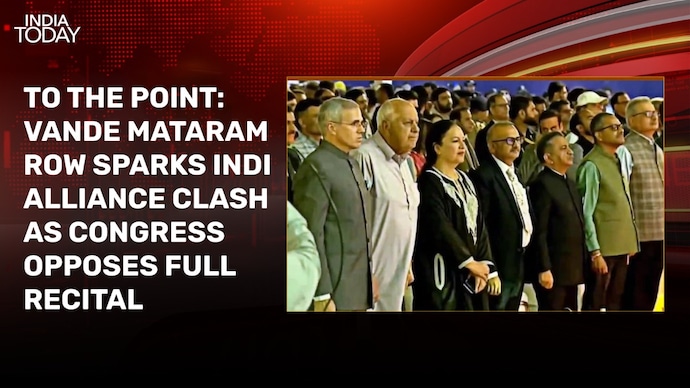
A political controversy has emerged over the rendition of the national song, Vande Mataram, creating differences within the opposition alliance. While National Conference leaders in Jammu and Kashmir stood in attention for the full six stanzas of the song at an event in Srinagar, the Congress party reaffirmed its position of endorsing only the first two stanzas to preserve inclusive ethos. The National Conference maintained that the law passed regarding the song must be respected. Meanwhile, the Bharatiya Janata Party targeted Congress over its stance, criticising the party and highlighting growing internal divisions between the alliance partners.

NC Slams Congress On Vande Mataram, Cites Parliamentary Law, Warns Against BJP Trap

A political controversy has erupted between allies National Conference and Congress in Jammu and Kashmir over the rendition of Vande Mataram. Congress expressed displeasure after the full version of the national song was played at the International Film Festival inauguration in Srinagar, where Chief Minister Omar Abdullah and Farooq Abdullah stood in respect. Congress argued that only three stanzas should be sung to maintain communal harmony. Hitting back, the National Conference stated that Parliament enacted a law regarding Vande Mataram and the entire nation must respect the national song. The National Conference urged Congress to avoid falling into the Bharatiya Janata Party's narrative trap and to focus on pressing national issues like unemployment and the economy. The party also cited instances of leaders standing for the full song during Independence Day events in Karnataka, calling the controversy unnecessary.

BJP-Congress Clash Over Vande Mataram Row, Stances on Full Song and Opposition Rift

A political confrontation has intensified between the Bharatiya Janata Party and the Congress over the singing of the full rendition of Vande Mataram. The BJP accused the Congress of harbouring an anti-national mindset and disrespecting freedom fighters after Congress leaders reaffirmed their stance of singing only the first two stanzas to maintain communal harmony. Meanwhile, the central government has proposed legislation penalising disrespect to the national song on par with the national anthem. The issue has also exposed divisions within the opposition alliance after National Conference leaders Farooq Abdullah and Jammu and Kashmir Chief Minister Omar Abdullah stood for all six verses played at an event in Srinagar following new guidelines. Congress leader K. C. Venugopal stated that the full version sits uneasily with India's pluralist ethos, urging allies to adhere only to the version adopted during the freedom movement, while the BJP criticised the Congress for opposing the original version of the national song.

Row Over National Song: Debate Over Verses Sparks Clash as Stand on Stanzas Reaffirmed

A political dispute has emerged over the singing of the national song, Vande Mataram, following an event at the International Film Festival in Srinagar where all six verses were played. The dispute intensified after calls were made for allies to adhere to singing only the first two stanzas, in line with the 1937 position adopted during the freedom movement. The stance maintains that the two-stanza version protects the secular, pluralist, and inclusive ethos of the country, citing historical counsel. In contrast, criticism was levelled against this position, arguing that opposing the full version demonstrates a communal outlook and disrespects the national song despite legislative support for the complete six verses at public events. The disagreement highlights differing views over whether the full rendition or the selected stanzas best reflect national unity and diversity.

India First: 'Sar Tan Se Juda' Slogan, Blasphemy Laws And Secular Democracy | Maulana Sajid Rashidi, Jai Anant Dehadrai

On India First, anchor Gaurav leads a fiery debate on the High Court's ruling against the controversial slogan 'sar tan se juda', examining its conflict with the sovereignty of India and the rule of law. Panelists Maulana Sajid Rashidi, President of the All India Imam Association, and Jai Anant Dehadrai, Advocate at the Supreme Court, share sharply contrasting perspectives. While Maulana Sajid Rashidi condemns the violent slogan and insists it has no place in Islam, stating 'sar tan se juda ko Islam bhi nahi maanta', he raises concerns regarding mob lynching cases and constitutional freedoms concerning national slogans like Vande Mataram. In response, Jai Anant Dehadrai strongly refutes comparisons between violent incitement and religious invocations, emphasising that India is a constitutional democracy governed strictly by the criminal justice system and not mob rule. The panel further deliberates on the legal boundaries of blasphemy, essential religious practices, and the push towards a Uniform Civil Code.

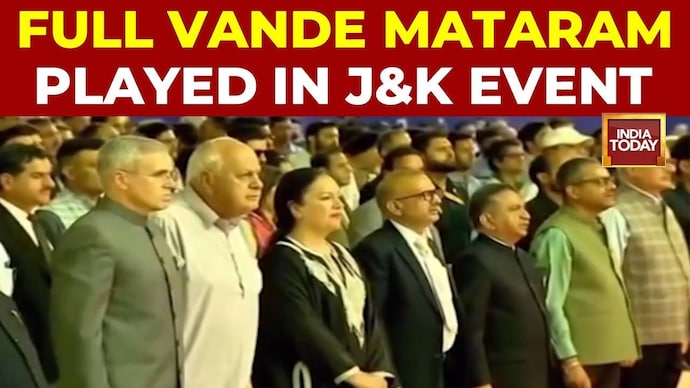
Vande Mataram Played At J&K Film Festival; Omar Abdullah & Farooq Abdullah Stand In Attention

The full rendition of the national song, Vande Mataram, was played during the inaugural session of Jammu and Kashmir's first international film festival. Chief Minister Omar Abdullah, along with former Chief Minister and National Conference patron Dr Farooq Abdullah, stood at attention throughout the complete duration of the song. Senior dignitaries, including Syed Ata Hasnain, were also present and stood at attention during the performance. The event highlighted political discussions surrounding the rendition of the national song, with the Chief Minister leading by example during the ceremony.