
New York woman says India isn't poor, calls out stereotypes about the country

In one of the videos posted on her Instagram account, Jema Ferrer Julka said, "You have been racist and you do not even realise it," before addressing some of the commonly held perceptions about India and placing them in a broader historical context.
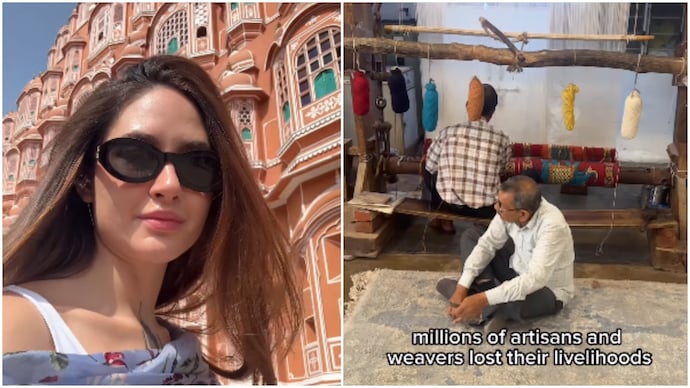

A tattoo artist from New York currently touring India has called out stereotypes surrounding the country in videos examining how it has been portrayed abroad, arguing that its history and cultural contributions have often been overlooked or misrepresented.
In one of the videos posted on her Instagram account, Jema Ferrer Julka said, “You have been racist, and you do not even realise it,” before addressing some of the commonly held perceptions about India and placing them in a broader historical context.
Discussing the idea that India has always been a poor country, Jema argued that the country was instead “impoverished for centuries”. She pointed to India’s history as a major textile power, noting that its cotton, silk and muslin were once among the finest and most sought-after fabrics in the world.
She attributed the decline of the industry to the changes brought about under British rule. Colonial trade policies disadvantaged Indian producers while benefiting British manufacturers, she said, leaving millions of artisans and weavers without their livelihoods and pushing an industry that had represented Indian craftsmanship for centuries into decline.
Jema said the decline did not mean India had stopped producing high-quality goods, but that colonial rule had shifted who had control over the profits generated from Indian production.
She also highlighted India’s approach to its struggle for independence, pointing to Mahatma Gandhi and the country’s use of non-violence as a means of resisting oppression.
“When the time came to fight back, India chose a different path. Peace,” she said, adding that India demonstrated how immense oppression could be challenged without relying on weapons.
In a separate video, Jema addressed the stereotypes through which India has often been viewed, both during the colonial period and in modern popular culture: “India has been portrayed through a stereotype of poverty, mocked accents and poor hygiene.”
At the same time, she pointed out that several aspects of Indian culture have been widely adopted and commercialised in the West. She cited yoga as one example, saying it had grown into a multi-billion-dollar industry while often becoming detached from its philosophical and spiritual origins.
She also referred to boho aesthetics, mandalas, Ayurveda, meditation and Indian textile and artisanal traditions as cultural elements that have gained popularity internationally without always receiving acknowledgement for their Indian origins.
Jema Ferrer Julka further highlighted the contribution of Indian creativity and labour to the global fashion industry. She argued that the appreciation of Indian culture cannot be separated from the treatment of the people and communities responsible for creating and preserving it.
“We can’t keep celebrating a culture while dehumanising the people who represent it,” she said.