Meet 12-year-old Mana Jampala who built an AI startup with clients in 3 countries
Mana Jampala is only 12, but she is already running an AI startup with deployments in Canada, India and Cambodia. After learning Python at nine and building AI products by 11, the Grade 7 student has created tools that help businesses automate customer calls and everyday work.
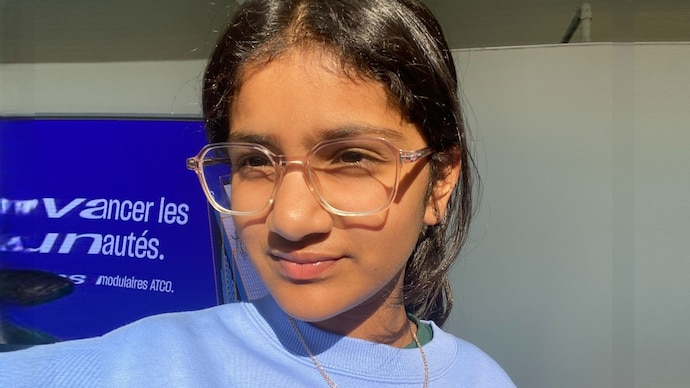
Most 12-year-olds spend their afternoons juggling homework, sports and time with friends.
Mana Jampala is doing all that while running an artificial intelligence startup with deployments in three countries.
The Grade 7 student from Kelowna, British Columbia, has built Voxa, an AI-powered receptionist that helps businesses avoid missing customer calls. According to her LinkedIn profile, the platform is already deployed in Canada, India and Cambodia, making her one of the youngest AI founders attracting global attention.
A CODING JOURNEY THAT STARTED AT NINE
Mana's interest in technology began early. She learnt coding through Scratch camps before picking up Python at just nine years old. By the age of 11, she had started building AI products of her own.
Her talent soon earned recognition beyond school. She won a special prize in a collegiate-level science competition during a visit to India and also received a grant from the 1517 Fund's Medici Project, which supports young entrepreneurs building startups.
Despite running a company, Mana says she still enjoys playing football, spending time with friends and meeting other young builders.
ONE MISSED PHONE CALL CHANGED EVERYTHING
The idea for Voxa came from watching her father's workplace.
She noticed employees often missed customer calls because they were busy serving people. Those missed calls often translated into missed business opportunities.
That observation inspired Voxa, a 24-hour AI voice assistant designed for restaurants, pharmacies and other service businesses where every unanswered call can mean lost revenue.
The system can answer customer calls, book appointments, take restaurant orders, manage follow-ups and generate summaries after each conversation.
According to Mana, Voxa is already handling hundreds of calls while expanding its deployments across Canada.
BUILDING WITH AI, NOT LETTING AI DO EVERYTHING
Mana told Business Insider that she used AI coding assistants such as ChatGPT and later Claude, but never relied on them to build the product in one go.
Instead, she generated small snippets of code, tested each one carefully, fixed bugs herself and gradually built her own backend. That step-by-step approach, she says, helped her understand every part of the software.
HER NEXT BIG BET IS AI AGENTS
Mana is already thinking beyond AI receptionists.
Her latest venture, Voxa Agents, lets users create autonomous AI agents simply by describing a task in plain English. A user can ask it to monitor competitors, prepare meeting briefings or track online conversations, and the AI carries out the work automatically.
She hopes to keep growing the company, join a leading startup accelerator and eventually scale the business further.
At an age when most students are just beginning to think about future careers, Mana Jampala is already building products used by businesses across continents, showing how the next generation is entering the AI revolution much earlier than anyone imagined.
Most 12-year-olds spend their afternoons juggling homework, sports and time with friends.
Mana Jampala is doing all that while running an artificial intelligence startup with deployments in three countries.
The Grade 7 student from Kelowna, British Columbia, has built Voxa, an AI-powered receptionist that helps businesses avoid missing customer calls. According to her LinkedIn profile, the platform is already deployed in Canada, India and Cambodia, making her one of the youngest AI founders attracting global attention.
A CODING JOURNEY THAT STARTED AT NINE
Mana's interest in technology began early. She learnt coding through Scratch camps before picking up Python at just nine years old. By the age of 11, she had started building AI products of her own.
Her talent soon earned recognition beyond school. She won a special prize in a collegiate-level science competition during a visit to India and also received a grant from the 1517 Fund's Medici Project, which supports young entrepreneurs building startups.
Despite running a company, Mana says she still enjoys playing football, spending time with friends and meeting other young builders.
ONE MISSED PHONE CALL CHANGED EVERYTHING
The idea for Voxa came from watching her father's workplace.
She noticed employees often missed customer calls because they were busy serving people. Those missed calls often translated into missed business opportunities.
That observation inspired Voxa, a 24-hour AI voice assistant designed for restaurants, pharmacies and other service businesses where every unanswered call can mean lost revenue.
The system can answer customer calls, book appointments, take restaurant orders, manage follow-ups and generate summaries after each conversation.
According to Mana, Voxa is already handling hundreds of calls while expanding its deployments across Canada.
BUILDING WITH AI, NOT LETTING AI DO EVERYTHING
Mana told Business Insider that she used AI coding assistants such as ChatGPT and later Claude, but never relied on them to build the product in one go.
Instead, she generated small snippets of code, tested each one carefully, fixed bugs herself and gradually built her own backend. That step-by-step approach, she says, helped her understand every part of the software.
HER NEXT BIG BET IS AI AGENTS
Mana is already thinking beyond AI receptionists.
Her latest venture, Voxa Agents, lets users create autonomous AI agents simply by describing a task in plain English. A user can ask it to monitor competitors, prepare meeting briefings or track online conversations, and the AI carries out the work automatically.
She hopes to keep growing the company, join a leading startup accelerator and eventually scale the business further.
At an age when most students are just beginning to think about future careers, Mana Jampala is already building products used by businesses across continents, showing how the next generation is entering the AI revolution much earlier than anyone imagined.

