From nuclear deal to Quad: The making of the India-US partnership in 21st Century
When George W. Bush predicted in 1999 that India would emerge as a global force, few anticipated how quickly ties between New Delhi and Washington would evolve. Since then, the two countries have transformed their relationship through the civil nuclear deal, closer defence cooperation, growing trade and the Quad, even as differences over tariffs, Russia and strategic autonomy have persisted.
This is the fifth and final part of the series on India-US relations. Part I dealt with the colonial origins of India-US ties (read here), Part II chronicled the Nehru era (read here), Part III looked at the Indira and Rajiv era (read here), while Part IV dealt with the bilateral ties in the 1990s (read here).
It was November 19, 1999. Republican presidential candidate George W. Bush was outlining his foreign policy vision when he said something few in Washington had heard from a major American politician before.
"Often overlooked in our strategic calculations is that great land that rests at the south of Eurasia. This coming century will see democratic India's arrival as a force in the world."
At a time when India-US ties were still weighed down by decades of Cold War mistrust, it was a striking statement. Within a few years, it would begin to look prophetic.
9/11 AND THE NUCLEAR DEAL
An event just months after Bush entered the White House that accelerated the transformation.
The September 11, 2001 attacks fundamentally reshaped Washington's approach to terrorism. For years, the US had largely sidestepped India's concerns over cross-border terrorism emanating from Pakistan. 9/11 brought those concerns into sharper focus.
As Washington prepared for military operations in Afghanistan, New Delhi emerged as an important partner, sharing intelligence and logistical support. In 2002, under Operation Sagittarius, the Indian Navy escorted 24 US-flagged vessels through the Strait of Malacca in support of American operations.
The expanding security convergence was soon formalised. In 2005, the two countries signed the New Framework for the US-India Defense Partnership, identifying maritime security and counterterrorism as its key pillars. The framework has been renewed twice since.
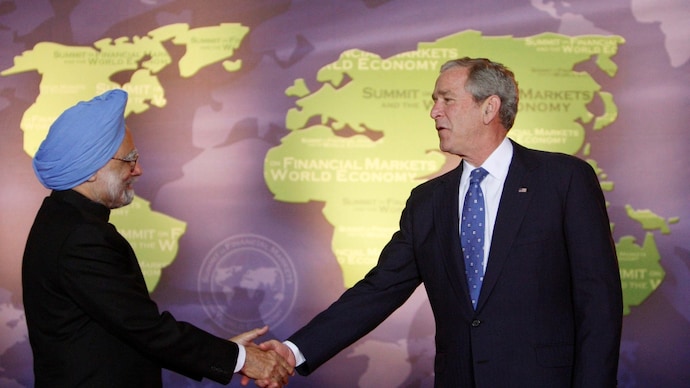
The defining moment, however, came on July 18, 2005, when Prime Minister Manmohan Singh and President Bush announced the framework for the landmark India-US Civil Nuclear Agreement.
Finalised in 2008, the deal ended India's decades-long isolation from global civil nuclear commerce, despite New Delhi remaining outside the Nuclear Non-Proliferation Treaty and retaining its nuclear weapons programme.Washington successfully pushed for a special waiver from the Nuclear Suppliers Group that allowed India to engage in civilian nuclear trade.
More than a nuclear pact, the agreement transformed India-US ties into a comprehensive strategic partnership.
GROWING PARTNERSHIP
The relationship had by then acquired a bipartisan character. Changes in political leadership in Washington or New Delhi no longer disrupted its broader trajectory.
President Barack Obama built on the strategic foundation laid by the Bush years. During his visit to India in November 2010, he declared the India-US relationship "will be a defining partnership of the 21st century." Subsequently, the two countries steadily deepened cooperation across defence, intelligence sharing, counterterrorism, and Indo-Pacific security through the decade that followed.
Trade and technology emerged as equally important pillars of the relationship. Over the next two decades, firms such as Tata Consultancy Services, Infosys and Wipro became key technology partners for Fortune 500 companies, providing software, consulting and digital transformation services across sectors.
American investment in India also surged. Apple expanded its manufacturing footprint in India steadily, with the country emerging as the company's largest manufacturing hub outside China by 2025. The US remained India's third-largest source of foreign direct investment, contributing around $78 billion between 2000 and 2025.
Goods trade rose to nearly $149 billion by 2025 while the US became the largest market for India's IT and software services industry.
On the defence front, the Obama administration designated India a Major Defense Partner in 2016, granting New Delhi access to advanced US military technology. In 2018, the two countries signed the Communications Compatibility and Security Agreement (COMCASA), enabling secure communications and greater interoperability between the two militaries.
Two years later, the Basic Exchange and Cooperation Agreement (BECA) allowed India access to sensitive geospatial data to enhance the accuracy of its drones and cruise missiles.
Under Joe Biden, the Quad, the security dialogue that also involves Japan and Australia, was elevated into a regular leader-level forum, while cooperation on semiconductors and emerging technologies deepened further.
A RELATIONSHIP NOT WITHOUT FRICTION
India refused to support the US-led invasion of Iraq in 2003 and later turned down Washington's request to send troops for post-war stabilisation, an early signal that New Delhi would preserve its strategic autonomy even as ties with the United States deepened.
A decade later, the arrest of Indian Deputy Consul General Devyani Khobragade in New York on visa fraud charges triggered a sharp diplomatic retaliation from New Delhi, including the removal of security barriers outside the US Embassy.
The more persistent tension, however, has been over trade. For years, successive US administrations have accused India of maintaining high tariffs and restricting market access.
In 2019, the Trump administration revoked India's preferential trade status, accusing New Delhi of denying fair access to American companies. India retaliated by imposing tariffs on 28 US products.
The situation worsened during Trump's second term. In 2025, Washington imposed a 26 per cent reciprocal tariff on Indian imports under its "Liberation Day" trade policy, before raising it to 50 per cent in August after penalising India for continuing to purchase Russian oil — one of the toughest US trade actions against any country in recent memory.
India has also spent decades trying to de-hyphenate itself from Pakistan in Washington's strategic calculus. The US and Pakistan have historically shared close ties, bound together by Cold War alliances and counterterrorism cooperation, a relationship New Delhi has long resented as an obstacle to being treated on its own terms.
That effort appeared to bear fruit through the 2010s. But critics now warn that the threat of re-hyphenation looms under Trump's second term, as he continues to claim credit for halting the 2025 India-Pakistan conflict.
WHERE THINGS STAND NOW
Even as India and the US negotiate a comprehensive trade deal, tariff tensions remain unresolved.
As China's rise reshapes the Indo-Pacific, both countries are expected to deepen cooperation in defence, maritime security, and advanced technologies, even as they continue to navigate their differences.
The partnership has come too far to unravel. From the nuclear deal to the Quad, from $149 billion in bilateral trade to co-operation in the Indo-Pacific, India and the US have built something neither country can afford to walk away from. The next chapter will be defined not by whether they cooperate, but by how much.
This is the fifth and final part of the series on India-US relations. Part I dealt with the colonial origins of India-US ties (read here), Part II chronicled the Nehru era (read here), Part III looked at the Indira and Rajiv era (read here), while Part IV dealt with the bilateral ties in the 1990s (read here).
It was November 19, 1999. Republican presidential candidate George W. Bush was outlining his foreign policy vision when he said something few in Washington had heard from a major American politician before.
"Often overlooked in our strategic calculations is that great land that rests at the south of Eurasia. This coming century will see democratic India's arrival as a force in the world."
At a time when India-US ties were still weighed down by decades of Cold War mistrust, it was a striking statement. Within a few years, it would begin to look prophetic.
9/11 AND THE NUCLEAR DEAL
An event just months after Bush entered the White House that accelerated the transformation.
The September 11, 2001 attacks fundamentally reshaped Washington's approach to terrorism. For years, the US had largely sidestepped India's concerns over cross-border terrorism emanating from Pakistan. 9/11 brought those concerns into sharper focus.
As Washington prepared for military operations in Afghanistan, New Delhi emerged as an important partner, sharing intelligence and logistical support. In 2002, under Operation Sagittarius, the Indian Navy escorted 24 US-flagged vessels through the Strait of Malacca in support of American operations.
The expanding security convergence was soon formalised. In 2005, the two countries signed the New Framework for the US-India Defense Partnership, identifying maritime security and counterterrorism as its key pillars. The framework has been renewed twice since.
The defining moment, however, came on July 18, 2005, when Prime Minister Manmohan Singh and President Bush announced the framework for the landmark India-US Civil Nuclear Agreement.
Finalised in 2008, the deal ended India's decades-long isolation from global civil nuclear commerce, despite New Delhi remaining outside the Nuclear Non-Proliferation Treaty and retaining its nuclear weapons programme.Washington successfully pushed for a special waiver from the Nuclear Suppliers Group that allowed India to engage in civilian nuclear trade.
More than a nuclear pact, the agreement transformed India-US ties into a comprehensive strategic partnership.
GROWING PARTNERSHIP
The relationship had by then acquired a bipartisan character. Changes in political leadership in Washington or New Delhi no longer disrupted its broader trajectory.
President Barack Obama built on the strategic foundation laid by the Bush years. During his visit to India in November 2010, he declared the India-US relationship "will be a defining partnership of the 21st century." Subsequently, the two countries steadily deepened cooperation across defence, intelligence sharing, counterterrorism, and Indo-Pacific security through the decade that followed.
Trade and technology emerged as equally important pillars of the relationship. Over the next two decades, firms such as Tata Consultancy Services, Infosys and Wipro became key technology partners for Fortune 500 companies, providing software, consulting and digital transformation services across sectors.
American investment in India also surged. Apple expanded its manufacturing footprint in India steadily, with the country emerging as the company's largest manufacturing hub outside China by 2025. The US remained India's third-largest source of foreign direct investment, contributing around $78 billion between 2000 and 2025.
Goods trade rose to nearly $149 billion by 2025 while the US became the largest market for India's IT and software services industry.
On the defence front, the Obama administration designated India a Major Defense Partner in 2016, granting New Delhi access to advanced US military technology. In 2018, the two countries signed the Communications Compatibility and Security Agreement (COMCASA), enabling secure communications and greater interoperability between the two militaries.
Two years later, the Basic Exchange and Cooperation Agreement (BECA) allowed India access to sensitive geospatial data to enhance the accuracy of its drones and cruise missiles.
Under Joe Biden, the Quad, the security dialogue that also involves Japan and Australia, was elevated into a regular leader-level forum, while cooperation on semiconductors and emerging technologies deepened further.
A RELATIONSHIP NOT WITHOUT FRICTION
India refused to support the US-led invasion of Iraq in 2003 and later turned down Washington's request to send troops for post-war stabilisation, an early signal that New Delhi would preserve its strategic autonomy even as ties with the United States deepened.
A decade later, the arrest of Indian Deputy Consul General Devyani Khobragade in New York on visa fraud charges triggered a sharp diplomatic retaliation from New Delhi, including the removal of security barriers outside the US Embassy.
The more persistent tension, however, has been over trade. For years, successive US administrations have accused India of maintaining high tariffs and restricting market access.
In 2019, the Trump administration revoked India's preferential trade status, accusing New Delhi of denying fair access to American companies. India retaliated by imposing tariffs on 28 US products.
The situation worsened during Trump's second term. In 2025, Washington imposed a 26 per cent reciprocal tariff on Indian imports under its "Liberation Day" trade policy, before raising it to 50 per cent in August after penalising India for continuing to purchase Russian oil — one of the toughest US trade actions against any country in recent memory.
India has also spent decades trying to de-hyphenate itself from Pakistan in Washington's strategic calculus. The US and Pakistan have historically shared close ties, bound together by Cold War alliances and counterterrorism cooperation, a relationship New Delhi has long resented as an obstacle to being treated on its own terms.
That effort appeared to bear fruit through the 2010s. But critics now warn that the threat of re-hyphenation looms under Trump's second term, as he continues to claim credit for halting the 2025 India-Pakistan conflict.
WHERE THINGS STAND NOW
Even as India and the US negotiate a comprehensive trade deal, tariff tensions remain unresolved.
As China's rise reshapes the Indo-Pacific, both countries are expected to deepen cooperation in defence, maritime security, and advanced technologies, even as they continue to navigate their differences.
The partnership has come too far to unravel. From the nuclear deal to the Quad, from $149 billion in bilateral trade to co-operation in the Indo-Pacific, India and the US have built something neither country can afford to walk away from. The next chapter will be defined not by whether they cooperate, but by how much.

