I wanted Punjab to feel lived-in, not an outsider's view: Ab Hisaab Hoga director
Ab Hisaab Hoga director Divyanshu said he worked to make Punjab feel authentic in the series. He said the show's workshops and rooted details reflect why OTT should keep backing smaller stories.
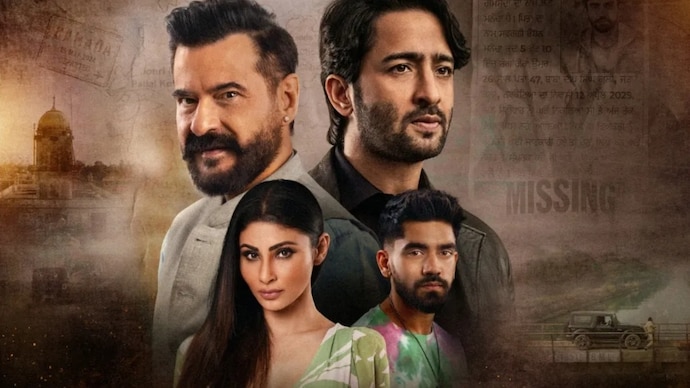
Set against the backdrop of Punjab, Ab Hisaab Hoga blends family drama with social commentary through an ensemble cast led by Shaheer Sheikh, Mouni Roy and others. While the series tackles layered themes, director Divyanshu says his biggest responsibility was ensuring the world felt authentic to the people it represents.
In an exclusive conversation with India Today, the filmmaker spoke about building a believable Punjab, preparing his actors through immersive workshops, and why he hopes OTT continues to make space for smaller, rooted stories.
For Divyanshu, the greatest challenge wasn’t the complexity of the narrative but getting the representation right.
“I really wanted to make sure I didn’t leave any stone unturned in getting the representation right—how people look, how they talk, their attitude, the houses, the clothes and even their everyday habits. I wanted it to feel like a lived-in show from that land instead of an outsider’s view,” he said.
Coming from Punjab himself, the director said authenticity became the guiding principle for every department on set.
“A director’s job is not just to dictate. I believe it’s about injecting your thought process into your cast and crew so they become the thinking brains and pumping hearts of what you’re trying to create,” he shared. “I wanted everyone to understand Punjab through actual life and its people, not through older films or preconceived notions,” he added.
The effort, he said, has been reflected in the audience’s response. “I’ve received messages from people saying the show feels raw, authentic and beautiful. They told me the attitude of the people feels right. It’s neither unnecessarily dark nor stereotypical,” he shared.
Discussing the ensemble cast, Divyanshu explained that while the actors brought their own audience, the characters were shaped around believable realities instead of forcing everyone into the same mould.
“There are so many people from Haryana and Himachal who live and work in Punjab. Instead of trying to hide those differences, we embraced them in the story,” he explained.
The filmmaker also paid close attention to visual details, insisting that nothing looked artificial. “I didn’t want wigs, fake beards, fake moustaches or fake turbans. I wanted everything to feel real,” he mentioned. For the female actors, the preparation extended beyond scripts and workshops.
“I would share Instagram profiles of friends from Punjab and tell them, ‘This is the world we’re trying to build.’ Then the actors would go even deeper with their own research and discover the characters themselves,” he shared.
One of his most unconventional exercises involved creating personalised playlists for every actor. “I think music is such a personal part of who we are. So I made individual playlists and told each actor, ‘This is the background music of your life for the next few months.’ I wanted them to find the attitude of their characters through it,” he recalled.
The exercise paid off when Shaheer Sheikh returned with a breakthrough. “One day Shaheer came to me and said, ‘I found Bobby.’ When I asked him how, he simply said, ‘Chardi Kala.’ That was magical because I knew he had truly found the soul of his character,” Divyanshu recalled.
Having come from a theatre background, the filmmaker believes workshops have always been an important part of acting, but OTT has made them even more valuable.
“OTT allows every character to have depth. It’s not just a hero’s journey anymore. Since every character has multiple layers, actors naturally have to spend more time discovering them,” he said.
Looking at the larger streaming landscape, Divyanshu admitted he hopes platforms continue backing intimate stories alongside star-led projects. “I believe OTT should not let go of stories about ordinary people and ordinary households. Just because a story is smaller in scale doesn’t make it smaller in value,” he said.
Using a business analogy, he added, “If something made for Rs 10 earns Rs 30, and something made for Rs 100 earns Rs 120, which one is actually more profitable?” For him, that diversity is what makes streaming unique. “OTT gave audiences the chance to enjoy all kinds of stories from home. That was its biggest differentiating factor, and I hope it continues,” he concluded.
The show is available on Prime Video.
Set against the backdrop of Punjab, Ab Hisaab Hoga blends family drama with social commentary through an ensemble cast led by Shaheer Sheikh, Mouni Roy and others. While the series tackles layered themes, director Divyanshu says his biggest responsibility was ensuring the world felt authentic to the people it represents.
In an exclusive conversation with India Today, the filmmaker spoke about building a believable Punjab, preparing his actors through immersive workshops, and why he hopes OTT continues to make space for smaller, rooted stories.
For Divyanshu, the greatest challenge wasn’t the complexity of the narrative but getting the representation right.
“I really wanted to make sure I didn’t leave any stone unturned in getting the representation right—how people look, how they talk, their attitude, the houses, the clothes and even their everyday habits. I wanted it to feel like a lived-in show from that land instead of an outsider’s view,” he said.
Coming from Punjab himself, the director said authenticity became the guiding principle for every department on set.
“A director’s job is not just to dictate. I believe it’s about injecting your thought process into your cast and crew so they become the thinking brains and pumping hearts of what you’re trying to create,” he shared. “I wanted everyone to understand Punjab through actual life and its people, not through older films or preconceived notions,” he added.
The effort, he said, has been reflected in the audience’s response. “I’ve received messages from people saying the show feels raw, authentic and beautiful. They told me the attitude of the people feels right. It’s neither unnecessarily dark nor stereotypical,” he shared.
Discussing the ensemble cast, Divyanshu explained that while the actors brought their own audience, the characters were shaped around believable realities instead of forcing everyone into the same mould.
“There are so many people from Haryana and Himachal who live and work in Punjab. Instead of trying to hide those differences, we embraced them in the story,” he explained.
The filmmaker also paid close attention to visual details, insisting that nothing looked artificial. “I didn’t want wigs, fake beards, fake moustaches or fake turbans. I wanted everything to feel real,” he mentioned. For the female actors, the preparation extended beyond scripts and workshops.
“I would share Instagram profiles of friends from Punjab and tell them, ‘This is the world we’re trying to build.’ Then the actors would go even deeper with their own research and discover the characters themselves,” he shared.
One of his most unconventional exercises involved creating personalised playlists for every actor. “I think music is such a personal part of who we are. So I made individual playlists and told each actor, ‘This is the background music of your life for the next few months.’ I wanted them to find the attitude of their characters through it,” he recalled.
The exercise paid off when Shaheer Sheikh returned with a breakthrough. “One day Shaheer came to me and said, ‘I found Bobby.’ When I asked him how, he simply said, ‘Chardi Kala.’ That was magical because I knew he had truly found the soul of his character,” Divyanshu recalled.
Having come from a theatre background, the filmmaker believes workshops have always been an important part of acting, but OTT has made them even more valuable.
“OTT allows every character to have depth. It’s not just a hero’s journey anymore. Since every character has multiple layers, actors naturally have to spend more time discovering them,” he said.
Looking at the larger streaming landscape, Divyanshu admitted he hopes platforms continue backing intimate stories alongside star-led projects. “I believe OTT should not let go of stories about ordinary people and ordinary households. Just because a story is smaller in scale doesn’t make it smaller in value,” he said.
Using a business analogy, he added, “If something made for Rs 10 earns Rs 30, and something made for Rs 100 earns Rs 120, which one is actually more profitable?” For him, that diversity is what makes streaming unique. “OTT gave audiences the chance to enjoy all kinds of stories from home. That was its biggest differentiating factor, and I hope it continues,” he concluded.
The show is available on Prime Video.
Set against the backdrop of Punjab, Ab Hisaab Hoga blends family drama with social commentary through an ensemble cast led by Shaheer Sheikh, Mouni Roy and others. While the series tackles layered themes, director Divyanshu says his biggest responsibility was ensuring the world felt authentic to the people it represents.
In an exclusive conversation with India Today, the filmmaker spoke about building a believable Punjab, preparing his actors through immersive workshops, and why he hopes OTT continues to make space for smaller, rooted stories.
For Divyanshu, the greatest challenge wasn’t the complexity of the narrative but getting the representation right.
“I really wanted to make sure I didn’t leave any stone unturned in getting the representation right—how people look, how they talk, their attitude, the houses, the clothes and even their everyday habits. I wanted it to feel like a lived-in show from that land instead of an outsider’s view,” he said.
Coming from Punjab himself, the director said authenticity became the guiding principle for every department on set.
“A director’s job is not just to dictate. I believe it’s about injecting your thought process into your cast and crew so they become the thinking brains and pumping hearts of what you’re trying to create,” he shared. “I wanted everyone to understand Punjab through actual life and its people, not through older films or preconceived notions,” he added.
The effort, he said, has been reflected in the audience’s response. “I’ve received messages from people saying the show feels raw, authentic and beautiful. They told me the attitude of the people feels right. It’s neither unnecessarily dark nor stereotypical,” he shared.
Discussing the ensemble cast, Divyanshu explained that while the actors brought their own audience, the characters were shaped around believable realities instead of forcing everyone into the same mould.
“There are so many people from Haryana and Himachal who live and work in Punjab. Instead of trying to hide those differences, we embraced them in the story,” he explained.
The filmmaker also paid close attention to visual details, insisting that nothing looked artificial. “I didn’t want wigs, fake beards, fake moustaches or fake turbans. I wanted everything to feel real,” he mentioned. For the female actors, the preparation extended beyond scripts and workshops.
“I would share Instagram profiles of friends from Punjab and tell them, ‘This is the world we’re trying to build.’ Then the actors would go even deeper with their own research and discover the characters themselves,” he shared.
One of his most unconventional exercises involved creating personalised playlists for every actor. “I think music is such a personal part of who we are. So I made individual playlists and told each actor, ‘This is the background music of your life for the next few months.’ I wanted them to find the attitude of their characters through it,” he recalled.
The exercise paid off when Shaheer Sheikh returned with a breakthrough. “One day Shaheer came to me and said, ‘I found Bobby.’ When I asked him how, he simply said, ‘Chardi Kala.’ That was magical because I knew he had truly found the soul of his character,” Divyanshu recalled.
Having come from a theatre background, the filmmaker believes workshops have always been an important part of acting, but OTT has made them even more valuable.
“OTT allows every character to have depth. It’s not just a hero’s journey anymore. Since every character has multiple layers, actors naturally have to spend more time discovering them,” he said.
Looking at the larger streaming landscape, Divyanshu admitted he hopes platforms continue backing intimate stories alongside star-led projects. “I believe OTT should not let go of stories about ordinary people and ordinary households. Just because a story is smaller in scale doesn’t make it smaller in value,” he said.
Using a business analogy, he added, “If something made for Rs 10 earns Rs 30, and something made for Rs 100 earns Rs 120, which one is actually more profitable?” For him, that diversity is what makes streaming unique. “OTT gave audiences the chance to enjoy all kinds of stories from home. That was its biggest differentiating factor, and I hope it continues,” he concluded.
The show is available on Prime Video.

