BTech in Civil Engineering or Civil, Infrastructure Engineering: What to choose?
As engineering admissions gather pace, students are weighing Civil Engineering against Civil and Infrastructure Engineering. The choice depends more on curriculum focus, skills and career interests than on the course title alone.
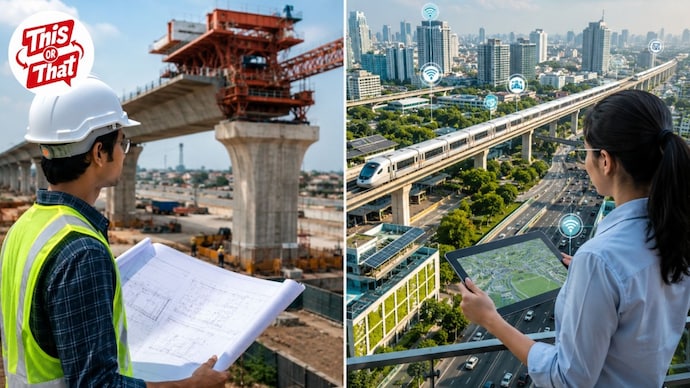
As engineering admissions gather pace across the country, many students are comparing the long-established BTech in Civil Engineering with the newer BTech in Civil and Infrastructure Engineering. While both programmes are rooted in the same engineering fundamentals, they differ in their academic focus and the kinds of infrastructure challenges they prepare students to solve.
With India investing heavily in highways, metro rail, airports, smart cities and sustainable urban development, both courses can lead to rewarding careers. Here's a closer look at how they compare.
| Parameter | BTech in Civil Engineering | BTech in Civil and Infrastructure Engineering |
|---|---|---|
| Duration | 4 years | 4 years |
| Eligibility | Class 12 with Physics, Chemistry and Mathematics; admission through JEE Main, JEE Advanced or state-level entrance exams | Same |
| Core subjects | Structural engineering, geotechnical engineering, transportation engineering, environmental engineering, water resources engineering | Civil engineering fundamentals with additional focus on infrastructure planning, smart mobility, sustainability and project management |
| Skills needed | Analytical thinking, structural design, problem-solving, mathematics | Systems thinking, planning, digital tools, project management, analytical skills |
| Career options | Structural engineer, site engineer, construction manager, consultant, PSU engineer | Infrastructure planner, transportation engineer, project manager, consultant, smart city specialist |
| Top recruiters | Construction firms, consulting companies, PSUs, infrastructure developers, government departments | Similar recruiters, with additional opportunities in integrated infrastructure and urban development projects |
| Higher studies | MTech, MS, MBA, research, GATE | Same |
| Best suited for | Students interested in core civil engineering, structures and construction | Students interested in large infrastructure systems, smart cities and sustainable development |
BTECH IN CIVIL OR CIVIL AND INFRA: QUICK VERDICT
Choose BTech in Civil Engineering if you enjoy structural design, construction and core engineering disciplines, and want the flexibility to specialise later.
Choose BTech in Civil and Infrastructure Engineering if you are interested in transportation systems, smart cities, sustainability and managing large public infrastructure projects.
Either is a good fit if you enjoy mathematics, physics, problem-solving and want to contribute to building India's physical infrastructure.
BTECH IN CIVIL OR CIVIL AND INFRA: WHY STUDENTS COMPARE THESE TWO COURSES
The growing emphasis on urban development and mega infrastructure projects has led several institutions to introduce specialised engineering programmes alongside traditional Civil Engineering.
While the course names sound similar, many students wonder whether the newer programme offers better career prospects or a different learning experience. According to Dr P Pravin Kumar Venkat Rao, Assistant Professor at the Earthquake Engineering Research Centre, IIIT Hyderabad, the distinction lies primarily in the academic emphasis rather than the engineering fundamentals.
BTECH IN CIVIL OR CIVIL AND INFRA: WHAT STUDENTS STUDY IN EACH COURSE
A BTech in Civil Engineering focuses on designing, constructing and maintaining physical infrastructure such as buildings, bridges, roads, dams, water supply systems and drainage networks.
BTech in Civil and Infrastructure Engineering covers these same core principles but extends them to the planning, development and management of integrated infrastructure systems. Students may study transportation planning, urban infrastructure, sustainable development and infrastructure management alongside traditional civil engineering subjects.
Dr Rao explains that BTech in Civil Engineering provides greater depth in conventional areas such as structural, geotechnical, transportation, environmental and water resources engineering.
BTech in Civil and Infrastructure Engineering, meanwhile, builds on this foundation while introducing broader perspectives on project delivery, infrastructure planning and sustainability.
At several institutions, students also gain exposure to Building Information Modelling (BIM), digital infrastructure management and emerging applications of artificial intelligence and machine learning through electives, laboratories or interdisciplinary projects.
BTECH IN CIVIL OR CIVIL AND INFRA: WHERE ARE THESE PROGRAMMES OFFERED?
BTech in Civil Engineering remains one of India's most widely available engineering programmes. It is offered by almost all IITs, NITs, state engineering colleges and private universities.
BTech in Civil and Infrastructure Engineering, however, is currently available at relatively few institutions. Among those offering the programme are IIT Dharwad, IIT Jodhpur, BITS Pilani and Adani University, although course structures may vary across institutions.
Students are therefore advised to compare the detailed curriculum rather than relying solely on the programme title.
BTECH IN CIVIL OR CIVIL AND INFRA: SKILLS STUDENTS NEED TO SUCCEED
Both programmes require a strong foundation in mathematics, physics and analytical thinking.
BTech in Civil Engineering generally suits students who enjoy structural analysis, construction technology and engineering design.
BTech in Civil and Infrastructure Engineering may appeal to students interested in systems thinking, infrastructure planning, sustainability, project coordination and digital engineering tools.
Dr Rao notes that while the technical foundation remains common, students in infrastructure-focused programmes often work with broader questions involving urban mobility, integrated planning and long-term infrastructure management.
BTECH IN CIVIL OR CIVIL AND INFRA: PLACEMENTS AND CAREER OPPORTUNITIES
Graduates from both programmes are eligible for similar placement opportunities across the public and private sectors.
Common recruiters include engineering and construction companies, infrastructure developers, consulting firms, metro rail corporations, public sector undertakings and government agencies.
Career roles include structural engineer, transportation engineer, geotechnical engineer, environmental engineer, project manager, infrastructure planner, consultant and researcher.
Rather than the exact programme title, employers generally place greater importance on a graduate's technical knowledge, internships, software proficiency, practical experience and the reputation of the institution, Dr. Rao says.
Both programmes also provide pathways to higher studies through MTech, MS and doctoral programmes, as well as competitive examinations such as GATE and engineering services recruitment.
BTECH IN CIVIL OR CIVIL AND INFRA: WHAT ABOUT TUITION FEES?
The cost of pursuing either programme depends largely on the institution rather than the course itself.
In government institutions, semester tuition fees generally range from around Rs 20,000 in many state engineering colleges to approximately Rs 1 lakh at centrally funded institutions such as the IITs.
Private universities typically charge between Rs 60,000 and Rs 1.5 lakh per semester in tuition fees. These figures usually exclude hostel, mess, examination and other institutional charges.
Many institutions also offer scholarships and fee waivers based on academic merit or family income.
BTECH IN CIVIL OR CIVIL AND INFRA: WHICH STUDENTS SHOULD CHOOSE WHICH?
Students who enjoy structural design, construction engineering and traditional civil engineering disciplines may find Civil Engineering a better fit, especially if they plan to specialise later through postgraduate studies.
Those interested in transportation systems, sustainable urban development, smart cities and integrated infrastructure planning may prefer Civil and Infrastructure Engineering, which offers greater exposure to these emerging areas.
Dr Rao advises students to look beyond the course title. Comparing the curriculum, faculty expertise, laboratories, research opportunities, industry collaborations, internships and placement records of individual institutions can provide a clearer picture of what each programme offers.
Ultimately, both degrees equip graduates to contribute to India's rapidly expanding infrastructure sector, albeit with slightly different academic perspectives.
Disclaimer: This comparison is part of our This vs That series. The courses have been selected based on popular student comparisons and do not represent a ranking or endorsement.
As engineering admissions gather pace across the country, many students are comparing the long-established BTech in Civil Engineering with the newer BTech in Civil and Infrastructure Engineering. While both programmes are rooted in the same engineering fundamentals, they differ in their academic focus and the kinds of infrastructure challenges they prepare students to solve.
With India investing heavily in highways, metro rail, airports, smart cities and sustainable urban development, both courses can lead to rewarding careers. Here's a closer look at how they compare.
| Parameter | BTech in Civil Engineering | BTech in Civil and Infrastructure Engineering |
|---|---|---|
| Duration | 4 years | 4 years |
| Eligibility | Class 12 with Physics, Chemistry and Mathematics; admission through JEE Main, JEE Advanced or state-level entrance exams | Same |
| Core subjects | Structural engineering, geotechnical engineering, transportation engineering, environmental engineering, water resources engineering | Civil engineering fundamentals with additional focus on infrastructure planning, smart mobility, sustainability and project management |
| Skills needed | Analytical thinking, structural design, problem-solving, mathematics | Systems thinking, planning, digital tools, project management, analytical skills |
| Career options | Structural engineer, site engineer, construction manager, consultant, PSU engineer | Infrastructure planner, transportation engineer, project manager, consultant, smart city specialist |
| Top recruiters | Construction firms, consulting companies, PSUs, infrastructure developers, government departments | Similar recruiters, with additional opportunities in integrated infrastructure and urban development projects |
| Higher studies | MTech, MS, MBA, research, GATE | Same |
| Best suited for | Students interested in core civil engineering, structures and construction | Students interested in large infrastructure systems, smart cities and sustainable development |
BTECH IN CIVIL OR CIVIL AND INFRA: QUICK VERDICT
Choose BTech in Civil Engineering if you enjoy structural design, construction and core engineering disciplines, and want the flexibility to specialise later.
Choose BTech in Civil and Infrastructure Engineering if you are interested in transportation systems, smart cities, sustainability and managing large public infrastructure projects.
Either is a good fit if you enjoy mathematics, physics, problem-solving and want to contribute to building India's physical infrastructure.
BTECH IN CIVIL OR CIVIL AND INFRA: WHY STUDENTS COMPARE THESE TWO COURSES
The growing emphasis on urban development and mega infrastructure projects has led several institutions to introduce specialised engineering programmes alongside traditional Civil Engineering.
While the course names sound similar, many students wonder whether the newer programme offers better career prospects or a different learning experience. According to Dr P Pravin Kumar Venkat Rao, Assistant Professor at the Earthquake Engineering Research Centre, IIIT Hyderabad, the distinction lies primarily in the academic emphasis rather than the engineering fundamentals.
BTECH IN CIVIL OR CIVIL AND INFRA: WHAT STUDENTS STUDY IN EACH COURSE
A BTech in Civil Engineering focuses on designing, constructing and maintaining physical infrastructure such as buildings, bridges, roads, dams, water supply systems and drainage networks.
BTech in Civil and Infrastructure Engineering covers these same core principles but extends them to the planning, development and management of integrated infrastructure systems. Students may study transportation planning, urban infrastructure, sustainable development and infrastructure management alongside traditional civil engineering subjects.
Dr Rao explains that BTech in Civil Engineering provides greater depth in conventional areas such as structural, geotechnical, transportation, environmental and water resources engineering.
BTech in Civil and Infrastructure Engineering, meanwhile, builds on this foundation while introducing broader perspectives on project delivery, infrastructure planning and sustainability.
At several institutions, students also gain exposure to Building Information Modelling (BIM), digital infrastructure management and emerging applications of artificial intelligence and machine learning through electives, laboratories or interdisciplinary projects.
BTECH IN CIVIL OR CIVIL AND INFRA: WHERE ARE THESE PROGRAMMES OFFERED?
BTech in Civil Engineering remains one of India's most widely available engineering programmes. It is offered by almost all IITs, NITs, state engineering colleges and private universities.
BTech in Civil and Infrastructure Engineering, however, is currently available at relatively few institutions. Among those offering the programme are IIT Dharwad, IIT Jodhpur, BITS Pilani and Adani University, although course structures may vary across institutions.
Students are therefore advised to compare the detailed curriculum rather than relying solely on the programme title.
BTECH IN CIVIL OR CIVIL AND INFRA: SKILLS STUDENTS NEED TO SUCCEED
Both programmes require a strong foundation in mathematics, physics and analytical thinking.
BTech in Civil Engineering generally suits students who enjoy structural analysis, construction technology and engineering design.
BTech in Civil and Infrastructure Engineering may appeal to students interested in systems thinking, infrastructure planning, sustainability, project coordination and digital engineering tools.
Dr Rao notes that while the technical foundation remains common, students in infrastructure-focused programmes often work with broader questions involving urban mobility, integrated planning and long-term infrastructure management.
BTECH IN CIVIL OR CIVIL AND INFRA: PLACEMENTS AND CAREER OPPORTUNITIES
Graduates from both programmes are eligible for similar placement opportunities across the public and private sectors.
Common recruiters include engineering and construction companies, infrastructure developers, consulting firms, metro rail corporations, public sector undertakings and government agencies.
Career roles include structural engineer, transportation engineer, geotechnical engineer, environmental engineer, project manager, infrastructure planner, consultant and researcher.
Rather than the exact programme title, employers generally place greater importance on a graduate's technical knowledge, internships, software proficiency, practical experience and the reputation of the institution, Dr. Rao says.
Both programmes also provide pathways to higher studies through MTech, MS and doctoral programmes, as well as competitive examinations such as GATE and engineering services recruitment.
BTECH IN CIVIL OR CIVIL AND INFRA: WHAT ABOUT TUITION FEES?
The cost of pursuing either programme depends largely on the institution rather than the course itself.
In government institutions, semester tuition fees generally range from around Rs 20,000 in many state engineering colleges to approximately Rs 1 lakh at centrally funded institutions such as the IITs.
Private universities typically charge between Rs 60,000 and Rs 1.5 lakh per semester in tuition fees. These figures usually exclude hostel, mess, examination and other institutional charges.
Many institutions also offer scholarships and fee waivers based on academic merit or family income.
BTECH IN CIVIL OR CIVIL AND INFRA: WHICH STUDENTS SHOULD CHOOSE WHICH?
Students who enjoy structural design, construction engineering and traditional civil engineering disciplines may find Civil Engineering a better fit, especially if they plan to specialise later through postgraduate studies.
Those interested in transportation systems, sustainable urban development, smart cities and integrated infrastructure planning may prefer Civil and Infrastructure Engineering, which offers greater exposure to these emerging areas.
Dr Rao advises students to look beyond the course title. Comparing the curriculum, faculty expertise, laboratories, research opportunities, industry collaborations, internships and placement records of individual institutions can provide a clearer picture of what each programme offers.
Ultimately, both degrees equip graduates to contribute to India's rapidly expanding infrastructure sector, albeit with slightly different academic perspectives.
Disclaimer: This comparison is part of our This vs That series. The courses have been selected based on popular student comparisons and do not represent a ranking or endorsement.
As engineering admissions gather pace across the country, many students are comparing the long-established BTech in Civil Engineering with the newer BTech in Civil and Infrastructure Engineering. While both programmes are rooted in the same engineering fundamentals, they differ in their academic focus and the kinds of infrastructure challenges they prepare students to solve.
With India investing heavily in highways, metro rail, airports, smart cities and sustainable urban development, both courses can lead to rewarding careers. Here's a closer look at how they compare.
| Parameter | BTech in Civil Engineering | BTech in Civil and Infrastructure Engineering |
|---|---|---|
| Duration | 4 years | 4 years |
| Eligibility | Class 12 with Physics, Chemistry and Mathematics; admission through JEE Main, JEE Advanced or state-level entrance exams | Same |
| Core subjects | Structural engineering, geotechnical engineering, transportation engineering, environmental engineering, water resources engineering | Civil engineering fundamentals with additional focus on infrastructure planning, smart mobility, sustainability and project management |
| Skills needed | Analytical thinking, structural design, problem-solving, mathematics | Systems thinking, planning, digital tools, project management, analytical skills |
| Career options | Structural engineer, site engineer, construction manager, consultant, PSU engineer | Infrastructure planner, transportation engineer, project manager, consultant, smart city specialist |
| Top recruiters | Construction firms, consulting companies, PSUs, infrastructure developers, government departments | Similar recruiters, with additional opportunities in integrated infrastructure and urban development projects |
| Higher studies | MTech, MS, MBA, research, GATE | Same |
| Best suited for | Students interested in core civil engineering, structures and construction | Students interested in large infrastructure systems, smart cities and sustainable development |
BTECH IN CIVIL OR CIVIL AND INFRA: QUICK VERDICT
Choose BTech in Civil Engineering if you enjoy structural design, construction and core engineering disciplines, and want the flexibility to specialise later.
Choose BTech in Civil and Infrastructure Engineering if you are interested in transportation systems, smart cities, sustainability and managing large public infrastructure projects.
Either is a good fit if you enjoy mathematics, physics, problem-solving and want to contribute to building India's physical infrastructure.
BTECH IN CIVIL OR CIVIL AND INFRA: WHY STUDENTS COMPARE THESE TWO COURSES
The growing emphasis on urban development and mega infrastructure projects has led several institutions to introduce specialised engineering programmes alongside traditional Civil Engineering.
While the course names sound similar, many students wonder whether the newer programme offers better career prospects or a different learning experience. According to Dr P Pravin Kumar Venkat Rao, Assistant Professor at the Earthquake Engineering Research Centre, IIIT Hyderabad, the distinction lies primarily in the academic emphasis rather than the engineering fundamentals.
BTECH IN CIVIL OR CIVIL AND INFRA: WHAT STUDENTS STUDY IN EACH COURSE
A BTech in Civil Engineering focuses on designing, constructing and maintaining physical infrastructure such as buildings, bridges, roads, dams, water supply systems and drainage networks.
BTech in Civil and Infrastructure Engineering covers these same core principles but extends them to the planning, development and management of integrated infrastructure systems. Students may study transportation planning, urban infrastructure, sustainable development and infrastructure management alongside traditional civil engineering subjects.
Dr Rao explains that BTech in Civil Engineering provides greater depth in conventional areas such as structural, geotechnical, transportation, environmental and water resources engineering.
BTech in Civil and Infrastructure Engineering, meanwhile, builds on this foundation while introducing broader perspectives on project delivery, infrastructure planning and sustainability.
At several institutions, students also gain exposure to Building Information Modelling (BIM), digital infrastructure management and emerging applications of artificial intelligence and machine learning through electives, laboratories or interdisciplinary projects.
BTECH IN CIVIL OR CIVIL AND INFRA: WHERE ARE THESE PROGRAMMES OFFERED?
BTech in Civil Engineering remains one of India's most widely available engineering programmes. It is offered by almost all IITs, NITs, state engineering colleges and private universities.
BTech in Civil and Infrastructure Engineering, however, is currently available at relatively few institutions. Among those offering the programme are IIT Dharwad, IIT Jodhpur, BITS Pilani and Adani University, although course structures may vary across institutions.
Students are therefore advised to compare the detailed curriculum rather than relying solely on the programme title.
BTECH IN CIVIL OR CIVIL AND INFRA: SKILLS STUDENTS NEED TO SUCCEED
Both programmes require a strong foundation in mathematics, physics and analytical thinking.
BTech in Civil Engineering generally suits students who enjoy structural analysis, construction technology and engineering design.
BTech in Civil and Infrastructure Engineering may appeal to students interested in systems thinking, infrastructure planning, sustainability, project coordination and digital engineering tools.
Dr Rao notes that while the technical foundation remains common, students in infrastructure-focused programmes often work with broader questions involving urban mobility, integrated planning and long-term infrastructure management.
BTECH IN CIVIL OR CIVIL AND INFRA: PLACEMENTS AND CAREER OPPORTUNITIES
Graduates from both programmes are eligible for similar placement opportunities across the public and private sectors.
Common recruiters include engineering and construction companies, infrastructure developers, consulting firms, metro rail corporations, public sector undertakings and government agencies.
Career roles include structural engineer, transportation engineer, geotechnical engineer, environmental engineer, project manager, infrastructure planner, consultant and researcher.
Rather than the exact programme title, employers generally place greater importance on a graduate's technical knowledge, internships, software proficiency, practical experience and the reputation of the institution, Dr. Rao says.
Both programmes also provide pathways to higher studies through MTech, MS and doctoral programmes, as well as competitive examinations such as GATE and engineering services recruitment.
BTECH IN CIVIL OR CIVIL AND INFRA: WHAT ABOUT TUITION FEES?
The cost of pursuing either programme depends largely on the institution rather than the course itself.
In government institutions, semester tuition fees generally range from around Rs 20,000 in many state engineering colleges to approximately Rs 1 lakh at centrally funded institutions such as the IITs.
Private universities typically charge between Rs 60,000 and Rs 1.5 lakh per semester in tuition fees. These figures usually exclude hostel, mess, examination and other institutional charges.
Many institutions also offer scholarships and fee waivers based on academic merit or family income.
BTECH IN CIVIL OR CIVIL AND INFRA: WHICH STUDENTS SHOULD CHOOSE WHICH?
Students who enjoy structural design, construction engineering and traditional civil engineering disciplines may find Civil Engineering a better fit, especially if they plan to specialise later through postgraduate studies.
Those interested in transportation systems, sustainable urban development, smart cities and integrated infrastructure planning may prefer Civil and Infrastructure Engineering, which offers greater exposure to these emerging areas.
Dr Rao advises students to look beyond the course title. Comparing the curriculum, faculty expertise, laboratories, research opportunities, industry collaborations, internships and placement records of individual institutions can provide a clearer picture of what each programme offers.
Ultimately, both degrees equip graduates to contribute to India's rapidly expanding infrastructure sector, albeit with slightly different academic perspectives.
Disclaimer: This comparison is part of our This vs That series. The courses have been selected based on popular student comparisons and do not represent a ranking or endorsement.

