5 healthy habits you should adopt at work
Long work hours and constant screen time can affect your health and productivity. Adopting simple habits like following the 20-20-20 rule, staying hydrated, taking movement breaks, keeping your workspace organised, and planning your day can help you work healthier, happier, and more efficiently.
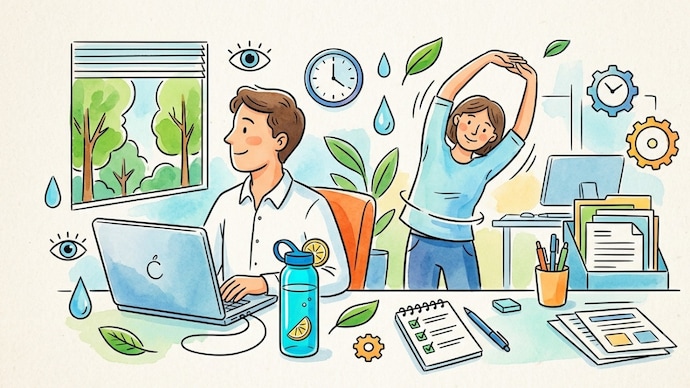
Today, almost everyone has a busy schedule. Some people work the traditional 9-to-5, while others work rotational shifts or spend well over nine hours at their desks. Long hours in front of a screen, back-to-back meetings, and endless to-do lists can leave you feeling mentally drained and physically exhausted. Over time, this can lead to burnout, affect your overall health, and even reduce your productivity.
But here's the good news: you don't have to quit your job or completely overhaul your lifestyle to feel better. Sometimes, the smallest changes can make the biggest difference. By building a few healthy habits into your workday, you can reduce stress, improve focus, boost your energy levels, and make your workday far more manageable. Here are five simple workplace habits worth adopting.
5 SIMPLE HEALTHY HABIT TO ADOPT AT WORKPLACE
Here are 5 simple and easy to follow heathy habit that you can adopt at your workplace:
1. Follow the 20-20-20 rule: Spending hours staring at a laptop or desktop screen can take a toll on your eyes. If you've ever experienced dry eyes, blurry vision, headaches, or trouble focusing after a long workday, digital eye strain could be the reason. A simple way to reduce this discomfort is by following the 20-20-20 rule: every 20 minutes, shift your gaze to something about 20 feet away and look at it for at least 20 seconds.
This brief pause gives your eye muscles a chance to relax after prolonged screen use. It also reminds you to blink more often, a habit many people unknowingly neglect while working on digital devices. Practising the 20-20-20 rule regularly can help reduce eye fatigue and make long hours at your desk much easier for your eyes.
2. Stay hydrated throughout the day: When you're busy with deadlines and meetings, it's easy to forget something as basic as drinking water. However, even mild dehydration can reduce your focus, affect your memory, and leave you feeling tired.
Keeping a reusable water bottle on your desk can act as a simple reminder to sip water regularly throughout the day. Staying hydrated supports brain function, helps regulate body temperature, boosts energy levels, and keeps you productive. If plain water isn't appealing, try adding lemon, cucumber, or mint for a refreshing flavour that makes hydration easier to stick with.
3. Take short movement breaks every hour: Spending most of your workday sitting at a desk can leave your body feeling stiff and sluggish. Over time, prolonged sitting may contribute to poor posture, muscle tension, reduced blood circulation, and even lower energy levels. That's why it's important to get up and move, even if it's only for a few minutes every hour.
Use these short breaks to stretch your neck, shoulders, back, and legs, take a quick walk around the office, or simply stand while grabbing a glass of water. These small bursts of movement help improve circulation, ease stiffness, and give your body a much-needed reset. They can also refresh your mind, helping you return to your tasks feeling more focused and energised.
4. Keep your workspace clean and clutter-free: A cluttered desk can make it difficult to focus and add to your stress during a busy workday. While your workspace doesn't need to be spotless, keeping it organised can improve concentration and make your day feel more manageable.
Spend a few minutes at the end of each day clearing unnecessary papers, arranging your essentials, organising cables, and wiping down your desk. An organised workspace minimises distractions, helps you find things quickly, and creates a cleaner, more productive environment that supports better work.
5. Plan your day before diving into work: Rather than diving straight into emails or back-to-back meetings, take the first five to ten minutes of your workday to map out your priorities. Identify the most important tasks, note any urgent deadlines, and estimate how long each task is likely to take.
Starting the day with a clear plan helps you stay focused on what matters instead of constantly reacting to notifications and interruptions. It also improves time management, reduces stress, and gives you a sense of progress as you complete tasks throughout the day.
SMALL HABITS, BIG IMPACT
Healthy work habits don't require a complete lifestyle overhaul. Often, it's the small, consistent actions you take each day that have the biggest impact on your physical health, mental well-being, and overall productivity.
Whether it's staying hydrated, taking regular screen breaks, moving your body, keeping your workspace organised, or planning your day before diving into work, these simple habits can help reduce stress and make your workday more manageable. Start with one habit, build it into your routine, and gradually add more over time. Small changes today can lead to healthier, happier, and more productive workdays.
Today, almost everyone has a busy schedule. Some people work the traditional 9-to-5, while others work rotational shifts or spend well over nine hours at their desks. Long hours in front of a screen, back-to-back meetings, and endless to-do lists can leave you feeling mentally drained and physically exhausted. Over time, this can lead to burnout, affect your overall health, and even reduce your productivity.
But here's the good news: you don't have to quit your job or completely overhaul your lifestyle to feel better. Sometimes, the smallest changes can make the biggest difference. By building a few healthy habits into your workday, you can reduce stress, improve focus, boost your energy levels, and make your workday far more manageable. Here are five simple workplace habits worth adopting.
5 SIMPLE HEALTHY HABIT TO ADOPT AT WORKPLACE
Here are 5 simple and easy to follow heathy habit that you can adopt at your workplace:
1. Follow the 20-20-20 rule: Spending hours staring at a laptop or desktop screen can take a toll on your eyes. If you've ever experienced dry eyes, blurry vision, headaches, or trouble focusing after a long workday, digital eye strain could be the reason. A simple way to reduce this discomfort is by following the 20-20-20 rule: every 20 minutes, shift your gaze to something about 20 feet away and look at it for at least 20 seconds.
This brief pause gives your eye muscles a chance to relax after prolonged screen use. It also reminds you to blink more often, a habit many people unknowingly neglect while working on digital devices. Practising the 20-20-20 rule regularly can help reduce eye fatigue and make long hours at your desk much easier for your eyes.
2. Stay hydrated throughout the day: When you're busy with deadlines and meetings, it's easy to forget something as basic as drinking water. However, even mild dehydration can reduce your focus, affect your memory, and leave you feeling tired.
Keeping a reusable water bottle on your desk can act as a simple reminder to sip water regularly throughout the day. Staying hydrated supports brain function, helps regulate body temperature, boosts energy levels, and keeps you productive. If plain water isn't appealing, try adding lemon, cucumber, or mint for a refreshing flavour that makes hydration easier to stick with.
3. Take short movement breaks every hour: Spending most of your workday sitting at a desk can leave your body feeling stiff and sluggish. Over time, prolonged sitting may contribute to poor posture, muscle tension, reduced blood circulation, and even lower energy levels. That's why it's important to get up and move, even if it's only for a few minutes every hour.
Use these short breaks to stretch your neck, shoulders, back, and legs, take a quick walk around the office, or simply stand while grabbing a glass of water. These small bursts of movement help improve circulation, ease stiffness, and give your body a much-needed reset. They can also refresh your mind, helping you return to your tasks feeling more focused and energised.
4. Keep your workspace clean and clutter-free: A cluttered desk can make it difficult to focus and add to your stress during a busy workday. While your workspace doesn't need to be spotless, keeping it organised can improve concentration and make your day feel more manageable.
Spend a few minutes at the end of each day clearing unnecessary papers, arranging your essentials, organising cables, and wiping down your desk. An organised workspace minimises distractions, helps you find things quickly, and creates a cleaner, more productive environment that supports better work.
5. Plan your day before diving into work: Rather than diving straight into emails or back-to-back meetings, take the first five to ten minutes of your workday to map out your priorities. Identify the most important tasks, note any urgent deadlines, and estimate how long each task is likely to take.
Starting the day with a clear plan helps you stay focused on what matters instead of constantly reacting to notifications and interruptions. It also improves time management, reduces stress, and gives you a sense of progress as you complete tasks throughout the day.
SMALL HABITS, BIG IMPACT
Healthy work habits don't require a complete lifestyle overhaul. Often, it's the small, consistent actions you take each day that have the biggest impact on your physical health, mental well-being, and overall productivity.
Whether it's staying hydrated, taking regular screen breaks, moving your body, keeping your workspace organised, or planning your day before diving into work, these simple habits can help reduce stress and make your workday more manageable. Start with one habit, build it into your routine, and gradually add more over time. Small changes today can lead to healthier, happier, and more productive workdays.

