How Shirdi Sai Baba, Siddhivinayak temples secure donations
The shrines get cash and precious metal offerings worth crores of rupees, and place their audited annual reports before the Maharashtra legislature
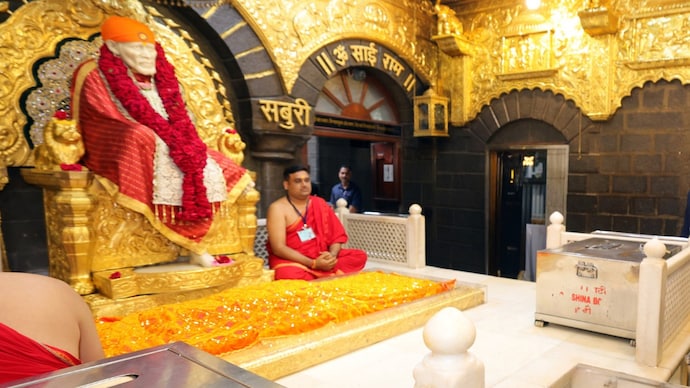
Goraksha Gadilkar, CEO of the trust, said that the vast sum includes online and offline donations for free meals for devotees, two hospitals of the trust (650 beds), and an education complex catering to around 6,000 students, from kindergarten to graduation.
The cash collections are counted twice a week under CCTV surveillance in the presence of the trust’s officials and representatives from the charity commissioner and the trust’s bank. The money is deposited in the bank. Employees who count the currency are frisked before and after entering the counting centre; they have to wear a separate dress sans pockets. Gold, silver and metal donated are evaluated through an official valuer and converted into coins.
Gadilkar said the trust has internal and external auditors and its annual report is placed before the Maharashtra legislature every year. While the trust is to have 17 members appointed by the state government, it is currently administered by an ad hoc committee under the principal district judge of Ahilyanagar (Ahmednagar), and consisting of the district collector and the CEO of the trust.
Shirdi, with a population of around 45,000, gets an average 60,000 devotees per day, which can swell to 80,000 in holiday season and 200,000 during festivals.
The trust has had its share of controversies, such as over the quality of free meals served. In 2012, the Aurangabad bench of the Bombay High Court had ordered the dissolution of the Shirdi temple trust over a PIL alleging misappropriation of funds. In 2024, the Supreme Court dismissed appeals challenging the Bombay High Court's decision to set aside the appointments of members to the trust’s managing committee. The court said while political affiliation was not a disqualification, the selection process adopted by the Maharashtra government was flawed and arbitrary.
At Mumbai’s Siddhivinayak Temple, the annual income stands at Rs 200 crore, including from donations and pujas. Sada Sarvankar, former Shiv Sena MLA and chairman of the Shree Siddhivinayak Ganapati Temple Trust, said the cash offered by devotees is counted on a weekly basis under CCTV surveillance and in the presence of trustees, officials and a bank representative. The gold and silver received are auctioned four to five times a year.
The temple sees around 700,000 devotees queue up for darshan on auspicious days, such as the Angarika Sankashti Chaturthi. On weekends and Tuesdays, the visitors number around 300,000.
The accounts of the trust are audited by an audit firm empanelled by the government, and the annual reports were placed before the state legislature. In 2024, Maharashtra chief minister Devendra Fadnavis had ordered a probe into alleged irregularities in the functioning of the trust, then headed by Aadesh Bandekar, a leader of the Shiv Sena (Uddhav Balasaheb Thackeray).
In 2020, the trust’s contribution of Rs 10 crore for the Maharashtra government’s ‘Shiv Bhojan’ subsidised meal scheme and Rs 5 crore for the Chief Minister’s Relief Fund had courted controversy. At the time, the Maha Vikas Aghadi (MVA) coalition under Uddhav Thackeray was in power in Maharashtra.
In 2018, a group of devotees, under the ‘Shree Siddhivinayak Mandir Trust Bhrashtachar Virodhi Kruti Samiti’, had accused the trustees of misappropriation and claimed they spent over Rs 12 lakh on study tours between January 2015 and August 2016.
Subscribe to India Today Magazine
Goraksha Gadilkar, CEO of the trust, said that the vast sum includes online and offline donations for free meals for devotees, two hospitals of the trust (650 beds), and an education complex catering to around 6,000 students, from kindergarten to graduation.
The cash collections are counted twice a week under CCTV surveillance in the presence of the trust’s officials and representatives from the charity commissioner and the trust’s bank. The money is deposited in the bank. Employees who count the currency are frisked before and after entering the counting centre; they have to wear a separate dress sans pockets. Gold, silver and metal donated are evaluated through an official valuer and converted into coins.
Gadilkar said the trust has internal and external auditors and its annual report is placed before the Maharashtra legislature every year. While the trust is to have 17 members appointed by the state government, it is currently administered by an ad hoc committee under the principal district judge of Ahilyanagar (Ahmednagar), and consisting of the district collector and the CEO of the trust.
Shirdi, with a population of around 45,000, gets an average 60,000 devotees per day, which can swell to 80,000 in holiday season and 200,000 during festivals.
The trust has had its share of controversies, such as over the quality of free meals served. In 2012, the Aurangabad bench of the Bombay High Court had ordered the dissolution of the Shirdi temple trust over a PIL alleging misappropriation of funds. In 2024, the Supreme Court dismissed appeals challenging the Bombay High Court's decision to set aside the appointments of members to the trust’s managing committee. The court said while political affiliation was not a disqualification, the selection process adopted by the Maharashtra government was flawed and arbitrary.
At Mumbai’s Siddhivinayak Temple, the annual income stands at Rs 200 crore, including from donations and pujas. Sada Sarvankar, former Shiv Sena MLA and chairman of the Shree Siddhivinayak Ganapati Temple Trust, said the cash offered by devotees is counted on a weekly basis under CCTV surveillance and in the presence of trustees, officials and a bank representative. The gold and silver received are auctioned four to five times a year.
The temple sees around 700,000 devotees queue up for darshan on auspicious days, such as the Angarika Sankashti Chaturthi. On weekends and Tuesdays, the visitors number around 300,000.
The accounts of the trust are audited by an audit firm empanelled by the government, and the annual reports were placed before the state legislature. In 2024, Maharashtra chief minister Devendra Fadnavis had ordered a probe into alleged irregularities in the functioning of the trust, then headed by Aadesh Bandekar, a leader of the Shiv Sena (Uddhav Balasaheb Thackeray).
In 2020, the trust’s contribution of Rs 10 crore for the Maharashtra government’s ‘Shiv Bhojan’ subsidised meal scheme and Rs 5 crore for the Chief Minister’s Relief Fund had courted controversy. At the time, the Maha Vikas Aghadi (MVA) coalition under Uddhav Thackeray was in power in Maharashtra.
In 2018, a group of devotees, under the ‘Shree Siddhivinayak Mandir Trust Bhrashtachar Virodhi Kruti Samiti’, had accused the trustees of misappropriation and claimed they spent over Rs 12 lakh on study tours between January 2015 and August 2016.
Subscribe to India Today Magazine

