Divided Trinamool loses Martyrs' Day spunk, but Mamata still holds the stage
The iconic July 21 mobilisation stood fractured between the Trinamool Congress camps, yet the turnout indicated who workers see as their commander
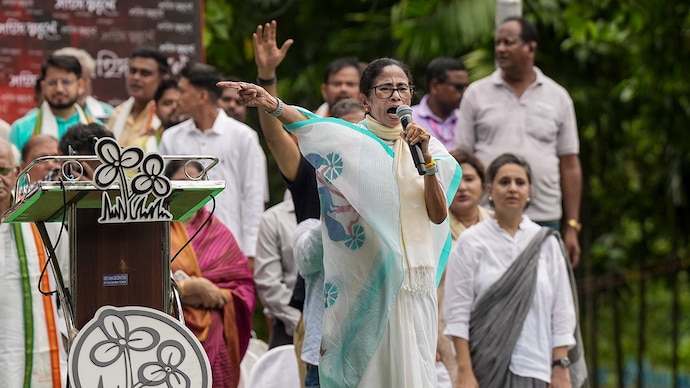
But this year, the annual ritual commemorating the death of 13 Youth Congress workers in police firing in 1993 played out markedly different. For the first time since the observance began, Kolkata hosted three separate Martyrs’ Day programmes, within barely 2.5 km of one another.
Mamata’s Kalighat Trinamool faction held its rally outside Birla Planetarium; the rival party camp led by Leader of the Opposition Ritabrata Banerjee gathered on Mayo Road near Mahatma Gandhi’s statue; the Congress, which had faced the brunt of the 1993 violence and had Mamata as a firebrand youth leader at the time, organised its own programme at Shahid Minar.
The fragmentation of Martyrs’ Day reflected the dramatic political changes that have swept Bengal since the TMC’s brutal rout from power after a 15-year-long reign and eventual split in the party.
The change was visible long before the speeches began on July 21. In previous years, thousands of TMC workers would begin arriving in Kolkata a day before. Temporary camps would accommodate them overnight. Howrah railway station and the adjoining ferry terminals would be draped in party flags, banners and welcome arches. Reception desks would greet supporters; loudspeakers would blare party songs through the night.
This year, in BJP-ruled Bengal, those familiar images were largely absent. Howrah station and the ferry ghats looked no different from an ordinary weekday morning. No elaborate TMC welcome gates, sprawling decorations or massive streams of supporters. Even by mid-morning, the rush that had come to define July 21 was missing.
The split in the TMC appeared to have diluted what was once a centralised mobilisation. Yet that division did not translate into an even contest. Among the three gatherings, Mamata’s programme emerged as the clear draw. Cathedral Road outside Birla Planetarium was packed with her supporters. One carriageway was filled with party workers while more and more of them spilled onto the adjacent lane, waving Trinamool flags and chanting slogans in support of the former chief minister. Senior leaders Abhishek Banerjee, Kunal Ghosh, Mahua Moitra and Dola Sen shared the stage with Mamata.
In contrast, the Ritabrata-led rally started with sparse attendance. Rows of chairs remained vacant through much of the morning before gradually filling up. However, the gathering never appeared to match the scale of Mamata’s event.
The split may have created confusion among ordinary TMC workers who had travelled from far. Several supporters were seen stopping briefly at the Mayo Road venue before proceeding towards Mamata’s event. Some said they had come only to look around before attending the meeting led by her.
“Our leader is Mamata Banerjee. We are going to the meeting near Birla Planetarium. We just stopped here on the way,” said a TMC worker who had stopped briefly at Ritabrata’s venue.
Another supporter said he intended to visit both programmes since the two factions continue to claim the same party symbol. Others were more decisive, insisting they would attend only Mamata’s rally and rejecting the rival group as politically irrelevant.
The day’s political drama had begun even before the rallies. On July 20, the Mamata faction accused the police and BJP government of vandalising its stage, tearing down banners and cutting microphone cables despite the Calcutta High Court permitting the programme. Mamata rushed to the venue late at night and stayed put until morning along with Abhishek, Derek O’Brien, Moitra and Sen.
Mamata also warned of contempt proceedings against the police and the state government. The Calcutta High Court has subsequently sought an explanation from the police on her allegations.
Meanwhile, the TMC’s rebel Lok Sabha MPs who have joined the Nationalist Citizens Party of India marked the day separately by paying floral tributes at Mahatma Gandhi’s memorial Rajghat in Delhi. Among the attendees were Sudeep Bandyopadhyay, Kakoli Ghosh Dastidar, Yusuf Pathan and Satabdi Roy.
If previous editions of Martyrs' Day showcased the organisational strength of an undivided TMC, this year told a different story. The iconic rally under a single banner was fractured across multiple venues, reflecting the political realignment that followed the electoral defeat. Even so, the turnout suggested that while the organisation stands divided, Mamata continues to command the larger share of the party’s formidable street mobilisation.
Subscribe to India Today Magazine
But this year, the annual ritual commemorating the death of 13 Youth Congress workers in police firing in 1993 played out markedly different. For the first time since the observance began, Kolkata hosted three separate Martyrs’ Day programmes, within barely 2.5 km of one another.
Mamata’s Kalighat Trinamool faction held its rally outside Birla Planetarium; the rival party camp led by Leader of the Opposition Ritabrata Banerjee gathered on Mayo Road near Mahatma Gandhi’s statue; the Congress, which had faced the brunt of the 1993 violence and had Mamata as a firebrand youth leader at the time, organised its own programme at Shahid Minar.
The fragmentation of Martyrs’ Day reflected the dramatic political changes that have swept Bengal since the TMC’s brutal rout from power after a 15-year-long reign and eventual split in the party.
The change was visible long before the speeches began on July 21. In previous years, thousands of TMC workers would begin arriving in Kolkata a day before. Temporary camps would accommodate them overnight. Howrah railway station and the adjoining ferry terminals would be draped in party flags, banners and welcome arches. Reception desks would greet supporters; loudspeakers would blare party songs through the night.
This year, in BJP-ruled Bengal, those familiar images were largely absent. Howrah station and the ferry ghats looked no different from an ordinary weekday morning. No elaborate TMC welcome gates, sprawling decorations or massive streams of supporters. Even by mid-morning, the rush that had come to define July 21 was missing.
The split in the TMC appeared to have diluted what was once a centralised mobilisation. Yet that division did not translate into an even contest. Among the three gatherings, Mamata’s programme emerged as the clear draw. Cathedral Road outside Birla Planetarium was packed with her supporters. One carriageway was filled with party workers while more and more of them spilled onto the adjacent lane, waving Trinamool flags and chanting slogans in support of the former chief minister. Senior leaders Abhishek Banerjee, Kunal Ghosh, Mahua Moitra and Dola Sen shared the stage with Mamata.
In contrast, the Ritabrata-led rally started with sparse attendance. Rows of chairs remained vacant through much of the morning before gradually filling up. However, the gathering never appeared to match the scale of Mamata’s event.
The split may have created confusion among ordinary TMC workers who had travelled from far. Several supporters were seen stopping briefly at the Mayo Road venue before proceeding towards Mamata’s event. Some said they had come only to look around before attending the meeting led by her.
“Our leader is Mamata Banerjee. We are going to the meeting near Birla Planetarium. We just stopped here on the way,” said a TMC worker who had stopped briefly at Ritabrata’s venue.
Another supporter said he intended to visit both programmes since the two factions continue to claim the same party symbol. Others were more decisive, insisting they would attend only Mamata’s rally and rejecting the rival group as politically irrelevant.
The day’s political drama had begun even before the rallies. On July 20, the Mamata faction accused the police and BJP government of vandalising its stage, tearing down banners and cutting microphone cables despite the Calcutta High Court permitting the programme. Mamata rushed to the venue late at night and stayed put until morning along with Abhishek, Derek O’Brien, Moitra and Sen.
Mamata also warned of contempt proceedings against the police and the state government. The Calcutta High Court has subsequently sought an explanation from the police on her allegations.
Meanwhile, the TMC’s rebel Lok Sabha MPs who have joined the Nationalist Citizens Party of India marked the day separately by paying floral tributes at Mahatma Gandhi’s memorial Rajghat in Delhi. Among the attendees were Sudeep Bandyopadhyay, Kakoli Ghosh Dastidar, Yusuf Pathan and Satabdi Roy.
If previous editions of Martyrs' Day showcased the organisational strength of an undivided TMC, this year told a different story. The iconic rally under a single banner was fractured across multiple venues, reflecting the political realignment that followed the electoral defeat. Even so, the turnout suggested that while the organisation stands divided, Mamata continues to command the larger share of the party’s formidable street mobilisation.
Subscribe to India Today Magazine
But this year, the annual ritual commemorating the death of 13 Youth Congress workers in police firing in 1993 played out markedly different. For the first time since the observance began, Kolkata hosted three separate Martyrs’ Day programmes, within barely 2.5 km of one another.
Mamata’s Kalighat Trinamool faction held its rally outside Birla Planetarium; the rival party camp led by Leader of the Opposition Ritabrata Banerjee gathered on Mayo Road near Mahatma Gandhi’s statue; the Congress, which had faced the brunt of the 1993 violence and had Mamata as a firebrand youth leader at the time, organised its own programme at Shahid Minar.
The fragmentation of Martyrs’ Day reflected the dramatic political changes that have swept Bengal since the TMC’s brutal rout from power after a 15-year-long reign and eventual split in the party.
The change was visible long before the speeches began on July 21. In previous years, thousands of TMC workers would begin arriving in Kolkata a day before. Temporary camps would accommodate them overnight. Howrah railway station and the adjoining ferry terminals would be draped in party flags, banners and welcome arches. Reception desks would greet supporters; loudspeakers would blare party songs through the night.
This year, in BJP-ruled Bengal, those familiar images were largely absent. Howrah station and the ferry ghats looked no different from an ordinary weekday morning. No elaborate TMC welcome gates, sprawling decorations or massive streams of supporters. Even by mid-morning, the rush that had come to define July 21 was missing.
The split in the TMC appeared to have diluted what was once a centralised mobilisation. Yet that division did not translate into an even contest. Among the three gatherings, Mamata’s programme emerged as the clear draw. Cathedral Road outside Birla Planetarium was packed with her supporters. One carriageway was filled with party workers while more and more of them spilled onto the adjacent lane, waving Trinamool flags and chanting slogans in support of the former chief minister. Senior leaders Abhishek Banerjee, Kunal Ghosh, Mahua Moitra and Dola Sen shared the stage with Mamata.
In contrast, the Ritabrata-led rally started with sparse attendance. Rows of chairs remained vacant through much of the morning before gradually filling up. However, the gathering never appeared to match the scale of Mamata’s event.
The split may have created confusion among ordinary TMC workers who had travelled from far. Several supporters were seen stopping briefly at the Mayo Road venue before proceeding towards Mamata’s event. Some said they had come only to look around before attending the meeting led by her.
“Our leader is Mamata Banerjee. We are going to the meeting near Birla Planetarium. We just stopped here on the way,” said a TMC worker who had stopped briefly at Ritabrata’s venue.
Another supporter said he intended to visit both programmes since the two factions continue to claim the same party symbol. Others were more decisive, insisting they would attend only Mamata’s rally and rejecting the rival group as politically irrelevant.
The day’s political drama had begun even before the rallies. On July 20, the Mamata faction accused the police and BJP government of vandalising its stage, tearing down banners and cutting microphone cables despite the Calcutta High Court permitting the programme. Mamata rushed to the venue late at night and stayed put until morning along with Abhishek, Derek O’Brien, Moitra and Sen.
Mamata also warned of contempt proceedings against the police and the state government. The Calcutta High Court has subsequently sought an explanation from the police on her allegations.
Meanwhile, the TMC’s rebel Lok Sabha MPs who have joined the Nationalist Citizens Party of India marked the day separately by paying floral tributes at Mahatma Gandhi’s memorial Rajghat in Delhi. Among the attendees were Sudeep Bandyopadhyay, Kakoli Ghosh Dastidar, Yusuf Pathan and Satabdi Roy.
If previous editions of Martyrs' Day showcased the organisational strength of an undivided TMC, this year told a different story. The iconic rally under a single banner was fractured across multiple venues, reflecting the political realignment that followed the electoral defeat. Even so, the turnout suggested that while the organisation stands divided, Mamata continues to command the larger share of the party’s formidable street mobilisation.
Subscribe to India Today Magazine

