'Satluj isn't really silent on the "other side" of the Punjab story': Honey Trehan
In an exclusive interview with India Today the 'Satluj' director reflects on his battles with the CBFC, and the impact his film has had
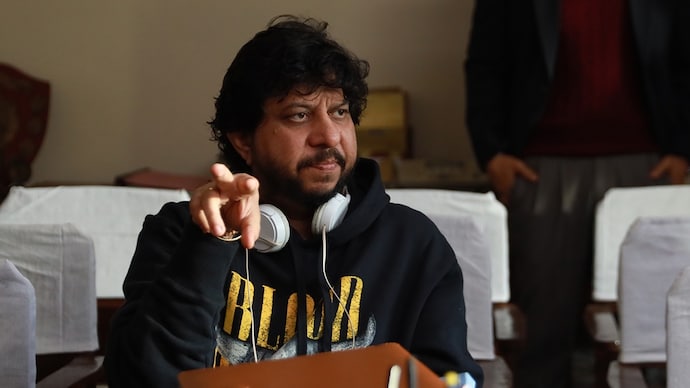
There, too, Trehan’s dream was shortlived. In just two days, the film was taken down in India. A few days later, the government invoked Section 69A of the Information Technology Act, 2000, citing “sovereignty, integrity, defence of India” and “security of the state” to ban the film. ZEE5 blocked access to the film internationally, too.
However, in those 48 hours, Trehan’s compelling, affecting film on human rights activist Jaswant Singh Khalra’s battle for justice and the subsequent investigation of his death by the CBI had found a life of its own, with pirated copies circulating on WhatsApp and Telegram channels, torrents and YouTube. In an interview with deputy editor Suhani Singh, Trehan talks about his own battle with the CBFC, one where, like Khalra, he refused to relent, and the impact his film continues to make. Edited excerpts:
Q. As a filmmaker you want your work to be seen. You waited more than three years for Punjab ’95/Satluj’s release. But it was taken down from ZEE5 in just two and a half days. Now your film is being watched all around the world in public parks, in gurudwaras, on phones.
It is a very mixed feeling as a filmmaker. Yes, you really want the film to reach a large audience, but somewhere I am not happy with the way it has reached people through piracy. I was happy when it was on ZEE5. Within two days we got a 9.7 IMDb rating, which is unheard of. But, after it was pulled out, it began to be pirated. I do understand how people are moved by it. I feel it shouldn’t have been banned without court proceedings.
I am proud of my film and stand by my moral values, my cast and the producer, Ronnie Screwvala of RSVP, who always stood by the film and me. I am disappointed by the current political atmosphere that has made it impossible for people to watch the film legally.
Q. What made you shine a light on Jaswant Singh Khalra?
I was raised in Tarn Taran and lived there until I was in sixth standard. I have seen people in our extended family and neighbourhood go through this. I had heard of Khalra ji as a kid. You grow up, become a filmmaker and find certain stories, and you think why not do something that makes sense to Punjab. It is high time Punjab had some serious cinema that could open a dialogue.
Khalra ji is one of the greatest martyrs of Punjab in recent history. In my personal opinion, his sacrifice is as big as Bhagat Singh’s. In fact, he was a great follower of the freedom fighter. If we have people like Khalra ji, one who had such an inspiring life and journey, who lived so selflessly fighting for others, I felt his story should be known.
His fight was not about one community but for humanity, and he did so knowing he might have to lose his life. He was offered asylum in Canada but he didn’t take it because he knew his mission would die if he left. He refused police security and instead suggested that it be given to all the people who were scared of the Punjab police.
Q. How did the idea come to you?
I was down with Covid-19 in 2020 and during the mandatory 14-day quarantine I read Amandeep Sandhu’s Panjab: Journeys Through Fault Lines. The book has a chapter titled ‘Lashaan: Corpses’ on Khalra ji. The story kept coming back to me.
I reached out to Amandeep and asked if he knew Khalra’s family because I wanted to make a film on him. He told me he would approach them only when I was 100 per cent sure because they had been through a lot and were very apprehensive about giving the rights.
I remember checking the time on my iPhone. I noticed the date was September 6, the last day Khalra ji was seen alive by his family (his body was never found). I immediately called Amandeep again and he asked, “What made you make a decision in an hour and a half?” I told him about the significance of the date and that if I couldn’t take the decision to make a film on him on that date, then I couldn’t ever do it. It was a karmic coincidence. That moved Amandeep and he immediately introduced me to the family.
I had multiple calls with the family. They gradually showed faith in me and my perseverance, and felt I knew the world well.
Q. Tell us about casting Diljit Dosanjh for the role.
In January 2021, I messaged Diljit Dosanjh asking, “Paaji, kahaan ho? America or India?” He said he was in India but was leaving for America that very night. I told him to meet me in Mumbai for just half an hour. It was cutting it a bit too close to his flight but he still came.
I told I want to do a film on Punjab but set it after 1984 because people think nothing happened there after Operation Blue Star (1984). Diljit said there were a few stories but the one he felt should be made was on Khalra. “Paaji, kya life rahi hui unki, kitni badi shahadat hai unki (brother, what a life he lived, and what a great sacrifice he made),” he said. He had tried through other people to get the rights but it never materialised. I smiled. He had said what I had in mind.
I just took out my file of research that had on its cover a photo of Khalra ji with JSK written on it. I kept it in front of him and Diljit was like “Arre, yeh toh Khalra sahab hai”. I said I would be thrilled if he would play him as I had got the rights. Diljit stood up from his chair, held the file in his hand, put it against his forehead and said, “Wahe guru ji... Paaji, kadon aana hai, kitthe khadna hai, bas tusi das dena, main aa jaunga (just tell me where to come and I’ll be there).”
Diljit refused to quote a fee to play this role. He felt it would be a shame if he asked for money to play such a monumental figure. My producer, though, did pay him graciously.
Q. Why did you change the name from Punjab ’95 to Satluj?
The initial working title was Gallughara. Punjab ’95 was the title with which we submitted the film to the Toronto International Film Festival (TIFF), where it was supposed to have its world premiere in 2023. When the film was about to be released on ZEE5, I got a call from the producer, who said they wanted to change the title. I said we could go with Satluj as that title was also registered with us. I always felt Satluj had a deep resonance with the entire film. The bodies, including Khalra ji’s, were thrown into the river. It would be poetic justice. We offered the fresh title to ZEE5 and they decided to go with it.
In hindsight, I feel if it was called Punjab ’95, they would have put pressure and stopped the release altogether. We wouldn’t even have had two days of release.
Q. Besides adulation, the film has also drawn plenty of criticism. Detractors say it shows only one side of the Punjab insurgency story. They say you are glorifying the militants while objecting to extrajudicial killings, and that your film feeds radicalisation. They say the assassination of then CM Beant Singh is shown as an act of martyrdom.
I am a filmmaker, not a criminal or a politician. I made a film about a character I believe in. For three years when we didn’t get the censor certificate, we were told it would create a law-and-order situation in Punjab. Now that the film has come out, it has brought all of Punjab together regardless of religion, caste and status. Punjab ke ikkathaa hone se problem ho rahi hai inn logon ko (these people are worried by this unity in Punjab). They are inciting violence by saying, “Punjab ke Hinduon tum kab jaagoge (the Hindus of Punjab, when will you rise up)?” The statement is out in public. People can decide who is on the wrong side of history.
If they feel Satluj is a one-sided story, then they are absolutely free to make a film on the other side. It is a free country and there is free speech, too. Some are casting doubt on the number of cremated bodies. Firstly, it’s an estimated figure taken from Khalra ji’s speeches. My film is on him, so I will address only what he has mentioned publicly and which still exists in the public domain.
Nobody can tell me what I am supposed to make and do. Kashmir Files ka bhi doosra side hoga, Kerala Story ka bhi hoga (there must be another side to The Kashmir Files and The Kerala Story, too). I am not against these films and filmmakers at all. But why is their freedom of speech and expression welcomed, but mine is not?
I am not asking anybody to endorse my film. My work is to tell a story. You buy it or don’t buy it; it is your interpretation. Jinko iss cheez se problem hai naa dekhe meri picture (those who have a problem with it need not see my film). They allege that I don’t talk about the other side. I urge them to watch the film. There is a scene where DGP Bitta (Kanwaljeet Singh) makes a speech at an event where 56 people have surrendered their arms. There is another one where he tells the new chief minister how he has finished militancy from the state, and the latter commends him and tells him to now let the bureaucracy take over. There is another scene in which SSP Sugga (Suvinder Vicky) educates a CBI officer (Arjun Rampal) on Punjab’s conflicted history, detailing how at times one needs army intervention to tackle the violence. All these scenes speak directly about the other side.
Q. Do you know why ZEE5 withdrew the film? Was there pressure from the government?
ZEEE5 was asked to remove the film. They received a letter from the Information & Broadcasting ministry stating that the sensitivity of the subject and national security were reasons to take it down. Then the government formed a committee and two days later they wrote to the platform saying the ban continues. ZEE5 decided to pull out the film globally, too.
Q. You have stated how the CBFC asked for 127 cuts. How did you realise they wanted to stall the film’s release?
We sent the film to the CBFC in early 2023 as we wanted it to be screened at international film festivals. They came back asking for 21 cuts, which didn’t make any sense to us. Hence, we decided to approach the Bombay High Court. The CBFC kept changing their lawyers to argue the matter. At one point, one had argued without seeing the film. The lordship requested him to see it. In one argument, the CBFC said that even the Ministry of Information & Broadcasting had a problem with the film. That was a giveaway. Who gave it to the ministry to watch? The CBFC is supposed to be an independent body, whose opinion shouldn’t be colour coordinated with any sitting government.
While the proceedings were going on, we got to know the film was selected for the Toronto festival. Later, my producer Ronnie got a call asking him to withdraw the matter from the high court and the film from TIFF, and to do an out-of-court settlement.
Unfortunately, the out-of-court settlement went on for two and a half years, going from 21 cuts to 127. It made us eventually realise this was a futile exercise, and that they are just buying time and stalling the release. I am happy to do even 150 cuts if they have a legitimate reason. I gave my producer the option to release the film with the cuts, but only after removing my and Diljit’s names because we wouldn’t stand by a film we had not made. Ronnie and Diljit stood by me like pillars. Without them the film wouldn’t even have had two days of release.
Then, we decided we would not release the film in India but only internationally. I told Ronnie to withdraw the matter from the Bombay High Court because they could deny even a release outside the country saying the matter was subjudice. He did so and in January end Diljit released the teaser on Instagram saying the film would be released on February 7, 2025. Then Ronnie got another call asking him to not release the film internationally as the Delhi election was around the corner, but with a promise to help us with the release. We abided because we didn’t want to do anything that could jeopardise the national interest. The Delhi election happened and the government was formed, but we are still waiting for a call from the person who said he would help us release the film.
Subscribe to India Today Magazine
There, too, Trehan’s dream was shortlived. In just two days, the film was taken down in India. A few days later, the government invoked Section 69A of the Information Technology Act, 2000, citing “sovereignty, integrity, defence of India” and “security of the state” to ban the film. ZEE5 blocked access to the film internationally, too.
However, in those 48 hours, Trehan’s compelling, affecting film on human rights activist Jaswant Singh Khalra’s battle for justice and the subsequent investigation of his death by the CBI had found a life of its own, with pirated copies circulating on WhatsApp and Telegram channels, torrents and YouTube. In an interview with deputy editor Suhani Singh, Trehan talks about his own battle with the CBFC, one where, like Khalra, he refused to relent, and the impact his film continues to make. Edited excerpts:
Q. As a filmmaker you want your work to be seen. You waited more than three years for Punjab ’95/Satluj’s release. But it was taken down from ZEE5 in just two and a half days. Now your film is being watched all around the world in public parks, in gurudwaras, on phones.
It is a very mixed feeling as a filmmaker. Yes, you really want the film to reach a large audience, but somewhere I am not happy with the way it has reached people through piracy. I was happy when it was on ZEE5. Within two days we got a 9.7 IMDb rating, which is unheard of. But, after it was pulled out, it began to be pirated. I do understand how people are moved by it. I feel it shouldn’t have been banned without court proceedings.
I am proud of my film and stand by my moral values, my cast and the producer, Ronnie Screwvala of RSVP, who always stood by the film and me. I am disappointed by the current political atmosphere that has made it impossible for people to watch the film legally.
Q. What made you shine a light on Jaswant Singh Khalra?
I was raised in Tarn Taran and lived there until I was in sixth standard. I have seen people in our extended family and neighbourhood go through this. I had heard of Khalra ji as a kid. You grow up, become a filmmaker and find certain stories, and you think why not do something that makes sense to Punjab. It is high time Punjab had some serious cinema that could open a dialogue.
Khalra ji is one of the greatest martyrs of Punjab in recent history. In my personal opinion, his sacrifice is as big as Bhagat Singh’s. In fact, he was a great follower of the freedom fighter. If we have people like Khalra ji, one who had such an inspiring life and journey, who lived so selflessly fighting for others, I felt his story should be known.
His fight was not about one community but for humanity, and he did so knowing he might have to lose his life. He was offered asylum in Canada but he didn’t take it because he knew his mission would die if he left. He refused police security and instead suggested that it be given to all the people who were scared of the Punjab police.
Q. How did the idea come to you?
I was down with Covid-19 in 2020 and during the mandatory 14-day quarantine I read Amandeep Sandhu’s Panjab: Journeys Through Fault Lines. The book has a chapter titled ‘Lashaan: Corpses’ on Khalra ji. The story kept coming back to me.
I reached out to Amandeep and asked if he knew Khalra’s family because I wanted to make a film on him. He told me he would approach them only when I was 100 per cent sure because they had been through a lot and were very apprehensive about giving the rights.
I remember checking the time on my iPhone. I noticed the date was September 6, the last day Khalra ji was seen alive by his family (his body was never found). I immediately called Amandeep again and he asked, “What made you make a decision in an hour and a half?” I told him about the significance of the date and that if I couldn’t take the decision to make a film on him on that date, then I couldn’t ever do it. It was a karmic coincidence. That moved Amandeep and he immediately introduced me to the family.
I had multiple calls with the family. They gradually showed faith in me and my perseverance, and felt I knew the world well.
Q. Tell us about casting Diljit Dosanjh for the role.
In January 2021, I messaged Diljit Dosanjh asking, “Paaji, kahaan ho? America or India?” He said he was in India but was leaving for America that very night. I told him to meet me in Mumbai for just half an hour. It was cutting it a bit too close to his flight but he still came.
I told I want to do a film on Punjab but set it after 1984 because people think nothing happened there after Operation Blue Star (1984). Diljit said there were a few stories but the one he felt should be made was on Khalra. “Paaji, kya life rahi hui unki, kitni badi shahadat hai unki (brother, what a life he lived, and what a great sacrifice he made),” he said. He had tried through other people to get the rights but it never materialised. I smiled. He had said what I had in mind.
I just took out my file of research that had on its cover a photo of Khalra ji with JSK written on it. I kept it in front of him and Diljit was like “Arre, yeh toh Khalra sahab hai”. I said I would be thrilled if he would play him as I had got the rights. Diljit stood up from his chair, held the file in his hand, put it against his forehead and said, “Wahe guru ji... Paaji, kadon aana hai, kitthe khadna hai, bas tusi das dena, main aa jaunga (just tell me where to come and I’ll be there).”
Diljit refused to quote a fee to play this role. He felt it would be a shame if he asked for money to play such a monumental figure. My producer, though, did pay him graciously.
Q. Why did you change the name from Punjab ’95 to Satluj?
The initial working title was Gallughara. Punjab ’95 was the title with which we submitted the film to the Toronto International Film Festival (TIFF), where it was supposed to have its world premiere in 2023. When the film was about to be released on ZEE5, I got a call from the producer, who said they wanted to change the title. I said we could go with Satluj as that title was also registered with us. I always felt Satluj had a deep resonance with the entire film. The bodies, including Khalra ji’s, were thrown into the river. It would be poetic justice. We offered the fresh title to ZEE5 and they decided to go with it.
In hindsight, I feel if it was called Punjab ’95, they would have put pressure and stopped the release altogether. We wouldn’t even have had two days of release.
Q. Besides adulation, the film has also drawn plenty of criticism. Detractors say it shows only one side of the Punjab insurgency story. They say you are glorifying the militants while objecting to extrajudicial killings, and that your film feeds radicalisation. They say the assassination of then CM Beant Singh is shown as an act of martyrdom.
I am a filmmaker, not a criminal or a politician. I made a film about a character I believe in. For three years when we didn’t get the censor certificate, we were told it would create a law-and-order situation in Punjab. Now that the film has come out, it has brought all of Punjab together regardless of religion, caste and status. Punjab ke ikkathaa hone se problem ho rahi hai inn logon ko (these people are worried by this unity in Punjab). They are inciting violence by saying, “Punjab ke Hinduon tum kab jaagoge (the Hindus of Punjab, when will you rise up)?” The statement is out in public. People can decide who is on the wrong side of history.
If they feel Satluj is a one-sided story, then they are absolutely free to make a film on the other side. It is a free country and there is free speech, too. Some are casting doubt on the number of cremated bodies. Firstly, it’s an estimated figure taken from Khalra ji’s speeches. My film is on him, so I will address only what he has mentioned publicly and which still exists in the public domain.
Nobody can tell me what I am supposed to make and do. Kashmir Files ka bhi doosra side hoga, Kerala Story ka bhi hoga (there must be another side to The Kashmir Files and The Kerala Story, too). I am not against these films and filmmakers at all. But why is their freedom of speech and expression welcomed, but mine is not?
I am not asking anybody to endorse my film. My work is to tell a story. You buy it or don’t buy it; it is your interpretation. Jinko iss cheez se problem hai naa dekhe meri picture (those who have a problem with it need not see my film). They allege that I don’t talk about the other side. I urge them to watch the film. There is a scene where DGP Bitta (Kanwaljeet Singh) makes a speech at an event where 56 people have surrendered their arms. There is another one where he tells the new chief minister how he has finished militancy from the state, and the latter commends him and tells him to now let the bureaucracy take over. There is another scene in which SSP Sugga (Suvinder Vicky) educates a CBI officer (Arjun Rampal) on Punjab’s conflicted history, detailing how at times one needs army intervention to tackle the violence. All these scenes speak directly about the other side.
Q. Do you know why ZEE5 withdrew the film? Was there pressure from the government?
ZEEE5 was asked to remove the film. They received a letter from the Information & Broadcasting ministry stating that the sensitivity of the subject and national security were reasons to take it down. Then the government formed a committee and two days later they wrote to the platform saying the ban continues. ZEE5 decided to pull out the film globally, too.
Q. You have stated how the CBFC asked for 127 cuts. How did you realise they wanted to stall the film’s release?
We sent the film to the CBFC in early 2023 as we wanted it to be screened at international film festivals. They came back asking for 21 cuts, which didn’t make any sense to us. Hence, we decided to approach the Bombay High Court. The CBFC kept changing their lawyers to argue the matter. At one point, one had argued without seeing the film. The lordship requested him to see it. In one argument, the CBFC said that even the Ministry of Information & Broadcasting had a problem with the film. That was a giveaway. Who gave it to the ministry to watch? The CBFC is supposed to be an independent body, whose opinion shouldn’t be colour coordinated with any sitting government.
While the proceedings were going on, we got to know the film was selected for the Toronto festival. Later, my producer Ronnie got a call asking him to withdraw the matter from the high court and the film from TIFF, and to do an out-of-court settlement.
Unfortunately, the out-of-court settlement went on for two and a half years, going from 21 cuts to 127. It made us eventually realise this was a futile exercise, and that they are just buying time and stalling the release. I am happy to do even 150 cuts if they have a legitimate reason. I gave my producer the option to release the film with the cuts, but only after removing my and Diljit’s names because we wouldn’t stand by a film we had not made. Ronnie and Diljit stood by me like pillars. Without them the film wouldn’t even have had two days of release.
Then, we decided we would not release the film in India but only internationally. I told Ronnie to withdraw the matter from the Bombay High Court because they could deny even a release outside the country saying the matter was subjudice. He did so and in January end Diljit released the teaser on Instagram saying the film would be released on February 7, 2025. Then Ronnie got another call asking him to not release the film internationally as the Delhi election was around the corner, but with a promise to help us with the release. We abided because we didn’t want to do anything that could jeopardise the national interest. The Delhi election happened and the government was formed, but we are still waiting for a call from the person who said he would help us release the film.
Subscribe to India Today Magazine
There, too, Trehan’s dream was shortlived. In just two days, the film was taken down in India. A few days later, the government invoked Section 69A of the Information Technology Act, 2000, citing “sovereignty, integrity, defence of India” and “security of the state” to ban the film. ZEE5 blocked access to the film internationally, too.
However, in those 48 hours, Trehan’s compelling, affecting film on human rights activist Jaswant Singh Khalra’s battle for justice and the subsequent investigation of his death by the CBI had found a life of its own, with pirated copies circulating on WhatsApp and Telegram channels, torrents and YouTube. In an interview with deputy editor Suhani Singh, Trehan talks about his own battle with the CBFC, one where, like Khalra, he refused to relent, and the impact his film continues to make. Edited excerpts:
Q. As a filmmaker you want your work to be seen. You waited more than three years for Punjab ’95/Satluj’s release. But it was taken down from ZEE5 in just two and a half days. Now your film is being watched all around the world in public parks, in gurudwaras, on phones.
It is a very mixed feeling as a filmmaker. Yes, you really want the film to reach a large audience, but somewhere I am not happy with the way it has reached people through piracy. I was happy when it was on ZEE5. Within two days we got a 9.7 IMDb rating, which is unheard of. But, after it was pulled out, it began to be pirated. I do understand how people are moved by it. I feel it shouldn’t have been banned without court proceedings.
I am proud of my film and stand by my moral values, my cast and the producer, Ronnie Screwvala of RSVP, who always stood by the film and me. I am disappointed by the current political atmosphere that has made it impossible for people to watch the film legally.
Q. What made you shine a light on Jaswant Singh Khalra?
I was raised in Tarn Taran and lived there until I was in sixth standard. I have seen people in our extended family and neighbourhood go through this. I had heard of Khalra ji as a kid. You grow up, become a filmmaker and find certain stories, and you think why not do something that makes sense to Punjab. It is high time Punjab had some serious cinema that could open a dialogue.
Khalra ji is one of the greatest martyrs of Punjab in recent history. In my personal opinion, his sacrifice is as big as Bhagat Singh’s. In fact, he was a great follower of the freedom fighter. If we have people like Khalra ji, one who had such an inspiring life and journey, who lived so selflessly fighting for others, I felt his story should be known.
His fight was not about one community but for humanity, and he did so knowing he might have to lose his life. He was offered asylum in Canada but he didn’t take it because he knew his mission would die if he left. He refused police security and instead suggested that it be given to all the people who were scared of the Punjab police.
Q. How did the idea come to you?
I was down with Covid-19 in 2020 and during the mandatory 14-day quarantine I read Amandeep Sandhu’s Panjab: Journeys Through Fault Lines. The book has a chapter titled ‘Lashaan: Corpses’ on Khalra ji. The story kept coming back to me.
I reached out to Amandeep and asked if he knew Khalra’s family because I wanted to make a film on him. He told me he would approach them only when I was 100 per cent sure because they had been through a lot and were very apprehensive about giving the rights.
I remember checking the time on my iPhone. I noticed the date was September 6, the last day Khalra ji was seen alive by his family (his body was never found). I immediately called Amandeep again and he asked, “What made you make a decision in an hour and a half?” I told him about the significance of the date and that if I couldn’t take the decision to make a film on him on that date, then I couldn’t ever do it. It was a karmic coincidence. That moved Amandeep and he immediately introduced me to the family.
I had multiple calls with the family. They gradually showed faith in me and my perseverance, and felt I knew the world well.
Q. Tell us about casting Diljit Dosanjh for the role.
In January 2021, I messaged Diljit Dosanjh asking, “Paaji, kahaan ho? America or India?” He said he was in India but was leaving for America that very night. I told him to meet me in Mumbai for just half an hour. It was cutting it a bit too close to his flight but he still came.
I told I want to do a film on Punjab but set it after 1984 because people think nothing happened there after Operation Blue Star (1984). Diljit said there were a few stories but the one he felt should be made was on Khalra. “Paaji, kya life rahi hui unki, kitni badi shahadat hai unki (brother, what a life he lived, and what a great sacrifice he made),” he said. He had tried through other people to get the rights but it never materialised. I smiled. He had said what I had in mind.
I just took out my file of research that had on its cover a photo of Khalra ji with JSK written on it. I kept it in front of him and Diljit was like “Arre, yeh toh Khalra sahab hai”. I said I would be thrilled if he would play him as I had got the rights. Diljit stood up from his chair, held the file in his hand, put it against his forehead and said, “Wahe guru ji... Paaji, kadon aana hai, kitthe khadna hai, bas tusi das dena, main aa jaunga (just tell me where to come and I’ll be there).”
Diljit refused to quote a fee to play this role. He felt it would be a shame if he asked for money to play such a monumental figure. My producer, though, did pay him graciously.
Q. Why did you change the name from Punjab ’95 to Satluj?
The initial working title was Gallughara. Punjab ’95 was the title with which we submitted the film to the Toronto International Film Festival (TIFF), where it was supposed to have its world premiere in 2023. When the film was about to be released on ZEE5, I got a call from the producer, who said they wanted to change the title. I said we could go with Satluj as that title was also registered with us. I always felt Satluj had a deep resonance with the entire film. The bodies, including Khalra ji’s, were thrown into the river. It would be poetic justice. We offered the fresh title to ZEE5 and they decided to go with it.
In hindsight, I feel if it was called Punjab ’95, they would have put pressure and stopped the release altogether. We wouldn’t even have had two days of release.
Q. Besides adulation, the film has also drawn plenty of criticism. Detractors say it shows only one side of the Punjab insurgency story. They say you are glorifying the militants while objecting to extrajudicial killings, and that your film feeds radicalisation. They say the assassination of then CM Beant Singh is shown as an act of martyrdom.
I am a filmmaker, not a criminal or a politician. I made a film about a character I believe in. For three years when we didn’t get the censor certificate, we were told it would create a law-and-order situation in Punjab. Now that the film has come out, it has brought all of Punjab together regardless of religion, caste and status. Punjab ke ikkathaa hone se problem ho rahi hai inn logon ko (these people are worried by this unity in Punjab). They are inciting violence by saying, “Punjab ke Hinduon tum kab jaagoge (the Hindus of Punjab, when will you rise up)?” The statement is out in public. People can decide who is on the wrong side of history.
If they feel Satluj is a one-sided story, then they are absolutely free to make a film on the other side. It is a free country and there is free speech, too. Some are casting doubt on the number of cremated bodies. Firstly, it’s an estimated figure taken from Khalra ji’s speeches. My film is on him, so I will address only what he has mentioned publicly and which still exists in the public domain.
Nobody can tell me what I am supposed to make and do. Kashmir Files ka bhi doosra side hoga, Kerala Story ka bhi hoga (there must be another side to The Kashmir Files and The Kerala Story, too). I am not against these films and filmmakers at all. But why is their freedom of speech and expression welcomed, but mine is not?
I am not asking anybody to endorse my film. My work is to tell a story. You buy it or don’t buy it; it is your interpretation. Jinko iss cheez se problem hai naa dekhe meri picture (those who have a problem with it need not see my film). They allege that I don’t talk about the other side. I urge them to watch the film. There is a scene where DGP Bitta (Kanwaljeet Singh) makes a speech at an event where 56 people have surrendered their arms. There is another one where he tells the new chief minister how he has finished militancy from the state, and the latter commends him and tells him to now let the bureaucracy take over. There is another scene in which SSP Sugga (Suvinder Vicky) educates a CBI officer (Arjun Rampal) on Punjab’s conflicted history, detailing how at times one needs army intervention to tackle the violence. All these scenes speak directly about the other side.
Q. Do you know why ZEE5 withdrew the film? Was there pressure from the government?
ZEEE5 was asked to remove the film. They received a letter from the Information & Broadcasting ministry stating that the sensitivity of the subject and national security were reasons to take it down. Then the government formed a committee and two days later they wrote to the platform saying the ban continues. ZEE5 decided to pull out the film globally, too.
Q. You have stated how the CBFC asked for 127 cuts. How did you realise they wanted to stall the film’s release?
We sent the film to the CBFC in early 2023 as we wanted it to be screened at international film festivals. They came back asking for 21 cuts, which didn’t make any sense to us. Hence, we decided to approach the Bombay High Court. The CBFC kept changing their lawyers to argue the matter. At one point, one had argued without seeing the film. The lordship requested him to see it. In one argument, the CBFC said that even the Ministry of Information & Broadcasting had a problem with the film. That was a giveaway. Who gave it to the ministry to watch? The CBFC is supposed to be an independent body, whose opinion shouldn’t be colour coordinated with any sitting government.
While the proceedings were going on, we got to know the film was selected for the Toronto festival. Later, my producer Ronnie got a call asking him to withdraw the matter from the high court and the film from TIFF, and to do an out-of-court settlement.
Unfortunately, the out-of-court settlement went on for two and a half years, going from 21 cuts to 127. It made us eventually realise this was a futile exercise, and that they are just buying time and stalling the release. I am happy to do even 150 cuts if they have a legitimate reason. I gave my producer the option to release the film with the cuts, but only after removing my and Diljit’s names because we wouldn’t stand by a film we had not made. Ronnie and Diljit stood by me like pillars. Without them the film wouldn’t even have had two days of release.
Then, we decided we would not release the film in India but only internationally. I told Ronnie to withdraw the matter from the Bombay High Court because they could deny even a release outside the country saying the matter was subjudice. He did so and in January end Diljit released the teaser on Instagram saying the film would be released on February 7, 2025. Then Ronnie got another call asking him to not release the film internationally as the Delhi election was around the corner, but with a promise to help us with the release. We abided because we didn’t want to do anything that could jeopardise the national interest. The Delhi election happened and the government was formed, but we are still waiting for a call from the person who said he would help us release the film.
Subscribe to India Today Magazine

