Throw like there's no tomorrow: Words behind Yashvir's final throw to land CWG bronze
Yashvir Singh's Commonwealth Games bronze was built on years of sacrifice by father and coach Rai Singh. A stirring final message before his last throw inspired the 24-year-old to produce a career-best 85.41m in Glasgow.
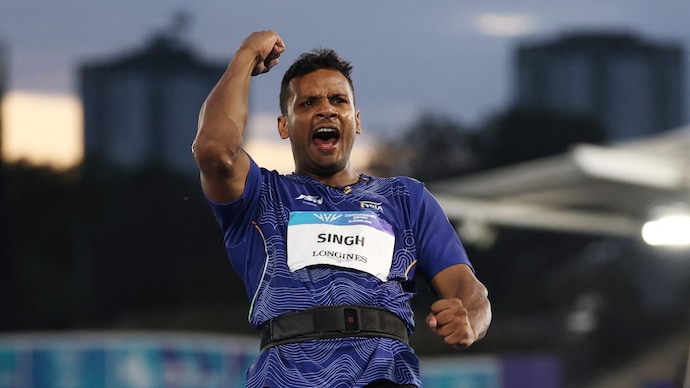
When Yashvir Singh walked up for his sixth and final attempt in the men's javelin throw at the Commonwealth Games in Glasgow, he knew only something extraordinary would keep his medal hopes alive. The Indian was down in seventh place with a best effort of 81.33m, well outside the podium places.
Watching from the stands at Scotstoun Stadium was his father and personal coach, Rai Singh. As Yashvir prepared for the biggest throw of his career, Rai had one final message.
"Zindagi ka aakhri sawal hey, dam lagake marna."
Those words proved to be all the motivation Yashvir needed. Moments later, the 24-year-old launched the javelin to a personal-best 85.41m, vaulting from seventh to third to claim a dramatic Commonwealth Games bronze medal. The throw eclipsed his previous personal best of 83.72m and earned him a place on the podium alongside Olympic champion Neeraj Chopra, who won silver.
Speaking to PTI from Glasgow after the event, Rai revealed what he told his son just before the decisive attempt.
"Throwing beyond 85m is not a big thing for my son. Just before the run-up for his final throw, I told him straight, 'Zindagi sawar jayegi, dam lagake marna'. He did exactly that and I am very proud of him," Rai said.
The emotional exchange was the culmination of years of sacrifice, discipline and belief shared between father and son.
FATHER'S MISSION
Long before Yashvir became one of India's brightest javelin prospects, Rai Singh had his own dreams in the sport. A former national-level javelin thrower, he won medals at the National Open Championships, National Inter-State Championships and Railway meets before retiring in 2006. A National Institute of Sports diploma holder, he later became a Railways coach.
Yet one dream always remained incomplete.
"I was always clear that Yashvir should take up an individual sport and win medals in the Commonwealth Games and Asian Games. I could not do it myself," Rai shared.
"I wanted my son to fulfil the dream which I could not fulfil, maybe because of lack of coaching, equipment, diet and facilities. So I have been doing my best that my son should not face those difficulties."
That commitment shaped Yashvir's upbringing. Before specialising in javelin, Rai encouraged both Yashvir and his younger brother Utsav to play several sports, including basketball, believing it would improve their all-round athletic development.
"The purpose of basketball is that it helps in the growth of the whole body. I made both my sons play basketball," Rai said.
Yashvir also began with makeshift bamboo javelins before gradually progressing through the ranks. Today, he trains under Rai at Jaipur's Railways Stadium, where his father serves as the in-charge.
According to Rai, Yashvir briefly trained with JSW before returning home following an injury.
THREE GENERATIONS
Athletics has become a family tradition spanning three generations. Rai's father competed as a national-level 400m hurdler, while his younger brother represented Railways in the 110m hurdles. Yashvir's younger brother Utsav has also taken up the sport, recently winning a medal in javelin at the Khelo India University Games.
Rai believes keeping Yashvir under his direct supervision has played a key role in his rise.
"I can look after him 24 hours. I know what he is doing and what he is eating. It's like home tuition. The Athletics Federation of India also knows Yashvir trains with me," he told PTI.
Friday's bronze medal meant much more than an individual achievement. It represented the fulfilment of a dream that Rai had carried for decades but never realised himself.
"I have put all my strength behind him. My family has put all their strength behind him," Rai said.
"So, you can say I am a very happy father with Yashvir winning the Commonwealth Games medal. But this is just the beginning. He will keep on achieving more and more."
For Yashvir, the medal came from one unforgettable throw. For Rai Singh, it was the reward for a lifetime spent making sure his son had every opportunity that he never did.
When Yashvir Singh walked up for his sixth and final attempt in the men's javelin throw at the Commonwealth Games in Glasgow, he knew only something extraordinary would keep his medal hopes alive. The Indian was down in seventh place with a best effort of 81.33m, well outside the podium places.
Watching from the stands at Scotstoun Stadium was his father and personal coach, Rai Singh. As Yashvir prepared for the biggest throw of his career, Rai had one final message.
"Zindagi ka aakhri sawal hey, dam lagake marna."
Those words proved to be all the motivation Yashvir needed. Moments later, the 24-year-old launched the javelin to a personal-best 85.41m, vaulting from seventh to third to claim a dramatic Commonwealth Games bronze medal. The throw eclipsed his previous personal best of 83.72m and earned him a place on the podium alongside Olympic champion Neeraj Chopra, who won silver.
Speaking to PTI from Glasgow after the event, Rai revealed what he told his son just before the decisive attempt.
"Throwing beyond 85m is not a big thing for my son. Just before the run-up for his final throw, I told him straight, 'Zindagi sawar jayegi, dam lagake marna'. He did exactly that and I am very proud of him," Rai said.
The emotional exchange was the culmination of years of sacrifice, discipline and belief shared between father and son.
FATHER'S MISSION
Long before Yashvir became one of India's brightest javelin prospects, Rai Singh had his own dreams in the sport. A former national-level javelin thrower, he won medals at the National Open Championships, National Inter-State Championships and Railway meets before retiring in 2006. A National Institute of Sports diploma holder, he later became a Railways coach.
Yet one dream always remained incomplete.
"I was always clear that Yashvir should take up an individual sport and win medals in the Commonwealth Games and Asian Games. I could not do it myself," Rai shared.
"I wanted my son to fulfil the dream which I could not fulfil, maybe because of lack of coaching, equipment, diet and facilities. So I have been doing my best that my son should not face those difficulties."
That commitment shaped Yashvir's upbringing. Before specialising in javelin, Rai encouraged both Yashvir and his younger brother Utsav to play several sports, including basketball, believing it would improve their all-round athletic development.
"The purpose of basketball is that it helps in the growth of the whole body. I made both my sons play basketball," Rai said.
Yashvir also began with makeshift bamboo javelins before gradually progressing through the ranks. Today, he trains under Rai at Jaipur's Railways Stadium, where his father serves as the in-charge.
According to Rai, Yashvir briefly trained with JSW before returning home following an injury.
THREE GENERATIONS
Athletics has become a family tradition spanning three generations. Rai's father competed as a national-level 400m hurdler, while his younger brother represented Railways in the 110m hurdles. Yashvir's younger brother Utsav has also taken up the sport, recently winning a medal in javelin at the Khelo India University Games.
Rai believes keeping Yashvir under his direct supervision has played a key role in his rise.
"I can look after him 24 hours. I know what he is doing and what he is eating. It's like home tuition. The Athletics Federation of India also knows Yashvir trains with me," he told PTI.
Friday's bronze medal meant much more than an individual achievement. It represented the fulfilment of a dream that Rai had carried for decades but never realised himself.
"I have put all my strength behind him. My family has put all their strength behind him," Rai said.
"So, you can say I am a very happy father with Yashvir winning the Commonwealth Games medal. But this is just the beginning. He will keep on achieving more and more."
For Yashvir, the medal came from one unforgettable throw. For Rai Singh, it was the reward for a lifetime spent making sure his son had every opportunity that he never did.
When Yashvir Singh walked up for his sixth and final attempt in the men's javelin throw at the Commonwealth Games in Glasgow, he knew only something extraordinary would keep his medal hopes alive. The Indian was down in seventh place with a best effort of 81.33m, well outside the podium places.
Watching from the stands at Scotstoun Stadium was his father and personal coach, Rai Singh. As Yashvir prepared for the biggest throw of his career, Rai had one final message.
"Zindagi ka aakhri sawal hey, dam lagake marna."
Those words proved to be all the motivation Yashvir needed. Moments later, the 24-year-old launched the javelin to a personal-best 85.41m, vaulting from seventh to third to claim a dramatic Commonwealth Games bronze medal. The throw eclipsed his previous personal best of 83.72m and earned him a place on the podium alongside Olympic champion Neeraj Chopra, who won silver.
Speaking to PTI from Glasgow after the event, Rai revealed what he told his son just before the decisive attempt.
"Throwing beyond 85m is not a big thing for my son. Just before the run-up for his final throw, I told him straight, 'Zindagi sawar jayegi, dam lagake marna'. He did exactly that and I am very proud of him," Rai said.
The emotional exchange was the culmination of years of sacrifice, discipline and belief shared between father and son.
FATHER'S MISSION
Long before Yashvir became one of India's brightest javelin prospects, Rai Singh had his own dreams in the sport. A former national-level javelin thrower, he won medals at the National Open Championships, National Inter-State Championships and Railway meets before retiring in 2006. A National Institute of Sports diploma holder, he later became a Railways coach.
Yet one dream always remained incomplete.
"I was always clear that Yashvir should take up an individual sport and win medals in the Commonwealth Games and Asian Games. I could not do it myself," Rai shared.
"I wanted my son to fulfil the dream which I could not fulfil, maybe because of lack of coaching, equipment, diet and facilities. So I have been doing my best that my son should not face those difficulties."
That commitment shaped Yashvir's upbringing. Before specialising in javelin, Rai encouraged both Yashvir and his younger brother Utsav to play several sports, including basketball, believing it would improve their all-round athletic development.
"The purpose of basketball is that it helps in the growth of the whole body. I made both my sons play basketball," Rai said.
Yashvir also began with makeshift bamboo javelins before gradually progressing through the ranks. Today, he trains under Rai at Jaipur's Railways Stadium, where his father serves as the in-charge.
According to Rai, Yashvir briefly trained with JSW before returning home following an injury.
THREE GENERATIONS
Athletics has become a family tradition spanning three generations. Rai's father competed as a national-level 400m hurdler, while his younger brother represented Railways in the 110m hurdles. Yashvir's younger brother Utsav has also taken up the sport, recently winning a medal in javelin at the Khelo India University Games.
Rai believes keeping Yashvir under his direct supervision has played a key role in his rise.
"I can look after him 24 hours. I know what he is doing and what he is eating. It's like home tuition. The Athletics Federation of India also knows Yashvir trains with me," he told PTI.
Friday's bronze medal meant much more than an individual achievement. It represented the fulfilment of a dream that Rai had carried for decades but never realised himself.
"I have put all my strength behind him. My family has put all their strength behind him," Rai said.
"So, you can say I am a very happy father with Yashvir winning the Commonwealth Games medal. But this is just the beginning. He will keep on achieving more and more."
For Yashvir, the medal came from one unforgettable throw. For Rai Singh, it was the reward for a lifetime spent making sure his son had every opportunity that he never did.

