Why earthquake-hit Venezuela invited Naveen Patnaik's ex-aide VK Pandian
Former BJD leader and bureaucrat VK Pandian, who has remained out of the public eye since quitting politics in 2024, made a quiet visit to quake-hit Venezuela. It was on the invitation of interim president Delcy Rodriguez. Why did Venezuela suddenly invite an Odisha leader?
If there is one state globally known for its successful disaster management model, it is Odisha. Now, Venezuela, reeling from two devastating earthquakes two weeks ago, wants to learn from Odisha's playbook. That is why Venezuelan interim president Delcy Rodriguez invited former Odisha IAS officer VK Pandian to share insights on the coastal state's "zero casualty" disaster management model.
It has put Pandian in the spotlight again, two years since he stepped away from public life and active politics. Many remember Pandian as the trusted aide of former Odisha Chief Minister Naveen Patnaik. The Odisha cadre IAS officer joined the BJD six months before the 2024 elections, and led its campaign. However, he stepped down after the BJD was routed by the BJP. But before politics, Pandian was known in the state's circles as the "cyclone manager". Venezuela seems to have carefully noted his credentials.
WHY VENEZUELA INVITED VK PANDIAN
Earlier this week, Pandian visited Venezuela and toured areas worst affected by the earthquakes, which left over 3,000 dead. The former BJD leader is known to be usually reticent and maintain a low profile. People only came to know of his visit after Pandian himself posted videos and images from Venezuela.
The visuals showed much of the Latin American country in ruins, with flattened buildings and debris scattered across. Pandian is also seen interacting with locals and working with teams involved in rescue and recovery operations.
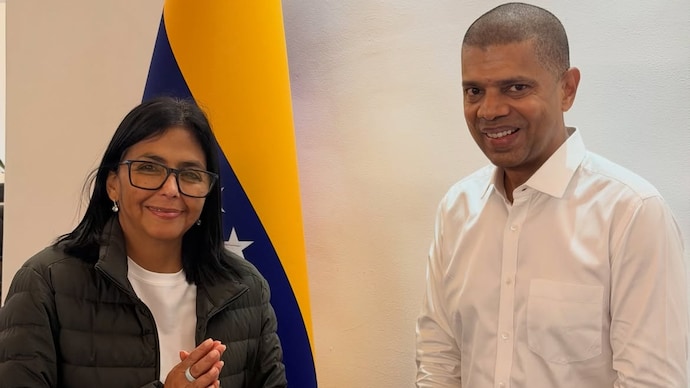
Later, Pandian met Rodriguez, where he discussed Odisha's globally recognised approach to handling natural disasters.
The interim president, battling, perhaps, her gravest crisis, has faced criticism over what the public has called a slow and inadequate response to the disaster. In fact, it has been just months since Rodriguez took charge after the US's capture of Venezuelan president Nicholas Maduro.
"Shared experiences and learning on rescue, recovery and rehabilitation. Discussed both immediate and long-term responses in disaster mitigation," the former bureaucrat said in a post on Instagram.
Following the catastrophe, India launched Operation Amistad, setting up an Army Field Hospital on a racetrack to provide medical treatment. Pandian said he received "great feedback" from Venezuela about the Army's initiative.
The fact that Venezuela invited Pandian to assist it burnishes the former BJD leader's reputation as a disaster management expert.
When he quit politics in 2024, Naveen Patnaik vividly recalled Pandian's role when the state was struck by two major cyclones and the Covid pandemic. Pandian, who served as Patnaik's private secretary for 12 years, was largely seen as the BJD supremo's successor.
THE ODISHA MODEL OF DISASTER MANAGEMENT
Historically, Odisha has faced the maximum brunt of deadly cyclones that strike its coast every year. However, the state's infallible disaster response model, developed after the devastating 1999 super cyclone, has gone a long way in tackling such disasters.
The result? From over 10,000 deaths in the 1999 tragedy, the fatalities from subsequent cyclones have mostly been in double digits. While one died in Cyclone Dana, Cyclone Fani killed 64, Cyclone Titli 27, and Cyclone Hudhud just three.
So what did Odisha do differently? After the 1999 cyclone, Odisha became the first state to form a disaster management authority. It developed a "zero casualty" model to minimise casualties.
Pandian, who started in 2002 in the poverty-stricken Kalahandi district, quickly rose through the bureaucratic ranks in Odisha. Over the years, his stamp has been hard to miss in the state's governance map, even though he preferred to work behind the curtains.
Right from 2000, Odisha invested heavily in preparedness rather than simply reacting after disasters occur.
Central to it has been the state's move to actively involve communities and NGOs in disaster preparedness and response. The government trained volunteers, even at the gram panchayat level, for rescue and relief operations.
Even today, the Odisha Disaster Rapid Action Force (ODRAF) conducts community-led mock drills across the state twice annually.
Additionally, Odisha has empowered panchayats to lead disaster planning. By decentralising decision-making, the state has enabled faster, more effective responses.
Building disaster-resilient infrastructure has also been a key element of Odisha's disaster management. Over the years, the state disaster authority has built over 800 cyclone shelters along with evacuation roads along the entire coastline.
Moreover, Odisha was also one of the first states to put in place an early warning system that reached the very last mile. Presently, more than 2,000 villages in the coastal districts receive cyclone warnings through sirens.
VK Pandian is likely to have shared these inputs with the Venezuelan interim president as the country picks up the pieces and rebuilds from the tragedy. The country has a long history of devastating earthquakes.
The June 24 catastrophe will not be the last, as Venezuela sits on a seismically active zone. Perhaps, the next time when tragedy strikes, Venezuela will be better prepared by learning from the Odisha model. It can thank VK Pandian then.
If there is one state globally known for its successful disaster management model, it is Odisha. Now, Venezuela, reeling from two devastating earthquakes two weeks ago, wants to learn from Odisha's playbook. That is why Venezuelan interim president Delcy Rodriguez invited former Odisha IAS officer VK Pandian to share insights on the coastal state's "zero casualty" disaster management model.
It has put Pandian in the spotlight again, two years since he stepped away from public life and active politics. Many remember Pandian as the trusted aide of former Odisha Chief Minister Naveen Patnaik. The Odisha cadre IAS officer joined the BJD six months before the 2024 elections, and led its campaign. However, he stepped down after the BJD was routed by the BJP. But before politics, Pandian was known in the state's circles as the "cyclone manager". Venezuela seems to have carefully noted his credentials.
WHY VENEZUELA INVITED VK PANDIAN
Earlier this week, Pandian visited Venezuela and toured areas worst affected by the earthquakes, which left over 3,000 dead. The former BJD leader is known to be usually reticent and maintain a low profile. People only came to know of his visit after Pandian himself posted videos and images from Venezuela.
The visuals showed much of the Latin American country in ruins, with flattened buildings and debris scattered across. Pandian is also seen interacting with locals and working with teams involved in rescue and recovery operations.
Later, Pandian met Rodriguez, where he discussed Odisha's globally recognised approach to handling natural disasters.
The interim president, battling, perhaps, her gravest crisis, has faced criticism over what the public has called a slow and inadequate response to the disaster. In fact, it has been just months since Rodriguez took charge after the US's capture of Venezuelan president Nicholas Maduro.
"Shared experiences and learning on rescue, recovery and rehabilitation. Discussed both immediate and long-term responses in disaster mitigation," the former bureaucrat said in a post on Instagram.
Following the catastrophe, India launched Operation Amistad, setting up an Army Field Hospital on a racetrack to provide medical treatment. Pandian said he received "great feedback" from Venezuela about the Army's initiative.
The fact that Venezuela invited Pandian to assist it burnishes the former BJD leader's reputation as a disaster management expert.
When he quit politics in 2024, Naveen Patnaik vividly recalled Pandian's role when the state was struck by two major cyclones and the Covid pandemic. Pandian, who served as Patnaik's private secretary for 12 years, was largely seen as the BJD supremo's successor.
THE ODISHA MODEL OF DISASTER MANAGEMENT
Historically, Odisha has faced the maximum brunt of deadly cyclones that strike its coast every year. However, the state's infallible disaster response model, developed after the devastating 1999 super cyclone, has gone a long way in tackling such disasters.
The result? From over 10,000 deaths in the 1999 tragedy, the fatalities from subsequent cyclones have mostly been in double digits. While one died in Cyclone Dana, Cyclone Fani killed 64, Cyclone Titli 27, and Cyclone Hudhud just three.
So what did Odisha do differently? After the 1999 cyclone, Odisha became the first state to form a disaster management authority. It developed a "zero casualty" model to minimise casualties.
Pandian, who started in 2002 in the poverty-stricken Kalahandi district, quickly rose through the bureaucratic ranks in Odisha. Over the years, his stamp has been hard to miss in the state's governance map, even though he preferred to work behind the curtains.
Right from 2000, Odisha invested heavily in preparedness rather than simply reacting after disasters occur.
Central to it has been the state's move to actively involve communities and NGOs in disaster preparedness and response. The government trained volunteers, even at the gram panchayat level, for rescue and relief operations.
Even today, the Odisha Disaster Rapid Action Force (ODRAF) conducts community-led mock drills across the state twice annually.
Additionally, Odisha has empowered panchayats to lead disaster planning. By decentralising decision-making, the state has enabled faster, more effective responses.
Building disaster-resilient infrastructure has also been a key element of Odisha's disaster management. Over the years, the state disaster authority has built over 800 cyclone shelters along with evacuation roads along the entire coastline.
Moreover, Odisha was also one of the first states to put in place an early warning system that reached the very last mile. Presently, more than 2,000 villages in the coastal districts receive cyclone warnings through sirens.
VK Pandian is likely to have shared these inputs with the Venezuelan interim president as the country picks up the pieces and rebuilds from the tragedy. The country has a long history of devastating earthquakes.
The June 24 catastrophe will not be the last, as Venezuela sits on a seismically active zone. Perhaps, the next time when tragedy strikes, Venezuela will be better prepared by learning from the Odisha model. It can thank VK Pandian then.

