Lost for 158 years: Rare Himalayan flower found in Arunachal Pradesh
A rare Himalayan flowering plant believed to have disappeared from India for more than a century has been recorded in Arunachal Pradesh, giving a boost to botanical research and conservation efforts.
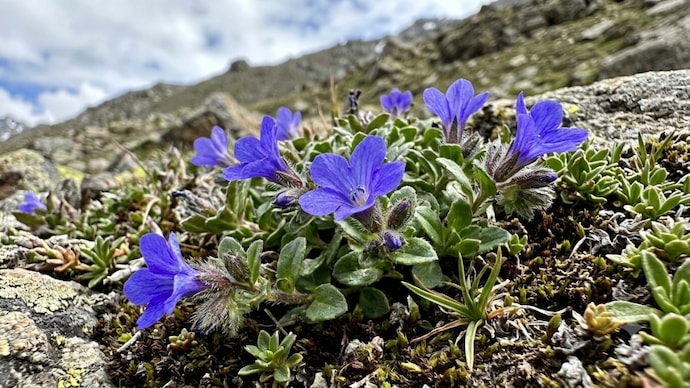
A rare Himalayan flowering plant, Cyananthus hookeri, has been recorded in Arunachal Pradesh's Tawang district after 158 years, marking its first confirmed sighting in India since it was last documented in Sikkim in 1867.
The discovery was made by scientists from the Botanical Survey of India (BSI) during a field survey near Chuna Valley, close to Mago village, at an altitude of around 3,600 metres.
The finding has been published in the international conservation journal Oryx and is being seen as an important step for India's botanical research and biodiversity conservation.
FIRST RECORD IN ARUNACHAL PRADESH
The purple-blue flowering plant belongs to the bellflower family (Campanulaceae). It was last recorded in India by British botanist Joseph Dalton Hooker during his expedition to Sikkim in 1867.
The latest discovery marks the first confirmed record of Cyananthus hookeri in Arunachal Pradesh, expanding the known distribution of the species within India.
FEWER THAN 50 PLANTS FOUND
During the field survey carried out in September 2025, researchers found fewer than 50 mature plants growing on alpine grassy and rocky slopes near Chuna Valley.
The small population and restricted habitat point to the species' rarity in India and raise concerns about its long-term survival.
SCIENTISTS SEEK ENDANGERED STATUS
Based on the limited number of plants and their narrow distribution, the researchers have recommended that Cyananthus hookeri be classified as endangered in India under the International Union for Conservation of Nature (IUCN) criteria.
The species is also found in parts of Bhutan, China and Nepal, but remains extremely rare within India.
IMPORTANT FIND FOR BOTANICAL RESEARCH
The study was conducted by BSI scientists Subhajit Lahiri, Monalisa Das and Sudhansu Sekhar Dash. Their findings have been published in Oryx, an international journal focused on biodiversity conservation.
Deputy Chief Minister Chowna Mein described the discovery as a major milestone for India's botanical heritage. In a social media post, he said the finding showcases Arunachal Pradesh's rich biodiversity and reinforces the need to protect the fragile ecosystems of the eastern Himalayas.
ALSO READ: From Mount Kailash to Punjab: 5 things you probably didn't know about the Sutlej
WHY THE DISCOVERY MATTERS
Arunachal Pradesh forms part of the globally recognised Eastern Himalaya biodiversity hotspot and is home to thousands of plant species, many of which are rare or found nowhere else.
Officials said the rediscovery of Cyananthus hookeri after 158 years further strengthens the state's importance for biodiversity conservation, scientific research and the protection of India's unique Himalayan flora.
A rare Himalayan flowering plant, Cyananthus hookeri, has been recorded in Arunachal Pradesh's Tawang district after 158 years, marking its first confirmed sighting in India since it was last documented in Sikkim in 1867.
The discovery was made by scientists from the Botanical Survey of India (BSI) during a field survey near Chuna Valley, close to Mago village, at an altitude of around 3,600 metres.
The finding has been published in the international conservation journal Oryx and is being seen as an important step for India's botanical research and biodiversity conservation.
FIRST RECORD IN ARUNACHAL PRADESH
The purple-blue flowering plant belongs to the bellflower family (Campanulaceae). It was last recorded in India by British botanist Joseph Dalton Hooker during his expedition to Sikkim in 1867.
The latest discovery marks the first confirmed record of Cyananthus hookeri in Arunachal Pradesh, expanding the known distribution of the species within India.
FEWER THAN 50 PLANTS FOUND
During the field survey carried out in September 2025, researchers found fewer than 50 mature plants growing on alpine grassy and rocky slopes near Chuna Valley.
The small population and restricted habitat point to the species' rarity in India and raise concerns about its long-term survival.
SCIENTISTS SEEK ENDANGERED STATUS
Based on the limited number of plants and their narrow distribution, the researchers have recommended that Cyananthus hookeri be classified as endangered in India under the International Union for Conservation of Nature (IUCN) criteria.
The species is also found in parts of Bhutan, China and Nepal, but remains extremely rare within India.
IMPORTANT FIND FOR BOTANICAL RESEARCH
The study was conducted by BSI scientists Subhajit Lahiri, Monalisa Das and Sudhansu Sekhar Dash. Their findings have been published in Oryx, an international journal focused on biodiversity conservation.
Deputy Chief Minister Chowna Mein described the discovery as a major milestone for India's botanical heritage. In a social media post, he said the finding showcases Arunachal Pradesh's rich biodiversity and reinforces the need to protect the fragile ecosystems of the eastern Himalayas.
ALSO READ: From Mount Kailash to Punjab: 5 things you probably didn't know about the Sutlej
WHY THE DISCOVERY MATTERS
Arunachal Pradesh forms part of the globally recognised Eastern Himalaya biodiversity hotspot and is home to thousands of plant species, many of which are rare or found nowhere else.
Officials said the rediscovery of Cyananthus hookeri after 158 years further strengthens the state's importance for biodiversity conservation, scientific research and the protection of India's unique Himalayan flora.

