Missiles, maps and messaging: Inside the latest US-Iran clash
As a fragile ceasefire frays, the latest US strikes reveal an expanding battlefield, strategic targets around Hormuz and a parallel war of words driving the conflict.


The only thing more unpredictable than US President Donald Trump's statements right now is the ceasefire agreement between Washington and Tehran. It feels like no one knows what will happen next. Trump has alternated between declaring the agreement "over" and suggesting Iran still wants a deal, even as military exchanges have continued despite the ceasefire. Statements from both sides remain sharply confrontational, and so do developments on the ground.
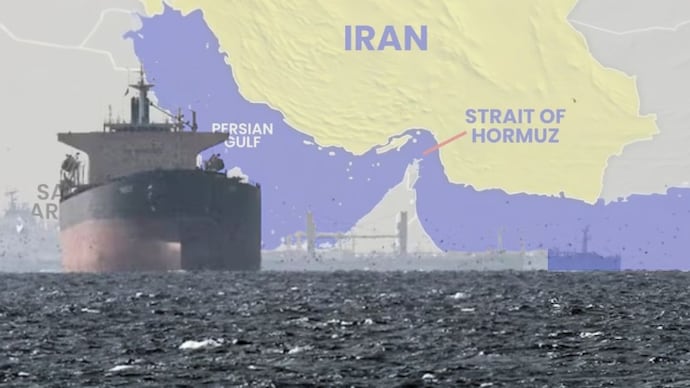
Over the last 48 hours, the two militaries have exchanged fire in and around the Strait of Hormuz despite a 60 day ceasefire framework. The latest US strikes also marked a significant geographical shift.
Unlike previous rounds, which were concentrated largely along Iran's southern coastline, the latest operation expanded northwards to include railway bridges and transport infrastructure while continuing to target ports, coastal military infrastructure, maritime traffic control facilities and other strategic sites in the south. Tehran, meanwhile, continued its retaliation, leaving the fragile agreement under renewed strain.
India Today Open Source Intelligence (OSINT) team mapped the latest US strikes across Iran over the past two days and tracked official statements issued by Washington and Tehran to understand how military operations and political messaging have evolved amidst the ceasefire agreement.
According to US officials, the recent strikes are intended to degrade Iran's ability to threaten commercial shipping through the Strait of Hormuz. US Central Command (CENTCOM) said the operation targeted about 90 military sites, including air defence systems, missile and drone infrastructure, naval assets and logistics facilities.
A WIDER FOOTPRINT OF STRATEGIC TARGETS
Reuters reported strikes in Bandar Abbas, while Iranian state media reported attacks on Bushehr, Konarak, Chabahar, Iranshahr and the two railway bridges in northern Iran. Together, the locations indicate an operation extending well beyond Iran's southern coastline.
The selection of targets suggests an attempt to pressure multiple layers of Iran's strategic infrastructure simultaneously. Bandar Abbas is Iran's largest commercial port and home to major Islamic Revolutionary Guard Corps (IRGC) Navy facilities. Kharg Island serves as Iran's principal crude oil export terminal, while Qeshm, Lavan and Abu Musa overlook some of the world's busiest shipping lanes through the Strait of Hormuz.
Iranian state media also reported strikes stretching eastward to Sirik, Jask, Konarak and Chabahar, locations that form part of Iran's coastal surveillance and naval network extending into the Gulf of Oman. Iranian media also reported damage to a maritime traffic control tower in Chabahar and disruptions around Iranshahr airport.
The railway bridges add a different dimension. According to Iranian state media, one bridge near Aqqala in Golestan province and another on the Tehran–Mashhad rail corridor were struck, disrupting rail services. Unlike ports or naval facilities, these are critical transport links supporting the movement of personnel and military equipment, suggesting the latest operation sought to pressure both Iran's maritime posture and its inland logistics.
US Central Command described the latest operation as an "immediate response" to attacks on commercial shipping, saying more than 80 military targets had been struck with precision munitions and accusing Iran of committing "a clear violation" of the ceasefire.
Although the Strait of Hormuz has long been recognised as the world's most critical energy chokepoint, it rarely dominated headlines before this war. Today, it has emerged as the defining theatre of the confrontation, with military operations from both sides increasingly centred in and around the strategic waterway. Whether the conflict is ultimately about Hormuz itself or part of a broader geopolitical contest remains to be seen.
Responding to the latest wave of US strikes, Iranian state television claimed Tehran had launched retaliatory attacks on US military assets across the Gulf. According to the broadcaster, drones struck a satellite antenna in Qatar, while separate attacks targeted Patriot air defence systems in Kuwait and a US Army fuel storage facility in Bahrain. The claims could not be independently verified, and there was no immediate confirmation of damage or casualties.
The conflict, however, is not being fought through missiles and drones alone. Running parallel is a battle of narratives that has become equally consequential. Washington and Tehran continue to exchange threats, warnings and declarations of resolve, with neither side willing to concede strategic leverage, diplomatic advantage or the battle for global perception.
WAR OF WORDS
While committees constituted under the 60 day memorandum of understanding are expected to continue negotiations on a longer term settlement, every round of military action has been followed by equally sharp rhetoric, raising fresh doubts over whether diplomacy is keeping pace with events on the battlefield.
On the American side, President Donald Trump declared the memorandum of understanding "over", saying, "To me, I think it's over. I don't want to deal with them." Speaking ahead of the NATO summit in Ankara, he described Iran's leadership as "scum" and "sick people", adding, "As far as I'm concerned, it's just a waste of time dealing with them." He later claimed Iran "wants to make a deal so badly" while questioning whether they were "worthy of making a deal", warning, "If they persist, we'll get much worse."
Iran's response has been equally uncompromising. Parliament Speaker Mohammad Bagher Ghalibaf accused Washington of "major MOU violations", citing renewed strikes, sanctions and continued military threats. He warned, "America still hasn't learned that bullying and breaking promises are no longer cost free. Let me put it plainly: if you strike, you'll get hit."
The message was echoed across Tehran's political and military establishment. Foreign Minister Abbas Araghchi insisted Iran would not negotiate under threats and urged Washington to "honor your signature", while the Iranian Foreign Ministry accused the US of violating both the ceasefire and international law.
Brigadier General Ebrahim Azizi, chairman of the Iranian Parliament's National Security Commission, summed up Tehran's position in a single message: "Recognize the new Iranian order in the Strait of Hormuz."
Taken together, the military exchanges and diplomatic rhetoric point in the same direction. While the ceasefire remains formally in place, both Washington and Tehran continue to communicate through coercion rather than compromise, leaving the future of the agreement increasingly uncertain.
The only thing more unpredictable than US President Donald Trump's statements right now is the ceasefire agreement between Washington and Tehran. It feels like no one knows what will happen next. Trump has alternated between declaring the agreement "over" and suggesting Iran still wants a deal, even as military exchanges have continued despite the ceasefire. Statements from both sides remain sharply confrontational, and so do developments on the ground.
Over the last 48 hours, the two militaries have exchanged fire in and around the Strait of Hormuz despite a 60 day ceasefire framework. The latest US strikes also marked a significant geographical shift.
Unlike previous rounds, which were concentrated largely along Iran's southern coastline, the latest operation expanded northwards to include railway bridges and transport infrastructure while continuing to target ports, coastal military infrastructure, maritime traffic control facilities and other strategic sites in the south. Tehran, meanwhile, continued its retaliation, leaving the fragile agreement under renewed strain.
India Today Open Source Intelligence (OSINT) team mapped the latest US strikes across Iran over the past two days and tracked official statements issued by Washington and Tehran to understand how military operations and political messaging have evolved amidst the ceasefire agreement.
According to US officials, the recent strikes are intended to degrade Iran's ability to threaten commercial shipping through the Strait of Hormuz. US Central Command (CENTCOM) said the operation targeted about 90 military sites, including air defence systems, missile and drone infrastructure, naval assets and logistics facilities.
A WIDER FOOTPRINT OF STRATEGIC TARGETS
Reuters reported strikes in Bandar Abbas, while Iranian state media reported attacks on Bushehr, Konarak, Chabahar, Iranshahr and the two railway bridges in northern Iran. Together, the locations indicate an operation extending well beyond Iran's southern coastline.
The selection of targets suggests an attempt to pressure multiple layers of Iran's strategic infrastructure simultaneously. Bandar Abbas is Iran's largest commercial port and home to major Islamic Revolutionary Guard Corps (IRGC) Navy facilities. Kharg Island serves as Iran's principal crude oil export terminal, while Qeshm, Lavan and Abu Musa overlook some of the world's busiest shipping lanes through the Strait of Hormuz.
Iranian state media also reported strikes stretching eastward to Sirik, Jask, Konarak and Chabahar, locations that form part of Iran's coastal surveillance and naval network extending into the Gulf of Oman. Iranian media also reported damage to a maritime traffic control tower in Chabahar and disruptions around Iranshahr airport.
The railway bridges add a different dimension. According to Iranian state media, one bridge near Aqqala in Golestan province and another on the Tehran–Mashhad rail corridor were struck, disrupting rail services. Unlike ports or naval facilities, these are critical transport links supporting the movement of personnel and military equipment, suggesting the latest operation sought to pressure both Iran's maritime posture and its inland logistics.
US Central Command described the latest operation as an "immediate response" to attacks on commercial shipping, saying more than 80 military targets had been struck with precision munitions and accusing Iran of committing "a clear violation" of the ceasefire.
Although the Strait of Hormuz has long been recognised as the world's most critical energy chokepoint, it rarely dominated headlines before this war. Today, it has emerged as the defining theatre of the confrontation, with military operations from both sides increasingly centred in and around the strategic waterway. Whether the conflict is ultimately about Hormuz itself or part of a broader geopolitical contest remains to be seen.
Responding to the latest wave of US strikes, Iranian state television claimed Tehran had launched retaliatory attacks on US military assets across the Gulf. According to the broadcaster, drones struck a satellite antenna in Qatar, while separate attacks targeted Patriot air defence systems in Kuwait and a US Army fuel storage facility in Bahrain. The claims could not be independently verified, and there was no immediate confirmation of damage or casualties.
The conflict, however, is not being fought through missiles and drones alone. Running parallel is a battle of narratives that has become equally consequential. Washington and Tehran continue to exchange threats, warnings and declarations of resolve, with neither side willing to concede strategic leverage, diplomatic advantage or the battle for global perception.
WAR OF WORDS
While committees constituted under the 60 day memorandum of understanding are expected to continue negotiations on a longer term settlement, every round of military action has been followed by equally sharp rhetoric, raising fresh doubts over whether diplomacy is keeping pace with events on the battlefield.
On the American side, President Donald Trump declared the memorandum of understanding "over", saying, "To me, I think it's over. I don't want to deal with them." Speaking ahead of the NATO summit in Ankara, he described Iran's leadership as "scum" and "sick people", adding, "As far as I'm concerned, it's just a waste of time dealing with them." He later claimed Iran "wants to make a deal so badly" while questioning whether they were "worthy of making a deal", warning, "If they persist, we'll get much worse."
Iran's response has been equally uncompromising. Parliament Speaker Mohammad Bagher Ghalibaf accused Washington of "major MOU violations", citing renewed strikes, sanctions and continued military threats. He warned, "America still hasn't learned that bullying and breaking promises are no longer cost free. Let me put it plainly: if you strike, you'll get hit."
The message was echoed across Tehran's political and military establishment. Foreign Minister Abbas Araghchi insisted Iran would not negotiate under threats and urged Washington to "honor your signature", while the Iranian Foreign Ministry accused the US of violating both the ceasefire and international law.
Brigadier General Ebrahim Azizi, chairman of the Iranian Parliament's National Security Commission, summed up Tehran's position in a single message: "Recognize the new Iranian order in the Strait of Hormuz."
Taken together, the military exchanges and diplomatic rhetoric point in the same direction. While the ceasefire remains formally in place, both Washington and Tehran continue to communicate through coercion rather than compromise, leaving the future of the agreement increasingly uncertain.

