That one ghost scene in Satluj proves why Diljit Dosanjh is at his haunting best
In Satluj, one quiet ghost scene says more about fear, justice and conscience than pages of dialogue ever could. It's a haunting masterclass in restraint by Diljit Dosanjh that stays with you long after the film ends.
Satluj, starring Diljit Dosanjh, is no longer available to stream in India. But the film leaves a lasting impact. In particular, one scene from the film has stayed with everyone who has watched it. It's tucked away near the end of Honey Trehan's account of Jaswant Singh Khalra's story, at a point where the film takes a risk few Hindi dramas would attempt. A police procedural about a missing human rights activist suddenly tips into the supernatural, and somehow never loses its emotional footing.
Spoiler warning: If you haven't watched the film yet despite all the buzz, this might reveal more than you'd like. If you have, you already know exactly where this is headed.
The scene belongs to Kuljeet, a police witness played by Jagjeet Sandhu, who had earlier agreed to testify against the colleagues who abducted and killed Khalra, only to turn hostile at the last moment. He tells investigators that he had lied, that the police were never involved in Khalra's abduction at all. It is a betrayal, not dramatic but deeply unsettling. And soon, late one night, Kuljeet wakes to find Jaswant Singh Khalra standing in his room.
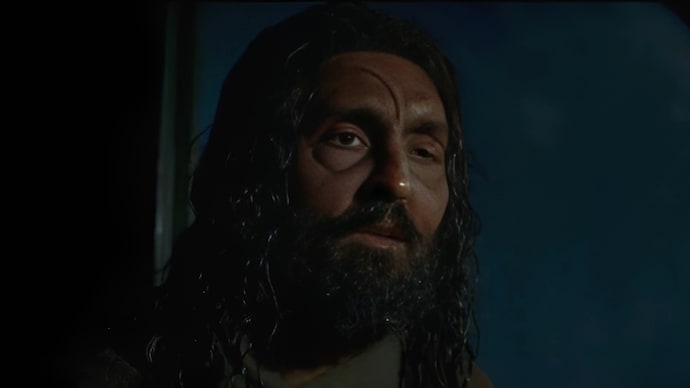
Diljit Dosanjh, playing Khalra, does not raise his voice once. His swollen face carries the cuts and bruises of a man who has clearly been through unspeakable violence, and his words, when they come, are almost conversational in their horror.
"Dariya se seedha aya hoon main," he says, telling Kuljeet he has come straight from the river. He is not alone there, he says; there are countless others like him, children, women, the elderly, and more will keep arriving, one by one.
In winter, when the river freezes over, he tells Kuljeet, the cold sets in from both outside and within, seeping through his open wounds until it fills entirely with water. "Yeh dekh," he says, showing Kuljeet the wound itself. "Pura paani bhar jata hai yaar [Water fills these wounds]." Kuljeet cannot bear to look. He shuts his eyes and turns away, and when he opens them again, Khalra is gone.
There is no scream, no swelling background score, no manufactured jump-scare. Just a man addressing another man's guilt directly, in language so plain it barely sounds like a horror scene at all, and yet it lands as one of the most unsettling passages in recent Indian films.
The scene works because of both Dosanjh's restraint and Trehan's careful build-up. Until this moment, Satluj follows the structure of a police procedural focused on Khalra's disappearance. The sudden shift into the surreal could have felt forced, but it doesn't.
The scene doesn’t feel gimmicky because both Diljit and Sandhu play the scene with complete honesty, grounding it in guilt, grief and fear rather than treating it as a moment of shock or spectacle.
The confrontation does its work. Shaken, Kuljeet returns to the CBI the next day and asks to redo his testimony, this time truthfully. Investigator Samudra Singh, played by Arjun Rampal, is sceptical, and asks him plainly why he should be believed now. Kuljeet's answer is the quietest line in the scene, and perhaps the film's clearest thesis. Earlier, he says, he had been afraid of the police. Asked what has changed, he simply replies that he is now afraid of God instead.
Dosanjh carries the entire scene without ever raising his voice. There is no anger in his Jaswant Singh Khalra, no vengeful energy of the kind Hindi cinema usually reaches for when a wronged man returns to confront the guilty. Instead, he plays it almost gently, describing the cold of the river and the wound that never quite closes as though he were making small talk, and that plainness is exactly what makes it devastating. It is a subtle performance that lets silence do the talking. It's haunting and stays with you long after the credits roll.
The horror of the scene lies as much on the surface as it lies within it. It is the horror of the situation, the guilt and the self-conscience. Khalra appears as a ghost not to make Kuljeet fear him, but to make him fear what he has done by hiding the truth, and participating in murders of the innocents. The scene has been shot almost entirely in the dark. The light only highlights the faces as the camera pans from Dosanjh's expressions to Kuljeet's.
It is a scene built almost entirely out of restraint, a ghost story told without a single special effect or background music, carried instead by two performances that trust silence as much as dialogue. For a film that has otherwise been engulfed by a censorship row and an abrupt removal from OTT, it is this scene, more than any statement or press note, that makes the strongest case for why Satluj deserves to be seen. A scene worth remembering in a film that is worthy of a comeback.
Satluj, starring Diljit Dosanjh, is no longer available to stream in India. But the film leaves a lasting impact. In particular, one scene from the film has stayed with everyone who has watched it. It's tucked away near the end of Honey Trehan's account of Jaswant Singh Khalra's story, at a point where the film takes a risk few Hindi dramas would attempt. A police procedural about a missing human rights activist suddenly tips into the supernatural, and somehow never loses its emotional footing.
Spoiler warning: If you haven't watched the film yet despite all the buzz, this might reveal more than you'd like. If you have, you already know exactly where this is headed.
The scene belongs to Kuljeet, a police witness played by Jagjeet Sandhu, who had earlier agreed to testify against the colleagues who abducted and killed Khalra, only to turn hostile at the last moment. He tells investigators that he had lied, that the police were never involved in Khalra's abduction at all. It is a betrayal, not dramatic but deeply unsettling. And soon, late one night, Kuljeet wakes to find Jaswant Singh Khalra standing in his room.
Diljit Dosanjh, playing Khalra, does not raise his voice once. His swollen face carries the cuts and bruises of a man who has clearly been through unspeakable violence, and his words, when they come, are almost conversational in their horror.
"Dariya se seedha aya hoon main," he says, telling Kuljeet he has come straight from the river. He is not alone there, he says; there are countless others like him, children, women, the elderly, and more will keep arriving, one by one.
In winter, when the river freezes over, he tells Kuljeet, the cold sets in from both outside and within, seeping through his open wounds until it fills entirely with water. "Yeh dekh," he says, showing Kuljeet the wound itself. "Pura paani bhar jata hai yaar [Water fills these wounds]." Kuljeet cannot bear to look. He shuts his eyes and turns away, and when he opens them again, Khalra is gone.
There is no scream, no swelling background score, no manufactured jump-scare. Just a man addressing another man's guilt directly, in language so plain it barely sounds like a horror scene at all, and yet it lands as one of the most unsettling passages in recent Indian films.
The scene works because of both Dosanjh's restraint and Trehan's careful build-up. Until this moment, Satluj follows the structure of a police procedural focused on Khalra's disappearance. The sudden shift into the surreal could have felt forced, but it doesn't.
The scene doesn’t feel gimmicky because both Diljit and Sandhu play the scene with complete honesty, grounding it in guilt, grief and fear rather than treating it as a moment of shock or spectacle.
The confrontation does its work. Shaken, Kuljeet returns to the CBI the next day and asks to redo his testimony, this time truthfully. Investigator Samudra Singh, played by Arjun Rampal, is sceptical, and asks him plainly why he should be believed now. Kuljeet's answer is the quietest line in the scene, and perhaps the film's clearest thesis. Earlier, he says, he had been afraid of the police. Asked what has changed, he simply replies that he is now afraid of God instead.
Dosanjh carries the entire scene without ever raising his voice. There is no anger in his Jaswant Singh Khalra, no vengeful energy of the kind Hindi cinema usually reaches for when a wronged man returns to confront the guilty. Instead, he plays it almost gently, describing the cold of the river and the wound that never quite closes as though he were making small talk, and that plainness is exactly what makes it devastating. It is a subtle performance that lets silence do the talking. It's haunting and stays with you long after the credits roll.
The horror of the scene lies as much on the surface as it lies within it. It is the horror of the situation, the guilt and the self-conscience. Khalra appears as a ghost not to make Kuljeet fear him, but to make him fear what he has done by hiding the truth, and participating in murders of the innocents. The scene has been shot almost entirely in the dark. The light only highlights the faces as the camera pans from Dosanjh's expressions to Kuljeet's.
It is a scene built almost entirely out of restraint, a ghost story told without a single special effect or background music, carried instead by two performances that trust silence as much as dialogue. For a film that has otherwise been engulfed by a censorship row and an abrupt removal from OTT, it is this scene, more than any statement or press note, that makes the strongest case for why Satluj deserves to be seen. A scene worth remembering in a film that is worthy of a comeback.

