In good shape | Exhibition of Sankho Chaudhuri and D.L.N. Reddy sculptures
An exhibition in Mumbai pairs sculptures by Sankho Chaudhuri and D.L.N. Reddy, tracing distinct approaches to form and material
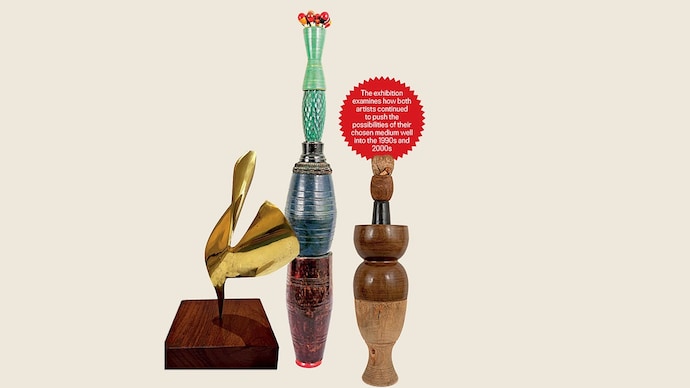
Two of modern Indian sculpture’s most distinctive voices take centre stage at Mumbai-based Chatterjee & Lal’s newest exhibition, Late Assembly: Play in Two Acts. Bringing together the works of Sankho Chaudhuri (1916-2006) and D.L.N. Reddy (1949-), the exhibition examines how both artists continued to push the possibilities of their chosen medium well into the 1990s and 2000s, producing works that are as inventive as they are revealing.
Two of modern Indian sculpture’s most distinctive voices take centre stage at Mumbai-based Chatterjee & Lal’s newest exhibition, Late Assembly: Play in Two Acts. Bringing together the works of Sankho Chaudhuri (1916-2006) and D.L.N. Reddy (1949-), the exhibition examines how both artists continued to push the possibilities of their chosen medium well into the 1990s and 2000s, producing works that are as inventive as they are revealing.
Two of modern Indian sculpture’s most distinctive voices take centre stage at Mumbai-based Chatterjee & Lal’s newest exhibition, Late Assembly: Play in Two Acts. Bringing together the works of Sankho Chaudhuri (1916-2006) and D.L.N. Reddy (1949-), the exhibition examines how both artists continued to push the possibilities of their chosen medium well into the 1990s and 2000s, producing works that are as inventive as they are revealing.
Though linked by their engagement with sculpture, the two artists arrived at markedly different outcomes. Chaudhuri, a faculty member of the sculpture department at The Maharaja Sayajirao University of Baroda (in the early 1950s), remained invested in the formal concerns that defined much of his practice. His late works emerged from an attentive observation of everyday life—metal moulded into shapes of birds or abstract standing forms in brass, bronze and marble. The resulting sculptures retain a sense of balance and compression while embracing a spirit of curiosity and play. Also on view are rare watercolours and sketches by Chaudhuri, all of which are being shown for the first time in India.
Based largely in Hyderabad, Reddy was a student in the printmaking department at Baroda from 1970 to 1971. His work involved transforming hardware store finds, scrap materials and discarded objects into assemblages marked by improvisation and surprise. By cutting, bending and reconfiguring everyday materials, he sought to give them new identities and meanings. “Their spirit is so different—Chaudhuri is more restrained while Reddy has an exuberant energy,” says the gallery’s co-founder, Mortimer Chatterjee. Together, these works offer a compelling view of sculpture as a site of ongoing inquiry, where experimentation, material transformation and formal. Invention remained central to artistic practice.
While painting dominated much of the critical art discourse of the 20th century, the contributions of sculptors have often received less attention. By focusing on these late works, the exhibition argues that they are not merely concluding notes in two distinguished careers, but significant artistic statements in their own right.
—On view until August 22

