Ties that bind | Manil Suri's memoir, 'A Room in Bombay'
Mathematician and novelist Manil Suri writes a memoir about parents, property and the battle between duty and selfhood
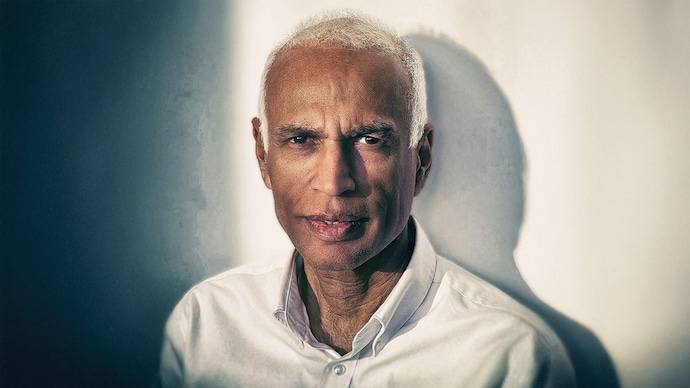
How does space, or the lack of it, wring our relationships? How does place contour our personality? When and how does a room morph from a location into a protagonist? What do escape and freedom mean? And is there escape without guilt? These are just some of the questions that Manil Suri, author of three novels and a book on popular mathematics, probes in his memoir, A Room in Bombay.
How does space, or the lack of it, wring our relationships? How does place contour our personality? When and how does a room morph from a location into a protagonist? What do escape and freedom mean? And is there escape without guilt? These are just some of the questions that Manil Suri, author of three novels and a book on popular mathematics, probes in his memoir, A Room in Bombay.
How does space, or the lack of it, wring our relationships? How does place contour our personality? When and how does a room morph from a location into a protagonist? What do escape and freedom mean? And is there escape without guilt? These are just some of the questions that Manil Suri, author of three novels and a book on popular mathematics, probes in his memoir, A Room in Bombay.
When we speak, Suri is in Pittsburgh, attending a literary festival. The Booker-longlisted author says that while he struggles with plot in fiction, in a memoir the plot was already laid out for him. He often found he had “too much plot”, as so much had happened to him. He grew up in a derelict apartment in Bombay, which his parents, Ram and Prem, shared with three Muslim families. The families used a common kitchen and bathroom, which often led to heated skirmishes. His parents were caught in a loveless and humourless marriage, and from a young age Suri became peacekeeper, accountant, cheerleader and soother of broken spirits. In the confines of Razia Mansion, as a friendless child, he realised he might be gay. At the age of 20, he finally admitted to his mother—“I couldn’t do it anymore. The flat was killing me; I couldn’t stay”—and left for the US.
Suri elaborates on the grip of the room: “The room did have this clutching quality to it, like it had all of us in its grasp. And it was both a place that was somewhere to escape from all the hostility around us, but also this prison because we were all in there and, in a way, that’s good and that’s bad.”
His departure and the US gave him a new lease of life, he found friends and lovers and finally a partner and home. But back in Mumbai, his father continued to battle alcoholism and his mother (a voracious reader and a beloved teacher) her own demons. The memoir is a tug of war between duty and selfhood, freedom and guilt. Suri wrote the book based on the 2,700 letters (which made it to The Limca Book of Records) that he exchanged with his parents.
The copious letters hint at the devotion between parents and son. Much of the book focuses on Suri’s mother Prem who, from her marriage onwards, was forced to lower her expectations as she found that her husband did not share her inclination towards art, literature or politics.
Writing A Room in Bombay allowed Manil Suri to see his father anew. He had always perceived him through his mother’s eyes as the dreamer and the drunk. But the book gave him new insights. Suri says, “My father’s character was something that I learned the most about while writing this book and just sifting through the past and re-examining this person in the light of the larger story.”
Suri—who was trained as a mathematician at Carnegie-Mellon University and has taught at University of Maryland Baltimore County (UMBC) since 1983—is accustomed to seeing patterns like a scientist. This training held him in good stead while navigating personal tumults. When dementia started robbing Prem of her senses, Suri had to find a solution that provided for her, while not upending his own life.
A Room in Bombay movingly illustrates the shapes of love and caregiving. It could be a wife who insists on cleaning her husband, even though she is loath to do it. It could be a son inviting his hallucinating mother into his home in another continent though he knows it will topple his life. It is a book about how liberation and guilt walk in tandem. As Suri says, “It’s one thing to liberate yourself; if you’re willing to snap off the major ties in your life with your parents, then you’re home free. But you also have to keep tending to the ties that you’re not willing to break and you shouldn’t be breaking. So, it’s a compromise. What do you optimise?”
A Room in Bombay reminds us that there are no optimal solutions; there is finally only compromise and love.

