Knowing your place | Daniyal Mueenuddin's 'This is Where the Serpent Lives'
Dreams are dashed in the feudal Pakistan depicted in Daniyal Mueenuddin's 'This is Where the Serpent Lives'
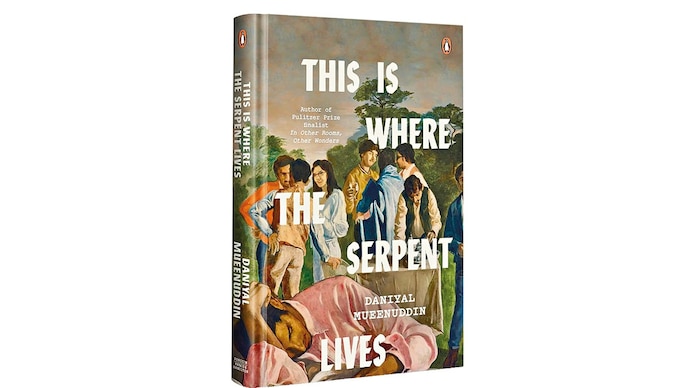
It’s strange to think of Daniyal Mueenuddin, an already much-heralded writer, as a debut novelist. Back in 2009, his brilliant collection of short stories, In Other Rooms, Other Wonders was a finalist for both a Pulitzer prize and the United States' National Book Award. Mueenuddin's stories recreated, with verve, insight and genuine feeling, his unusual experience as the scion of a landowning family in Pakistani Punjab who returned from the United States, and an elite education at Dartmouth and Yale, to run his farm.
It’s strange to think of Daniyal Mueenuddin, an already much-heralded writer, as a debut novelist. Back in 2009, his brilliant collection of short stories, In Other Rooms, Other Wonders was a finalist for both a Pulitzer prize and the United States' National Book Award. Mueenuddin's stories recreated, with verve, insight and genuine feeling, his unusual experience as the scion of a landowning family in Pakistani Punjab who returned from the United States, and an elite education at Dartmouth and Yale, to run his farm.
It’s strange to think of Daniyal Mueenuddin, an already much-heralded writer, as a debut novelist. Back in 2009, his brilliant collection of short stories, In Other Rooms, Other Wonders was a finalist for both a Pulitzer prize and the United States' National Book Award. Mueenuddin's stories recreated, with verve, insight and genuine feeling, his unusual experience as the scion of a landowning family in Pakistani Punjab who returned from the United States, and an elite education at Dartmouth and Yale, to run his farm.
Mueenuddin, whose father was a chief negotiator of the Indus Waters Treaty—suspended by the Modi government following the terrorist attack in Pulwama last year—and whose Norwegian-American mother was a Washington Post journalist, is, unlike most Pakistani (and Indian) gentleman farmers desiccated by privilege, immersed in the rhythms of rural life. He has an intimate understanding of its structure, its lattice of relationships, its carefully wrought and preserved hierarchies.
This understanding gives his voice authority. You believe what he is telling you about life in both Lahore and Dunyapur, about life in grand houses and squalid lean-tos, about life as a wealthy, art-buying, Turgenev-reading housewife, a diffident America-returned scion, a corpulent munshi, an orphan who rises to become a trusted driver to the boss, a favoured servant undone by ambition, a prickly gangster at once contemptuous and covetous of the trappings of the old order and so on.
The problem, though, is that Mueenuddin's understanding, his intimacy with Pakistan's still extant feudal structure, prevents him, or rather his characters, from upending the whole edifice, from blasting the whole burnished building to hell. Because no amount of carefully, even lovingly detailed exegesis of this feudal life can mask its essential brutality, its dark heart. "The world is governed more by chance than intention," observes Saqib, the main character in the last, longest eponymous section of This is Where the Serpent Lives, "as if a madman or a child were sovereign."
But the feudal world Mueenuddin itemises is inert. The one character who does transcend his circumstances, his assigned role, is Bayazid, found on the street in Rawalpindi in the 1950s, "holding a new pair of cheap plastic shoes tightly in his arms as if afraid they would be taken away". Bayazid flees Rawalpindi because he is foolish
enough to hope for love with a girl above his station, but winds up as the trusted driver to successive generations of Atar patriarchs, men who hold power as tightly in their arms as an infant Bayazid held those shoes.
Even Bayazid, though, goes only so far and appears content (except for a brief squall of protest at the very end of the novel) with how far he goes. Bayazid and Saqib bookend This is Where the Servant Lives, similar characters of different generations whose charisma, competence and ambition lead them in different directions. Readers will yearn for Saqib to triumph, for Pakistan to make the transition from the Atars to the Saqibs—but for that to happen, democracy would have had to succeed.
And it's not a spoiler to say that democracy, a shared post-Independence dream in both Pakistan and India, is at best contained, at worst on the verge of being stamped out.

