The India Story review: A relevant issue lost in an underwhelming courtroom drama
The India Story movie review: The India Story follows a grieving father and a novice lawyer as they challenge toxic food practices in court. The film keeps the food safety debate in focus, but its drama rarely matches the issue's urgency.
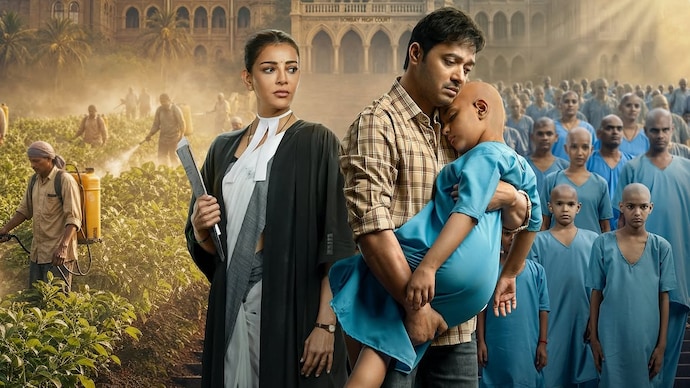
What if the food on your plate slowly turns into poison? That's the unsettling question The India Story attempts to ask. Starring Shreyas Talpade and Kajal Aggarwal, the courtroom drama is more than just a legal battle—it raises concerns about food safety, pesticides, farming practices and the system meant to protect consumers. While the subject is relevant and thought-provoking, the film struggles to deliver the emotional and dramatic impact it promises.
The story follows Major Yogesh Patil (Shreyas Talpade), whose young daughter Pari (Trisha Sarda) dies of cancer. Refusing to accept that it was simply a tragic illness, Yogesh believes her death was caused by toxic pesticides and contaminated food.
When neither the police nor experienced lawyers agree to help him, first-time advocate Archana (Kajal Aggarwal) decides to take up his case. What follows is a courtroom battle against the government, multinational pesticide companies and farmers, a case that soon sparks a nationwide debate.
The film's biggest strength is undoubtedly its subject. It touches upon issues such as pesticide use in agriculture, food adulteration, contaminated milk and the rising number of cancer cases. References to real-life incidents, including Punjab's 'Cancer Train' and the pesticide controversy in Kerala, lend weight to the narrative.
Unfortunately, such a compelling premise is let down by an underwhelming screenplay. A courtroom drama thrives on sharp arguments, tense cross-examinations and memorable exchanges. The India Story offers very little of that. The opposing lawyers mostly appear to be responding rather than challenging the case, while the multinational companies never seem to mount a convincing defence. As a result, the legal battle feels far less gripping than it should.
The first half maintains a steady pace, but the second half slows down considerably. Hospital sequences and treatment scenes are stretched longer than necessary, and the emotional beats often drift into melodrama. Even the climax lacks the impact a story of this scale deserves.
Shreyas Talpade delivers a sincere performance as a grieving father. He convincingly portrays a man devastated by loss, and his work in the latter half is particularly moving.
Kajal Aggarwal makes for a determined lawyer who tries to hold the film together, although a few scenes feel more dramatic than required.
Child actor Trisha Sarda leaves a mark with her innocent portrayal of Pari, especially during the illness sequences. Murli Sharma is dependable as always, while Manish Wadhwa makes his presence felt despite limited screen time.
The music fails to leave a lasting impression, with none of the songs staying with you after the film ends. The background score does its job without standing out. The cinematography and production design suit the film's tone, though the use of AI in a few portions feels distracting. Tighter editing could also have improved the overall pace.
The India Story is built around an issue that deserves attention and discussion. It succeeds in making viewers question how safe the food on their plates really is. However, weak writing, an underpowered courtroom battle, excessive melodrama and a climax that doesn't quite land prevent the film from reaching its full potential.
If you enjoy socially relevant dramas, are a fan of Kajal Aggarwal, or want to watch Shreyas Talpade's heartfelt performance, the film is worth a watch. But if you're expecting a gripping courtroom thriller packed with powerful confrontations and edge-of-the-seat moments, The India Story may leave you wanting more.
What if the food on your plate slowly turns into poison? That's the unsettling question The India Story attempts to ask. Starring Shreyas Talpade and Kajal Aggarwal, the courtroom drama is more than just a legal battle—it raises concerns about food safety, pesticides, farming practices and the system meant to protect consumers. While the subject is relevant and thought-provoking, the film struggles to deliver the emotional and dramatic impact it promises.
The story follows Major Yogesh Patil (Shreyas Talpade), whose young daughter Pari (Trisha Sarda) dies of cancer. Refusing to accept that it was simply a tragic illness, Yogesh believes her death was caused by toxic pesticides and contaminated food.
When neither the police nor experienced lawyers agree to help him, first-time advocate Archana (Kajal Aggarwal) decides to take up his case. What follows is a courtroom battle against the government, multinational pesticide companies and farmers, a case that soon sparks a nationwide debate.
The film's biggest strength is undoubtedly its subject. It touches upon issues such as pesticide use in agriculture, food adulteration, contaminated milk and the rising number of cancer cases. References to real-life incidents, including Punjab's 'Cancer Train' and the pesticide controversy in Kerala, lend weight to the narrative.
Unfortunately, such a compelling premise is let down by an underwhelming screenplay. A courtroom drama thrives on sharp arguments, tense cross-examinations and memorable exchanges. The India Story offers very little of that. The opposing lawyers mostly appear to be responding rather than challenging the case, while the multinational companies never seem to mount a convincing defence. As a result, the legal battle feels far less gripping than it should.
The first half maintains a steady pace, but the second half slows down considerably. Hospital sequences and treatment scenes are stretched longer than necessary, and the emotional beats often drift into melodrama. Even the climax lacks the impact a story of this scale deserves.
Shreyas Talpade delivers a sincere performance as a grieving father. He convincingly portrays a man devastated by loss, and his work in the latter half is particularly moving.
Kajal Aggarwal makes for a determined lawyer who tries to hold the film together, although a few scenes feel more dramatic than required.
Child actor Trisha Sarda leaves a mark with her innocent portrayal of Pari, especially during the illness sequences. Murli Sharma is dependable as always, while Manish Wadhwa makes his presence felt despite limited screen time.
The music fails to leave a lasting impression, with none of the songs staying with you after the film ends. The background score does its job without standing out. The cinematography and production design suit the film's tone, though the use of AI in a few portions feels distracting. Tighter editing could also have improved the overall pace.
The India Story is built around an issue that deserves attention and discussion. It succeeds in making viewers question how safe the food on their plates really is. However, weak writing, an underpowered courtroom battle, excessive melodrama and a climax that doesn't quite land prevent the film from reaching its full potential.
If you enjoy socially relevant dramas, are a fan of Kajal Aggarwal, or want to watch Shreyas Talpade's heartfelt performance, the film is worth a watch. But if you're expecting a gripping courtroom thriller packed with powerful confrontations and edge-of-the-seat moments, The India Story may leave you wanting more.
What if the food on your plate slowly turns into poison? That's the unsettling question The India Story attempts to ask. Starring Shreyas Talpade and Kajal Aggarwal, the courtroom drama is more than just a legal battle—it raises concerns about food safety, pesticides, farming practices and the system meant to protect consumers. While the subject is relevant and thought-provoking, the film struggles to deliver the emotional and dramatic impact it promises.
The story follows Major Yogesh Patil (Shreyas Talpade), whose young daughter Pari (Trisha Sarda) dies of cancer. Refusing to accept that it was simply a tragic illness, Yogesh believes her death was caused by toxic pesticides and contaminated food.
When neither the police nor experienced lawyers agree to help him, first-time advocate Archana (Kajal Aggarwal) decides to take up his case. What follows is a courtroom battle against the government, multinational pesticide companies and farmers, a case that soon sparks a nationwide debate.
The film's biggest strength is undoubtedly its subject. It touches upon issues such as pesticide use in agriculture, food adulteration, contaminated milk and the rising number of cancer cases. References to real-life incidents, including Punjab's 'Cancer Train' and the pesticide controversy in Kerala, lend weight to the narrative.
Unfortunately, such a compelling premise is let down by an underwhelming screenplay. A courtroom drama thrives on sharp arguments, tense cross-examinations and memorable exchanges. The India Story offers very little of that. The opposing lawyers mostly appear to be responding rather than challenging the case, while the multinational companies never seem to mount a convincing defence. As a result, the legal battle feels far less gripping than it should.
The first half maintains a steady pace, but the second half slows down considerably. Hospital sequences and treatment scenes are stretched longer than necessary, and the emotional beats often drift into melodrama. Even the climax lacks the impact a story of this scale deserves.
Shreyas Talpade delivers a sincere performance as a grieving father. He convincingly portrays a man devastated by loss, and his work in the latter half is particularly moving.
Kajal Aggarwal makes for a determined lawyer who tries to hold the film together, although a few scenes feel more dramatic than required.
Child actor Trisha Sarda leaves a mark with her innocent portrayal of Pari, especially during the illness sequences. Murli Sharma is dependable as always, while Manish Wadhwa makes his presence felt despite limited screen time.
The music fails to leave a lasting impression, with none of the songs staying with you after the film ends. The background score does its job without standing out. The cinematography and production design suit the film's tone, though the use of AI in a few portions feels distracting. Tighter editing could also have improved the overall pace.
The India Story is built around an issue that deserves attention and discussion. It succeeds in making viewers question how safe the food on their plates really is. However, weak writing, an underpowered courtroom battle, excessive melodrama and a climax that doesn't quite land prevent the film from reaching its full potential.
If you enjoy socially relevant dramas, are a fan of Kajal Aggarwal, or want to watch Shreyas Talpade's heartfelt performance, the film is worth a watch. But if you're expecting a gripping courtroom thriller packed with powerful confrontations and edge-of-the-seat moments, The India Story may leave you wanting more.

