Why is Pakistan playing hardball with Britain over a child rapist?
The Shabir Ahmed deportation issue is widely seen in the UK as a test of the government's will and ability to deliver justice to victims of grooming gangs.
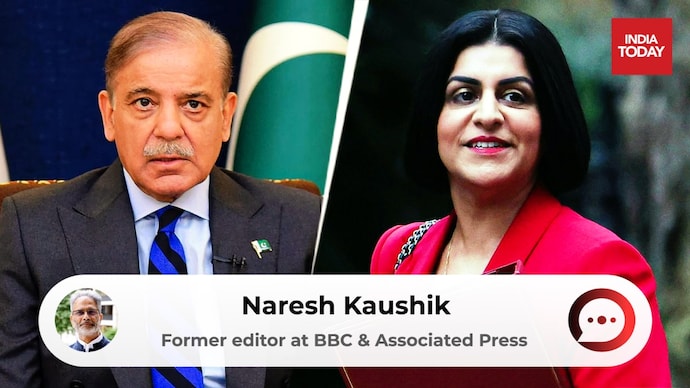
The ringleader of a Pakistani "grooming gang" in Britain has become a major point of negotiation between Islamabad and London. There is consensus in Britain that Shabir Ahmed, released earlier this month after serving 14 of his 22-year prison sentence, should be deported to Pakistan.
Britain's Home Secretary, Shabana Mahmood, announced plans on Monday to amend a decades-old law to enable his deportation. But Pakistan says it will not accept Ahmed, provoking anger in Britain and calls for a visa ban on Pakistanis.
The Shabir Ahmed deportation issue is widely seen in the UK as a test of the government's will and ability to deliver justice to victims of grooming gangs — one of the darkest chapters in the country's history.
For years, thousands of mainly white young girls were groomed, stalked, held against their will, and sexually abused by gangs of men, almost all of whom were of Pakistani origin. The victims' calls for help were allegedly dismissed by police and local authorities on political and racial grounds. The scandal was first exposed by the media in 2003, and since then, scores of men have been convicted.
NO REMORSE
The gang Ahmed led in Rochdale was among the most vicious. It raped and trafficked dozens of vulnerable girls from backgrounds the police then described as “chaotic”. They were plied with alcohol and drugs, ferried around in taxis, and gangraped.
Ahmed was convicted of 30 child rape offences. Some of his victims were as young as 12. During the trial, he showed no remorse and called the judge a “racist bastard”. He repeatedly said that the girls he had raped were “prostitutes” and that white people in Britain had trained their daughters to drink and be sexually promiscuous at an early age.
The parole board found Ahmed, now 73, unsafe for release on three separate occasions, even as recently as 2024. He was released automatically after serving three-fourths of his sentence under government rules. When Ahmed’s victims learned that their tormentor was about to be released and that they could encounter him in the streets, they were horrified, despite the authorities' promise that his movements would be tracked and that he had been forced to wear an electronic tag.
The courts stripped Ahmed of his British citizenship after he was jailed, and he was expected to be deported to Pakistan once his sentence was complete. Unlike India, Pakistan allows dual nationality, and Ahmed retained his Pakistani passport until his trial.
But Ahmed couldn’t be deported. A 55-year-old law bars the removal of any Commonwealth citizen who arrived in the UK before 1973 and had been in the country for five years. Under mounting public pressure, the government had to announce a change to that law on Monday.
ISLAMABAD'S CONDITIONS
Britain, however, still can't deport him unless Pakistan agrees to accept him. Islamabad has so far refused London’s request. Its officials have told the British media that Ahmed, who left Pakistan for Britain before 1971, relinquished his nationality of the Islamic Republic, and that there was no question of the country accepting his return. Pakistan argues that Ahmed’s crimes were committed in Britain, where he belongs.
Although the two sides have not officially confirmed it, Islamabad is demanding the UK’s extradition of political dissidents in exchange for Ahmed’s deportation. It has been seeking the extradition of Shahzad Akbar, a member of former prime minister Imran Khan’s cabinet, and Adil Raja, a Pakistani journalist, over alleged “fake news” and anti-state propaganda. Islamabad also wants London to return Altaf Hussain, the founder of the Muttahida Qaumi Movement, who has lived in exile in the UK for three decades.
A week ago, an unnamed Pakistani official suggested to The Telegraph that negotiations between London and Islamabad had been ongoing for nearly a year in anticipation of the release of Ahmed and other grooming gang members. "Our position is that (the UK) must listen to us too. Both sides need to apply standards. Pakistan cannot be railroaded into agreeing to terms and conditions that are suitable only to the UK,” the official said.
WILL BRITAIN USE THE VISA STICK?
Britain’s opposition parties are demanding a visa ban on Pakistan unless it allows the deportation of Ahmed and other Pakistani child rapists. Britain’s Pakistani-origin Home Secretary, Shabana Mahmood, hasn’t commented on the visa threat, but the government has not ruled it out. Victims’ minister Catherine Atkinson told the BBC that the threat of visa restrictions has produced results before.
Atkinson was referring to Mahmood’s visa threat last year to Angola, Namibia, and the Democratic Republic of Congo if they refused to take back illegal immigrants. The threat worked, and all three African countries thereafter cooperated with Britain. Last year, according to UK government figures, Pakistanis were the largest nationality among asylum seekers, with 10,638 claims (India was at number seven with 5,751 claims). About 70 per cent of asylum applications from Pakistanis were rejected. Yet only four per cent of these failed applicants were returned.
The proportion of failed asylum seekers returned to Pakistan is on par with that of three African nations that faced visa bans after failing to take back their rejected claimants. These figures emerged in March, months before the Ahmed deportation issue. Thus, anger against Pakistani visas and asylum applications has been building for some time.
NEW PM'S CHALLENGE
The Shabir Ahmed deportation issue comes days before Andy Burnham is due to take over as Britain’s new PM from Keir Starmer. The issue has already been pretty sensitive for him. A damning report published in 2024 — when Burnham was still mayor of Greater Manchester — found there had been “serious multiple failures” by police and local authority agencies, who had left the girls “at the mercy” of Ahmed’s gang.
On the eve of Ahmed's release from prison, Burnham posted on X, "Like everyone, I want this vile criminal out of the country. I will ask the home and foreign secretaries to review all possible options — and they should consider nothing is off the table."
Victims will accept decisive, tougher action from him once he becomes head of the UK government on July 20. They have been demanding that the government stop the automatic release from prison of serious offenders like Ahmed after two-thirds of their terms have expired.
Another issue is being raised by activists in Britain. Is it fair to deport child rapists like Ahmed to Pakistan, where crimes against women and child abuse are on the rise? Earlier this month, a six-year-old boy was found murdered after being brutally raped in Karachi. There have also been several other killings of young girls in Pakistan in recent months following sexual abuse.
So will monsters like Shabir Ahmed be deported there? It's a difficult question. Perhaps they should be kept behind bars until their last breath.
(Naresh Kaushik is a former editor at the BBC and Associated Press. He is based in London.)
The ringleader of a Pakistani "grooming gang" in Britain has become a major point of negotiation between Islamabad and London. There is consensus in Britain that Shabir Ahmed, released earlier this month after serving 14 of his 22-year prison sentence, should be deported to Pakistan.
Britain's Home Secretary, Shabana Mahmood, announced plans on Monday to amend a decades-old law to enable his deportation. But Pakistan says it will not accept Ahmed, provoking anger in Britain and calls for a visa ban on Pakistanis.
The Shabir Ahmed deportation issue is widely seen in the UK as a test of the government's will and ability to deliver justice to victims of grooming gangs — one of the darkest chapters in the country's history.
For years, thousands of mainly white young girls were groomed, stalked, held against their will, and sexually abused by gangs of men, almost all of whom were of Pakistani origin. The victims' calls for help were allegedly dismissed by police and local authorities on political and racial grounds. The scandal was first exposed by the media in 2003, and since then, scores of men have been convicted.
NO REMORSE
The gang Ahmed led in Rochdale was among the most vicious. It raped and trafficked dozens of vulnerable girls from backgrounds the police then described as “chaotic”. They were plied with alcohol and drugs, ferried around in taxis, and gangraped.
Ahmed was convicted of 30 child rape offences. Some of his victims were as young as 12. During the trial, he showed no remorse and called the judge a “racist bastard”. He repeatedly said that the girls he had raped were “prostitutes” and that white people in Britain had trained their daughters to drink and be sexually promiscuous at an early age.
The parole board found Ahmed, now 73, unsafe for release on three separate occasions, even as recently as 2024. He was released automatically after serving three-fourths of his sentence under government rules. When Ahmed’s victims learned that their tormentor was about to be released and that they could encounter him in the streets, they were horrified, despite the authorities' promise that his movements would be tracked and that he had been forced to wear an electronic tag.
The courts stripped Ahmed of his British citizenship after he was jailed, and he was expected to be deported to Pakistan once his sentence was complete. Unlike India, Pakistan allows dual nationality, and Ahmed retained his Pakistani passport until his trial.
But Ahmed couldn’t be deported. A 55-year-old law bars the removal of any Commonwealth citizen who arrived in the UK before 1973 and had been in the country for five years. Under mounting public pressure, the government had to announce a change to that law on Monday.
ISLAMABAD'S CONDITIONS
Britain, however, still can't deport him unless Pakistan agrees to accept him. Islamabad has so far refused London’s request. Its officials have told the British media that Ahmed, who left Pakistan for Britain before 1971, relinquished his nationality of the Islamic Republic, and that there was no question of the country accepting his return. Pakistan argues that Ahmed’s crimes were committed in Britain, where he belongs.
Although the two sides have not officially confirmed it, Islamabad is demanding the UK’s extradition of political dissidents in exchange for Ahmed’s deportation. It has been seeking the extradition of Shahzad Akbar, a member of former prime minister Imran Khan’s cabinet, and Adil Raja, a Pakistani journalist, over alleged “fake news” and anti-state propaganda. Islamabad also wants London to return Altaf Hussain, the founder of the Muttahida Qaumi Movement, who has lived in exile in the UK for three decades.
A week ago, an unnamed Pakistani official suggested to The Telegraph that negotiations between London and Islamabad had been ongoing for nearly a year in anticipation of the release of Ahmed and other grooming gang members. "Our position is that (the UK) must listen to us too. Both sides need to apply standards. Pakistan cannot be railroaded into agreeing to terms and conditions that are suitable only to the UK,” the official said.
WILL BRITAIN USE THE VISA STICK?
Britain’s opposition parties are demanding a visa ban on Pakistan unless it allows the deportation of Ahmed and other Pakistani child rapists. Britain’s Pakistani-origin Home Secretary, Shabana Mahmood, hasn’t commented on the visa threat, but the government has not ruled it out. Victims’ minister Catherine Atkinson told the BBC that the threat of visa restrictions has produced results before.
Atkinson was referring to Mahmood’s visa threat last year to Angola, Namibia, and the Democratic Republic of Congo if they refused to take back illegal immigrants. The threat worked, and all three African countries thereafter cooperated with Britain. Last year, according to UK government figures, Pakistanis were the largest nationality among asylum seekers, with 10,638 claims (India was at number seven with 5,751 claims). About 70 per cent of asylum applications from Pakistanis were rejected. Yet only four per cent of these failed applicants were returned.
The proportion of failed asylum seekers returned to Pakistan is on par with that of three African nations that faced visa bans after failing to take back their rejected claimants. These figures emerged in March, months before the Ahmed deportation issue. Thus, anger against Pakistani visas and asylum applications has been building for some time.
NEW PM'S CHALLENGE
The Shabir Ahmed deportation issue comes days before Andy Burnham is due to take over as Britain’s new PM from Keir Starmer. The issue has already been pretty sensitive for him. A damning report published in 2024 — when Burnham was still mayor of Greater Manchester — found there had been “serious multiple failures” by police and local authority agencies, who had left the girls “at the mercy” of Ahmed’s gang.
On the eve of Ahmed's release from prison, Burnham posted on X, "Like everyone, I want this vile criminal out of the country. I will ask the home and foreign secretaries to review all possible options — and they should consider nothing is off the table."
Victims will accept decisive, tougher action from him once he becomes head of the UK government on July 20. They have been demanding that the government stop the automatic release from prison of serious offenders like Ahmed after two-thirds of their terms have expired.
Another issue is being raised by activists in Britain. Is it fair to deport child rapists like Ahmed to Pakistan, where crimes against women and child abuse are on the rise? Earlier this month, a six-year-old boy was found murdered after being brutally raped in Karachi. There have also been several other killings of young girls in Pakistan in recent months following sexual abuse.
So will monsters like Shabir Ahmed be deported there? It's a difficult question. Perhaps they should be kept behind bars until their last breath.
(Naresh Kaushik is a former editor at the BBC and Associated Press. He is based in London.)

