Beyond Satluj: The forgotten victims of Punjab's years of terror
As Diljit Dosanjh's Satluj revisits alleged police excesses, another account of Punjab's insurgency has resurfaced. It brings focus back to civilians, journalists, political workers and families killed in militant violence.
The Sutlej River runs nearly 440 kilometres through Punjab, physically dividing the state into Malwa on one side and Doaba and Majha on the other. But Punjab's history also has another, invisible Sutlej, one that separates competing memories of one of the state's darkest chapters.
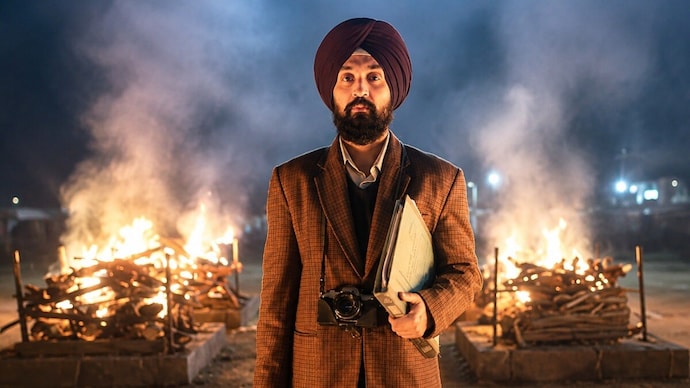
On one bank lies the story of alleged police excesses during the militancy years, a narrative that forms the backdrop of Diljit Dosanjh's upcoming film Satluj. On the other are the thousands of civilians who lost their lives in the violence unleashed by Khalistani militant groups, a story that often receives far less attention.
The film revisits allegations of fake encounters and the cremation of unidentified bodies, an issue that became synonymous with the work of human rights activist Jaswant Singh Khalra. Khalra investigated allegations that police had secretly cremated unidentified bodies without informing families. He was later abducted and murdered, a case that remains one of the most significant human rights episodes of the Punjab insurgency.
The demand for accountability in such cases is well documented. But Punjab's history also includes another painful reality: years of militant violence that claimed thousands of civilian lives.
That dual reality is reflected in a 1994 report by Human Rights Watch. While the report sharply criticised serious human rights violations allegedly committed by security forces, it also documented widespread killings, targeted assassinations and mass attacks carried out by Khalistani militant organisations between 1981 and 1992.
PUNJAB'S INSURGENCY
The insurgency that engulfed Punjab through the 1980s and early 1990s evolved over several years against the backdrop of political tensions, religious mobilisation and growing demands for Khalistan.
The movement reached a turning point with Operation Blue Star in 1984, followed by the assassination of Prime Minister Indira Gandhi by her Sikh bodyguards and the anti-Sikh riots that erupted afterwards. The events deepened divisions and fuelled years of violence.
Between 1981 and 1992, multiple Khalistani militant organisations operated across Punjab under rival factions, while the Punjab Police and central security forces launched an extensive counter-insurgency campaign.
The period witnessed both allegations of widespread human rights abuses by security forces and sustained militant attacks on civilians.
CIVILIANS CAUGHT IN THE CROSSFIRE
According to the Human Rights Watch report, militant groups targeted far more than police personnel and government officials.
Markets, buses, passenger trains, villages and places of worship came under attack. Government employees, journalists and even relatives of police personnel were among those killed. The report says these attacks were designed to create fear and destabilise normal life.
One of the incidents documented by the report occurred in March 1992, when armed militants opened fire across several locations in Ludhiana. Beginning in the Vishwakarma locality, the attackers shot people in a crowded market before continuing along nearby roads, killing around 20 civilians and injuring many others.
WHEN IDENTITY BECAME A TARGET
The report also documents repeated attacks on Hindu civilians during the insurgency.
Militant organisations allegedly threatened Hindus to leave Punjab, while areas with significant Hindu populations frequently witnessed shootings and bomb attacks.
Among the incidents cited is the November 1990 attack on Islamabad Market, where gunmen armed with AK-47 rifles opened indiscriminate fire on shopkeepers and pedestrians, killing 12 people.
Another attack in December 1992 saw militants stop a government bus travelling towards Chandigarh, separate Hindu passengers from Sikh passengers and open fire, killing 16 people. Weeks earlier, another bus attack had claimed the lives of 25 Hindu migrant workers.
Perhaps the deadliest episode came on June 15, 1991, when gunmen attacked two passenger trains near Ludhiana after emergency chains were pulled to halt them. At least 75 passengers were killed. Survivors told investigators that attackers identified Hindu passengers on one train before shooting them, while indiscriminate firing on the other train killed both Hindus and Sikhs.
Human Rights Watch notes that such attacks formed part of a broader campaign aimed at spreading fear among civilians and disrupting everyday life.
A HISTORY WITH MANY VICTIMS
Punjab's insurgency left behind competing narratives that continue to shape public debate decades later.
One focuses on allegations of illegal killings, disappearances and fake encounters during the state's counter-insurgency operations. The other remembers the thousands of civilians, security personnel and public servants killed in years of militant violence.
Both form part of Punjab's history. Any attempt to revisit that period inevitably reopens questions about justice, accountability and remembrance for all those who suffered during one of the bloodiest chapters in the state's modern history.
EVEN NAMDHARIS WERE NOT SPARED
The violence in Punjab was not confined to Hindus alone. Sikhs who opposed the separatist movement also found themselves in the militants' crosshairs.
Among those targeted was the Namdhari community, which has maintained a distinct religious identity for generations and publicly opposed militancy. Contemporary accounts from the period suggest that anyone who challenged the ideology of Khalistani militant groups risked being branded a traitor.
The 1994 Human Rights Watch report also documents attacks on Sikhs who were perceived to be close to the government or who openly opposed militant organisations, noting that many were systematically targeted and killed.
WHEN CASTING A VOTE BECAME AN ACT OF COURAGE
Militant organisations also sought to derail Punjab's democratic process through intimidation and violence.
In 1991, after nearly five years of President's Rule, the Centre announced Assembly elections in the state. Separatist groups called for a complete boycott, arguing that participating in the polls would legitimise Indian rule and undermine the demand for Khalistan.
The campaign of violence that followed proved devastating. According to Human Rights Watch, 24 election candidates were killed, forcing the cancellation of the 1991 Assembly elections.
Fresh elections were scheduled for February 19, 1992. Once again, militant organisations urged people to boycott the polls and threatened violence. Several political parties stayed away, while only a fraction of the usual number of candidates entered the fray. Those who did campaigned under extraordinary security.
One journalist captured the atmosphere with a memorable observation: "Election candidate Kanwaljit Singh is accompanied by more bodyguards than supporters as he campaigns across Punjab."
Militant groups also threatened to kill the first five voters at each of Punjab's 14,659 polling stations.
Despite the risks, some people chose to vote. Human Rights Watch recounts the story of 22-year-old Devinder Singh, who dismissed fears for his life with a stark assessment of the times.
"People are killed while travelling on buses. People are killed in markets every day. People are killed while simply walking outside. So if I die while casting my vote, so be it."
His words reflected the climate of fear that prevailed in Punjab during the insurgency.
JOURNALISTS UNDER THREAT
The media also became a target.
According to Human Rights Watch/Asia, the Hind Samachar newspaper group was among the principal targets of militant organisations. Between 1981 and February 1991, 60 people associated with the media house were killed.
Alongside the violence came attempts to dictate how the conflict should be reported.
On November 22, 1990, the Sikh Panthic Committee issued directives instructing journalists not to describe separatists as "terrorists", "extremists" or "militants". Instead, they were told to use terms such as "freedom fighters" or "mujahideen", and to refer to Punjab as "Khalistan".
The warning was unequivocal: those who failed to comply would face severe punishment.
In February 1991, the Zaffarwal Panthic Committee issued another directive, asking journalists to boycott government functions and avoid publishing official statements or reports critical of militant groups. The order warned that violations could invite the death penalty.
The Sohan Singh Panthic Committee issued similar instructions, threatening action against journalists, government employees and even university professors.
For many reporters covering Punjab during the insurgency, journalism became a profession that carried the constant risk of death.
POLICE FAMILIES BECAME TARGETS
The Punjab Police remained at the forefront of the state's counter-insurgency campaign during the years of militancy, supported by central paramilitary forces.
While police personnel directly involved in combat were part of the conflict, their families were not.
Yet, according to Human Rights Watch, militant groups increasingly targeted the wives, children and relatives of police personnel, particularly in 1992.
Following the death of a senior militant leader, several organisations reportedly launched what they described as a campaign of revenge against police families. Dozens of people, including children, were killed.
The attacks appeared aimed at weakening police morale and undermining the state's counter-insurgency efforts. Whether an officer was on duty or off duty made little difference. Family members, whose only link to the conflict was their relationship with a police officer, also came under attack.
For many households, the violence extended far beyond the battlefield, reaching homes and schools that had no direct role in the conflict.
SIKHS WHO OPPOSED MILITANCY WERE ALSO TARGETED
The victims of militant violence were not limited to non-Sikhs.
The Human Rights Watch report documents that Sikh political leaders who advocated reconciliation, participated in elections or cooperated with the government were also singled out for attack.
Among them was former Punjab Finance Minister Balwant Singh, who was assassinated after being viewed by militants as a symbol of political compromise.
Moderate Sikh leader Maninderjit Singh Bitta survived a powerful car bomb attack that left him permanently disabled, while veteran Akali leader Jagdev Singh Talwandi also survived an assassination attempt.
The attacks underscored the risks faced by Sikh leaders who publicly opposed militancy or chose to participate in the democratic process.
WOMEN BORE SOME OF THE DEEPEST SCARS
Women experienced another, often overlooked, dimension of the insurgency.
A 1992 India Today magazine report described what it termed "sexual terrorism", documenting allegations that militant groups abducted young women, subjected them to sexual violence and forced them into marriage.
Among the cases cited was that of 18-year-old Manjit Kaur, who was allegedly abducted from Tarn Taran by members of the Khalistan Liberation Force (KLF) in June 1992. According to the report, she was sexually assaulted before being forced to marry one of her captors inside a gurdwara.
The report also recounts the ordeal of Bhupinder Kaur, who was allegedly forced into marriage by militants on two separate occasions and later had three children from those relationships.
Another case involved Jasbir Kaur, who was allegedly raped after militants from the Bhindranwale Tiger Force of Khalistan entered her home in January 1991. According to the report, when she later sought protection from another militant faction, she was instead held captive, forced into marriage and subjected to further abuse.
The report said such forced marriages served multiple purposes for militant groups, including providing safe shelter and creating an appearance of legitimacy within local communities.
For the survivors, however, the consequences endured long after the violence ended. Many lived with lasting psychological trauma, social stigma and isolation.
Human rights organisations have consistently noted that while both militant violence and counter-insurgency operations inflicted widespread suffering, the experiences of women often remained underreported and inadequately reflected in official records.
BEYOND ONE NARRATIVE
The allegations of fake encounters, enforced disappearances and illegal cremations remain an important part of Punjab's history. The work of human rights activist Jaswant Singh Khalra brought international attention to those allegations, and the demand for accountability continues decades later.
But the years of insurgency also left behind another record of suffering.
Human Rights Watch, court records and contemporary reporting document widespread attacks by Khalistani militant organisations on civilians, elected representatives, journalists, police personnel and their families. Hindus, Sikhs who opposed militancy and ordinary residents across Punjab all figured among the victims.
Taken together, these accounts show that the conflict cannot be understood through a single narrative. It was marked both by allegations of serious human rights violations during the state's counter-insurgency campaign and by sustained militant violence that claimed thousands of lives.
Today, the Sutlej once again flows through a peaceful Punjab, but the memories of those years remain deeply contested. For some, the defining images are of disappearances and alleged fake encounters. For others, they are of bombings, assassinations and indiscriminate attacks on civilians.
Both experiences form part of Punjab's history. Revisiting that period, whether through films, books or historical research, inevitably raises difficult questions about justice, accountability and remembrance. A fuller understanding of the insurgency requires acknowledging both the allegations against the state and the documented violence carried out by militant groups.
Only by recognising the suffering endured across communities can the history of Punjab's insurgency be understood in its entirety.
The Sutlej River runs nearly 440 kilometres through Punjab, physically dividing the state into Malwa on one side and Doaba and Majha on the other. But Punjab's history also has another, invisible Sutlej, one that separates competing memories of one of the state's darkest chapters.
On one bank lies the story of alleged police excesses during the militancy years, a narrative that forms the backdrop of Diljit Dosanjh's upcoming film Satluj. On the other are the thousands of civilians who lost their lives in the violence unleashed by Khalistani militant groups, a story that often receives far less attention.
The film revisits allegations of fake encounters and the cremation of unidentified bodies, an issue that became synonymous with the work of human rights activist Jaswant Singh Khalra. Khalra investigated allegations that police had secretly cremated unidentified bodies without informing families. He was later abducted and murdered, a case that remains one of the most significant human rights episodes of the Punjab insurgency.
The demand for accountability in such cases is well documented. But Punjab's history also includes another painful reality: years of militant violence that claimed thousands of civilian lives.
That dual reality is reflected in a 1994 report by Human Rights Watch. While the report sharply criticised serious human rights violations allegedly committed by security forces, it also documented widespread killings, targeted assassinations and mass attacks carried out by Khalistani militant organisations between 1981 and 1992.
PUNJAB'S INSURGENCY
The insurgency that engulfed Punjab through the 1980s and early 1990s evolved over several years against the backdrop of political tensions, religious mobilisation and growing demands for Khalistan.
The movement reached a turning point with Operation Blue Star in 1984, followed by the assassination of Prime Minister Indira Gandhi by her Sikh bodyguards and the anti-Sikh riots that erupted afterwards. The events deepened divisions and fuelled years of violence.
Between 1981 and 1992, multiple Khalistani militant organisations operated across Punjab under rival factions, while the Punjab Police and central security forces launched an extensive counter-insurgency campaign.
The period witnessed both allegations of widespread human rights abuses by security forces and sustained militant attacks on civilians.
CIVILIANS CAUGHT IN THE CROSSFIRE
According to the Human Rights Watch report, militant groups targeted far more than police personnel and government officials.
Markets, buses, passenger trains, villages and places of worship came under attack. Government employees, journalists and even relatives of police personnel were among those killed. The report says these attacks were designed to create fear and destabilise normal life.
One of the incidents documented by the report occurred in March 1992, when armed militants opened fire across several locations in Ludhiana. Beginning in the Vishwakarma locality, the attackers shot people in a crowded market before continuing along nearby roads, killing around 20 civilians and injuring many others.
WHEN IDENTITY BECAME A TARGET
The report also documents repeated attacks on Hindu civilians during the insurgency.
Militant organisations allegedly threatened Hindus to leave Punjab, while areas with significant Hindu populations frequently witnessed shootings and bomb attacks.
Among the incidents cited is the November 1990 attack on Islamabad Market, where gunmen armed with AK-47 rifles opened indiscriminate fire on shopkeepers and pedestrians, killing 12 people.
Another attack in December 1992 saw militants stop a government bus travelling towards Chandigarh, separate Hindu passengers from Sikh passengers and open fire, killing 16 people. Weeks earlier, another bus attack had claimed the lives of 25 Hindu migrant workers.
Perhaps the deadliest episode came on June 15, 1991, when gunmen attacked two passenger trains near Ludhiana after emergency chains were pulled to halt them. At least 75 passengers were killed. Survivors told investigators that attackers identified Hindu passengers on one train before shooting them, while indiscriminate firing on the other train killed both Hindus and Sikhs.
Human Rights Watch notes that such attacks formed part of a broader campaign aimed at spreading fear among civilians and disrupting everyday life.
A HISTORY WITH MANY VICTIMS
Punjab's insurgency left behind competing narratives that continue to shape public debate decades later.
One focuses on allegations of illegal killings, disappearances and fake encounters during the state's counter-insurgency operations. The other remembers the thousands of civilians, security personnel and public servants killed in years of militant violence.
Both form part of Punjab's history. Any attempt to revisit that period inevitably reopens questions about justice, accountability and remembrance for all those who suffered during one of the bloodiest chapters in the state's modern history.
EVEN NAMDHARIS WERE NOT SPARED
The violence in Punjab was not confined to Hindus alone. Sikhs who opposed the separatist movement also found themselves in the militants' crosshairs.
Among those targeted was the Namdhari community, which has maintained a distinct religious identity for generations and publicly opposed militancy. Contemporary accounts from the period suggest that anyone who challenged the ideology of Khalistani militant groups risked being branded a traitor.
The 1994 Human Rights Watch report also documents attacks on Sikhs who were perceived to be close to the government or who openly opposed militant organisations, noting that many were systematically targeted and killed.
WHEN CASTING A VOTE BECAME AN ACT OF COURAGE
Militant organisations also sought to derail Punjab's democratic process through intimidation and violence.
In 1991, after nearly five years of President's Rule, the Centre announced Assembly elections in the state. Separatist groups called for a complete boycott, arguing that participating in the polls would legitimise Indian rule and undermine the demand for Khalistan.
The campaign of violence that followed proved devastating. According to Human Rights Watch, 24 election candidates were killed, forcing the cancellation of the 1991 Assembly elections.
Fresh elections were scheduled for February 19, 1992. Once again, militant organisations urged people to boycott the polls and threatened violence. Several political parties stayed away, while only a fraction of the usual number of candidates entered the fray. Those who did campaigned under extraordinary security.
One journalist captured the atmosphere with a memorable observation: "Election candidate Kanwaljit Singh is accompanied by more bodyguards than supporters as he campaigns across Punjab."
Militant groups also threatened to kill the first five voters at each of Punjab's 14,659 polling stations.
Despite the risks, some people chose to vote. Human Rights Watch recounts the story of 22-year-old Devinder Singh, who dismissed fears for his life with a stark assessment of the times.
"People are killed while travelling on buses. People are killed in markets every day. People are killed while simply walking outside. So if I die while casting my vote, so be it."
His words reflected the climate of fear that prevailed in Punjab during the insurgency.
JOURNALISTS UNDER THREAT
The media also became a target.
According to Human Rights Watch/Asia, the Hind Samachar newspaper group was among the principal targets of militant organisations. Between 1981 and February 1991, 60 people associated with the media house were killed.
Alongside the violence came attempts to dictate how the conflict should be reported.
On November 22, 1990, the Sikh Panthic Committee issued directives instructing journalists not to describe separatists as "terrorists", "extremists" or "militants". Instead, they were told to use terms such as "freedom fighters" or "mujahideen", and to refer to Punjab as "Khalistan".
The warning was unequivocal: those who failed to comply would face severe punishment.
In February 1991, the Zaffarwal Panthic Committee issued another directive, asking journalists to boycott government functions and avoid publishing official statements or reports critical of militant groups. The order warned that violations could invite the death penalty.
The Sohan Singh Panthic Committee issued similar instructions, threatening action against journalists, government employees and even university professors.
For many reporters covering Punjab during the insurgency, journalism became a profession that carried the constant risk of death.
POLICE FAMILIES BECAME TARGETS
The Punjab Police remained at the forefront of the state's counter-insurgency campaign during the years of militancy, supported by central paramilitary forces.
While police personnel directly involved in combat were part of the conflict, their families were not.
Yet, according to Human Rights Watch, militant groups increasingly targeted the wives, children and relatives of police personnel, particularly in 1992.
Following the death of a senior militant leader, several organisations reportedly launched what they described as a campaign of revenge against police families. Dozens of people, including children, were killed.
The attacks appeared aimed at weakening police morale and undermining the state's counter-insurgency efforts. Whether an officer was on duty or off duty made little difference. Family members, whose only link to the conflict was their relationship with a police officer, also came under attack.
For many households, the violence extended far beyond the battlefield, reaching homes and schools that had no direct role in the conflict.
SIKHS WHO OPPOSED MILITANCY WERE ALSO TARGETED
The victims of militant violence were not limited to non-Sikhs.
The Human Rights Watch report documents that Sikh political leaders who advocated reconciliation, participated in elections or cooperated with the government were also singled out for attack.
Among them was former Punjab Finance Minister Balwant Singh, who was assassinated after being viewed by militants as a symbol of political compromise.
Moderate Sikh leader Maninderjit Singh Bitta survived a powerful car bomb attack that left him permanently disabled, while veteran Akali leader Jagdev Singh Talwandi also survived an assassination attempt.
The attacks underscored the risks faced by Sikh leaders who publicly opposed militancy or chose to participate in the democratic process.
WOMEN BORE SOME OF THE DEEPEST SCARS
Women experienced another, often overlooked, dimension of the insurgency.
A 1992 India Today magazine report described what it termed "sexual terrorism", documenting allegations that militant groups abducted young women, subjected them to sexual violence and forced them into marriage.
Among the cases cited was that of 18-year-old Manjit Kaur, who was allegedly abducted from Tarn Taran by members of the Khalistan Liberation Force (KLF) in June 1992. According to the report, she was sexually assaulted before being forced to marry one of her captors inside a gurdwara.
The report also recounts the ordeal of Bhupinder Kaur, who was allegedly forced into marriage by militants on two separate occasions and later had three children from those relationships.
Another case involved Jasbir Kaur, who was allegedly raped after militants from the Bhindranwale Tiger Force of Khalistan entered her home in January 1991. According to the report, when she later sought protection from another militant faction, she was instead held captive, forced into marriage and subjected to further abuse.
The report said such forced marriages served multiple purposes for militant groups, including providing safe shelter and creating an appearance of legitimacy within local communities.
For the survivors, however, the consequences endured long after the violence ended. Many lived with lasting psychological trauma, social stigma and isolation.
Human rights organisations have consistently noted that while both militant violence and counter-insurgency operations inflicted widespread suffering, the experiences of women often remained underreported and inadequately reflected in official records.
BEYOND ONE NARRATIVE
The allegations of fake encounters, enforced disappearances and illegal cremations remain an important part of Punjab's history. The work of human rights activist Jaswant Singh Khalra brought international attention to those allegations, and the demand for accountability continues decades later.
But the years of insurgency also left behind another record of suffering.
Human Rights Watch, court records and contemporary reporting document widespread attacks by Khalistani militant organisations on civilians, elected representatives, journalists, police personnel and their families. Hindus, Sikhs who opposed militancy and ordinary residents across Punjab all figured among the victims.
Taken together, these accounts show that the conflict cannot be understood through a single narrative. It was marked both by allegations of serious human rights violations during the state's counter-insurgency campaign and by sustained militant violence that claimed thousands of lives.
Today, the Sutlej once again flows through a peaceful Punjab, but the memories of those years remain deeply contested. For some, the defining images are of disappearances and alleged fake encounters. For others, they are of bombings, assassinations and indiscriminate attacks on civilians.
Both experiences form part of Punjab's history. Revisiting that period, whether through films, books or historical research, inevitably raises difficult questions about justice, accountability and remembrance. A fuller understanding of the insurgency requires acknowledging both the allegations against the state and the documented violence carried out by militant groups.
Only by recognising the suffering endured across communities can the history of Punjab's insurgency be understood in its entirety.

