Jupiter's moon Io is hiding a surprising secret beneath its surface, Nasa finds
A new discovery from Nasa's Juno mission has revealed what lies beneath one of the most extreme environments in the solar system, offering a glimpse into processes scientists have long struggled to observe.
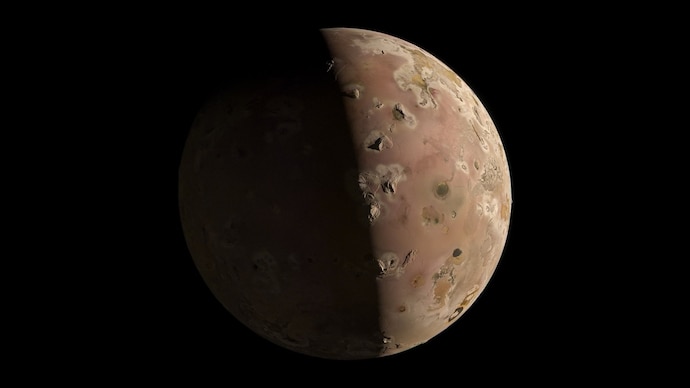
Nasa's Juno spacecraft has uncovered new clues about what powers the solar system's most volcanic world after looking beneath the surface of Io, Jupiter's fiery moon.
Launched in 2011 and orbiting Jupiter since 2016, Juno was originally designed to study the giant planet itself. Its extended mission has since transformed it into an explorer of Jupiter's moons, with Io offering one of its most prominent discoveries yet.
Using a microwave instrument that can peer below the ground, Juno detected widespread underground heat and mapped hidden warm regions beneath Io's crust, giving scientists their clearest view yet of the moon's volcanic engine.
The findings are helping researchers better understand why Io remains the most geologically active body in the solar system.
The mission also released two new visualisations.
One showed where Juno collected data during close flybys of Io, and another revealed a map of subsurface temperatures beneath the moon's rough landscape.
PEEKING BENEATH A MOON'S SURFACE
Io is about the size of Earth's Moon but is home to more than 400 active volcanoes.
Unlike volcanoes on Earth, which are powered largely by heat from radioactive elements inside the planet, Io's eruptions are fuelled by tidal heating.
Tidal heating is the process by which a planet or moon's gravity repeatedly stretches and squeezes another celestial body, generating friction inside it that produces enough heat to melt rock and drive volcanic activity.
As Io circles Jupiter, the giant planet's immense gravity constantly stretches and squeezes the moon.
This repeated flexing generates enormous internal friction, producing enough heat to melt rock beneath the surface and drive continuous volcanic eruptions.
During close flybys in December 2023 and February 2024, Juno's Microwave Radiometer (MWR) measured temperatures 2 to 6 metres below the surface.
Unlike infrared cameras, which detect only surface heat, microwaves can penetrate the ground, allowing scientists to study what lies underneath.
The observations revealed that heat is distributed across large parts of Io's shallow interior rather than being confined to individual volcanoes.
Scientists also found evidence that much of the moon's surface is covered by low-density volcanic deposits, built up through countless eruptions over millions of years.
MAPS AND HIDDEN HEAT
Nasa's newly released maps help illustrate the discovery.
One graphic traces Juno's flight path over Io, showing where the spacecraft gathered microwave measurements during its two flybys.
Another colour-coded map highlights underground heat anomalies, revealing warm regions beneath the crust that line up with many of Io's volcanic centres.
Together, the observations provide the first detailed look at how heat is stored and transported beneath the moon's surface.
Scientists have deemed the findings significant, noting that they could improve understanding not only of Io's extraordinary volcanic characteristics but also of how heat shapes rocky cosmic bodies throughout the solar system.
Nasa's Juno spacecraft has uncovered new clues about what powers the solar system's most volcanic world after looking beneath the surface of Io, Jupiter's fiery moon.
Launched in 2011 and orbiting Jupiter since 2016, Juno was originally designed to study the giant planet itself. Its extended mission has since transformed it into an explorer of Jupiter's moons, with Io offering one of its most prominent discoveries yet.
Using a microwave instrument that can peer below the ground, Juno detected widespread underground heat and mapped hidden warm regions beneath Io's crust, giving scientists their clearest view yet of the moon's volcanic engine.
The findings are helping researchers better understand why Io remains the most geologically active body in the solar system.
The mission also released two new visualisations.
One showed where Juno collected data during close flybys of Io, and another revealed a map of subsurface temperatures beneath the moon's rough landscape.
PEEKING BENEATH A MOON'S SURFACE
Io is about the size of Earth's Moon but is home to more than 400 active volcanoes.
Unlike volcanoes on Earth, which are powered largely by heat from radioactive elements inside the planet, Io's eruptions are fuelled by tidal heating.
Tidal heating is the process by which a planet or moon's gravity repeatedly stretches and squeezes another celestial body, generating friction inside it that produces enough heat to melt rock and drive volcanic activity.
As Io circles Jupiter, the giant planet's immense gravity constantly stretches and squeezes the moon.
This repeated flexing generates enormous internal friction, producing enough heat to melt rock beneath the surface and drive continuous volcanic eruptions.
During close flybys in December 2023 and February 2024, Juno's Microwave Radiometer (MWR) measured temperatures 2 to 6 metres below the surface.
Unlike infrared cameras, which detect only surface heat, microwaves can penetrate the ground, allowing scientists to study what lies underneath.
The observations revealed that heat is distributed across large parts of Io's shallow interior rather than being confined to individual volcanoes.
Scientists also found evidence that much of the moon's surface is covered by low-density volcanic deposits, built up through countless eruptions over millions of years.
MAPS AND HIDDEN HEAT
Nasa's newly released maps help illustrate the discovery.
One graphic traces Juno's flight path over Io, showing where the spacecraft gathered microwave measurements during its two flybys.
Another colour-coded map highlights underground heat anomalies, revealing warm regions beneath the crust that line up with many of Io's volcanic centres.
Together, the observations provide the first detailed look at how heat is stored and transported beneath the moon's surface.
Scientists have deemed the findings significant, noting that they could improve understanding not only of Io's extraordinary volcanic characteristics but also of how heat shapes rocky cosmic bodies throughout the solar system.
Nasa's Juno spacecraft has uncovered new clues about what powers the solar system's most volcanic world after looking beneath the surface of Io, Jupiter's fiery moon.
Launched in 2011 and orbiting Jupiter since 2016, Juno was originally designed to study the giant planet itself. Its extended mission has since transformed it into an explorer of Jupiter's moons, with Io offering one of its most prominent discoveries yet.
Using a microwave instrument that can peer below the ground, Juno detected widespread underground heat and mapped hidden warm regions beneath Io's crust, giving scientists their clearest view yet of the moon's volcanic engine.
The findings are helping researchers better understand why Io remains the most geologically active body in the solar system.
The mission also released two new visualisations.
One showed where Juno collected data during close flybys of Io, and another revealed a map of subsurface temperatures beneath the moon's rough landscape.
PEEKING BENEATH A MOON'S SURFACE
Io is about the size of Earth's Moon but is home to more than 400 active volcanoes.
Unlike volcanoes on Earth, which are powered largely by heat from radioactive elements inside the planet, Io's eruptions are fuelled by tidal heating.
Tidal heating is the process by which a planet or moon's gravity repeatedly stretches and squeezes another celestial body, generating friction inside it that produces enough heat to melt rock and drive volcanic activity.
As Io circles Jupiter, the giant planet's immense gravity constantly stretches and squeezes the moon.
This repeated flexing generates enormous internal friction, producing enough heat to melt rock beneath the surface and drive continuous volcanic eruptions.
During close flybys in December 2023 and February 2024, Juno's Microwave Radiometer (MWR) measured temperatures 2 to 6 metres below the surface.
Unlike infrared cameras, which detect only surface heat, microwaves can penetrate the ground, allowing scientists to study what lies underneath.
The observations revealed that heat is distributed across large parts of Io's shallow interior rather than being confined to individual volcanoes.
Scientists also found evidence that much of the moon's surface is covered by low-density volcanic deposits, built up through countless eruptions over millions of years.
MAPS AND HIDDEN HEAT
Nasa's newly released maps help illustrate the discovery.
One graphic traces Juno's flight path over Io, showing where the spacecraft gathered microwave measurements during its two flybys.
Another colour-coded map highlights underground heat anomalies, revealing warm regions beneath the crust that line up with many of Io's volcanic centres.
Together, the observations provide the first detailed look at how heat is stored and transported beneath the moon's surface.
Scientists have deemed the findings significant, noting that they could improve understanding not only of Io's extraordinary volcanic characteristics but also of how heat shapes rocky cosmic bodies throughout the solar system.

