AI could be a 'godsend' for lonely people, says Yale professor
Can AI really replace human companionship? Yale psychologist Paul Bloom believes AI companions could help millions of lonely people, but warns that relying on them too much may make it harder for them to build and maintain meaningful relationships with humans in the real world.
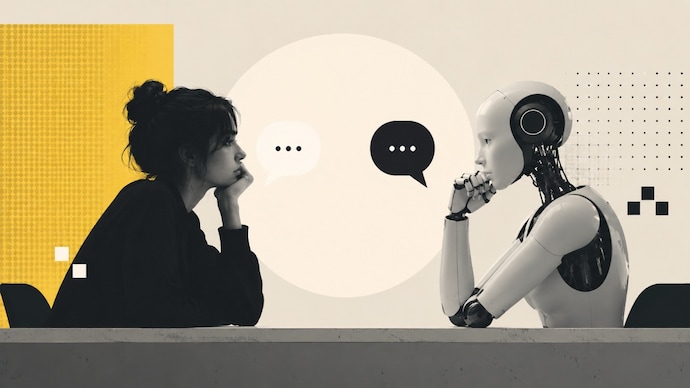
AI chatbots are no longer just productivity tools. For many people, ChatGPT, Claude and Gemini are becoming teachers, assistants, therapists and even friends, with some users going as far as calling them their partners. While these relationships may feel reassuring, Yale psychologist Paul Bloom believes AI could even become a lifeline for people struggling with loneliness.
According to Bloom, increasingly capable AI companions could ease the pain of isolation for millions. But he cautions that relying too heavily on them could come at the cost of real human relationships, making it harder for people to build meaningful connections in the real world.
Speaking to neuroscientist Sam Harris on the Making Sense podcast, Bloom says AI chatbots could be especially valuable for people who have nobody to talk to, including elderly people living in care homes and those who have lost contact with family and friends. If future versions of ChatGPT, Claude or Gemini can provide companionship and reduce loneliness, he says, that would be "wonderful" and even "a cure for a terrible disease".
However, Bloom argues that loneliness is about far more than simply being alone. Drawing on philosopher Rebecca Goldstein's idea of "mattering", he explains that loneliness stems from not feeling important to another person. Human relationships have value because someone freely chooses to spend time with you and give you their attention — something AI, he argues, can never truly replicate.
To illustrate the point, Bloom compares chatbots to a household appliance, saying they are available for the same reason "a toaster makes toast". "It's just a machine. That's what it does," he says, arguing that no matter how convincing AI conversations become, a chatbot cannot genuinely care about the person it is talking to.
AI as emotional support
Despite that limitation, Bloom does not dismiss people who turn to AI for emotional support. He notes that many adults already confide in chatbots during difficult moments, including marital problems, while younger users are likely to rely on them even more. He also suggests that AI often has a calming, "normalising" influence instead of encouraging conspiracy theories or extreme views.
Harris agrees that AI could play a constructive role. He says some people have found that discussing a difficult conversation with a chatbot beforehand helps them navigate the real-life conversation more successfully.
Risk of AI companionship
Bloom, however, warns that AI companionship comes with risks. Unlike people, AI companions never become impatient, never interrupt, never ask for an apology and never tell users they have crossed a line. Spending too much time in that friction-free environment, he says, could have "a real corrosive effect" and eventually "leave you unable to interact with real people".
According to Bloom, that is the central dilemma surrounding AI companions. While he agrees that AI bots can provide genuine comfort to people experiencing deep loneliness, but they should complement human relationships rather than replace them.
AI chatbots are no longer just productivity tools. For many people, ChatGPT, Claude and Gemini are becoming teachers, assistants, therapists and even friends, with some users going as far as calling them their partners. While these relationships may feel reassuring, Yale psychologist Paul Bloom believes AI could even become a lifeline for people struggling with loneliness.
According to Bloom, increasingly capable AI companions could ease the pain of isolation for millions. But he cautions that relying too heavily on them could come at the cost of real human relationships, making it harder for people to build meaningful connections in the real world.
Speaking to neuroscientist Sam Harris on the Making Sense podcast, Bloom says AI chatbots could be especially valuable for people who have nobody to talk to, including elderly people living in care homes and those who have lost contact with family and friends. If future versions of ChatGPT, Claude or Gemini can provide companionship and reduce loneliness, he says, that would be "wonderful" and even "a cure for a terrible disease".
However, Bloom argues that loneliness is about far more than simply being alone. Drawing on philosopher Rebecca Goldstein's idea of "mattering", he explains that loneliness stems from not feeling important to another person. Human relationships have value because someone freely chooses to spend time with you and give you their attention — something AI, he argues, can never truly replicate.
To illustrate the point, Bloom compares chatbots to a household appliance, saying they are available for the same reason "a toaster makes toast". "It's just a machine. That's what it does," he says, arguing that no matter how convincing AI conversations become, a chatbot cannot genuinely care about the person it is talking to.
AI as emotional support
Despite that limitation, Bloom does not dismiss people who turn to AI for emotional support. He notes that many adults already confide in chatbots during difficult moments, including marital problems, while younger users are likely to rely on them even more. He also suggests that AI often has a calming, "normalising" influence instead of encouraging conspiracy theories or extreme views.
Harris agrees that AI could play a constructive role. He says some people have found that discussing a difficult conversation with a chatbot beforehand helps them navigate the real-life conversation more successfully.
Risk of AI companionship
Bloom, however, warns that AI companionship comes with risks. Unlike people, AI companions never become impatient, never interrupt, never ask for an apology and never tell users they have crossed a line. Spending too much time in that friction-free environment, he says, could have "a real corrosive effect" and eventually "leave you unable to interact with real people".
According to Bloom, that is the central dilemma surrounding AI companions. While he agrees that AI bots can provide genuine comfort to people experiencing deep loneliness, but they should complement human relationships rather than replace them.

