AI robot with 'superhuman' fingers goes viral, watch video here
What if a humanoid robot could catch falling objects, pick grapes and plug in a USB-C cable without dropping a thing? Meet Neo, 1X's latest home robot, whose human-like hands are going viral for performing delicate everyday tasks with impressive precision.
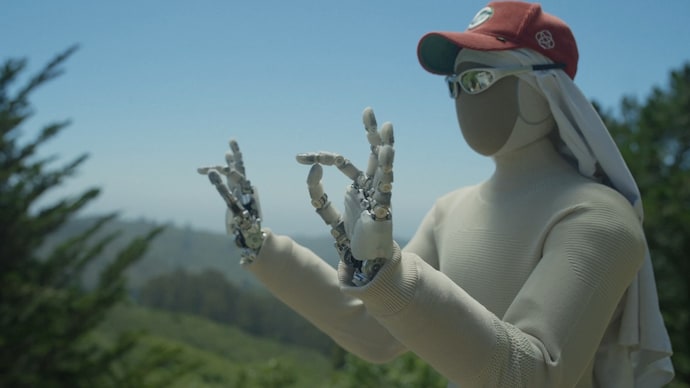
A humanoid robot with hands that can catch falling objects, pick grapes, plug in a USB-C cable and even wash itself? That's exactly what Norwegian-American robotics company 1X is promising with its latest humanoid robot, Neo. The company has unveiled a new set of AI-powered hands that it says are designed to mimic human dexterity, allowing the robot to perform delicate household tasks with greater precision than before.
One of Neo's biggest highlights is its new tendon-driven hands, which are designed to mimic the way tendons in the human arm move the fingers. In the viral demonstrations shared by the compnay, the robot is seen plucking grapes from their stems, picking up screws and coins, installing light bulbs, using a screwdriver, pouring from a kettle, plugging in a USB-C cable, wiping kitchen surfaces, catching a soft ball and even making sign language gestures. According to 1X, Neo can also open doors, lift heavy objects and plug itself into a charger when its battery runs low.
Videos of Neo's impressive abilities are now going viral on social media, with the humanoid robot seen carrying out a range of everyday tasks that closely resemble human movements. Watch the video below:
According to the company, Neo's hands feature 25 degrees of freedom, just two fewer than the average human hand, and include 22 fully actuated joints across the fingers and palm, along with three degrees of freedom in the wrist. Cameras, AI and tactile sensors work together to help the robot understand what it is holding, detect slipping objects and adjust its grip in real time.
According to 1X, Neo uses a different hand mechanism from most robots, allowing its joints to act as both motors and sensors. This helps the robot better sense the amount of force it is applying and adjust its grip in real time.
The company says the hands can lift a 20-pound kettlebell, achieve 0.2mm positioning accuracy, and use fingertip sensors to detect pressure and slipping. If an object starts to slip, Neo can tighten its grip automatically to stop it from falling.
Neo's hands are also said to be designed for domestic environments. They carry an IP68 rating and are built using food-safe materials, allowing the robot to wash its own hands after handling food or completing household chores. The company noted that the hardware of Neo has been tested through millions of operating cycles, while the wrist joints have survived more than two million load cycles. The company has already produced hundreds of the new hands and says it has the capacity to manufacture 10,000 of them this year.
Neo isn't fully autonomous just yet. For more complex tasks, 1X offers an Expert Mode, which allows trained human operators to remotely assist the robot through its onboard cameras. The company says operators can connect only when users request help, and that faces and other sensitive information can be blurred.
1X also clarified that not all of the viral demonstrations were fully powered by AI. While some videos show Neo operating on its own, others were remotely controlled to demonstrate the full capabilities of the robot's new hands.
A humanoid robot with hands that can catch falling objects, pick grapes, plug in a USB-C cable and even wash itself? That's exactly what Norwegian-American robotics company 1X is promising with its latest humanoid robot, Neo. The company has unveiled a new set of AI-powered hands that it says are designed to mimic human dexterity, allowing the robot to perform delicate household tasks with greater precision than before.
One of Neo's biggest highlights is its new tendon-driven hands, which are designed to mimic the way tendons in the human arm move the fingers. In the viral demonstrations shared by the compnay, the robot is seen plucking grapes from their stems, picking up screws and coins, installing light bulbs, using a screwdriver, pouring from a kettle, plugging in a USB-C cable, wiping kitchen surfaces, catching a soft ball and even making sign language gestures. According to 1X, Neo can also open doors, lift heavy objects and plug itself into a charger when its battery runs low.
Videos of Neo's impressive abilities are now going viral on social media, with the humanoid robot seen carrying out a range of everyday tasks that closely resemble human movements. Watch the video below:
According to the company, Neo's hands feature 25 degrees of freedom, just two fewer than the average human hand, and include 22 fully actuated joints across the fingers and palm, along with three degrees of freedom in the wrist. Cameras, AI and tactile sensors work together to help the robot understand what it is holding, detect slipping objects and adjust its grip in real time.
According to 1X, Neo uses a different hand mechanism from most robots, allowing its joints to act as both motors and sensors. This helps the robot better sense the amount of force it is applying and adjust its grip in real time.
The company says the hands can lift a 20-pound kettlebell, achieve 0.2mm positioning accuracy, and use fingertip sensors to detect pressure and slipping. If an object starts to slip, Neo can tighten its grip automatically to stop it from falling.
Neo's hands are also said to be designed for domestic environments. They carry an IP68 rating and are built using food-safe materials, allowing the robot to wash its own hands after handling food or completing household chores. The company noted that the hardware of Neo has been tested through millions of operating cycles, while the wrist joints have survived more than two million load cycles. The company has already produced hundreds of the new hands and says it has the capacity to manufacture 10,000 of them this year.
Neo isn't fully autonomous just yet. For more complex tasks, 1X offers an Expert Mode, which allows trained human operators to remotely assist the robot through its onboard cameras. The company says operators can connect only when users request help, and that faces and other sensitive information can be blurred.
1X also clarified that not all of the viral demonstrations were fully powered by AI. While some videos show Neo operating on its own, others were remotely controlled to demonstrate the full capabilities of the robot's new hands.

