
The Early Spring phenomenon: Why this Chinese drama refuses to leave India's Top 5

The Early Spring follows Luan Nian and Shang Zhitao through a six-year workplace romance on Netflix. Its easy availability in India and the debate around its flawed leads are keeping viewers talking.
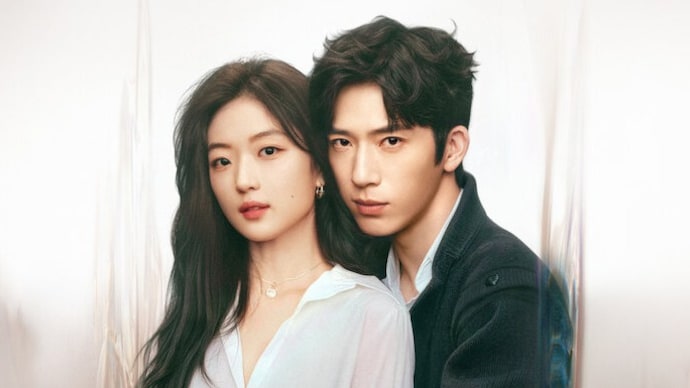

There is a Chinese romance drama that has been refusing to leave Netflix India’s Top 5 even as newer titles keep arriving every week. The Early Spring, starring Jing Boran and Sun Qian, has held its place since its debut. For a Chinese drama, that is no small feat.
The series premiered simultaneously on Netflix, with subtitles available from episode one. For Indian viewers who have followed C-dramas for years, this is a significant change from the old routine of waiting for fan translations, searching for episodes across unofficial websites or simply accepting that a popular Chinese show may take months to become legitimately accessible here.
The Early Spring arrived ready to watch. And people did.
The show has also travelled well outside India. It debuted at number 2 on Netflix’s Global Non-English TV list with 2.4 million views and 21.5 million hours watched, entering the Top 10 in 22 markets. In India, it climbed as high as number 2 and continues to feature in the daily Top 10.
What exactly has made this particular Chinese drama stick?
On paper, the answer is almost comically familiar. Luan Nian, played by Jing Boran, is the kind of man romance dramas have been manufacturing for years: wealthy, successful, intimidating, arrogant and almost legendary in Beijing’s advertising world. Shang Zhitao, played by Sun Qian, is a young professional who has recently moved to Beijing and sees herself as decidedly average.
They work together. They are attracted to each other. A secret relationship follows. In today’s dating vocabulary, you could call it a situationship. The difference is that The Early Spring doesn’t leave it there. The relationship stretches across six years, changing shape as the two characters grow older, their careers develop, and their feelings become harder to compartmentalise.
Talking to each other is another matter. They are very good at wanting each other.
Luan is an immaculate speaker at work, but with feelings: a total mute. He feels but refuses to acknowledge it. Flora is almost the opposite: she feels everything, and can articulate her feelings but spends a considerable amount of time trapped inside her own insecurities. So, for a large portion of the story, their bodies do the talking.
That is where the show’s much-discussed intimacy comes in. The physical relationship isn’t simply there to make an otherwise predictable romance more sensational. It is part of the way these two people communicate. They struggle to put their feelings into words, but proximity seems to unlock something neither can quite manage in conversation.
Until, inevitably, it doesn’t. Because chemistry can carry a relationship only so far. The fantasy is familiar. The mess is not.
There is a version of this story that could have gone very differently. Take an arrogant, powerful male boss, put him opposite an inexperienced female employee and dress the whole thing up in expensive clothes and sexual tension. It can very quickly become the familiar alpha-male fantasy where controlling behaviour is passed off as passion and the woman exists mainly to make the man vulnerable.
The Early Spring occasionally walks close to that line. Luan Nian is hardly a model boyfriend. But the series also keeps making him confront himself.
Flora isn’t particularly easy either. Her insecurities affect the way she behaves. She doesn’t always communicate when she should. She makes assumptions. She withdraws. Luan does much the same in his own way. Neither character is particularly good at relationships. That is also why their relationship feels recognisable.
The series uses different timelines to show how small communication problems can become much bigger ones when people leave them unresolved. Six years gives the characters enough time to grow, but it also gives their misunderstandings plenty of time to accumulate.
There is no suggestion that love magically fixes either of them. They have to do some of the work themselves.
The recurring idea that "you don’t have to be perfect to be loved" feels particularly relevant to the show’s appeal. Most relationships are not made up of two emotionally articulate people who always know what to say. Sometimes two people love each other and still hurt each other. Sometimes they have to learn how to listen before they can learn how to stay.
In an era of dating advice, therapy-speak and endless online arguments about attachment styles, that feels remarkably current.
Jing Boran and Sun Qian make it work
Then there is the obvious reason to keep coming back: Jing Boran and Sun Qian.
The chemistry is doing a lot of work. Jing was reportedly not the first choice for Luan Nian, with several actors said to have turned down the role because of concerns about the character’s toxicity. He eventually took it on and plays Luan without trying to make him more charming than the script allows. He can be arrogant and difficult, but there are enough quieter moments to suggest the person underneath.
Sun Qian’s Flora could easily have become the passive young woman waiting for the powerful man to rescue her. Instead, she gets her own professional ambitions, insecurities and frustrations.
Together, the two have the sort of chemistry that doesn’t require constant dialogue. A look, a pause or a change in distance between them can sometimes say more than a page of conversation. Their off-screen rapport has also become part of the show’s appeal, with interviews and promotional appearances giving fans plenty of material to dissect.
The production’s decision to have an intimacy coordinator also appears to have helped the actors navigate the show’s more physically demanding scenes. It is a relatively unusual step for a Chinese television production, and the resulting comfort between the performers is noticeable. There is a difference between watching two actors perform intimacy and watching two characters who appear comfortable enough with each other for the intimacy to feel organic. The Early Spring benefits from the latter.
Luan Nian and Shang Zhitao: Red or Green Flag
If there is one thing that keeps the conversation going, it is the debate over whether Luan and Flora are red flags.
Social media discussions have predictably divided viewers. Some see a controlling, emotionally complicated boss whose behaviour is difficult to excuse. Others see a flawed man who gradually learns to understand his partner. Flora, too, has attracted criticism for the ways in which she handles conflict and her own insecurities.
The arguments can get surprisingly detailed. And that is a good sign for the show. People don’t spend this much time debating a relationship they have completely forgotten about by the time the credits roll.
The series gives one enough room to have different readings of its characters. Luan can be attractive and frustrating in the same episode. Flora can be sympathetic and infuriating. Their relationship can look romantic in one scene and deeply dysfunctional in another.
There is no neat red-flag/green-flag checklist waiting at the end.
Has India finally entered its C-drama era?
It would be premature to say one Netflix hit has suddenly made Chinese dramas mainstream in India. C-drama fandoms have been around for years, and shows such as The First Frost, Pursuit of Jade, Hidden Love, When I Fly Towards You and Love Me, Love My Voice have already built passionate audiences here and across the world.
But The Early Spring is reaching people differently. Netflix has taken away the homework.
There is no need to know the actors beforehand. No need to belong to a C-drama fandom. No need to search for subtitles. The show sits on the same homepage as the latest Indian thriller, Korean romance or American prestige drama.
You click because it is in the Top 10. Then you stay because Jing Boran and Sun Qian have chemistry. Then you start discussing whether Luan Nian is toxic. Then you send clips to your friends. That is how a fandom moves beyond the people who were already looking for it.
The success of The Early Spring may therefore say as much about changing Indian viewing habits as it does about the show itself. Korean dramas have already made subtitles normal for a large section of Indian OTT audiences. Japanese and Spanish-language shows have benefited from the same shift.
Chinese dramas have been waiting for their turn. For years, the audience existed. What was missing was the easy route to it. The Early Spring has found that route. And for now, Indian viewers don’t seem particularly interested in letting it leave their screens.
The title might promise an early season. The audience, judging by those rankings, looks ready for a much longer one.