

After 60, you can find your new tribe at…: India's new social life for seniors

Retirement used to mean slowing down, but today it's anything but. India's 60-somethings are finding new tribes, new hobbies and surprisingly lively ways to spend their time.
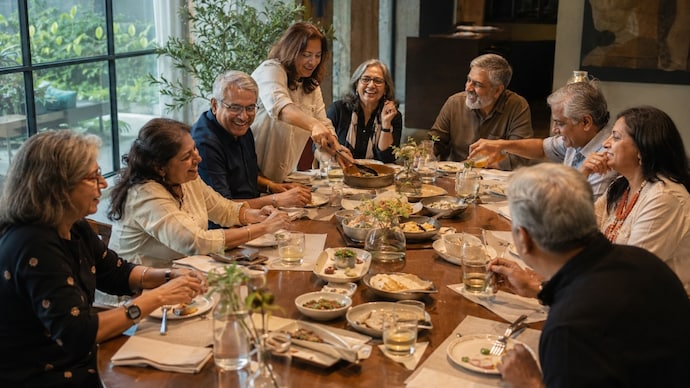
India's ageing population has a new way to socialise and that's beyond the morning yoga

New Delhi,UPDATED: Sep 6, 2026 13:40 IST
“Lunch tomorrow?”
“I’m unavailable. Can do a movie on Sunday afternoon instead.”
“Will join you for the morning reading baithak next weekend.”
Sounds like a perfectly normal group chat. Except this one is not buzzing between millennial or Gen Z. The people making these plans are in their 50s, 60s, and above.
Before you assume, this is not about the friendly neighbourhood luncheons, kitty parties, or early morning yoga and laughter therapy sessions. Something else is happening.
There’s a new way people are enjoying life after retirement, unlike the stereotypical image of morning walks, afternoon naps and a WhatsApp group that mostly forwards good-morning messages. All that is beginning to look a little dated.
And perhaps it should.
There’s a bigger shift in the social milieu of the elderly beyond the familiar meet-ups. Something newer, bigger and more adventurous is making its way.
Enter 'third spaces' for the elderly.
They are finding their community, their people, at supper clubs, ballroom dances, pickleball courts, game nights and more. Yes, you can read that all over again. These are not activities you’d necessarily associate with a 70-year-old, at least not until now.
“I never thought that retirement could be this vibrant. Who knew I would be buying athleisure wear to join running with strangers? Or buying party dresses for a dance party — no families, just friends, new friends,” Sudha Singh, a 70-year-old grandmother, who is a regular at runclubs, shares with India Today.

It’s become important now more than ever to engage, to build a community and find your own tribe. What's more interesting is how they are finding their "new friends" that's beyond their neighbourhood or family.
The rise of ‘third spaces’ for the elderly
First, what's really a third space? Home is considered to be the first space, the private one. The second is the professional space. And everything beyond that is the third space. A place where people come together because they want to, not because they have to. Somewhere they can meet new people, linger over conversations, try something new or simply be.
Now, increasingly, initiatives and communities are popping up that organise events like gaming nights where people engage in activities to stimulate cognition (probably, everyone needs that in this chronically online world now), dance parties, sporty actives and more, bringing like-minded people together. Here the target demographic is everyone 55 and above. That’s what’s building the silver economy — products and services in the market increasingly targeted at older adults.
“At our Senior Ball, members who had not danced in decades were on the floor within the first hour. At Grey Matter Games, teams spent an entire day on puzzles, laughing through most of it, and left asking when the next edition would be," Deval Delivala, Founder and CEO, WalkAbout, a community-building initiative for people above 55 in Mumbai, tells India Today Digital.
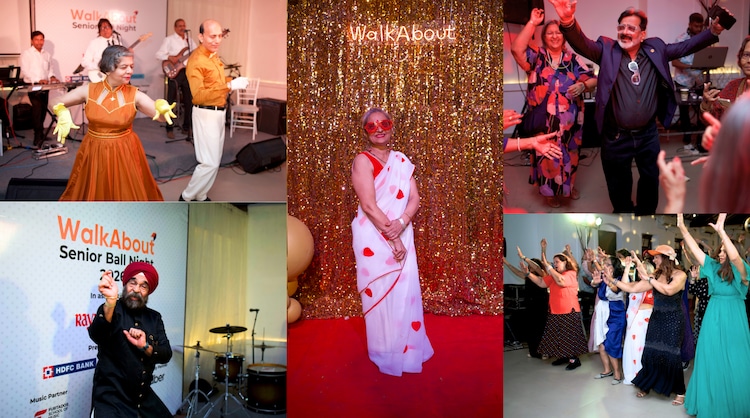
"At pickleball and Sports Day, people who had never once thought of themselves as sporty stepped onto the court, played badly, enjoyed it, and came back." In fact, at community lunches and cultural outings, strangers even exchange numbers and start making plans on their own.
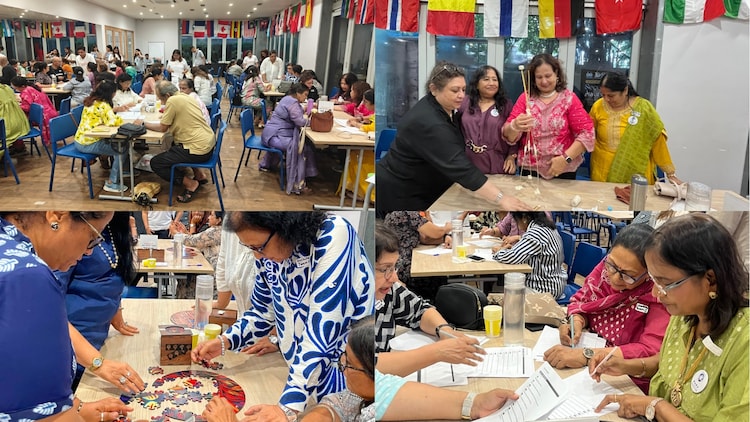
Today’s most active older adults are largely in the 60–75 bracket, and they are increasingly spending not just on necessities but on travel, experiences, hobbies and socialising. Sound familiar? It is the same experience-first mindset that has long defined Gen Z and millennials.
Delivala also highlights how the older adults they meet are not short on motivation. They are simply short on access. But that’s changing too.
And beneath all the pickleball, parties and supper clubs, what are they really looking for?
Connection, belonging and a renewed sense that things are still possible.
Perhaps that is what makes Anita, 61, love her job as a community manager at WalkAbout. She organises game nights, trips and celebrations for people around her own age because, that way, everyone is at a similar frequency.
“I imagined life after 55 would slow down a little, but instead this job happened,” she says. “It opened up an entirely new chapter. After 55, social circles can shrink as children move away, careers change and friendships evolve. But the desire to connect doesn’t disappear. People just need the right environment and the right opportunity.”

But this isn't simply about older people suddenly discovering that pickleball exists. There are bigger changes underneath it.
What's driving the change now?
First, retirement changes your social structure.
“We feel there is a significant gap in the way society looks at life after retirement. Retirement often changes much more than just a person’s professional identity. The workplace disappears, children may move away, routines change, and many of the social interactions that people took for granted gradually reduce,” MP Deepu, co-founder of SeniorWorld, an initiative that curates travel packages and experiences for the elderly, shares.
He points out that post-retirement, the checklist is limited to groceries, healthcare and pensions. “There is very little being created around how they want to live those additional years. There are services for healthcare, financial planning and assisted living, but not enough focus on friendships, experiences, travel, learning and simply having a vibrant social life.”
Delivala adds that when work lives come to an end, there is often nothing obvious to replace the social world that comes with it. And that creates a very real void.
And what isolation, reduced socialisation can do to a person has been discussed to death now.
Ageing population, shrinking families
According to UNFPA’s 2023 India Ageing Report, India’s elderly population is growing rapidly and is projected to cross 20 per cent of the population by 2050. By 2046, older adults could outnumber children aged 0–15. Therefore, there is a need to have a better social ecosystem in place.
And when the conversation is about ageing, there’s one question: who is “buddhape ka sahara”? Because that answer is changing too.
The Indian family dinner table has fewer chairs now. Kids are moving cities and countries, and there is a rise in DINK (Dual Income, No Kids) couples too. And the parents who do live with their children often lead surprisingly separate social lives, each generation busy on its own schedule.
As families shrink and children move away, Deepu says such communities could become an important part of the social ecosystem — “the need for companionship, community and meaningful social interaction is universal.”
The people you grow old with may increasingly have to be people you choose, not just the family you were born into.
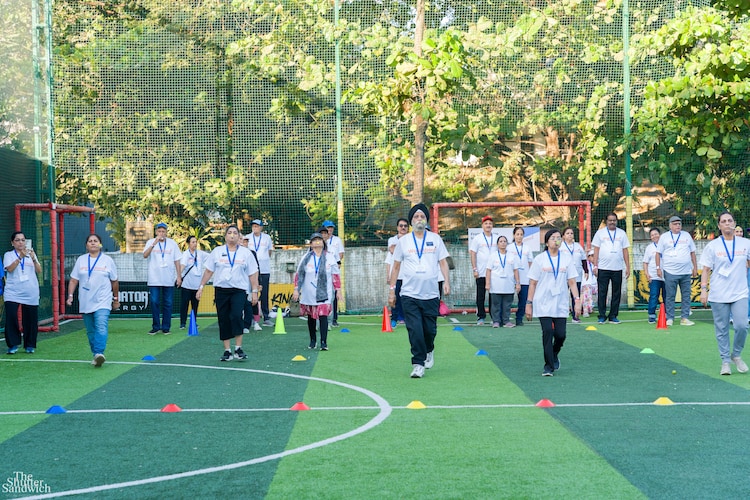
That's what a 76-year-old, retired, Mehboob G is exactly doing.
“I joined after I lost my wife and was alone, and wanted to make friends and get connected with like-minded good people. Before, I was very lonely, but now I am not."
For him, the experience has been wonderful and exhilarating. “I have made many lovely friends, and feel like a big happy family. Travelling with them is my favourite and I always look forward to their adventures.”
Delivala makes one very interesting observation about what has changed for the ageing population now: “With or without children, it’s changing what people want to do with their money. Our parents’ generation saved, so there would be something to leave behind. The generation retiring now wants to spend it while they are alive, on experiences, and we see this across the board.”
Now, if you look at it, these supper clubs, parties and game nights are exactly what Gen Z and millennials are already doing and almost for the same reasons - make companions, surround yourself with like-minded people and enjoy life.
This is just like a mirror of how this generation probably will age too.
And that’s precisely the need of the hour
Delivala says the sentence she hears most often from new members is some version of: “I don’t know what to do with myself any more.”
Sounds heavier than a pickleball racket. But perhaps it explains why these activities matter.
Here’s a strange sign of the times as well: we are talking less. One recent study found a 28 per cent drop in the number of words people speak daily between 2005 and 2019 — roughly 300 fewer words a day.
In that context, these communities are actually more important than we give them credit for: they give people a reason to leave the house, sit around a table, have a conversation. And perhaps that is the real point of growing older in this new social world.
- Ends