
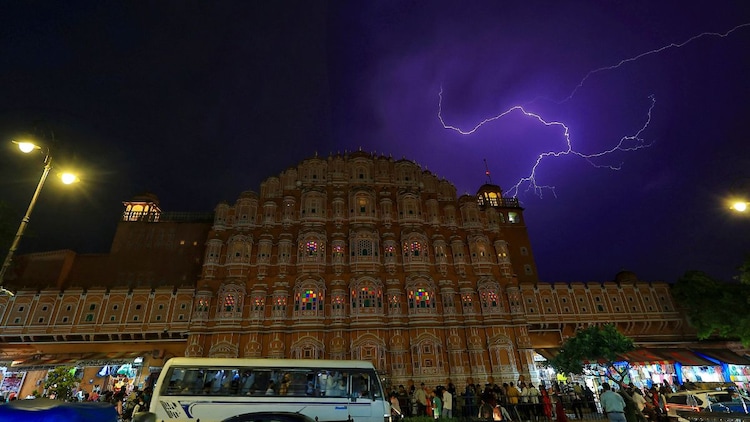
India's rain has paused, but its deadliest monsoon killer is out. What is it?
The IMD has forecast thunderstorms with lightning across nearly every region of India this week, even as monsoon rain stays subdued. Lightning kills more Indians than any other weather hazard, and dry, muggy spells are exactly when it strikes.
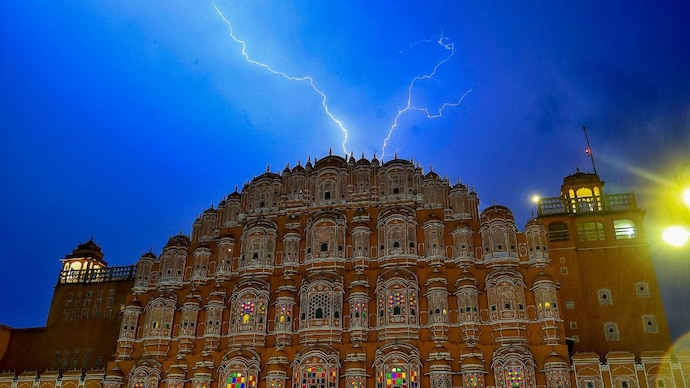
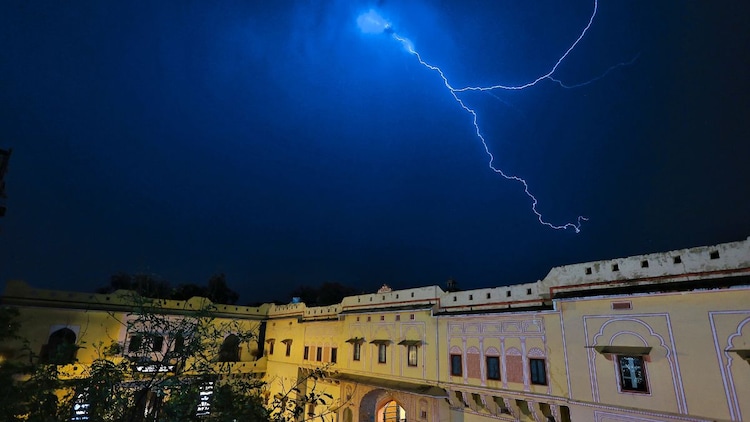
Lightning splits the sky during a thunderstorm. The IMD has forecast thunderstorms with lightning across most of India this week. (Photo: PTI)

The monsoon has gone quiet over most of India, and that silence is deceptive.
For this week, the India Meteorological Department's extended range forecast predicts thunderstorms accompanied by lightning and gusty winds over central India, east India, the northeast, the northwest plains, peninsular India, the west coast and the western Himalayan region. That is nearly the entire map.
It matters because lightning is not a side effect of India's weather. It is the deadliest part of it.
A study in the journal Natural Hazards found that lightning caused 46 per cent of all weather-related deaths in India between 2002 and 2022, more than floods, cyclones and heatwaves.
WHY DOES LIGHTNING INCREASE WHEN THE MONSOON WEAKENS?
A healthy monsoon spell brings vast, layered rain clouds that soak the land steadily and calmly. A monsoon pause brings something angrier.
With the rain switched off, the Sun beats down on humid land. Hot, moisture-laden air rises violently in narrow columns, building towering storm clouds that can climb over 12 kilometres.
The IMD has forecast hot and humid conditions over several states this week, which is precisely the fuel these storms feed on.
Less rain, in other words, does not mean safer skies. It often means electric ones.
HOW DOES LIGHTNING ACTUALLY FORM?
Inside a storm cloud, updrafts hurl ice crystals and soft hail past each other millions of times.
Each collision transfers a tiny electric charge, turning the cloud into a giant battery, with positive charge collecting at the top and negative at the bottom.
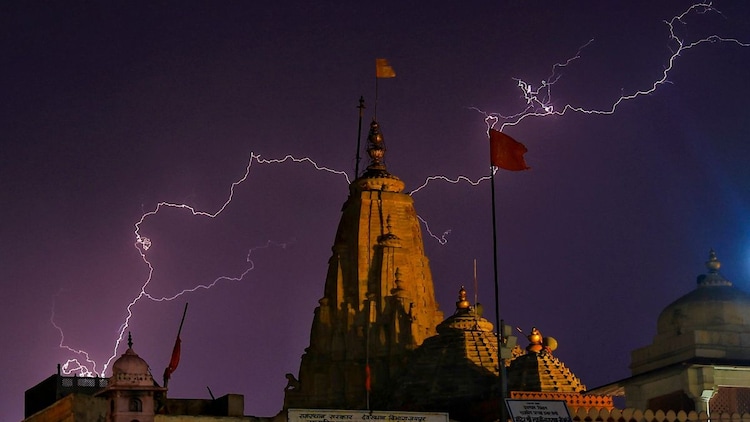
When the difference grows unbearable, the battery discharges in a single spark.
That spark heats the air around it to nearly 30,000 degrees Celsius, roughly five times hotter than the surface of the Sun.
HOW MANY PEOPLE DOES LIGHTNING KILL IN INDIA?
Between 1967 and 2020, lightning killed 1,01,309 people in India, an average of 1,876 every year, according to a study based on National Crime Records Bureau data.
The toll has risen sharply since 2001, and researchers link the increase to a warming climate, since hotter air holds more moisture and builds more of these electric clouds.
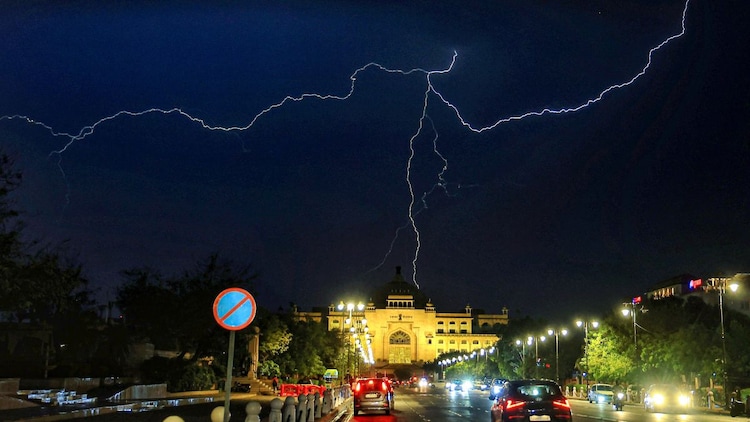
Half the deaths occur in central India.
Madhya Pradesh, Maharashtra, Uttar Pradesh and Odisha top the list, and the victims are overwhelmingly farmers and labourers caught in open fields.
HOW DO YOU STAY SAFE DURING A LIGHTNING STORM?
The IMD's advisory is blunt. Get indoors. Never shelter under a tree, which is where mass casualties happen.
Do not lie on concrete floors or lean against concrete walls, since wet concrete conducts electricity. Unplug appliances. If you are in a pond or river, get out immediately.
And download Damini, the free lightning alert app developed by the Indian Institute of Tropical Meteorology, which warns you when strikes are closing in on your location.
The rain will return in its own time. Until then, the safest place to admire the light show is from behind a window.
- Ends