The IPO hasn't opened yet. So how are people already buying the shares?
Investors are increasingly turning to the unlisted market to buy shares before an IPO opens. The route offers earlier access to company growth but comes with risks that differ from listed stocks.
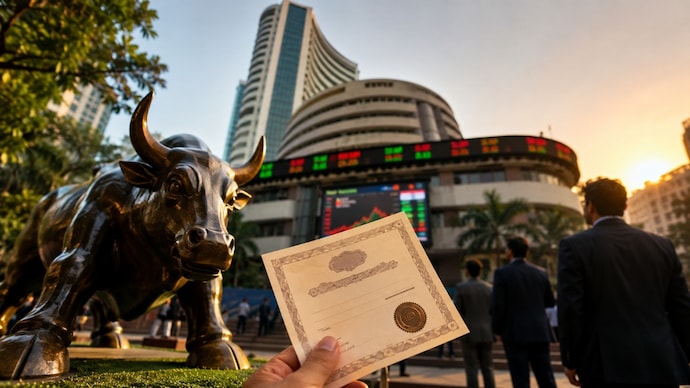
Most investors know there are two ways to own a company's shares. The first is by applying when it launches its initial public offering (IPO). The second is by buying the stock after it gets listed on the stock exchange.
But there's a third route that many retail investors are only now discovering.
Long before an IPO opens—and sometimes even years before a company files its draft papers with the market regulator—its shares can already be bought and sold legally in what's known as the unlisted or pre-IPO market.
That's why some investors already owned shares of companies like NSE, Swiggy and Waaree Energies well before they debuted on the stock exchange, giving them an opportunity to participate in the company's growth before the wider public got access.
With India's IPO pipeline packed with high-profile names and investor interest running high, curiosity around pre-IPO investing is growing rapidly. But while buying shares before an IPO may sound like getting in early on the next big opportunity, experts caution that it is a very different market from buying listed stocks—and one that comes with its own set of risks.
So, how does this lesser-known market actually work? Who sells these shares? Can ordinary investors buy them? And is it really worth the risk?
YOU REALLY DON'T HAVE TO WAIT FOR AN IPO
One of the biggest misconceptions among retail investors is that a company's shares become available only when its IPO opens.
In reality, companies issue equity much earlier to founders, employees through Employee Stock Ownership Plans (ESOPs), venture capital (VC) funds, private equity (PE) investors and other early backers. These shares exist in demat form and can be legally transferred through off-market transactions.
"This is one of the most common misconceptions I come across. Legally, unlisted shares are simply equity that a company has already issued to founders, employees via ESOPs, VCs or private investors well before it ever files for an IPO," says Rajesh Singla, CEO & Fund Manager at Alpha AMC.
"They can be legally transferred from one willing party to another through off-market transactions governed by the Companies Act, 2013. So buying pre-IPO shares isn't some grey-area workaround; it's simply participating one step earlier in a company's capital structure."
Prasenjit Paul, Fund Manager at 129 Wealth and Research Analyst at Paul Asset, agrees.
"Buying unlisted shares before an IPO is completely legal and it is a normal practice in the market. However, not every company's shares are available. Usually, only companies that raised funds privately in earlier years have shares available for trading in the unlisted market," he says.
HOW DOES THE UNLISTED SHARES MARKET WORK?
Unlike listed shares that trade on stock exchanges like the NSE or BSE, unlisted shares are bought and sold over-the-counter (OTC).
There is no live market price or exchange order book. Instead, prices are negotiated between buyers and sellers.
According to Singla, sellers are typically early employees who have exercised ESOPs, angel investors, venture capital funds or early-stage investors looking to partially exit before the IPO.
"Transactions happen either directly between two parties or through intermediary dealers and platforms, with settlement via off-market transfer through NSDL or CDSL. Pricing isn't real-time; it depends on negotiated deals, the company's last funding round, comparable listed peers and how close an IPO appears," he explains.
Paul says buyers are usually investors who want exposure to a company before it reaches the public markets.
"Generally, the sellers are early investors or private equity funds who already own shares. Buyers are investors looking to invest before the IPO, and these transactions happen through intermediaries after proper documentation and the share transfer process," he says.
WHY PRE-IPO SHARES ARE SUDDENLY IN DEMAND
The growing excitement around IPOs has naturally spilled over into the unlisted market.
Many investors have watched recent IPOs deliver healthy listing gains but have struggled to secure meaningful allotments because of heavy oversubscription.
According to Paul, pre-IPO investing offers an alternative.
"Many IPOs deliver good listing gains, but getting meaningful allotment has become difficult because of heavy oversubscription. In the unlisted market, investors can buy a much larger quantity if they have conviction, giving them an opportunity to participate more meaningfully if the company performs well after listing," he says.
Singla believes technology has also made the market more accessible.
"Platforms now let you buy pre-IPO shares in minutes with a KYC-complete demat account, something that simply wasn't accessible to retail investors a few years ago. And with a strong IPO pipeline building up, there's a natural pull toward getting in before the crowd does," he says.
THE BIG APPEAL: GETTING IN EARLY
The biggest attraction of pre-IPO investing is the possibility of entering before the market fully recognises a company's value.
"The core appeal is capturing value before the market prices it in. Once a company lists, its valuation gets discovered publicly and often re-rates sharply on listing day. Anyone who got in earlier benefits disproportionately," says Singla.
He adds that investors also get an opportunity to own companies that are otherwise unavailable on stock exchanges.
"It is about identifying strong growth businesses early, before institutional coverage catches up."
BUT THE RISKS ARE JUST AS REAL
While the possibility of early gains attracts investors, experts say the risks are often underestimated.
Liquidity tops the list.
Unlike listed stocks, there is no exchange where investors can sell unlisted shares whenever they want.
"If you need your money before a listing happens, you're dependent on finding a willing buyer, and that can take time," says Singla.
He also points to another challenge—limited information.
"Unlisted companies don't have the same disclosure obligations as listed companies, so investors often make decisions with limited or dated financial information."
Singla also cautions against using unregistered platforms.
"Sebi has issued multiple advisories warning that unauthorised platforms offer zero investor protection or grievance redressal if something goes wrong."
Paul believes valuation is another area where investors often make mistakes.
"Many investors assume buying an unlisted share automatically means easy listing gains, but that is not always true. Investors should carefully study the company's business, financials, future growth and, most importantly, the valuation, because even a good company can become a poor investment if bought at too high a price," he says.
DON'T ASSUME EVERY COMPANY WILL LIST
One of the biggest myths around pre-IPO investing is that every unlisted company will eventually launch an IPO and deliver handsome listing gains.
Experts say that assumption can be expensive.
"Filing a Draft Red Herring Prospectus (DRHP) doesn't guarantee a listing will happen or happen on any predictable timeline. I've seen companies remain unlisted for years despite having strong fundamentals," says Singla.
He adds that even if an IPO happens, listing gains are far from guaranteed.
"Treating pre-IPO investing as a guaranteed multiplier rather than a genuine risk-adjusted investment is exactly the kind of assumption that gets retail investors into trouble."
Paul shares a similar view.
"IPOs can get delayed for years or may even be withdrawn. Sometimes the unlisted market becomes too optimistic and pushes prices much above the eventual IPO valuation, leaving little upside for investors."
LESSONS FROM THE MARKET
Real-life examples show that success in pre-IPO investing depends as much on timing and valuation as on the quality of the business.
Singla points to Swiggy.
"Investors who bought Swiggy's unlisted shares in the Rs 60-100 range, well before its IPO, made significantly higher returns than those who entered later around Rs 300-400 when listing excitement had already built up."
Paul shares his firm's experience with several companies.
"We invested in NSE's unlisted shares around Rs 1,000 during August 2024, and today NSE is trading around Rs 2,100 in the unlisted market. We also invested in Waaree Energies around Rs 2,000 in the unlisted market and exited close to Rs 3,000 after listing."
However, he also points to Vikram Solar as an example of why patience alone does not guarantee profits.
"Our investment in Vikram Solar was around Rs 370. After listing, the stock touched Rs 400, but because of the six-month post-listing lock-in, we couldn't exit and the stock later corrected sharply."
"The lesson is simple—even good businesses can disappoint if entry price, timing and liquidity are ignored."
SHOULD RETAIL INVESTORS BUY PRE-IPO SHARES?
Both experts agree that pre-IPO investing should not become the core of an investor's portfolio.
Singla recommends treating it as a high-risk allocation.
"I'd treat it the way I'd treat any high-risk, high-reward investment—not more than 5-10% of a portfolio, and only with money an investor can afford to lock away for an extended and uncertain period."
"It works best for someone who already has their core equity and debt allocation sorted and is looking for asymmetric upside on the margins, not for someone chasing quick listing-day gains."
Paul echoes the advice.
"Pre-IPO investing is more suitable for experienced or high-net-worth investors who can remain invested for three to four years and understand liquidity risk. Retail investors should participate only with a small part of their portfolio and only after understanding that there is no guarantee of quick returns."
BEFORE BUYING AN UNLISTED SHARE
Experts say investors should ask a few basic questions before putting money into any pre-IPO company:
Is the platform or intermediary genuine and authorised?
Does the company have a valid Corporate Identification Number (CIN)?
Are audited financial statements available?
What was the company's last funding-round valuation?
Is the price being quoted reasonable compared to peers?
Is there any certainty around the IPO timeline?
Can you afford to keep your money locked in for several years?
For investors, the biggest attraction of pre-IPO investing is getting in early. But as experts point out, entering early is only rewarding when it's backed by research, realistic expectations and patience—not by the fear of missing out on the next big listing.
(Disclaimer: The views, opinions, recommendations, and suggestions expressed by experts/brokerages in this article are their own and do not reflect the views of the India Today Group. It is advisable to consult a qualified broker or financial advisor before making any actual investment or trading choices.)
Most investors know there are two ways to own a company's shares. The first is by applying when it launches its initial public offering (IPO). The second is by buying the stock after it gets listed on the stock exchange.
But there's a third route that many retail investors are only now discovering.
Long before an IPO opens—and sometimes even years before a company files its draft papers with the market regulator—its shares can already be bought and sold legally in what's known as the unlisted or pre-IPO market.
That's why some investors already owned shares of companies like NSE, Swiggy and Waaree Energies well before they debuted on the stock exchange, giving them an opportunity to participate in the company's growth before the wider public got access.
With India's IPO pipeline packed with high-profile names and investor interest running high, curiosity around pre-IPO investing is growing rapidly. But while buying shares before an IPO may sound like getting in early on the next big opportunity, experts caution that it is a very different market from buying listed stocks—and one that comes with its own set of risks.
So, how does this lesser-known market actually work? Who sells these shares? Can ordinary investors buy them? And is it really worth the risk?
YOU REALLY DON'T HAVE TO WAIT FOR AN IPO
One of the biggest misconceptions among retail investors is that a company's shares become available only when its IPO opens.
In reality, companies issue equity much earlier to founders, employees through Employee Stock Ownership Plans (ESOPs), venture capital (VC) funds, private equity (PE) investors and other early backers. These shares exist in demat form and can be legally transferred through off-market transactions.
"This is one of the most common misconceptions I come across. Legally, unlisted shares are simply equity that a company has already issued to founders, employees via ESOPs, VCs or private investors well before it ever files for an IPO," says Rajesh Singla, CEO & Fund Manager at Alpha AMC.
"They can be legally transferred from one willing party to another through off-market transactions governed by the Companies Act, 2013. So buying pre-IPO shares isn't some grey-area workaround; it's simply participating one step earlier in a company's capital structure."
Prasenjit Paul, Fund Manager at 129 Wealth and Research Analyst at Paul Asset, agrees.
"Buying unlisted shares before an IPO is completely legal and it is a normal practice in the market. However, not every company's shares are available. Usually, only companies that raised funds privately in earlier years have shares available for trading in the unlisted market," he says.
HOW DOES THE UNLISTED SHARES MARKET WORK?
Unlike listed shares that trade on stock exchanges like the NSE or BSE, unlisted shares are bought and sold over-the-counter (OTC).
There is no live market price or exchange order book. Instead, prices are negotiated between buyers and sellers.
According to Singla, sellers are typically early employees who have exercised ESOPs, angel investors, venture capital funds or early-stage investors looking to partially exit before the IPO.
"Transactions happen either directly between two parties or through intermediary dealers and platforms, with settlement via off-market transfer through NSDL or CDSL. Pricing isn't real-time; it depends on negotiated deals, the company's last funding round, comparable listed peers and how close an IPO appears," he explains.
Paul says buyers are usually investors who want exposure to a company before it reaches the public markets.
"Generally, the sellers are early investors or private equity funds who already own shares. Buyers are investors looking to invest before the IPO, and these transactions happen through intermediaries after proper documentation and the share transfer process," he says.
WHY PRE-IPO SHARES ARE SUDDENLY IN DEMAND
The growing excitement around IPOs has naturally spilled over into the unlisted market.
Many investors have watched recent IPOs deliver healthy listing gains but have struggled to secure meaningful allotments because of heavy oversubscription.
According to Paul, pre-IPO investing offers an alternative.
"Many IPOs deliver good listing gains, but getting meaningful allotment has become difficult because of heavy oversubscription. In the unlisted market, investors can buy a much larger quantity if they have conviction, giving them an opportunity to participate more meaningfully if the company performs well after listing," he says.
Singla believes technology has also made the market more accessible.
"Platforms now let you buy pre-IPO shares in minutes with a KYC-complete demat account, something that simply wasn't accessible to retail investors a few years ago. And with a strong IPO pipeline building up, there's a natural pull toward getting in before the crowd does," he says.
THE BIG APPEAL: GETTING IN EARLY
The biggest attraction of pre-IPO investing is the possibility of entering before the market fully recognises a company's value.
"The core appeal is capturing value before the market prices it in. Once a company lists, its valuation gets discovered publicly and often re-rates sharply on listing day. Anyone who got in earlier benefits disproportionately," says Singla.
He adds that investors also get an opportunity to own companies that are otherwise unavailable on stock exchanges.
"It is about identifying strong growth businesses early, before institutional coverage catches up."
BUT THE RISKS ARE JUST AS REAL
While the possibility of early gains attracts investors, experts say the risks are often underestimated.
Liquidity tops the list.
Unlike listed stocks, there is no exchange where investors can sell unlisted shares whenever they want.
"If you need your money before a listing happens, you're dependent on finding a willing buyer, and that can take time," says Singla.
He also points to another challenge—limited information.
"Unlisted companies don't have the same disclosure obligations as listed companies, so investors often make decisions with limited or dated financial information."
Singla also cautions against using unregistered platforms.
"Sebi has issued multiple advisories warning that unauthorised platforms offer zero investor protection or grievance redressal if something goes wrong."
Paul believes valuation is another area where investors often make mistakes.
"Many investors assume buying an unlisted share automatically means easy listing gains, but that is not always true. Investors should carefully study the company's business, financials, future growth and, most importantly, the valuation, because even a good company can become a poor investment if bought at too high a price," he says.
DON'T ASSUME EVERY COMPANY WILL LIST
One of the biggest myths around pre-IPO investing is that every unlisted company will eventually launch an IPO and deliver handsome listing gains.
Experts say that assumption can be expensive.
"Filing a Draft Red Herring Prospectus (DRHP) doesn't guarantee a listing will happen or happen on any predictable timeline. I've seen companies remain unlisted for years despite having strong fundamentals," says Singla.
He adds that even if an IPO happens, listing gains are far from guaranteed.
"Treating pre-IPO investing as a guaranteed multiplier rather than a genuine risk-adjusted investment is exactly the kind of assumption that gets retail investors into trouble."
Paul shares a similar view.
"IPOs can get delayed for years or may even be withdrawn. Sometimes the unlisted market becomes too optimistic and pushes prices much above the eventual IPO valuation, leaving little upside for investors."
LESSONS FROM THE MARKET
Real-life examples show that success in pre-IPO investing depends as much on timing and valuation as on the quality of the business.
Singla points to Swiggy.
"Investors who bought Swiggy's unlisted shares in the Rs 60-100 range, well before its IPO, made significantly higher returns than those who entered later around Rs 300-400 when listing excitement had already built up."
Paul shares his firm's experience with several companies.
"We invested in NSE's unlisted shares around Rs 1,000 during August 2024, and today NSE is trading around Rs 2,100 in the unlisted market. We also invested in Waaree Energies around Rs 2,000 in the unlisted market and exited close to Rs 3,000 after listing."
However, he also points to Vikram Solar as an example of why patience alone does not guarantee profits.
"Our investment in Vikram Solar was around Rs 370. After listing, the stock touched Rs 400, but because of the six-month post-listing lock-in, we couldn't exit and the stock later corrected sharply."
"The lesson is simple—even good businesses can disappoint if entry price, timing and liquidity are ignored."
SHOULD RETAIL INVESTORS BUY PRE-IPO SHARES?
Both experts agree that pre-IPO investing should not become the core of an investor's portfolio.
Singla recommends treating it as a high-risk allocation.
"I'd treat it the way I'd treat any high-risk, high-reward investment—not more than 5-10% of a portfolio, and only with money an investor can afford to lock away for an extended and uncertain period."
"It works best for someone who already has their core equity and debt allocation sorted and is looking for asymmetric upside on the margins, not for someone chasing quick listing-day gains."
Paul echoes the advice.
"Pre-IPO investing is more suitable for experienced or high-net-worth investors who can remain invested for three to four years and understand liquidity risk. Retail investors should participate only with a small part of their portfolio and only after understanding that there is no guarantee of quick returns."
BEFORE BUYING AN UNLISTED SHARE
Experts say investors should ask a few basic questions before putting money into any pre-IPO company:
Is the platform or intermediary genuine and authorised?
Does the company have a valid Corporate Identification Number (CIN)?
Are audited financial statements available?
What was the company's last funding-round valuation?
Is the price being quoted reasonable compared to peers?
Is there any certainty around the IPO timeline?
Can you afford to keep your money locked in for several years?
For investors, the biggest attraction of pre-IPO investing is getting in early. But as experts point out, entering early is only rewarding when it's backed by research, realistic expectations and patience—not by the fear of missing out on the next big listing.
(Disclaimer: The views, opinions, recommendations, and suggestions expressed by experts/brokerages in this article are their own and do not reflect the views of the India Today Group. It is advisable to consult a qualified broker or financial advisor before making any actual investment or trading choices.)

