Why Tier-II and Tier-III cities are driving India's next consumption boom
For years, India's consumer story centred on the metros. Today, smaller cities are rapidly taking the lead in spending, aspirations and premium consumption. Why are Tier-II and Tier-III cities booming?
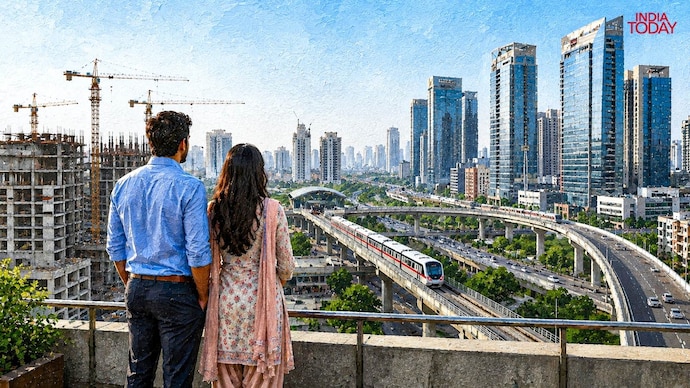
For decades, India's growth story seemed to belong to the metros. When brands wanted to launch a new product, investors looked at Mumbai, Delhi or Bengaluru. When marketers spoke about affluent consumers, the conversation rarely moved beyond the country's biggest cities.
That picture is changing, and perhaps faster than many expected.
Today, the strongest signs of India's next consumption boom are emerging from cities such as Lucknow, Jaipur, Indore, Surat, Patna and Bhopal. These are no longer just growing towns feeding the metros with talent. They are becoming powerful consumer markets in their own right, driven by rising incomes, digital adoption, changing lifestyles and a young population eager to spend.
A new report, titled 'Urban Bharat – India's Consumption Story' by the Dainik Bhaskar Group and Kantar, suggests that India's consumption engine is steadily shifting beyond the metros. The report says that Tier-II and Tier-III cities are no longer simply catching up—they are emerging as independent growth centres that are driving demand across sectors.
For the purpose of this study, Urban Bharat refers to cities across the Hindi-speaking markets of Madhya Pradesh, Rajasthan, Uttar Pradesh, Bihar, Punjab, Haryana, Uttarakhand, Chhattisgarh and Jharkhand, as well as Maharashtra and Gujarat, excluding Delhi and Mumbai.
URBAN BHARAT IS NO LONGER PLAYING CATCH-UP
One of the report's biggest takeaways is that Tier-II and Tier-III cities are no longer following the consumption trends set by metros. Instead, they are creating demand of their own.
Nearly one in three urban Indians now lives in Urban Bharat, making it one of the country's largest consumption markets. Even more significantly, the affluent population in these cities has grown by 76% over the past six years, reflecting a sharp rise in purchasing power.
According to the report, this is no temporary trend. It marks a structural shift in where India's future demand is likely to come from.
Covering 11 high-growth sectors, i.e., from automobiles and personal finance to healthcare, retail, real estate and travel, the study suggests that Urban Bharat is fast becoming the country's next engine of economic growth.
A YOUNG INDIA IS SPENDING WITH CONFIDENCE
The story of Urban Bharat is also a story of demographics.
Nearly 60% of the population in these cities is below the age of 35. Many are entering their highest earning years, finding better employment opportunities and enjoying rising disposable incomes.
This younger generation is no longer satisfied with buying products that simply meet basic needs. They are increasingly choosing branded goods, premium services and better experiences.
The report shows that affluent households have increased from 26% to 41% in just six years, underlining the rapid pace of premiumisation beyond the metros.
DIGITAL INDIA HAS TRANSFORMED SMALLER CITIES
Technology has quietly erased many of the barriers that once separated smaller cities from metropolitan India.
Digital payments, online banking, investment platforms and e-commerce have become part of everyday life across Urban Bharat.
According to the report, debit and credit card ownership has more than doubled over the past six years, while online shopping has expanded rapidly. Today, one in every three consumers in Urban Bharat shops online.
Indian-language mobile applications are also creating fresh opportunities by enabling people to become online entrepreneurs, resellers and digital content creators.
HOMES, EDUCATION AND BETTER LIFESTYLES ARE DRIVING SPENDING
The report suggests that rising aspirations are visible across almost every aspect of daily life.
Residential property prices have risen two to three times over the past decade in many Urban Bharat markets. Developers are increasingly focusing on Tier-II and Tier-III cities as demand for homeownership remains strong.
Family structures are evolving too. Nuclear households are becoming more common, increasing demand for larger homes, convenience products and financial planning solutions.
Education has also emerged as a major priority. More than 27% of households now spend over 10% of their income on education, reflecting parents' willingness to invest in better opportunities for their children.
Cities such as Lucknow, Patna, Indore and Bhopal are steadily developing into education hubs, while Pune continues to strengthen its position as one of India's largest centres for higher education.
WHY BRANDS ARE LOOKING BEYOND THE METROS
For years, many companies planned their marketing strategies largely around metro consumers. The report argues that approach is rapidly becoming outdated.
Girish Agarwal, Director of Dainik Bhaskar Group, said marketers have long relied on assumptions because of limited insights into smaller cities.
"For years, marketers have looked at Bharat through the lens of metro India, often relying on assumptions due to the absence of credible market intelligence. Today, cities like Jaipur, Lucknow, Surat and Indore are emerging as powerful consumption hubs. Consumers across Tier-II and Tier-III India are highly aspirational, digitally connected and increasingly willing to spend across categories," he said.
To help businesses identify future opportunities, the study introduces the ‘Urban Bharat City Opportunity Index’, which ranks the country's top 50 consumption markets using data rather than perception.
THE FUTURE OF INDIA'S GROWTH MAY LIE BEYOND ITS BIGGEST CITIES
According to Kantar's Director, B2B & Technology, Biswapriya Bhattacharya, the numbers make the shift impossible to ignore.
"In recent years, 76% of the growth in India's affluent population has come from Urban Bharat. More importantly, 60% of this affluent population is below the age of 35. This young demographic is in its peak earning and spending years and is actively driving India's new consumption economy," he said.
The message from the report is straightforward. Urban Bharat is no longer waiting for growth to trickle down from the metros. It has emerged as a parallel, and in many sectors faster-growing, economic engine.
For businesses, investors and policymakers, that changes the map of opportunity. India's next decade of growth may not be written in its biggest cities alone. Increasingly, it will be shaped by the ambition, purchasing power and confidence of consumers in Tier-II and Tier-III India.
For decades, India's growth story seemed to belong to the metros. When brands wanted to launch a new product, investors looked at Mumbai, Delhi or Bengaluru. When marketers spoke about affluent consumers, the conversation rarely moved beyond the country's biggest cities.
That picture is changing, and perhaps faster than many expected.
Today, the strongest signs of India's next consumption boom are emerging from cities such as Lucknow, Jaipur, Indore, Surat, Patna and Bhopal. These are no longer just growing towns feeding the metros with talent. They are becoming powerful consumer markets in their own right, driven by rising incomes, digital adoption, changing lifestyles and a young population eager to spend.
A new report, titled 'Urban Bharat – India's Consumption Story' by the Dainik Bhaskar Group and Kantar, suggests that India's consumption engine is steadily shifting beyond the metros. The report says that Tier-II and Tier-III cities are no longer simply catching up—they are emerging as independent growth centres that are driving demand across sectors.
For the purpose of this study, Urban Bharat refers to cities across the Hindi-speaking markets of Madhya Pradesh, Rajasthan, Uttar Pradesh, Bihar, Punjab, Haryana, Uttarakhand, Chhattisgarh and Jharkhand, as well as Maharashtra and Gujarat, excluding Delhi and Mumbai.
URBAN BHARAT IS NO LONGER PLAYING CATCH-UP
One of the report's biggest takeaways is that Tier-II and Tier-III cities are no longer following the consumption trends set by metros. Instead, they are creating demand of their own.
Nearly one in three urban Indians now lives in Urban Bharat, making it one of the country's largest consumption markets. Even more significantly, the affluent population in these cities has grown by 76% over the past six years, reflecting a sharp rise in purchasing power.
According to the report, this is no temporary trend. It marks a structural shift in where India's future demand is likely to come from.
Covering 11 high-growth sectors, i.e., from automobiles and personal finance to healthcare, retail, real estate and travel, the study suggests that Urban Bharat is fast becoming the country's next engine of economic growth.
A YOUNG INDIA IS SPENDING WITH CONFIDENCE
The story of Urban Bharat is also a story of demographics.
Nearly 60% of the population in these cities is below the age of 35. Many are entering their highest earning years, finding better employment opportunities and enjoying rising disposable incomes.
This younger generation is no longer satisfied with buying products that simply meet basic needs. They are increasingly choosing branded goods, premium services and better experiences.
The report shows that affluent households have increased from 26% to 41% in just six years, underlining the rapid pace of premiumisation beyond the metros.
DIGITAL INDIA HAS TRANSFORMED SMALLER CITIES
Technology has quietly erased many of the barriers that once separated smaller cities from metropolitan India.
Digital payments, online banking, investment platforms and e-commerce have become part of everyday life across Urban Bharat.
According to the report, debit and credit card ownership has more than doubled over the past six years, while online shopping has expanded rapidly. Today, one in every three consumers in Urban Bharat shops online.
Indian-language mobile applications are also creating fresh opportunities by enabling people to become online entrepreneurs, resellers and digital content creators.
HOMES, EDUCATION AND BETTER LIFESTYLES ARE DRIVING SPENDING
The report suggests that rising aspirations are visible across almost every aspect of daily life.
Residential property prices have risen two to three times over the past decade in many Urban Bharat markets. Developers are increasingly focusing on Tier-II and Tier-III cities as demand for homeownership remains strong.
Family structures are evolving too. Nuclear households are becoming more common, increasing demand for larger homes, convenience products and financial planning solutions.
Education has also emerged as a major priority. More than 27% of households now spend over 10% of their income on education, reflecting parents' willingness to invest in better opportunities for their children.
Cities such as Lucknow, Patna, Indore and Bhopal are steadily developing into education hubs, while Pune continues to strengthen its position as one of India's largest centres for higher education.
WHY BRANDS ARE LOOKING BEYOND THE METROS
For years, many companies planned their marketing strategies largely around metro consumers. The report argues that approach is rapidly becoming outdated.
Girish Agarwal, Director of Dainik Bhaskar Group, said marketers have long relied on assumptions because of limited insights into smaller cities.
"For years, marketers have looked at Bharat through the lens of metro India, often relying on assumptions due to the absence of credible market intelligence. Today, cities like Jaipur, Lucknow, Surat and Indore are emerging as powerful consumption hubs. Consumers across Tier-II and Tier-III India are highly aspirational, digitally connected and increasingly willing to spend across categories," he said.
To help businesses identify future opportunities, the study introduces the ‘Urban Bharat City Opportunity Index’, which ranks the country's top 50 consumption markets using data rather than perception.
THE FUTURE OF INDIA'S GROWTH MAY LIE BEYOND ITS BIGGEST CITIES
According to Kantar's Director, B2B & Technology, Biswapriya Bhattacharya, the numbers make the shift impossible to ignore.
"In recent years, 76% of the growth in India's affluent population has come from Urban Bharat. More importantly, 60% of this affluent population is below the age of 35. This young demographic is in its peak earning and spending years and is actively driving India's new consumption economy," he said.
The message from the report is straightforward. Urban Bharat is no longer waiting for growth to trickle down from the metros. It has emerged as a parallel, and in many sectors faster-growing, economic engine.
For businesses, investors and policymakers, that changes the map of opportunity. India's next decade of growth may not be written in its biggest cities alone. Increasingly, it will be shaped by the ambition, purchasing power and confidence of consumers in Tier-II and Tier-III India.
For decades, India's growth story seemed to belong to the metros. When brands wanted to launch a new product, investors looked at Mumbai, Delhi or Bengaluru. When marketers spoke about affluent consumers, the conversation rarely moved beyond the country's biggest cities.
That picture is changing, and perhaps faster than many expected.
Today, the strongest signs of India's next consumption boom are emerging from cities such as Lucknow, Jaipur, Indore, Surat, Patna and Bhopal. These are no longer just growing towns feeding the metros with talent. They are becoming powerful consumer markets in their own right, driven by rising incomes, digital adoption, changing lifestyles and a young population eager to spend.
A new report, titled 'Urban Bharat – India's Consumption Story' by the Dainik Bhaskar Group and Kantar, suggests that India's consumption engine is steadily shifting beyond the metros. The report says that Tier-II and Tier-III cities are no longer simply catching up—they are emerging as independent growth centres that are driving demand across sectors.
For the purpose of this study, Urban Bharat refers to cities across the Hindi-speaking markets of Madhya Pradesh, Rajasthan, Uttar Pradesh, Bihar, Punjab, Haryana, Uttarakhand, Chhattisgarh and Jharkhand, as well as Maharashtra and Gujarat, excluding Delhi and Mumbai.
URBAN BHARAT IS NO LONGER PLAYING CATCH-UP
One of the report's biggest takeaways is that Tier-II and Tier-III cities are no longer following the consumption trends set by metros. Instead, they are creating demand of their own.
Nearly one in three urban Indians now lives in Urban Bharat, making it one of the country's largest consumption markets. Even more significantly, the affluent population in these cities has grown by 76% over the past six years, reflecting a sharp rise in purchasing power.
According to the report, this is no temporary trend. It marks a structural shift in where India's future demand is likely to come from.
Covering 11 high-growth sectors, i.e., from automobiles and personal finance to healthcare, retail, real estate and travel, the study suggests that Urban Bharat is fast becoming the country's next engine of economic growth.
A YOUNG INDIA IS SPENDING WITH CONFIDENCE
The story of Urban Bharat is also a story of demographics.
Nearly 60% of the population in these cities is below the age of 35. Many are entering their highest earning years, finding better employment opportunities and enjoying rising disposable incomes.
This younger generation is no longer satisfied with buying products that simply meet basic needs. They are increasingly choosing branded goods, premium services and better experiences.
The report shows that affluent households have increased from 26% to 41% in just six years, underlining the rapid pace of premiumisation beyond the metros.
DIGITAL INDIA HAS TRANSFORMED SMALLER CITIES
Technology has quietly erased many of the barriers that once separated smaller cities from metropolitan India.
Digital payments, online banking, investment platforms and e-commerce have become part of everyday life across Urban Bharat.
According to the report, debit and credit card ownership has more than doubled over the past six years, while online shopping has expanded rapidly. Today, one in every three consumers in Urban Bharat shops online.
Indian-language mobile applications are also creating fresh opportunities by enabling people to become online entrepreneurs, resellers and digital content creators.
HOMES, EDUCATION AND BETTER LIFESTYLES ARE DRIVING SPENDING
The report suggests that rising aspirations are visible across almost every aspect of daily life.
Residential property prices have risen two to three times over the past decade in many Urban Bharat markets. Developers are increasingly focusing on Tier-II and Tier-III cities as demand for homeownership remains strong.
Family structures are evolving too. Nuclear households are becoming more common, increasing demand for larger homes, convenience products and financial planning solutions.
Education has also emerged as a major priority. More than 27% of households now spend over 10% of their income on education, reflecting parents' willingness to invest in better opportunities for their children.
Cities such as Lucknow, Patna, Indore and Bhopal are steadily developing into education hubs, while Pune continues to strengthen its position as one of India's largest centres for higher education.
WHY BRANDS ARE LOOKING BEYOND THE METROS
For years, many companies planned their marketing strategies largely around metro consumers. The report argues that approach is rapidly becoming outdated.
Girish Agarwal, Director of Dainik Bhaskar Group, said marketers have long relied on assumptions because of limited insights into smaller cities.
"For years, marketers have looked at Bharat through the lens of metro India, often relying on assumptions due to the absence of credible market intelligence. Today, cities like Jaipur, Lucknow, Surat and Indore are emerging as powerful consumption hubs. Consumers across Tier-II and Tier-III India are highly aspirational, digitally connected and increasingly willing to spend across categories," he said.
To help businesses identify future opportunities, the study introduces the ‘Urban Bharat City Opportunity Index’, which ranks the country's top 50 consumption markets using data rather than perception.
THE FUTURE OF INDIA'S GROWTH MAY LIE BEYOND ITS BIGGEST CITIES
According to Kantar's Director, B2B & Technology, Biswapriya Bhattacharya, the numbers make the shift impossible to ignore.
"In recent years, 76% of the growth in India's affluent population has come from Urban Bharat. More importantly, 60% of this affluent population is below the age of 35. This young demographic is in its peak earning and spending years and is actively driving India's new consumption economy," he said.
The message from the report is straightforward. Urban Bharat is no longer waiting for growth to trickle down from the metros. It has emerged as a parallel, and in many sectors faster-growing, economic engine.
For businesses, investors and policymakers, that changes the map of opportunity. India's next decade of growth may not be written in its biggest cities alone. Increasingly, it will be shaped by the ambition, purchasing power and confidence of consumers in Tier-II and Tier-III India.

