Delhi Police defends lathi-charge of protesters, says response graded, restrained
Delhi Police said it used lathi-charge and tear gas only after NEET protesters breached barricades and moved towards Parliament. The force said the action followed repeated warnings and will now face a post-incident review.
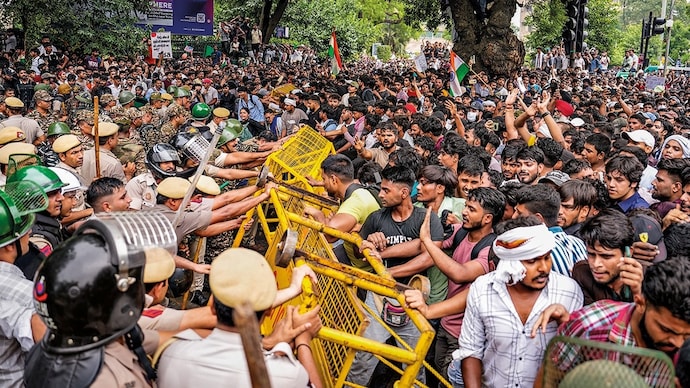
Delhi Police has defended its lathi-charge and use of tear gas during the Cockroach Janta Party (CJP)-led protests over NEET irregularities, saying force was used only as a last resort after repeated warnings, barricade breaches and an unauthorised march towards Parliament.
According to an internal police briefing, the response was "graded, restrained and warranted", with officers exhausting multiple non-forceful measures before resorting to crowd-control tactics. The force said recent coverage had largely focused on visuals of baton charges and tear gas without the sequence of events that preceded the police action.
PERMISSION GRANTED ONLY FOR SIT-IN: POLICE
The agitation began as a peaceful sit-in at Delhi's Jantar Mantar, where thousands of students gathered for weeks to protest alleged irregularities in the NEET examination.
Police said the demonstration at the designated protest site was facilitated throughout the agitation and was not forcibly dispersed despite sustained sloganeering, provocation and the presence of what the force described as disruptive fringe elements.
According to the briefing, permission had been granted only for a sit-in at Jantar Mantar and not for a march towards Parliament. Police said the situation escalated when sections of the crowd allegedly moved beyond the sanctioned protest area and attempted to enter high-security zones around Parliament during the session.
Officials said repeated announcements were made through public address systems asking protesters to remain within the permitted area. However, they alleged that sections of the crowd breached multiple layers of iron barricades erected to secure the route.
The police further claimed that several official vehicles were damaged during the confrontation and that senior officers, including elderly personnel deployed at the site, were surrounded, jostled and heckled while attempting to prevent the crowd from advancing.
MEDIA PERSONNEL HECKLED: DELHI POLICE
The briefing also alleged that some media personnel present at the protest were subjected to heckling and physical harassment.
According to Delhi Police, officers initially relied on repeated announcements under Section 163 of the Bharatiya Nagarik Suraksha Sanhita (BNSS), engagement with protest organisers and static formations behind multi-layered barricades.
As protesters allegedly climbed over and dismantled barricades, police first resorted to mild physical pushing and water cannons while refraining from using batons.
The force maintained that only after barricades were repeatedly breached, stones were allegedly thrown, public property was damaged and police personnel came under attack did officers authorise a targeted lathi-charge and controlled use of tear gas.
According to the briefing, the action was directed specifically at those allegedly breaching security cordons or attacking personnel rather than the crowd as a whole.
Police said the use of force ceased once the immediate threat had been neutralised and the crowd began dispersing.
The briefing also argued that injuries sustained by police personnel have received comparatively less attention than those suffered by protesters.
According to the force, several officers were injured while exercising restraint, and the decision to prioritise containment over retaliation prevented a wider law-and-order breakdown.
Delhi Police said a post-incident review is underway to examine whether the response remained proportionate at every stage, assess the role of alleged disruptive elements within the crowd, and identify any lapses by individual police personnel.
Officials said the review would evaluate the entire sequence of events, including both the conduct of protesters and the actions taken by the police during the confrontation.
Delhi Police has defended its lathi-charge and use of tear gas during the Cockroach Janta Party (CJP)-led protests over NEET irregularities, saying force was used only as a last resort after repeated warnings, barricade breaches and an unauthorised march towards Parliament.
According to an internal police briefing, the response was "graded, restrained and warranted", with officers exhausting multiple non-forceful measures before resorting to crowd-control tactics. The force said recent coverage had largely focused on visuals of baton charges and tear gas without the sequence of events that preceded the police action.
PERMISSION GRANTED ONLY FOR SIT-IN: POLICE
The agitation began as a peaceful sit-in at Delhi's Jantar Mantar, where thousands of students gathered for weeks to protest alleged irregularities in the NEET examination.
Police said the demonstration at the designated protest site was facilitated throughout the agitation and was not forcibly dispersed despite sustained sloganeering, provocation and the presence of what the force described as disruptive fringe elements.
According to the briefing, permission had been granted only for a sit-in at Jantar Mantar and not for a march towards Parliament. Police said the situation escalated when sections of the crowd allegedly moved beyond the sanctioned protest area and attempted to enter high-security zones around Parliament during the session.
Officials said repeated announcements were made through public address systems asking protesters to remain within the permitted area. However, they alleged that sections of the crowd breached multiple layers of iron barricades erected to secure the route.
The police further claimed that several official vehicles were damaged during the confrontation and that senior officers, including elderly personnel deployed at the site, were surrounded, jostled and heckled while attempting to prevent the crowd from advancing.
MEDIA PERSONNEL HECKLED: DELHI POLICE
The briefing also alleged that some media personnel present at the protest were subjected to heckling and physical harassment.
According to Delhi Police, officers initially relied on repeated announcements under Section 163 of the Bharatiya Nagarik Suraksha Sanhita (BNSS), engagement with protest organisers and static formations behind multi-layered barricades.
As protesters allegedly climbed over and dismantled barricades, police first resorted to mild physical pushing and water cannons while refraining from using batons.
The force maintained that only after barricades were repeatedly breached, stones were allegedly thrown, public property was damaged and police personnel came under attack did officers authorise a targeted lathi-charge and controlled use of tear gas.
According to the briefing, the action was directed specifically at those allegedly breaching security cordons or attacking personnel rather than the crowd as a whole.
Police said the use of force ceased once the immediate threat had been neutralised and the crowd began dispersing.
The briefing also argued that injuries sustained by police personnel have received comparatively less attention than those suffered by protesters.
According to the force, several officers were injured while exercising restraint, and the decision to prioritise containment over retaliation prevented a wider law-and-order breakdown.
Delhi Police said a post-incident review is underway to examine whether the response remained proportionate at every stage, assess the role of alleged disruptive elements within the crowd, and identify any lapses by individual police personnel.
Officials said the review would evaluate the entire sequence of events, including both the conduct of protesters and the actions taken by the police during the confrontation.
Delhi Police has defended its lathi-charge and use of tear gas during the Cockroach Janta Party (CJP)-led protests over NEET irregularities, saying force was used only as a last resort after repeated warnings, barricade breaches and an unauthorised march towards Parliament.
According to an internal police briefing, the response was "graded, restrained and warranted", with officers exhausting multiple non-forceful measures before resorting to crowd-control tactics. The force said recent coverage had largely focused on visuals of baton charges and tear gas without the sequence of events that preceded the police action.
PERMISSION GRANTED ONLY FOR SIT-IN: POLICE
The agitation began as a peaceful sit-in at Delhi's Jantar Mantar, where thousands of students gathered for weeks to protest alleged irregularities in the NEET examination.
Police said the demonstration at the designated protest site was facilitated throughout the agitation and was not forcibly dispersed despite sustained sloganeering, provocation and the presence of what the force described as disruptive fringe elements.
According to the briefing, permission had been granted only for a sit-in at Jantar Mantar and not for a march towards Parliament. Police said the situation escalated when sections of the crowd allegedly moved beyond the sanctioned protest area and attempted to enter high-security zones around Parliament during the session.
Officials said repeated announcements were made through public address systems asking protesters to remain within the permitted area. However, they alleged that sections of the crowd breached multiple layers of iron barricades erected to secure the route.
The police further claimed that several official vehicles were damaged during the confrontation and that senior officers, including elderly personnel deployed at the site, were surrounded, jostled and heckled while attempting to prevent the crowd from advancing.
MEDIA PERSONNEL HECKLED: DELHI POLICE
The briefing also alleged that some media personnel present at the protest were subjected to heckling and physical harassment.
According to Delhi Police, officers initially relied on repeated announcements under Section 163 of the Bharatiya Nagarik Suraksha Sanhita (BNSS), engagement with protest organisers and static formations behind multi-layered barricades.
As protesters allegedly climbed over and dismantled barricades, police first resorted to mild physical pushing and water cannons while refraining from using batons.
The force maintained that only after barricades were repeatedly breached, stones were allegedly thrown, public property was damaged and police personnel came under attack did officers authorise a targeted lathi-charge and controlled use of tear gas.
According to the briefing, the action was directed specifically at those allegedly breaching security cordons or attacking personnel rather than the crowd as a whole.
Police said the use of force ceased once the immediate threat had been neutralised and the crowd began dispersing.
The briefing also argued that injuries sustained by police personnel have received comparatively less attention than those suffered by protesters.
According to the force, several officers were injured while exercising restraint, and the decision to prioritise containment over retaliation prevented a wider law-and-order breakdown.
Delhi Police said a post-incident review is underway to examine whether the response remained proportionate at every stage, assess the role of alleged disruptive elements within the crowd, and identify any lapses by individual police personnel.
Officials said the review would evaluate the entire sequence of events, including both the conduct of protesters and the actions taken by the police during the confrontation.

