Why Gitanjali Angmo wants universities to invest more in Hindu Studies and Sanskrit
An old interview of Gitanjali Angmo has resurfaced after her Sanatana Dharma posts sparked debate on X. In it, she argues for greater academic focus on Hindu Studies, Sanskrit, ancient knowledge systems, and questions Western notions of secularism.
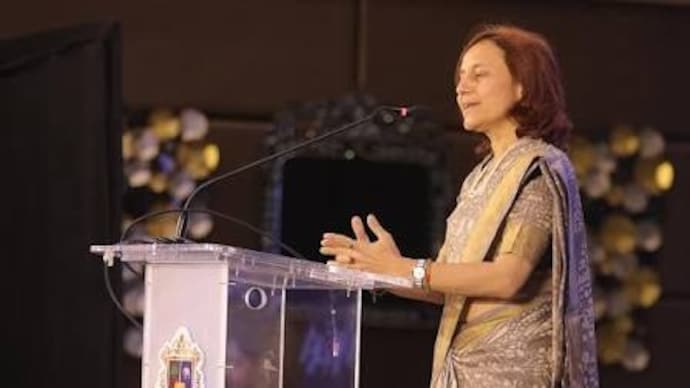
Following the debate over her recent X posts on Sanatana Dharma and nationalism, an older interview of educationist Gitanjali Angmo, wife of education reformer Sonam Wangchuk, with BJP leader Subramanian Swamy, has resurfaced on social media.
In the interview, clips of which have been widely circulated by both supporters and critics over the past two days, Angmo argued that India's universities should give greater academic space to Hindu philosophy and traditional knowledge systems. She also questioned whether Indian ideas of governance fit the Western understanding of secularism.
This is not the first time Angmo has spoken publicly about Sanatana Dharma. In a series of posts on X between July 25 and 27, she weighed in on the intersections of Sanatana Dharma, politics, and nationalism, triggering widespread discussion online. "If anyone has shown what it means for India to be a Vishwaguru, it is our Gen Z," she wrote in one of the posts.
Drawing on India's civilisational heritage, Angmo argued that the country's ancient philosophical traditions and classical texts continue to hold enduring relevance. She maintained that these knowledge systems deserve the same academic recognition and rigorous study as other established disciplines in higher education.
'CAN STATE AND DHARMA REALLY BE SEPARATED?'
In the resurfaced interview, Gitanjali Angmo invoked India's philosophical traditions, arguing that governance in Indian civilisation has historically been guided by the principles of dharma.
"In India, we speak of the Raja Rishi and the Philosopher King. Every aspect of life is governed by dharma. So how can we keep the state and religion apart?" she asked.
Her remarks sought to distinguish dharma as an ethical and civilisational framework rather than merely a religious concept.
Angmo also argued that several scientific ideas were documented in Indian texts long before they were formally recognised in the West.
Citing an ancient Sanskrit verse, she said Indian sages had described the speed of light centuries before modern scientists calculated it.
She also referred to the Sulbha Sutra by Baudhayana, claiming it contained the mathematical principle later associated with the Pythagorean theorem.
According to Angmo, such examples highlight the need to study India's knowledge traditions more seriously rather than treating them as mythology or folklore.
A QUESTION OF FUNDING
Another point from the interview that has resurfaced online was her observation about the way different academic disciplines are funded.
Angmo said centres dedicated to Islamic Studies and Chinese Studies receive significantly greater financial support than Centres for Hindu Studies.
"People shy away from funding Hindu Studies. I don't know why," she remarked, questioning why research on India's own intellectual traditions often receives less attention.
Her comments touched upon a larger debate over whether Indian universities should invest more in research on indigenous philosophies, languages and classical texts.
GITANJALI ANGMO EDUCATION BACKGROUND
Dr. Gitanjali J. Angmo is an educationist and social entrepreneur with a bachelor's degree in Physics from Fakir Mohan University, an MBA from Xavier Institute of Management, Bhubaneswar, and a doctorate in Education from Sri Sathya Sai University for Human Excellence.
She is the Founder and Dean of the Himalayan Institute of Alternatives, Ladakh (HIAL).
During the Jantar Mantar protest, she actively supported the students and stood by her husband throughout his hunger strike, emerging as a prominent voice in the movement.
On July 26, she also quoted nationalist leader and freedom fighter Aurobindo Ghosh to respond to her critics on X. "When it is said that India shall rise, it is the Sanatana Dharma that shall rise. India is rising for the sake of the Sanatana Dharma," she wrote, citing Ghosh.
The interview, recorded before the latest controversy, has gained fresh attention because of Angmo's recent social media posts on Sanatana Dharma, spirituality and nationalism. Clips from it have been widely shared online by both supporters and critics seeking to interpret her broader ideological views.
While supporters argue that India's ancient intellectual traditions deserve greater academic engagement and international recognition, critics say such discussions must remain rooted in rigorous scholarship and distinguish historical evidence from cultural belief.
Together, Angmo's recent posts and the resurfaced interview have expanded the public debate over how India's civilisational traditions should be understood and taught within modern higher education.
Following the debate over her recent X posts on Sanatana Dharma and nationalism, an older interview of educationist Gitanjali Angmo, wife of education reformer Sonam Wangchuk, with BJP leader Subramanian Swamy, has resurfaced on social media.
In the interview, clips of which have been widely circulated by both supporters and critics over the past two days, Angmo argued that India's universities should give greater academic space to Hindu philosophy and traditional knowledge systems. She also questioned whether Indian ideas of governance fit the Western understanding of secularism.
This is not the first time Angmo has spoken publicly about Sanatana Dharma. In a series of posts on X between July 25 and 27, she weighed in on the intersections of Sanatana Dharma, politics, and nationalism, triggering widespread discussion online. "If anyone has shown what it means for India to be a Vishwaguru, it is our Gen Z," she wrote in one of the posts.
Drawing on India's civilisational heritage, Angmo argued that the country's ancient philosophical traditions and classical texts continue to hold enduring relevance. She maintained that these knowledge systems deserve the same academic recognition and rigorous study as other established disciplines in higher education.
'CAN STATE AND DHARMA REALLY BE SEPARATED?'
In the resurfaced interview, Gitanjali Angmo invoked India's philosophical traditions, arguing that governance in Indian civilisation has historically been guided by the principles of dharma.
"In India, we speak of the Raja Rishi and the Philosopher King. Every aspect of life is governed by dharma. So how can we keep the state and religion apart?" she asked.
Her remarks sought to distinguish dharma as an ethical and civilisational framework rather than merely a religious concept.
Angmo also argued that several scientific ideas were documented in Indian texts long before they were formally recognised in the West.
Citing an ancient Sanskrit verse, she said Indian sages had described the speed of light centuries before modern scientists calculated it.
She also referred to the Sulbha Sutra by Baudhayana, claiming it contained the mathematical principle later associated with the Pythagorean theorem.
According to Angmo, such examples highlight the need to study India's knowledge traditions more seriously rather than treating them as mythology or folklore.
A QUESTION OF FUNDING
Another point from the interview that has resurfaced online was her observation about the way different academic disciplines are funded.
Angmo said centres dedicated to Islamic Studies and Chinese Studies receive significantly greater financial support than Centres for Hindu Studies.
"People shy away from funding Hindu Studies. I don't know why," she remarked, questioning why research on India's own intellectual traditions often receives less attention.
Her comments touched upon a larger debate over whether Indian universities should invest more in research on indigenous philosophies, languages and classical texts.
GITANJALI ANGMO EDUCATION BACKGROUND
Dr. Gitanjali J. Angmo is an educationist and social entrepreneur with a bachelor's degree in Physics from Fakir Mohan University, an MBA from Xavier Institute of Management, Bhubaneswar, and a doctorate in Education from Sri Sathya Sai University for Human Excellence.
She is the Founder and Dean of the Himalayan Institute of Alternatives, Ladakh (HIAL).
During the Jantar Mantar protest, she actively supported the students and stood by her husband throughout his hunger strike, emerging as a prominent voice in the movement.
On July 26, she also quoted nationalist leader and freedom fighter Aurobindo Ghosh to respond to her critics on X. "When it is said that India shall rise, it is the Sanatana Dharma that shall rise. India is rising for the sake of the Sanatana Dharma," she wrote, citing Ghosh.
The interview, recorded before the latest controversy, has gained fresh attention because of Angmo's recent social media posts on Sanatana Dharma, spirituality and nationalism. Clips from it have been widely shared online by both supporters and critics seeking to interpret her broader ideological views.
While supporters argue that India's ancient intellectual traditions deserve greater academic engagement and international recognition, critics say such discussions must remain rooted in rigorous scholarship and distinguish historical evidence from cultural belief.
Together, Angmo's recent posts and the resurfaced interview have expanded the public debate over how India's civilisational traditions should be understood and taught within modern higher education.
Following the debate over her recent X posts on Sanatana Dharma and nationalism, an older interview of educationist Gitanjali Angmo, wife of education reformer Sonam Wangchuk, with BJP leader Subramanian Swamy, has resurfaced on social media.
In the interview, clips of which have been widely circulated by both supporters and critics over the past two days, Angmo argued that India's universities should give greater academic space to Hindu philosophy and traditional knowledge systems. She also questioned whether Indian ideas of governance fit the Western understanding of secularism.
This is not the first time Angmo has spoken publicly about Sanatana Dharma. In a series of posts on X between July 25 and 27, she weighed in on the intersections of Sanatana Dharma, politics, and nationalism, triggering widespread discussion online. "If anyone has shown what it means for India to be a Vishwaguru, it is our Gen Z," she wrote in one of the posts.
Drawing on India's civilisational heritage, Angmo argued that the country's ancient philosophical traditions and classical texts continue to hold enduring relevance. She maintained that these knowledge systems deserve the same academic recognition and rigorous study as other established disciplines in higher education.
'CAN STATE AND DHARMA REALLY BE SEPARATED?'
In the resurfaced interview, Gitanjali Angmo invoked India's philosophical traditions, arguing that governance in Indian civilisation has historically been guided by the principles of dharma.
"In India, we speak of the Raja Rishi and the Philosopher King. Every aspect of life is governed by dharma. So how can we keep the state and religion apart?" she asked.
Her remarks sought to distinguish dharma as an ethical and civilisational framework rather than merely a religious concept.
Angmo also argued that several scientific ideas were documented in Indian texts long before they were formally recognised in the West.
Citing an ancient Sanskrit verse, she said Indian sages had described the speed of light centuries before modern scientists calculated it.
She also referred to the Sulbha Sutra by Baudhayana, claiming it contained the mathematical principle later associated with the Pythagorean theorem.
According to Angmo, such examples highlight the need to study India's knowledge traditions more seriously rather than treating them as mythology or folklore.
A QUESTION OF FUNDING
Another point from the interview that has resurfaced online was her observation about the way different academic disciplines are funded.
Angmo said centres dedicated to Islamic Studies and Chinese Studies receive significantly greater financial support than Centres for Hindu Studies.
"People shy away from funding Hindu Studies. I don't know why," she remarked, questioning why research on India's own intellectual traditions often receives less attention.
Her comments touched upon a larger debate over whether Indian universities should invest more in research on indigenous philosophies, languages and classical texts.
GITANJALI ANGMO EDUCATION BACKGROUND
Dr. Gitanjali J. Angmo is an educationist and social entrepreneur with a bachelor's degree in Physics from Fakir Mohan University, an MBA from Xavier Institute of Management, Bhubaneswar, and a doctorate in Education from Sri Sathya Sai University for Human Excellence.
She is the Founder and Dean of the Himalayan Institute of Alternatives, Ladakh (HIAL).
During the Jantar Mantar protest, she actively supported the students and stood by her husband throughout his hunger strike, emerging as a prominent voice in the movement.
On July 26, she also quoted nationalist leader and freedom fighter Aurobindo Ghosh to respond to her critics on X. "When it is said that India shall rise, it is the Sanatana Dharma that shall rise. India is rising for the sake of the Sanatana Dharma," she wrote, citing Ghosh.
The interview, recorded before the latest controversy, has gained fresh attention because of Angmo's recent social media posts on Sanatana Dharma, spirituality and nationalism. Clips from it have been widely shared online by both supporters and critics seeking to interpret her broader ideological views.
While supporters argue that India's ancient intellectual traditions deserve greater academic engagement and international recognition, critics say such discussions must remain rooted in rigorous scholarship and distinguish historical evidence from cultural belief.
Together, Angmo's recent posts and the resurfaced interview have expanded the public debate over how India's civilisational traditions should be understood and taught within modern higher education.

