After ZEE5 takedown, Satluj spreads across Punjab villages via private screenings
After the government ordered Satluj off ZEE5 in India, villagers in Punjab began holding private screenings. The film's spread through pen drives and peer networks has turned the takedown into a wider debate on memory, censorship and politics.
"If the movie had been banned from the start, maybe not so many people would have watched it," reflects Gagan, a local youth from a remote village in the Fazilka district, situated mere kilometres from the international border. "Many people didn't even know about it before. But now, it's everywhere."
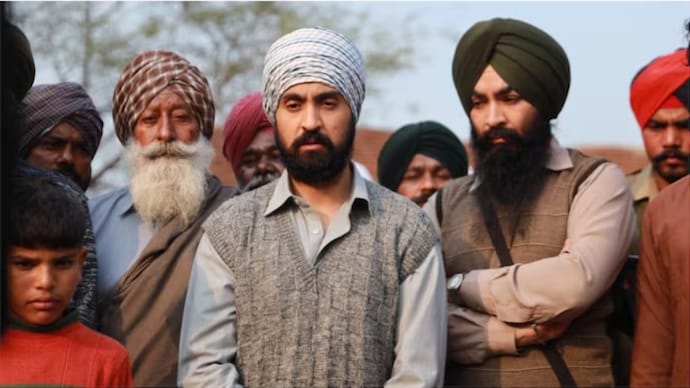
He is referring to Satluj (originally titled Punjab '95), the highly anticipated and intensely contested cinematic venture featuring actor Diljit Dosanjh. Directed by Honey Trehan, the biographical drama chronicles the harrowing life and ultimate sacrifice of Jaswant Singh Khalra, a human rights activist who unmasked evidence of thousands of illegal cremations and forced disappearances of Sikh youths during Punjab’s bloodied insurgency era between 1984 and 1994.
After languishing in a multi-year deadlock with the Central Board of Film Certification (CBFC) — which demanded an unprecedented 127 cuts — the filmmakers bypassed the board by releasing it directly on the streaming platform ZEE5 on 3 July 2026. Within 48 hours, under direct intervention from the Central government citing "security concerns" under the IT Rules 2021, the film was pulled down from its domestic server.
However, the government order has achieved the exact opposite of its intended effect. Denied a digital audience on official channels, Satluj has transitioned into an underground cultural phenomenon, transforming rural Punjab into a network of independent, improvised cinema halls.
How Satluj moves through Punjab
In a dusty village community space in Fazilka, hundreds of eyes are glued to a wall. A projector, arranged hastily by a cohort of local boys, casts the image of Diljit Dosanjh portraying Khalra on screen. The audience sits in absolute, heavy silence. This is the new reality of film distribution in rural Punjab.
When asked how they managed to source a film that is officially inaccessible to over a billion people, one of the organisers, Kuldeep, said, "Someone shared it with us through iCloud, and we transferred it to a pen drive. There are other digital channels through which it is being actively circulated as well."
The decentralised distribution loop operates entirely on grassroots initiative and peer-to-peer sharing. A small collective of six to eight village youngsters pooled their own money to arrange the necessary technical infrastructure for the screening. They did not rely on promotional campaigns, commercial sponsors, or political patronage. Despite the makeshift arrangement, the turnout was staggering—nearly 500 villagers packed into the venue, spanning generations.
"Yesterday alone, I received around 50 messages and several calls from neighbouring villages asking how they could screen the movie," youth coordinator Gurpreet reveals. "It is spreading fast. Now, it's not going to stop."
Reviving a fractured past
For the elderly attendees, the viewing experience is a painful trip down memory lane, a confrontation with a traumatic past that they spent decades trying to suppress. For the youth, it is a profound awakening.
"Our grandfather lived through that period himself," said Kuldeep. "Watching the film brought back all those memories for him. He lived that era on his own flesh. As the scenes unfolded, it was as if that entire dark chapter of his life came alive again. The memories are fresh, and the unresolved grief of that era hasn't faded for the elders."
The film primarily focuses on the systematic disappearances of local residents during the height of the counter-insurgency operations, where the lines between armed militants and innocent civilians were routinely blurred by law enforcement. The dialogue generated by the film among the villagers cuts straight to the bone of Punjab's modern history. At the peak of the Khalsa movement, the region was consumed by violence from both sides.
The historical backdrop of the film directly implicates the ruthless strategy deployed by the Punjab Police under its infamous "Super Cop" era. Archival records from India Today highlight the uncompromising, hardline stance by Punjab DGP KPS Gill that defined state actions at the time: "If you want to finish terrorism, you have to be ruthless about it." While these operations successfully crushed armed miltancy, they left behind a legacy deeply scarred by allegations of torture, custodial deaths, and widespread police brutality—the very realities Jaswant Singh Khalra sacrificed his life to document before he himself was abducted and murdered in 1995.
The redefinition of "militant"
While the film’s removal has united various factions on the platform of artistic freedom, the conversations taking place inside these village screenings reveal a deeper, more volatile ideological undercurrent. In these border pockets, the distinction between the historical narrative of the 1990s and contemporary radical politics is highly fluid.
Among some of the youth organising these clandestine screenings, there is an explicit rejection of state-sanctioned terminology. "The Khalsa army were not militants," argues one young resident aggressively. "Soldiers guarding our country's borders are protecting the nation and they are respected. Why is it that when our own community stands up for its rights and itself, they are labelled as bad? Only some individuals were militants; the rest were fighting for justice."
This sentiment is visibly intertwined with modern political figures. The youth in this Fazilka cluster openly acknowledge their alignment with Amritpal Singh, the jailed MP from Khadoor Sahib and pro-Khalistan separatist preacher. "After Amritpal Singh emerged, many young people here felt inspired—but only to learn more about our history," an organiser explains. "That's why we participate in these screenings. We want to know our past."
Political posturing and the unstoppable momentum
The controversy has predictably snowballed into a major political flashpoint across Punjab, with opposition parties seizing the momentum to corner the Central government. Leaders across the political spectrum have vocally slammed the sudden digital ban, labelling it an "assault on truth."
Significantly, the Shiromani Akali Dal (SAD) has turned this cultural resistance into an organised campaign. Parambans Singh Romana, a senior leader of the SAD, announced that the party would not let the film be silenced. "Shiromani Akali Dal workers and leaders will take this movie to each and every village and organise special screenings," Romana declared, effectively institutionalising the very grassroots movement that started on pen drives in Fazilka.
When the organisers in Fazilka are reminded that the film remains completely blocked on ZEE5 within domestic borders and that they are operating in a legal grey area, their resolve remains unbroken. They point out that the film is still streaming internationally via ZEE5 Global, proving that the truth cannot be confined by geographical borders.
As the projector screen flickers off and the crowd slowly disperses back into the dark Punjab night, Gagan delivers a final, defiant verdict on the government's digital blockade: "They can take it off the apps, but this is not going to stop now."
"If the movie had been banned from the start, maybe not so many people would have watched it," reflects Gagan, a local youth from a remote village in the Fazilka district, situated mere kilometres from the international border. "Many people didn't even know about it before. But now, it's everywhere."
He is referring to Satluj (originally titled Punjab '95), the highly anticipated and intensely contested cinematic venture featuring actor Diljit Dosanjh. Directed by Honey Trehan, the biographical drama chronicles the harrowing life and ultimate sacrifice of Jaswant Singh Khalra, a human rights activist who unmasked evidence of thousands of illegal cremations and forced disappearances of Sikh youths during Punjab’s bloodied insurgency era between 1984 and 1994.
After languishing in a multi-year deadlock with the Central Board of Film Certification (CBFC) — which demanded an unprecedented 127 cuts — the filmmakers bypassed the board by releasing it directly on the streaming platform ZEE5 on 3 July 2026. Within 48 hours, under direct intervention from the Central government citing "security concerns" under the IT Rules 2021, the film was pulled down from its domestic server.
However, the government order has achieved the exact opposite of its intended effect. Denied a digital audience on official channels, Satluj has transitioned into an underground cultural phenomenon, transforming rural Punjab into a network of independent, improvised cinema halls.
How Satluj moves through Punjab
In a dusty village community space in Fazilka, hundreds of eyes are glued to a wall. A projector, arranged hastily by a cohort of local boys, casts the image of Diljit Dosanjh portraying Khalra on screen. The audience sits in absolute, heavy silence. This is the new reality of film distribution in rural Punjab.
When asked how they managed to source a film that is officially inaccessible to over a billion people, one of the organisers, Kuldeep, said, "Someone shared it with us through iCloud, and we transferred it to a pen drive. There are other digital channels through which it is being actively circulated as well."
The decentralised distribution loop operates entirely on grassroots initiative and peer-to-peer sharing. A small collective of six to eight village youngsters pooled their own money to arrange the necessary technical infrastructure for the screening. They did not rely on promotional campaigns, commercial sponsors, or political patronage. Despite the makeshift arrangement, the turnout was staggering—nearly 500 villagers packed into the venue, spanning generations.
"Yesterday alone, I received around 50 messages and several calls from neighbouring villages asking how they could screen the movie," youth coordinator Gurpreet reveals. "It is spreading fast. Now, it's not going to stop."
Reviving a fractured past
For the elderly attendees, the viewing experience is a painful trip down memory lane, a confrontation with a traumatic past that they spent decades trying to suppress. For the youth, it is a profound awakening.
"Our grandfather lived through that period himself," said Kuldeep. "Watching the film brought back all those memories for him. He lived that era on his own flesh. As the scenes unfolded, it was as if that entire dark chapter of his life came alive again. The memories are fresh, and the unresolved grief of that era hasn't faded for the elders."
The film primarily focuses on the systematic disappearances of local residents during the height of the counter-insurgency operations, where the lines between armed militants and innocent civilians were routinely blurred by law enforcement. The dialogue generated by the film among the villagers cuts straight to the bone of Punjab's modern history. At the peak of the Khalsa movement, the region was consumed by violence from both sides.
The historical backdrop of the film directly implicates the ruthless strategy deployed by the Punjab Police under its infamous "Super Cop" era. Archival records from India Today highlight the uncompromising, hardline stance by Punjab DGP KPS Gill that defined state actions at the time: "If you want to finish terrorism, you have to be ruthless about it." While these operations successfully crushed armed miltancy, they left behind a legacy deeply scarred by allegations of torture, custodial deaths, and widespread police brutality—the very realities Jaswant Singh Khalra sacrificed his life to document before he himself was abducted and murdered in 1995.
The redefinition of "militant"
While the film’s removal has united various factions on the platform of artistic freedom, the conversations taking place inside these village screenings reveal a deeper, more volatile ideological undercurrent. In these border pockets, the distinction between the historical narrative of the 1990s and contemporary radical politics is highly fluid.
Among some of the youth organising these clandestine screenings, there is an explicit rejection of state-sanctioned terminology. "The Khalsa army were not militants," argues one young resident aggressively. "Soldiers guarding our country's borders are protecting the nation and they are respected. Why is it that when our own community stands up for its rights and itself, they are labelled as bad? Only some individuals were militants; the rest were fighting for justice."
This sentiment is visibly intertwined with modern political figures. The youth in this Fazilka cluster openly acknowledge their alignment with Amritpal Singh, the jailed MP from Khadoor Sahib and pro-Khalistan separatist preacher. "After Amritpal Singh emerged, many young people here felt inspired—but only to learn more about our history," an organiser explains. "That's why we participate in these screenings. We want to know our past."
Political posturing and the unstoppable momentum
The controversy has predictably snowballed into a major political flashpoint across Punjab, with opposition parties seizing the momentum to corner the Central government. Leaders across the political spectrum have vocally slammed the sudden digital ban, labelling it an "assault on truth."
Significantly, the Shiromani Akali Dal (SAD) has turned this cultural resistance into an organised campaign. Parambans Singh Romana, a senior leader of the SAD, announced that the party would not let the film be silenced. "Shiromani Akali Dal workers and leaders will take this movie to each and every village and organise special screenings," Romana declared, effectively institutionalising the very grassroots movement that started on pen drives in Fazilka.
When the organisers in Fazilka are reminded that the film remains completely blocked on ZEE5 within domestic borders and that they are operating in a legal grey area, their resolve remains unbroken. They point out that the film is still streaming internationally via ZEE5 Global, proving that the truth cannot be confined by geographical borders.
As the projector screen flickers off and the crowd slowly disperses back into the dark Punjab night, Gagan delivers a final, defiant verdict on the government's digital blockade: "They can take it off the apps, but this is not going to stop now."

