Ashutosh Gowariker on helming Temple Raiders: There was anger and compassion
Ashutosh Gowariker said Temple Raiders was driven by anger, compassion and alarm over idol theft. He said the series aims to raise awareness and acknowledge efforts to recover India's stolen heritage.
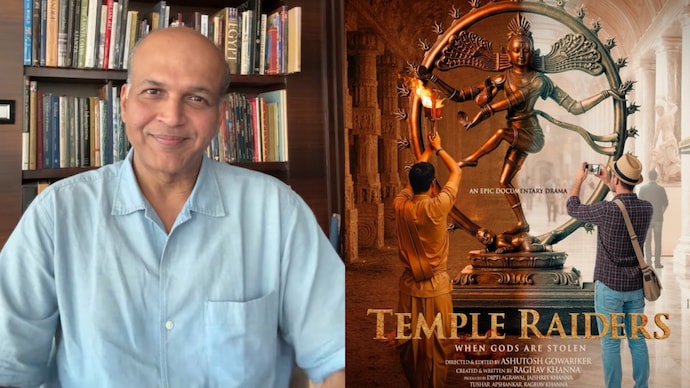
Filmmaker Ashutosh Gowariker believes Temple Raiders is much more than a docu-drama series about stolen idols. For him, it is an attempt to spark a larger conversation around India's disappearing cultural heritage while acknowledging the efforts being made to bring stolen artefacts back home. Speaking to India Today, Gowariker said the research on the subject left him with a mix of emotions rather than fascination.
"There was anger, there was compassion, and I was alarmed by seeing the size of it all and how it's consistently being carried out across so many years, across decades. I am not even going into what was happening before Independence," he said while talking about collaborating with filmmaker Raghav Khanna for the four-part series.
Temple Raiders explores the illicit trade of stolen temple idols and antiquities, tracing how priceless artefacts disappear from places of worship and often find their way into private collections, museums and auction houses across the world. The series combines documentary-style interviews with dramatised recreations to explain the complex network behind idol theft. Gowariker admitted the makers wanted the series to evoke the same emotions they experienced during the research process.
"I felt it was very important to showcase it in a manner that is compassionate and creates the same emotions for the audience. Hopefully, we'll also reach the lowest common denominator and make heroes out of the authorities and the smaller vigilante groups who are, in their own way, trying to stop this from happening," he said, adding that the series is also an acknowledgement of those already working to recover India's heritage.
The Lagaan director said, "It's applauding what a lot of people have already done and bringing awareness about why this needs to stop. What is our culture? What is our history? What are our artistic values? We heard that over 400 idols have been brought back. I hope that number continues consistently over the next decade. I am not saying our show alone will do that, but it will definitely help create awareness."
The filmmaker admitted that one of the most shocking discoveries during the making of the series was the scale of the illegal trade. "One of the first things that astounded me was that this is happening in plain sight. It's like a parallel track to our daily lives, and we just don't know about it. Nobody is aware enough, and nobody questions a very basic thing. How are idols that are supposed to be inside temples ending up in auction houses, museums, people's gardens and private lobbies?" he said.
While acknowledging that some collections are acquired through legitimate means, the Jodhaa Akbar maker also pointed out that "historically, a great part of it has been through illegitimate means." Referring to India's ongoing repatriation efforts, Gowariker praised the government's diplomatic initiatives but stressed that the recovered artefacts represent only a fraction of what has been lost.
Apart from its subject matter, Temple Raiders also allowed Gowariker to work in a format very different from fiction filmmaking. Unlike traditional dramas, he explained, the recreated sequences in a docu-drama demand a delicate balance. "In recreations, the performances cannot be fully realistic, nor can they be melodramatic. They need a very different blend because they are there to support what the talking heads are saying," he said.
Since there is no behind-the-scenes footage of actual idol thefts, the dramatised portions help visualise what investigators and experts describe: "What goes on in the mind of a criminal? Whether it's the people stealing idols at the grassroots, the handlers, the smugglers, the collectors or international buyers who want these antiques in their homes or gardens, that's something that can only be expressed through recreation. That has to be absolutely on point."
Calling the process both demanding and rewarding, the filmmaker admitted that every shooting day began with anxiety. He said, "It was both challenging and fun. In the morning, I start the day with fear in my eyes. By evening, I have a calm satisfaction that it's been a good day."
And when asked if there was an aspect of cinema that deserved the docu-drama treatment, Gowariker said he would love to shine the spotlight on the technicians who build the magic of filmmaking.
"The arts and crafts of the movie industry. What goes into production design and costume design? How does a sound designer create a sound palette? How does a cinematographer create the visual palette of a film? Those are things we don't know because they are behind the scenes. We are more interested in what the stars are doing or how an actor prepares. But as a docu-series, it would be wonderful to see all these crafts coming together and creating a world," he concluded.
Temple Raiders was announced in May this year. Written and created by Raghav Khanna, the docu-drama has been directed by Gowariker.
Filmmaker Ashutosh Gowariker believes Temple Raiders is much more than a docu-drama series about stolen idols. For him, it is an attempt to spark a larger conversation around India's disappearing cultural heritage while acknowledging the efforts being made to bring stolen artefacts back home. Speaking to India Today, Gowariker said the research on the subject left him with a mix of emotions rather than fascination.
"There was anger, there was compassion, and I was alarmed by seeing the size of it all and how it's consistently being carried out across so many years, across decades. I am not even going into what was happening before Independence," he said while talking about collaborating with filmmaker Raghav Khanna for the four-part series.
Temple Raiders explores the illicit trade of stolen temple idols and antiquities, tracing how priceless artefacts disappear from places of worship and often find their way into private collections, museums and auction houses across the world. The series combines documentary-style interviews with dramatised recreations to explain the complex network behind idol theft. Gowariker admitted the makers wanted the series to evoke the same emotions they experienced during the research process.
"I felt it was very important to showcase it in a manner that is compassionate and creates the same emotions for the audience. Hopefully, we'll also reach the lowest common denominator and make heroes out of the authorities and the smaller vigilante groups who are, in their own way, trying to stop this from happening," he said, adding that the series is also an acknowledgement of those already working to recover India's heritage.
The Lagaan director said, "It's applauding what a lot of people have already done and bringing awareness about why this needs to stop. What is our culture? What is our history? What are our artistic values? We heard that over 400 idols have been brought back. I hope that number continues consistently over the next decade. I am not saying our show alone will do that, but it will definitely help create awareness."
The filmmaker admitted that one of the most shocking discoveries during the making of the series was the scale of the illegal trade. "One of the first things that astounded me was that this is happening in plain sight. It's like a parallel track to our daily lives, and we just don't know about it. Nobody is aware enough, and nobody questions a very basic thing. How are idols that are supposed to be inside temples ending up in auction houses, museums, people's gardens and private lobbies?" he said.
While acknowledging that some collections are acquired through legitimate means, the Jodhaa Akbar maker also pointed out that "historically, a great part of it has been through illegitimate means." Referring to India's ongoing repatriation efforts, Gowariker praised the government's diplomatic initiatives but stressed that the recovered artefacts represent only a fraction of what has been lost.
Apart from its subject matter, Temple Raiders also allowed Gowariker to work in a format very different from fiction filmmaking. Unlike traditional dramas, he explained, the recreated sequences in a docu-drama demand a delicate balance. "In recreations, the performances cannot be fully realistic, nor can they be melodramatic. They need a very different blend because they are there to support what the talking heads are saying," he said.
Since there is no behind-the-scenes footage of actual idol thefts, the dramatised portions help visualise what investigators and experts describe: "What goes on in the mind of a criminal? Whether it's the people stealing idols at the grassroots, the handlers, the smugglers, the collectors or international buyers who want these antiques in their homes or gardens, that's something that can only be expressed through recreation. That has to be absolutely on point."
Calling the process both demanding and rewarding, the filmmaker admitted that every shooting day began with anxiety. He said, "It was both challenging and fun. In the morning, I start the day with fear in my eyes. By evening, I have a calm satisfaction that it's been a good day."
And when asked if there was an aspect of cinema that deserved the docu-drama treatment, Gowariker said he would love to shine the spotlight on the technicians who build the magic of filmmaking.
"The arts and crafts of the movie industry. What goes into production design and costume design? How does a sound designer create a sound palette? How does a cinematographer create the visual palette of a film? Those are things we don't know because they are behind the scenes. We are more interested in what the stars are doing or how an actor prepares. But as a docu-series, it would be wonderful to see all these crafts coming together and creating a world," he concluded.
Temple Raiders was announced in May this year. Written and created by Raghav Khanna, the docu-drama has been directed by Gowariker.

