India gets its first dengue vaccine: Who should get it and when it will be available
India has approved its first dengue vaccine, offering a new way to protect people against one of the country's biggest mosquito-borne diseases. Here's what doctors say about who should get vaccinated, who should avoid it, and when it is expected to become available.
For years, India has battled seasonal dengue outbreaks that overwhelm hospitals during the monsoon months. Every year, thousands of people develop high fever, severe body pain, low platelet counts, and in some cases, life-threatening complications that require intensive medical care. While mosquito control and personal protection have remained the main ways to prevent the disease, there has never been a widely approved vaccine available for the Indian population.
That is now changing.
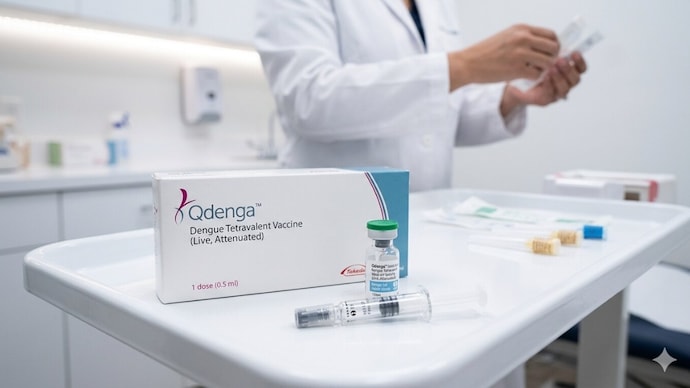
India has approved QDENGA (TAK-003), the country's first dengue vaccine, marking an important step in the fight against the mosquito-borne illness. The vaccine is designed to protect against all four types of the dengue virus and can be given without first checking whether a person has previously been infected with dengue, a major advantage over some earlier dengue vaccines developed elsewhere.
However, doctors say that while the vaccine is a significant breakthrough, it is not meant for everyone. People still need to understand who is eligible, who should avoid it, and why mosquito control measures remain just as important.
WHO CAN RECEIVE THE DENGUE VACCINE?
According to Dr Aishwarya R, Consultant - Infectious Diseases, Aster RV Hospital, Bangalore, QDENGA has been approved in India for people aged 4 to 60 years.
This means the vaccine can be given to:
- Children aged 4 years and above
- Teenagers
- Adults up to 60 years of age
- People living in regions where dengue outbreaks occur frequently
The approval offers a preventive option for millions of Indians who are exposed to dengue every year, particularly during the rainy season.
A MAJOR ADVANTAGE: NO BLOOD TEST NEEDED
One of the biggest benefits of QDENGA is that people do not need a blood test before getting vaccinated.
Some earlier dengue vaccines required testing to confirm whether a person had previously been infected with dengue, because vaccination could carry different risks depending on past infection.
Dr Aishwarya explains that QDENGA removes this extra step, making vaccination much simpler and easier to implement.
HOW MANY DOSES ARE REQUIRED?
The vaccine is given in two doses.
- First dose
- Second dose after three months
Doctors say completing both doses is necessary to achieve the best possible protection.
DOES IT PROTECT AGAINST ALL DENGUE VIRUSES?
Yes.
Dengue is caused by four different virus types (serotypes). Infection with one type does not provide complete protection against the others, which is why some people can get dengue more than once.
QDENGA has been developed to provide protection against all four dengue virus serotypes, helping lower the risk of severe disease.
WHO SHOULD AVOID THE VACCINE?
Although the vaccine has been approved for use, it is not suitable for everyone.
According to Dr Aishwarya, people who have had a severe allergic reaction to any ingredient in the vaccine should not receive it.
Certain groups should also speak to their doctor before getting vaccinated, including:
- Pregnant women
- Breastfeeding mothers
- People with severely weakened immune systems
- Those taking medicines that suppress the immune system
Doctors say recommendations for these groups may vary depending on an individual's health condition and the latest medical guidelines.
WHEN WILL THE VACCINE BE AVAILABLE?
Although QDENGA has received regulatory approval, it may not become available everywhere immediately.
Dr Aishwarya says its rollout will depend on several factors, including:
- Commercial launch plans
- Distribution through hospitals and vaccination centres
- Recommendations from national health authorities
The vaccine is expected to become available in phases over the coming months, meaning access may differ from one city or state to another initially.
DOES THE VACCINE MEAN PEOPLE CAN STOP WORRYING ABOUT MOSQUITOES?
No.
Experts stress that vaccination is an additional layer of protection, not a replacement for mosquito control.
People should continue to:
- Remove stagnant water around homes
- Use mosquito repellents
- Wear full-sleeved clothing, especially during mosquito-active hours
- Install window screens where possible
- Seek medical attention early if they develop symptoms such as high fever, severe headache, pain behind the eyes, muscle and joint pain, nausea, or bleeding signs
These measures remain essential for reducing dengue transmission and preventing severe illness.
A PROMISING STEP IN INDIA'S FIGHT AGAINST DENGUE
The approval of QDENGA marks a significant milestone in India's public health efforts against dengue. By offering protection against all four dengue virus types without requiring prior testing, the vaccine has the potential to make dengue prevention more accessible for eligible children and adults.
However, experts caution that vaccination should be seen as part of a broader strategy. Continued mosquito control, public awareness, and early diagnosis will remain crucial in reducing the country's dengue burden. As the vaccine becomes available across India over the coming months, healthcare providers are expected to guide people on whether it is appropriate for them based on their age, medical history, and overall health.
For years, India has battled seasonal dengue outbreaks that overwhelm hospitals during the monsoon months. Every year, thousands of people develop high fever, severe body pain, low platelet counts, and in some cases, life-threatening complications that require intensive medical care. While mosquito control and personal protection have remained the main ways to prevent the disease, there has never been a widely approved vaccine available for the Indian population.
That is now changing.
India has approved QDENGA (TAK-003), the country's first dengue vaccine, marking an important step in the fight against the mosquito-borne illness. The vaccine is designed to protect against all four types of the dengue virus and can be given without first checking whether a person has previously been infected with dengue, a major advantage over some earlier dengue vaccines developed elsewhere.
However, doctors say that while the vaccine is a significant breakthrough, it is not meant for everyone. People still need to understand who is eligible, who should avoid it, and why mosquito control measures remain just as important.
WHO CAN RECEIVE THE DENGUE VACCINE?
According to Dr Aishwarya R, Consultant - Infectious Diseases, Aster RV Hospital, Bangalore, QDENGA has been approved in India for people aged 4 to 60 years.
This means the vaccine can be given to:
- Children aged 4 years and above
- Teenagers
- Adults up to 60 years of age
- People living in regions where dengue outbreaks occur frequently
The approval offers a preventive option for millions of Indians who are exposed to dengue every year, particularly during the rainy season.
A MAJOR ADVANTAGE: NO BLOOD TEST NEEDED
One of the biggest benefits of QDENGA is that people do not need a blood test before getting vaccinated.
Some earlier dengue vaccines required testing to confirm whether a person had previously been infected with dengue, because vaccination could carry different risks depending on past infection.
Dr Aishwarya explains that QDENGA removes this extra step, making vaccination much simpler and easier to implement.
HOW MANY DOSES ARE REQUIRED?
The vaccine is given in two doses.
- First dose
- Second dose after three months
Doctors say completing both doses is necessary to achieve the best possible protection.
DOES IT PROTECT AGAINST ALL DENGUE VIRUSES?
Yes.
Dengue is caused by four different virus types (serotypes). Infection with one type does not provide complete protection against the others, which is why some people can get dengue more than once.
QDENGA has been developed to provide protection against all four dengue virus serotypes, helping lower the risk of severe disease.
WHO SHOULD AVOID THE VACCINE?
Although the vaccine has been approved for use, it is not suitable for everyone.
According to Dr Aishwarya, people who have had a severe allergic reaction to any ingredient in the vaccine should not receive it.
Certain groups should also speak to their doctor before getting vaccinated, including:
- Pregnant women
- Breastfeeding mothers
- People with severely weakened immune systems
- Those taking medicines that suppress the immune system
Doctors say recommendations for these groups may vary depending on an individual's health condition and the latest medical guidelines.
WHEN WILL THE VACCINE BE AVAILABLE?
Although QDENGA has received regulatory approval, it may not become available everywhere immediately.
Dr Aishwarya says its rollout will depend on several factors, including:
- Commercial launch plans
- Distribution through hospitals and vaccination centres
- Recommendations from national health authorities
The vaccine is expected to become available in phases over the coming months, meaning access may differ from one city or state to another initially.
DOES THE VACCINE MEAN PEOPLE CAN STOP WORRYING ABOUT MOSQUITOES?
No.
Experts stress that vaccination is an additional layer of protection, not a replacement for mosquito control.
People should continue to:
- Remove stagnant water around homes
- Use mosquito repellents
- Wear full-sleeved clothing, especially during mosquito-active hours
- Install window screens where possible
- Seek medical attention early if they develop symptoms such as high fever, severe headache, pain behind the eyes, muscle and joint pain, nausea, or bleeding signs
These measures remain essential for reducing dengue transmission and preventing severe illness.
A PROMISING STEP IN INDIA'S FIGHT AGAINST DENGUE
The approval of QDENGA marks a significant milestone in India's public health efforts against dengue. By offering protection against all four dengue virus types without requiring prior testing, the vaccine has the potential to make dengue prevention more accessible for eligible children and adults.
However, experts caution that vaccination should be seen as part of a broader strategy. Continued mosquito control, public awareness, and early diagnosis will remain crucial in reducing the country's dengue burden. As the vaccine becomes available across India over the coming months, healthcare providers are expected to guide people on whether it is appropriate for them based on their age, medical history, and overall health.
For years, India has battled seasonal dengue outbreaks that overwhelm hospitals during the monsoon months. Every year, thousands of people develop high fever, severe body pain, low platelet counts, and in some cases, life-threatening complications that require intensive medical care. While mosquito control and personal protection have remained the main ways to prevent the disease, there has never been a widely approved vaccine available for the Indian population.
That is now changing.
India has approved QDENGA (TAK-003), the country's first dengue vaccine, marking an important step in the fight against the mosquito-borne illness. The vaccine is designed to protect against all four types of the dengue virus and can be given without first checking whether a person has previously been infected with dengue, a major advantage over some earlier dengue vaccines developed elsewhere.
However, doctors say that while the vaccine is a significant breakthrough, it is not meant for everyone. People still need to understand who is eligible, who should avoid it, and why mosquito control measures remain just as important.
WHO CAN RECEIVE THE DENGUE VACCINE?
According to Dr Aishwarya R, Consultant - Infectious Diseases, Aster RV Hospital, Bangalore, QDENGA has been approved in India for people aged 4 to 60 years.
This means the vaccine can be given to:
- Children aged 4 years and above
- Teenagers
- Adults up to 60 years of age
- People living in regions where dengue outbreaks occur frequently
The approval offers a preventive option for millions of Indians who are exposed to dengue every year, particularly during the rainy season.
A MAJOR ADVANTAGE: NO BLOOD TEST NEEDED
One of the biggest benefits of QDENGA is that people do not need a blood test before getting vaccinated.
Some earlier dengue vaccines required testing to confirm whether a person had previously been infected with dengue, because vaccination could carry different risks depending on past infection.
Dr Aishwarya explains that QDENGA removes this extra step, making vaccination much simpler and easier to implement.
HOW MANY DOSES ARE REQUIRED?
The vaccine is given in two doses.
- First dose
- Second dose after three months
Doctors say completing both doses is necessary to achieve the best possible protection.
DOES IT PROTECT AGAINST ALL DENGUE VIRUSES?
Yes.
Dengue is caused by four different virus types (serotypes). Infection with one type does not provide complete protection against the others, which is why some people can get dengue more than once.
QDENGA has been developed to provide protection against all four dengue virus serotypes, helping lower the risk of severe disease.
WHO SHOULD AVOID THE VACCINE?
Although the vaccine has been approved for use, it is not suitable for everyone.
According to Dr Aishwarya, people who have had a severe allergic reaction to any ingredient in the vaccine should not receive it.
Certain groups should also speak to their doctor before getting vaccinated, including:
- Pregnant women
- Breastfeeding mothers
- People with severely weakened immune systems
- Those taking medicines that suppress the immune system
Doctors say recommendations for these groups may vary depending on an individual's health condition and the latest medical guidelines.
WHEN WILL THE VACCINE BE AVAILABLE?
Although QDENGA has received regulatory approval, it may not become available everywhere immediately.
Dr Aishwarya says its rollout will depend on several factors, including:
- Commercial launch plans
- Distribution through hospitals and vaccination centres
- Recommendations from national health authorities
The vaccine is expected to become available in phases over the coming months, meaning access may differ from one city or state to another initially.
DOES THE VACCINE MEAN PEOPLE CAN STOP WORRYING ABOUT MOSQUITOES?
No.
Experts stress that vaccination is an additional layer of protection, not a replacement for mosquito control.
People should continue to:
- Remove stagnant water around homes
- Use mosquito repellents
- Wear full-sleeved clothing, especially during mosquito-active hours
- Install window screens where possible
- Seek medical attention early if they develop symptoms such as high fever, severe headache, pain behind the eyes, muscle and joint pain, nausea, or bleeding signs
These measures remain essential for reducing dengue transmission and preventing severe illness.
A PROMISING STEP IN INDIA'S FIGHT AGAINST DENGUE
The approval of QDENGA marks a significant milestone in India's public health efforts against dengue. By offering protection against all four dengue virus types without requiring prior testing, the vaccine has the potential to make dengue prevention more accessible for eligible children and adults.
However, experts caution that vaccination should be seen as part of a broader strategy. Continued mosquito control, public awareness, and early diagnosis will remain crucial in reducing the country's dengue burden. As the vaccine becomes available across India over the coming months, healthcare providers are expected to guide people on whether it is appropriate for them based on their age, medical history, and overall health.

