Is Kerala's free travel for women a rough ride for both state, private buses?
Private operators say fleet is downsizing due to losses whereas the Kerala State Road Transportation Corporation is exploring additional revenue sources
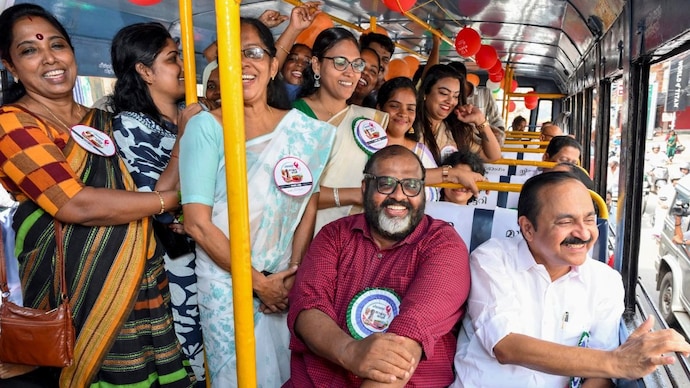
The Priyadarshini bus scheme for women and transgenders was launched by the new Congress-led government on June 15 and allows free travel on the ‘ordinary’ fleet of the Kerala State Road Transportation Corporation (KSRTC). Unions representing private buses say the scheme has destabilised the public transport network that they otherwise dominated.
“We are not against the decision to offer free rides to women and transgenders in state-owned buses, for which the government will be reimbursing KSRTC. Our appeal is to provide similar concessions to private bus operators too,” said T. Gopinathan, general secretary of the All Kerala Bus Operators Organisation, in a conversation with INDIA TODAY.
Gopinathan claimed private buses cover 70 per cent of the routes in the state whereas KSRTC does only a third. “The government is using the motor vehicle department to harass private bus owners,” he alleged.
Kerala’s public transport network has roughly 7,000 private buses and over 4,000 KSRTC buses. The private bus fleet has downsized over the past eight years—from 12,900 buses in 2018 to 7,000 buses now. After the Priyadarshini scheme was launched, around 500 private buses have discontinued, citing operational losses.
Gopinathan said private bus operators are struggling to survive as they also have bank loans and wages to pay. “The state government has killed the public transport network with a single stroke,” he alleged. “Around 28,000 families depend on the industry for livelihood.”
Private operators say their July 20 strike would be launched from the secretariat in Thiruvananthapuram and would be an indefinite agitation. The state has already witnessed sporadic protests by them, such as in Kottayam, Pathanamthitta, Idukki and Kasargod districts.
Former transport minister K.B. Ganesh Kumar said the Priyadarshini scheme could financially cripple not only private bus owners but KSRTC as well. “It will have far-reaching consequences. The scheme is not viable for KSRTC too as the corporation anyway struggles to pay salaries and pension,” Kumar said.
KSRTC, which ferries an estimated 2 million passengers every day and does daily ticket sales of over 1.8 million, has critically stressed finances. Its accumulated losses at the end of the 2024-25 fiscal year were pegged at close to Rs 21,000 crore. The Priyadarshini scheme is expected to significantly increase passenger load in its 3,000-plus ordinary buses. The free travellers will be issued zero-value ‘Priyadarshini tickets’ for the rides.
The government has nudged KSRTC to explore additional sources of revenue to bridge the annual revenue losses of over Rs 700 crore owing to the Priyadarshini scheme. As one such step, KSRTC is reportedly exploring the option of private advertising on the back of tickets.
While announcing the free ride, the Satheesan government had in the State Budget for 2026-27 reduced by half the quarterly vehicle taxes for stage carriage buses. “The move is an indirect financial support for the struggling public transport sector. It is even possible that the government offers a similar free ride facility in private buses,” said public transport expert P. Krishnakumar.
Subscribe to India Today Magazine
The Priyadarshini bus scheme for women and transgenders was launched by the new Congress-led government on June 15 and allows free travel on the ‘ordinary’ fleet of the Kerala State Road Transportation Corporation (KSRTC). Unions representing private buses say the scheme has destabilised the public transport network that they otherwise dominated.
“We are not against the decision to offer free rides to women and transgenders in state-owned buses, for which the government will be reimbursing KSRTC. Our appeal is to provide similar concessions to private bus operators too,” said T. Gopinathan, general secretary of the All Kerala Bus Operators Organisation, in a conversation with INDIA TODAY.
Gopinathan claimed private buses cover 70 per cent of the routes in the state whereas KSRTC does only a third. “The government is using the motor vehicle department to harass private bus owners,” he alleged.
Kerala’s public transport network has roughly 7,000 private buses and over 4,000 KSRTC buses. The private bus fleet has downsized over the past eight years—from 12,900 buses in 2018 to 7,000 buses now. After the Priyadarshini scheme was launched, around 500 private buses have discontinued, citing operational losses.
Gopinathan said private bus operators are struggling to survive as they also have bank loans and wages to pay. “The state government has killed the public transport network with a single stroke,” he alleged. “Around 28,000 families depend on the industry for livelihood.”
Private operators say their July 20 strike would be launched from the secretariat in Thiruvananthapuram and would be an indefinite agitation. The state has already witnessed sporadic protests by them, such as in Kottayam, Pathanamthitta, Idukki and Kasargod districts.
Former transport minister K.B. Ganesh Kumar said the Priyadarshini scheme could financially cripple not only private bus owners but KSRTC as well. “It will have far-reaching consequences. The scheme is not viable for KSRTC too as the corporation anyway struggles to pay salaries and pension,” Kumar said.
KSRTC, which ferries an estimated 2 million passengers every day and does daily ticket sales of over 1.8 million, has critically stressed finances. Its accumulated losses at the end of the 2024-25 fiscal year were pegged at close to Rs 21,000 crore. The Priyadarshini scheme is expected to significantly increase passenger load in its 3,000-plus ordinary buses. The free travellers will be issued zero-value ‘Priyadarshini tickets’ for the rides.
The government has nudged KSRTC to explore additional sources of revenue to bridge the annual revenue losses of over Rs 700 crore owing to the Priyadarshini scheme. As one such step, KSRTC is reportedly exploring the option of private advertising on the back of tickets.
While announcing the free ride, the Satheesan government had in the State Budget for 2026-27 reduced by half the quarterly vehicle taxes for stage carriage buses. “The move is an indirect financial support for the struggling public transport sector. It is even possible that the government offers a similar free ride facility in private buses,” said public transport expert P. Krishnakumar.
Subscribe to India Today Magazine

