Did PM Modi drop a big hint with praise for Australia's social media ban?
PM Narendra Modi has praised Australia's under-16 social media ban and underlined that India was learning from it. His remarks are perhaps the clearest indication that the government is weighing age-based curbs for social media access.
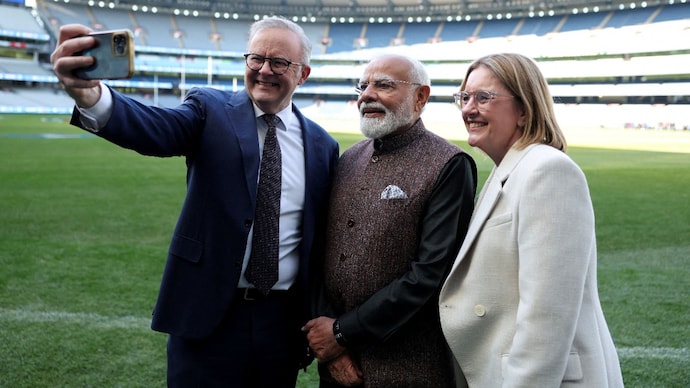
Prime Minister Narendra Modi seems to have dropped the biggest hint yet of the government likely considering a social media ban for young teens. Speaking at the Australia-India leaders' summit on Thursday, PM Modi praised the country's decision to restrict social media access for children under 16. The Prime Minister also said that India was "taking lessons" from it.
The remarks, coming from the Prime Minister himself, are the clearest indication that the government was likely looking at bringing similar social media restrictions for children. Australia became the first country last year to ban those aged under 16 from using social media platforms like TikTok, X, Facebook, Instagram, YouTube and Snapchat. The aim is to protect children from potentially harmful content.
Praising the move by the Anthony Albanese administration, PM Modi said, "The way you are bringing changes in laws related to IT (information technology) and social media, and working to protect society, is highly inspiring for the world."
"We are learning a lot from your efforts, and taking many lessons from them," the Prime Minister further said.
INDIA CONSIDERING SOCIAL MEDIA BAN?
The timing of PM Modi's remarks is crucial. Just last week, the government directed Instagram to remove ads promoting child sexual abuse. In June, a Home Ministry report revealed that messaging app Telegram was being used extensively to share child sexual abuse material.
Earlier this year, Union Minister Ashwini Vaishnaw said the government was already in talks with social media companies for age-based restrictions. Since then, IT Ministry officials have held at least three meetings with social media platforms and other stakeholders, according to a report in The Economic Times.
Several states have already moved to restrict social media access for children. In March, Karnataka and Andhra Pradesh became the first two states to announce a social media ban for children. While Karnataka announced it for those under 16, and Andhra Pradesh for those under 13. Goa is also exploring a similar move.
However, none of the states has come out with any law or enforcement mechanism. The hurdle is constitutional, as information technology falls under the Union list. It simply means Parliament holds the authority over it, not state assemblies.
Moreover, there are structural problems as well. A restriction in Karnataka will cease to exist if a child shifts to another state that has not banned social media.
CHALLENGES ON IMPLEMENTING SOCIAL MEDIA BAN
Now, implementing such a social media ban in India, the world's second-largest smartphone market with over 1.16 billion connections, has its own set of challenges. This makes India a major growth market for social media platforms like Instagram and YouTube.
Moreover, around one-fourth of the population is in the 0-14 age group. Thus, any restrictions on social media will have a major impact on companies like Meta and Google.
What may complicate matters is VPN. Data shows that India has a 43% VPN adoption rate, the second-highest globally. Experts said shared adult accounts and duplicate apps with weak moderation would make enforcement difficult.
"If it's self-declared, kids will bypass it. If it's ID-based, it raises privacy and surveillance concerns," Apar Gupta of the Internet Freedom Foundation told DW.
There is also the issue of age verification. To filter out children, social media platforms would have to carry out KYC or identity verification. This may mean handing over biometric data of minors to private platforms. It then becomes a privacy issue altogether.
WHAT INDIA CAN LEARN FROM AUSTRALIA LAW?
In fact, these are the very issues plaguing Australia's social media ban as well.
Australia became the first country to ban under-16s from accessing social media apps last year in December. Under-16s can no longer set up new accounts. The existing profiles were also deactivated.
The move came following months of studies. The government found that around 70% of those between 10-15 years were exposed to harmful content. It included abusive and violent material as well as content promoting suicide.
The law puts the onus on social media platforms to verify the age of the users and take steps to block those under 16 years of age. For this, the platforms have relied on AI to estimate a user's age by scanning their face through the camera.
However, this has been easily bypassed by teens by using the faces of video game characters. Social media firms failing to comply may face fines up to USD 32 million (Rs 300 crore).
A recent study by the University of Newcastle has found that, despite the ban, more than 80% of under-16s are still using social media, as per a report in The Guardian.
The study, published in BMJ, found inadequate age verification checks and rampant usage of VPN by teens to bypass the social media ban.
While Australia may have taken the lead in introducing such a ban, the rollout quickly exposed the practical limits of the policy. Implementing it in India, which has a massive internet user base, also has its own challenges.
Prime Minister Narendra Modi seems to have dropped the biggest hint yet of the government likely considering a social media ban for young teens. Speaking at the Australia-India leaders' summit on Thursday, PM Modi praised the country's decision to restrict social media access for children under 16. The Prime Minister also said that India was "taking lessons" from it.
The remarks, coming from the Prime Minister himself, are the clearest indication that the government was likely looking at bringing similar social media restrictions for children. Australia became the first country last year to ban those aged under 16 from using social media platforms like TikTok, X, Facebook, Instagram, YouTube and Snapchat. The aim is to protect children from potentially harmful content.
Praising the move by the Anthony Albanese administration, PM Modi said, "The way you are bringing changes in laws related to IT (information technology) and social media, and working to protect society, is highly inspiring for the world."
"We are learning a lot from your efforts, and taking many lessons from them," the Prime Minister further said.
INDIA CONSIDERING SOCIAL MEDIA BAN?
The timing of PM Modi's remarks is crucial. Just last week, the government directed Instagram to remove ads promoting child sexual abuse. In June, a Home Ministry report revealed that messaging app Telegram was being used extensively to share child sexual abuse material.
Earlier this year, Union Minister Ashwini Vaishnaw said the government was already in talks with social media companies for age-based restrictions. Since then, IT Ministry officials have held at least three meetings with social media platforms and other stakeholders, according to a report in The Economic Times.
Several states have already moved to restrict social media access for children. In March, Karnataka and Andhra Pradesh became the first two states to announce a social media ban for children. While Karnataka announced it for those under 16, and Andhra Pradesh for those under 13. Goa is also exploring a similar move.
However, none of the states has come out with any law or enforcement mechanism. The hurdle is constitutional, as information technology falls under the Union list. It simply means Parliament holds the authority over it, not state assemblies.
Moreover, there are structural problems as well. A restriction in Karnataka will cease to exist if a child shifts to another state that has not banned social media.
CHALLENGES ON IMPLEMENTING SOCIAL MEDIA BAN
Now, implementing such a social media ban in India, the world's second-largest smartphone market with over 1.16 billion connections, has its own set of challenges. This makes India a major growth market for social media platforms like Instagram and YouTube.
Moreover, around one-fourth of the population is in the 0-14 age group. Thus, any restrictions on social media will have a major impact on companies like Meta and Google.
What may complicate matters is VPN. Data shows that India has a 43% VPN adoption rate, the second-highest globally. Experts said shared adult accounts and duplicate apps with weak moderation would make enforcement difficult.
"If it's self-declared, kids will bypass it. If it's ID-based, it raises privacy and surveillance concerns," Apar Gupta of the Internet Freedom Foundation told DW.
There is also the issue of age verification. To filter out children, social media platforms would have to carry out KYC or identity verification. This may mean handing over biometric data of minors to private platforms. It then becomes a privacy issue altogether.
WHAT INDIA CAN LEARN FROM AUSTRALIA LAW?
In fact, these are the very issues plaguing Australia's social media ban as well.
Australia became the first country to ban under-16s from accessing social media apps last year in December. Under-16s can no longer set up new accounts. The existing profiles were also deactivated.
The move came following months of studies. The government found that around 70% of those between 10-15 years were exposed to harmful content. It included abusive and violent material as well as content promoting suicide.
The law puts the onus on social media platforms to verify the age of the users and take steps to block those under 16 years of age. For this, the platforms have relied on AI to estimate a user's age by scanning their face through the camera.
However, this has been easily bypassed by teens by using the faces of video game characters. Social media firms failing to comply may face fines up to USD 32 million (Rs 300 crore).
A recent study by the University of Newcastle has found that, despite the ban, more than 80% of under-16s are still using social media, as per a report in The Guardian.
The study, published in BMJ, found inadequate age verification checks and rampant usage of VPN by teens to bypass the social media ban.
While Australia may have taken the lead in introducing such a ban, the rollout quickly exposed the practical limits of the policy. Implementing it in India, which has a massive internet user base, also has its own challenges.

