As Jantar Mantar protest intensifies, Wangchuk surpasses CJP in online interest
As the Jantar Mantar protest intensified, Sonam Wangchuk emerged as the soul of the CJP protests which culminated in Chalo Sansad march on June 20
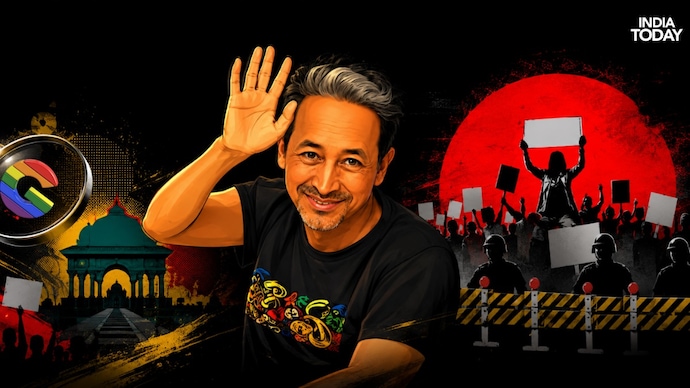

Cockroach Janta Party (CJP) first made its mark online. Within days of its launch, the Instagram page amassed millions of followers, eventually crossing 23 million, overtaking the official accounts of both the BJP and the Congress. The digital knock soon spilled onto the streets, with CJP leading protests at Delhi's Jantar Mantar over alleged examination irregularities and demanding the resignation of Union Education Minister Dharmendra Pradhan.
However, as the protest gathered momentum, the spotlight, both on the ground and in the digital space, began shifting. While CJP remained the movement's biggest online platform, public attention increasingly converged around one individual: Sonam Wangchuk.
India Today analysis of Google Trends, Instagram and X shows that while CJP continues to dominate mobilisation, Sonam Wangchuk has become the movement's biggest digital draw, attracting more searches and engagement than the organisation's own slogans across multiple platforms, while also gaining a significant number of followers as his health became a talking point during his hunger strike.
The shift is visible across Google Search results.
Over the past week, searches for "Sonam Wangchuk" consistently remained above "CJP", "CJP Protest", "Chalo Sansad" and other related terms. Search interest peaked on July 18, shortly after the Delhi Police intervened against Wangchuk during his indefinite hunger strike, marking the largest single spike in the movement's digital timeline.
Instagram tells a similar story
Since July 16, Wangchuk has added over 13.8 lakh followers on Instagram, coinciding with the Delhi High Court hearing on his deteriorating health. Hearing a PIL, the court observed that "life is precious" and directed the Centre and the Delhi government to ensure regular medical monitoring. Solicitor General Tushar Mehta told the court that the government had no objection to regular health checkups.
Following this, Wangchuk was moved to Delhi's Safdarjung Hospital. Police said the move was in compliance with the High Court's directions concerning his health.
The platform's hashtag data also reflects the shift. #SonamWangchuk has generated over 5 lakh posts, more than twice the number of posts under #CJPProtest, while #ChaloSansad, the campaign's Parliament march slogan, has around 13 thousand posts.
The trend continues on X
Between July 14 and July 20, #Wangchuk emerged as the most used hashtag, generating over 14 lakh posts. It was followed by #CJPProtest with nearly 1.4 lakh posts, #ChaloSansad with around 1.12 lakh posts, and #SonamWangchuk with over 1 lakh posts.
The numbers are significant because the movement was born online before evolving into a street protest, where Sonam Wangchuk, already a nationally recognised voice on Ladakh and climate issues, emerged as its most prominent public face.
CJP began as an Instagram page before evolving into a nationwide protest over alleged examination irregularities. As its following surged into the millions within days, the organisation called supporters to Jantar Mantar, making the resignation of Union Education Minister Dharmendra Pradhan one of its principal demands.
Wangchuk joined the protest on June 28 and began an indefinite hunger strike the same day. As his fast continued, organisers increasingly projected him at the forefront of the campaign, while public attention shifted towards his health and his appeal.
According to physician Dr Satish Lamba, Wangchuk had lost more than 9 kg after 19 days of fasting. Even after receiving thousands of appeals, including from political leaders, to end his fast, Wangchuk refused, urging supporters instead to join CJP's July 20 "Chalo Sansad" march.
Google search data does not indicate public support. It measures public curiosity. Taken together with Instagram and X data, however, the digital footprint points to a clear shift. CJP remains the movement's organiser, but Wangchuk has become its primary digital touchpoint.
Cockroach Janta Party (CJP) first made its mark online. Within days of its launch, the Instagram page amassed millions of followers, eventually crossing 23 million, overtaking the official accounts of both the BJP and the Congress. The digital knock soon spilled onto the streets, with CJP leading protests at Delhi's Jantar Mantar over alleged examination irregularities and demanding the resignation of Union Education Minister Dharmendra Pradhan.
However, as the protest gathered momentum, the spotlight, both on the ground and in the digital space, began shifting. While CJP remained the movement's biggest online platform, public attention increasingly converged around one individual: Sonam Wangchuk.
India Today analysis of Google Trends, Instagram and X shows that while CJP continues to dominate mobilisation, Sonam Wangchuk has become the movement's biggest digital draw, attracting more searches and engagement than the organisation's own slogans across multiple platforms, while also gaining a significant number of followers as his health became a talking point during his hunger strike.
The shift is visible across Google Search results.
Over the past week, searches for "Sonam Wangchuk" consistently remained above "CJP", "CJP Protest", "Chalo Sansad" and other related terms. Search interest peaked on July 18, shortly after the Delhi Police intervened against Wangchuk during his indefinite hunger strike, marking the largest single spike in the movement's digital timeline.
Instagram tells a similar story
Since July 16, Wangchuk has added over 13.8 lakh followers on Instagram, coinciding with the Delhi High Court hearing on his deteriorating health. Hearing a PIL, the court observed that "life is precious" and directed the Centre and the Delhi government to ensure regular medical monitoring. Solicitor General Tushar Mehta told the court that the government had no objection to regular health checkups.
Following this, Wangchuk was moved to Delhi's Safdarjung Hospital. Police said the move was in compliance with the High Court's directions concerning his health.
The platform's hashtag data also reflects the shift. #SonamWangchuk has generated over 5 lakh posts, more than twice the number of posts under #CJPProtest, while #ChaloSansad, the campaign's Parliament march slogan, has around 13 thousand posts.
The trend continues on X
Between July 14 and July 20, #Wangchuk emerged as the most used hashtag, generating over 14 lakh posts. It was followed by #CJPProtest with nearly 1.4 lakh posts, #ChaloSansad with around 1.12 lakh posts, and #SonamWangchuk with over 1 lakh posts.
The numbers are significant because the movement was born online before evolving into a street protest, where Sonam Wangchuk, already a nationally recognised voice on Ladakh and climate issues, emerged as its most prominent public face.
CJP began as an Instagram page before evolving into a nationwide protest over alleged examination irregularities. As its following surged into the millions within days, the organisation called supporters to Jantar Mantar, making the resignation of Union Education Minister Dharmendra Pradhan one of its principal demands.
Wangchuk joined the protest on June 28 and began an indefinite hunger strike the same day. As his fast continued, organisers increasingly projected him at the forefront of the campaign, while public attention shifted towards his health and his appeal.
According to physician Dr Satish Lamba, Wangchuk had lost more than 9 kg after 19 days of fasting. Even after receiving thousands of appeals, including from political leaders, to end his fast, Wangchuk refused, urging supporters instead to join CJP's July 20 "Chalo Sansad" march.
Google search data does not indicate public support. It measures public curiosity. Taken together with Instagram and X data, however, the digital footprint points to a clear shift. CJP remains the movement's organiser, but Wangchuk has become its primary digital touchpoint.
Cockroach Janta Party (CJP) first made its mark online. Within days of its launch, the Instagram page amassed millions of followers, eventually crossing 23 million, overtaking the official accounts of both the BJP and the Congress. The digital knock soon spilled onto the streets, with CJP leading protests at Delhi's Jantar Mantar over alleged examination irregularities and demanding the resignation of Union Education Minister Dharmendra Pradhan.
However, as the protest gathered momentum, the spotlight, both on the ground and in the digital space, began shifting. While CJP remained the movement's biggest online platform, public attention increasingly converged around one individual: Sonam Wangchuk.
India Today analysis of Google Trends, Instagram and X shows that while CJP continues to dominate mobilisation, Sonam Wangchuk has become the movement's biggest digital draw, attracting more searches and engagement than the organisation's own slogans across multiple platforms, while also gaining a significant number of followers as his health became a talking point during his hunger strike.
The shift is visible across Google Search results.
Over the past week, searches for "Sonam Wangchuk" consistently remained above "CJP", "CJP Protest", "Chalo Sansad" and other related terms. Search interest peaked on July 18, shortly after the Delhi Police intervened against Wangchuk during his indefinite hunger strike, marking the largest single spike in the movement's digital timeline.
Instagram tells a similar story
Since July 16, Wangchuk has added over 13.8 lakh followers on Instagram, coinciding with the Delhi High Court hearing on his deteriorating health. Hearing a PIL, the court observed that "life is precious" and directed the Centre and the Delhi government to ensure regular medical monitoring. Solicitor General Tushar Mehta told the court that the government had no objection to regular health checkups.
Following this, Wangchuk was moved to Delhi's Safdarjung Hospital. Police said the move was in compliance with the High Court's directions concerning his health.
The platform's hashtag data also reflects the shift. #SonamWangchuk has generated over 5 lakh posts, more than twice the number of posts under #CJPProtest, while #ChaloSansad, the campaign's Parliament march slogan, has around 13 thousand posts.
The trend continues on X
Between July 14 and July 20, #Wangchuk emerged as the most used hashtag, generating over 14 lakh posts. It was followed by #CJPProtest with nearly 1.4 lakh posts, #ChaloSansad with around 1.12 lakh posts, and #SonamWangchuk with over 1 lakh posts.
The numbers are significant because the movement was born online before evolving into a street protest, where Sonam Wangchuk, already a nationally recognised voice on Ladakh and climate issues, emerged as its most prominent public face.
CJP began as an Instagram page before evolving into a nationwide protest over alleged examination irregularities. As its following surged into the millions within days, the organisation called supporters to Jantar Mantar, making the resignation of Union Education Minister Dharmendra Pradhan one of its principal demands.
Wangchuk joined the protest on June 28 and began an indefinite hunger strike the same day. As his fast continued, organisers increasingly projected him at the forefront of the campaign, while public attention shifted towards his health and his appeal.
According to physician Dr Satish Lamba, Wangchuk had lost more than 9 kg after 19 days of fasting. Even after receiving thousands of appeals, including from political leaders, to end his fast, Wangchuk refused, urging supporters instead to join CJP's July 20 "Chalo Sansad" march.
Google search data does not indicate public support. It measures public curiosity. Taken together with Instagram and X data, however, the digital footprint points to a clear shift. CJP remains the movement's organiser, but Wangchuk has become its primary digital touchpoint.

