Skyroot to conduct maiden launch of private rocket Vikram-I on July 18. Details here
Skyroot Aerospace will attempt the maiden launch of Vikram-1 from Sriharikota on July 18. The test flight is expected to validate the rocket's systems and advance India's private space push.
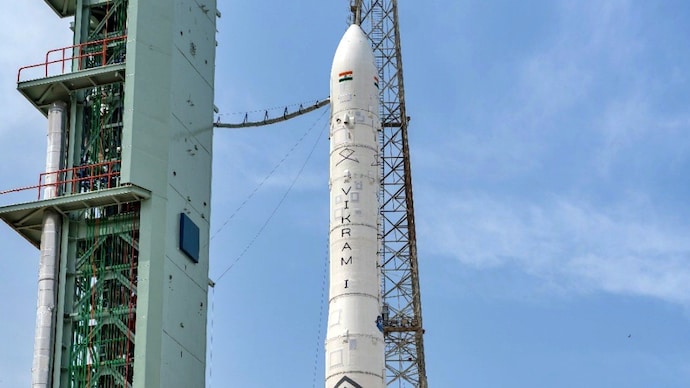
India's private space ambitions are set to take a giant leap forward on July 18, when Skyroot Aerospace attempts the maiden launch of Vikram-1, the country's first privately developed orbital-class rocket, from the First Launch Pad at the Satish Dhawan Space Centre (SDSC-SHAR) in Sriharikota.
Liftoff is scheduled for 11:30 am IST, making it the first time a fully designed and developed private Indian rocket will attempt to reach orbit from Indian soil.
Ahead of the mission, aviation and maritime authorities have issued the required airspace and navigational warnings, designating restricted zones along the rocket's ascent and impact corridor to ensure public safety during launch operations.
Dubbed Mission Aagaman, meaning "the arrival", the flight symbolises the emergence of India's private sector as a serious player in the global satellite launch market.
"We have done everything that could be done to test Vikram-1 on ground. On July 18, we are eager to see how Vikram-1 performs in the real flight environment for the first time. This is our first test flight, and we will be getting valuable data from it. This will be foundational to Skyroot's aspirations of establishing launch cadence," said Pawan Kumar Chandana, Co-founder and CEO of Skyroot Aerospace.
WHAY IS VIKRAM-1?
Standing nearly seven storeys tall, Vikram-1 is a multi-stage orbital launch vehicle built using an all-carbon composite structure. It is powered by propulsion systems developed entirely in-house, including 3D-printed rocket engines and high-thrust solid rocket motors.
The vehicle is designed to carry payloads weighing up to 350 kilograms into Low Earth Orbit. During its maiden mission, Vikram-1 will target a 450-kilometre orbit at a 60-degree inclination.
The rocket will carry multiple technology demonstration payloads from Grahaa Space, Cosmoserve, DCubed, along with Skyroot's own SCOPE payload. The mission also includes "Cosmic Bloom," an artwork by Cosmos Diamonds, as well as a micro-art payload.
According to Chandana, the growing global demand for small satellite launches presents a major opportunity for Indian launch providers.
"The small satellite launch market is deeply constrained on the supply side, while demand for satellite-enabled services continues to grow. The clearance of Vikram-1 for flight following rigorous testing is a defining milestone in India's space journey," he said.
Mission Aagaman follows Skyroot's successful Vikram-S suborbital mission in November 2022, which made history as the first privately built Indian rocket to reach space.
For Skyroot, however, Vikram-1 represents a much bigger milestone.
"What we are aiming to do on July 18 is bigger than a single launch. It represents the hopes and hard work of around 1,000 people, the contributions of over 400 suppliers, and nearly 3,000 days of determination to build a global launch company from India," said Naga Bharath Daka, Co-founder and COO of Skyroot Aerospace.
He added that the flight is intended not just to reach orbit but to validate every subsystem developed over the past several years.
The engineering data collected during the mission will guide future refinements as Skyroot works toward building a reliable, on-demand launch service for global customers.
Ahead of launch, all three stages of Vikram-1 have been successfully integrated and stacked on the launch pad. Engineers have completed final integrated health checks, along with interface testing between the vehicle, telemetry stations and tracking radars.
If successful, Mission Aagaman will mark a watershed moment for India's commercial space industry, demonstrating that private companies are now capable of building and launching orbital-class rockets from Indian soil.
The mission is also expected to strengthen India's position in the fast-growing global small satellite launch market and usher in a new era where private enterprise works alongside Isro to expand the country's presence in space.
India's private space ambitions are set to take a giant leap forward on July 18, when Skyroot Aerospace attempts the maiden launch of Vikram-1, the country's first privately developed orbital-class rocket, from the First Launch Pad at the Satish Dhawan Space Centre (SDSC-SHAR) in Sriharikota.
Liftoff is scheduled for 11:30 am IST, making it the first time a fully designed and developed private Indian rocket will attempt to reach orbit from Indian soil.
Ahead of the mission, aviation and maritime authorities have issued the required airspace and navigational warnings, designating restricted zones along the rocket's ascent and impact corridor to ensure public safety during launch operations.
Dubbed Mission Aagaman, meaning "the arrival", the flight symbolises the emergence of India's private sector as a serious player in the global satellite launch market.
"We have done everything that could be done to test Vikram-1 on ground. On July 18, we are eager to see how Vikram-1 performs in the real flight environment for the first time. This is our first test flight, and we will be getting valuable data from it. This will be foundational to Skyroot's aspirations of establishing launch cadence," said Pawan Kumar Chandana, Co-founder and CEO of Skyroot Aerospace.
WHAY IS VIKRAM-1?
Standing nearly seven storeys tall, Vikram-1 is a multi-stage orbital launch vehicle built using an all-carbon composite structure. It is powered by propulsion systems developed entirely in-house, including 3D-printed rocket engines and high-thrust solid rocket motors.
The vehicle is designed to carry payloads weighing up to 350 kilograms into Low Earth Orbit. During its maiden mission, Vikram-1 will target a 450-kilometre orbit at a 60-degree inclination.
The rocket will carry multiple technology demonstration payloads from Grahaa Space, Cosmoserve, DCubed, along with Skyroot's own SCOPE payload. The mission also includes "Cosmic Bloom," an artwork by Cosmos Diamonds, as well as a micro-art payload.
According to Chandana, the growing global demand for small satellite launches presents a major opportunity for Indian launch providers.
"The small satellite launch market is deeply constrained on the supply side, while demand for satellite-enabled services continues to grow. The clearance of Vikram-1 for flight following rigorous testing is a defining milestone in India's space journey," he said.
Mission Aagaman follows Skyroot's successful Vikram-S suborbital mission in November 2022, which made history as the first privately built Indian rocket to reach space.
For Skyroot, however, Vikram-1 represents a much bigger milestone.
"What we are aiming to do on July 18 is bigger than a single launch. It represents the hopes and hard work of around 1,000 people, the contributions of over 400 suppliers, and nearly 3,000 days of determination to build a global launch company from India," said Naga Bharath Daka, Co-founder and COO of Skyroot Aerospace.
He added that the flight is intended not just to reach orbit but to validate every subsystem developed over the past several years.
The engineering data collected during the mission will guide future refinements as Skyroot works toward building a reliable, on-demand launch service for global customers.
Ahead of launch, all three stages of Vikram-1 have been successfully integrated and stacked on the launch pad. Engineers have completed final integrated health checks, along with interface testing between the vehicle, telemetry stations and tracking radars.
If successful, Mission Aagaman will mark a watershed moment for India's commercial space industry, demonstrating that private companies are now capable of building and launching orbital-class rockets from Indian soil.
The mission is also expected to strengthen India's position in the fast-growing global small satellite launch market and usher in a new era where private enterprise works alongside Isro to expand the country's presence in space.
India's private space ambitions are set to take a giant leap forward on July 18, when Skyroot Aerospace attempts the maiden launch of Vikram-1, the country's first privately developed orbital-class rocket, from the First Launch Pad at the Satish Dhawan Space Centre (SDSC-SHAR) in Sriharikota.
Liftoff is scheduled for 11:30 am IST, making it the first time a fully designed and developed private Indian rocket will attempt to reach orbit from Indian soil.
Ahead of the mission, aviation and maritime authorities have issued the required airspace and navigational warnings, designating restricted zones along the rocket's ascent and impact corridor to ensure public safety during launch operations.
Dubbed Mission Aagaman, meaning "the arrival", the flight symbolises the emergence of India's private sector as a serious player in the global satellite launch market.
"We have done everything that could be done to test Vikram-1 on ground. On July 18, we are eager to see how Vikram-1 performs in the real flight environment for the first time. This is our first test flight, and we will be getting valuable data from it. This will be foundational to Skyroot's aspirations of establishing launch cadence," said Pawan Kumar Chandana, Co-founder and CEO of Skyroot Aerospace.
WHAY IS VIKRAM-1?
Standing nearly seven storeys tall, Vikram-1 is a multi-stage orbital launch vehicle built using an all-carbon composite structure. It is powered by propulsion systems developed entirely in-house, including 3D-printed rocket engines and high-thrust solid rocket motors.
The vehicle is designed to carry payloads weighing up to 350 kilograms into Low Earth Orbit. During its maiden mission, Vikram-1 will target a 450-kilometre orbit at a 60-degree inclination.
The rocket will carry multiple technology demonstration payloads from Grahaa Space, Cosmoserve, DCubed, along with Skyroot's own SCOPE payload. The mission also includes "Cosmic Bloom," an artwork by Cosmos Diamonds, as well as a micro-art payload.
According to Chandana, the growing global demand for small satellite launches presents a major opportunity for Indian launch providers.
"The small satellite launch market is deeply constrained on the supply side, while demand for satellite-enabled services continues to grow. The clearance of Vikram-1 for flight following rigorous testing is a defining milestone in India's space journey," he said.
Mission Aagaman follows Skyroot's successful Vikram-S suborbital mission in November 2022, which made history as the first privately built Indian rocket to reach space.
For Skyroot, however, Vikram-1 represents a much bigger milestone.
"What we are aiming to do on July 18 is bigger than a single launch. It represents the hopes and hard work of around 1,000 people, the contributions of over 400 suppliers, and nearly 3,000 days of determination to build a global launch company from India," said Naga Bharath Daka, Co-founder and COO of Skyroot Aerospace.
He added that the flight is intended not just to reach orbit but to validate every subsystem developed over the past several years.
The engineering data collected during the mission will guide future refinements as Skyroot works toward building a reliable, on-demand launch service for global customers.
Ahead of launch, all three stages of Vikram-1 have been successfully integrated and stacked on the launch pad. Engineers have completed final integrated health checks, along with interface testing between the vehicle, telemetry stations and tracking radars.
If successful, Mission Aagaman will mark a watershed moment for India's commercial space industry, demonstrating that private companies are now capable of building and launching orbital-class rockets from Indian soil.
The mission is also expected to strengthen India's position in the fast-growing global small satellite launch market and usher in a new era where private enterprise works alongside Isro to expand the country's presence in space.

