60 days or leave the US: H-1B visa employee gets fired weeks after joining Google
A software engineer on an H-1B visa lost his Google job just weeks after joining, triggering a 60-day deadline to find a new employer or leave the US. His story shows the growing uncertainty many foreign tech workers, especially Indians, are facing amid layoffs.
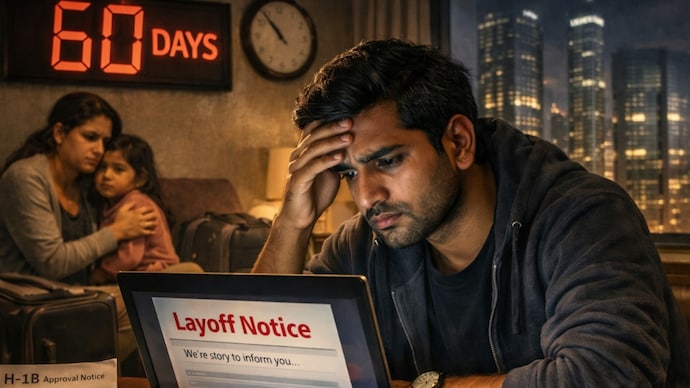
For many foreign workers in the US, landing a job at Google is considered a dream come true. But for one H-1B visa holder, that dream ended almost before it began. Just weeks after joining Google, 31-year-old software engineer Gu Yichen was laid off, leaving him with only 60 days to find another employer willing to sponsor his visa or risk losing his legal status in the US.
Yichen, a Chinese national currently working at Amazon in California, shared his experience with Business Insider, describing how a career move he believed would accelerate his future quickly turned into a race against time.
After graduating from the University of Illinois Urbana-Champaign with a degree in electrical and computer engineering, Yichen joined Amazon in 2017. He first worked under the Optional Practical Training (OPT) program before eventually securing an H-1B visa after being selected in the lottery on his third attempt.
In late 2022, he accepted an offer from Google during a period when tech companies were aggressively hiring. According to him, compensation packages were attractive and interviews were relatively straightforward. Although his manager at Amazon warned him that the market looked uncertain, he decided to take the opportunity while he could.
However, things changed almost immediately. Google had reportedly planned to assign his team to an experimental project, but the initiative was cancelled as the company started cutting costs. The entire team was laid off.
"I had started work around Christmas, and the layoff notice came in January 2023. I didn't do a single day of real work," Yichen told Business Insider.
A 60-day countdown begins
The job loss came with an even bigger challenge. Like many H-1B workers, Yichen had only a 60-day grace period to secure another employer, transfer his visa sponsorship and start a new job. Failing to do so could have meant leaving the US altogether.
He said he reached out to contacts inside Google to look for internal openings but could not find a suitable role. At the same time, layoffs were spreading across the technology sector, making the job market far more difficult than when he had switched companies just weeks earlier.
Instead of accepting any available role simply to stay in the country, Yichen decided to return to China for a short break. He spent time in his hometown of Nanjing and later travelled to Yunnan province.
Eventually, an opportunity opened up at Amazon, where his former colleagues informed him about a vacancy on his old team. Returning to the same team also made the immigration process easier because the company could use his previously approved employment-based paperwork instead of starting from scratch.
Today, Yichen is back at Amazon in Sunnyvale, California, and has applied for a US green card. Talking about his experience, he said it taught him that career success often depends as much on timing as hard work.
A familiar struggle for many H-1B workers including Indians
Yichen's experience is far from unique. In recent months, many H-1B workers, especially Indians employed in the US technology sector, have found themselves facing the same 60-day deadline after layoffs.
According to an Economic Times report published in May 2026, layoffs at companies such as Meta, Amazon and Oracle have left thousands of skilled foreign workers scrambling to secure new sponsorship before their grace period expires. Those who fail to do so are expected to leave the US.
The report says many laid-off workers were temporarily applying to switch to B-2 visitor visas to buy additional time, but immigration lawyers have reported a sharp increase in requests for extra documentation and visa denials, making that route more difficult than before.
The pressure is particularly severe for Indian professionals, who account for the majority of H-1B approvals. According to data from the US Citizenship and Immigration Services (USCIS) and the Department of Homeland Security for FY25, Indians received 283,772 of the 406,348 approved H-1B petitions, showing how heavily the community depends on the program.
For many foreign workers in the US, landing a job at Google is considered a dream come true. But for one H-1B visa holder, that dream ended almost before it began. Just weeks after joining Google, 31-year-old software engineer Gu Yichen was laid off, leaving him with only 60 days to find another employer willing to sponsor his visa or risk losing his legal status in the US.
Yichen, a Chinese national currently working at Amazon in California, shared his experience with Business Insider, describing how a career move he believed would accelerate his future quickly turned into a race against time.
After graduating from the University of Illinois Urbana-Champaign with a degree in electrical and computer engineering, Yichen joined Amazon in 2017. He first worked under the Optional Practical Training (OPT) program before eventually securing an H-1B visa after being selected in the lottery on his third attempt.
In late 2022, he accepted an offer from Google during a period when tech companies were aggressively hiring. According to him, compensation packages were attractive and interviews were relatively straightforward. Although his manager at Amazon warned him that the market looked uncertain, he decided to take the opportunity while he could.
However, things changed almost immediately. Google had reportedly planned to assign his team to an experimental project, but the initiative was cancelled as the company started cutting costs. The entire team was laid off.
"I had started work around Christmas, and the layoff notice came in January 2023. I didn't do a single day of real work," Yichen told Business Insider.
A 60-day countdown begins
The job loss came with an even bigger challenge. Like many H-1B workers, Yichen had only a 60-day grace period to secure another employer, transfer his visa sponsorship and start a new job. Failing to do so could have meant leaving the US altogether.
He said he reached out to contacts inside Google to look for internal openings but could not find a suitable role. At the same time, layoffs were spreading across the technology sector, making the job market far more difficult than when he had switched companies just weeks earlier.
Instead of accepting any available role simply to stay in the country, Yichen decided to return to China for a short break. He spent time in his hometown of Nanjing and later travelled to Yunnan province.
Eventually, an opportunity opened up at Amazon, where his former colleagues informed him about a vacancy on his old team. Returning to the same team also made the immigration process easier because the company could use his previously approved employment-based paperwork instead of starting from scratch.
Today, Yichen is back at Amazon in Sunnyvale, California, and has applied for a US green card. Talking about his experience, he said it taught him that career success often depends as much on timing as hard work.
A familiar struggle for many H-1B workers including Indians
Yichen's experience is far from unique. In recent months, many H-1B workers, especially Indians employed in the US technology sector, have found themselves facing the same 60-day deadline after layoffs.
According to an Economic Times report published in May 2026, layoffs at companies such as Meta, Amazon and Oracle have left thousands of skilled foreign workers scrambling to secure new sponsorship before their grace period expires. Those who fail to do so are expected to leave the US.
The report says many laid-off workers were temporarily applying to switch to B-2 visitor visas to buy additional time, but immigration lawyers have reported a sharp increase in requests for extra documentation and visa denials, making that route more difficult than before.
The pressure is particularly severe for Indian professionals, who account for the majority of H-1B approvals. According to data from the US Citizenship and Immigration Services (USCIS) and the Department of Homeland Security for FY25, Indians received 283,772 of the 406,348 approved H-1B petitions, showing how heavily the community depends on the program.

