Mark Zuckerberg makes X comeback to announce Muse Spark 1.1, kicks off AI price war with OpenAI and Anthropic
Meta is taking on Anthropic and OpenAI with its first AI coding tool, Muse Spark 1.1. The release is so important that Meta CEO Mark Zuckerberg broke his 3-year silence on X to announce Muse Spark 1.1. In doing so, Zuckerberg has also started a price war for AI coding tools.
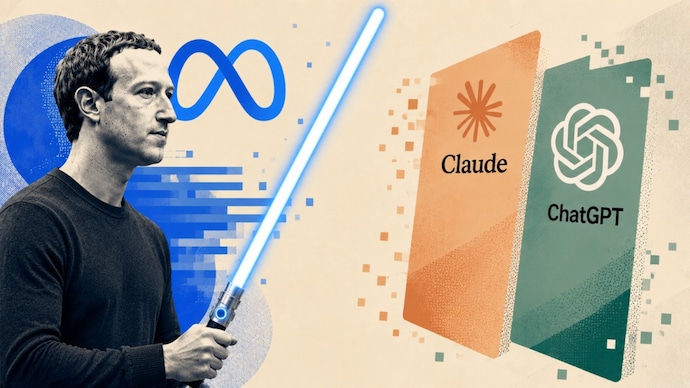
Meta wants to catch up in the AI race, and it is going all-in with its latest AI coding tool – Muse Spark 1.1. Meta CEO Mark Zuckerberg announced the release of Muse Spark 1.1 in his first X post since July 2023 – a gap of 3 years – signalling the importance of what might be at stake. But the AI coding space is already occupied by the likes of Claude Code and OpenAI’s Codex. To get developers to use Muse Spark 1.1, Zuckerberg seems to have an ace up his sleeves – pricing.
You see, as part of the Muse Spark 1.1 announcement on X, Mark Zuckerberg mentioned that the new coding tool was "a strong agentic and coding model at a very low price.”
His comments come at a time when the rising costs for AI models, be it from Anthropic or OpenAI, have made companies rethink AI usage. Some, like Uber and Walmart, have even capped how much AI tokens – basic measurement units for AI models – can be used by employees.
But before we delve deeper into the pricing of Muse Spark 1.1, let’s take a look at how capable Meta’s latest coding tool is.
Meta says Muse Spark 1.1 can outperform models from rivals
Meta says that Muse Spark 1.1 is one of the strongest models for coding out there. It is aimed at workloads that enterprises increasingly want AI systems to handle, including fixing bugs, managing digital workflows, deploying new features in enterprise systems and carrying out large code migrations.
Muse Spark 1.1 was developed by Meta’s Superintelligence Labs (MSL) which is led by Alexandr Wang.
According to Wang, the model was trained to perform well in coding because that improves the capabilities of AI agents that can autonomously perform multiple tasks. "You kind of have to build coding capabilities as part of that in service of overall agentic capabilities," he told CNBC. He added the model was trained to work with the popular harnesses developers already use, in what he described as the best approach to maximise adoption.
When Mark Zuckerberg announced Muse Spark 1.1 on X, he shared benchmark comparisons between different AI models in coding. As per the results, Muse Spark 1.1 outperforms Anthropic’s Opus 4.8 and OpenAI’s GPT-5.5 in certain tasks. Keep in mind that the benchmarks did not include Anthropic’s Mythos and Fable models or OpenAI’s GPT-5.6
Muse Spark 1.1 is cheaper than rivals, Elon Musk reacts
A key point made by Meta for Muse Spark 1.1 is its price. Muse Spark 1.1 can be accessed by developers via the Meta Model API. As per the company, every new API account will begin with $20 (roughly Rs 1,900) dollars in free credits. After that, it will charge $1.25 (roughly Rs 120) per million input tokens and $4.25 (roughly Rs 405) per million output tokens.
To give you some context, Grok 4.5, the new AI model released by Elon Musk’s SpaceXAI just a day ago, is priced at $2 (roughly Rs 190) per million input tokens and $6 (roughly Rs 570) per million output tokens. Elon Musk responded to Zuckerberg’s announcement on X. He replied, “Jinx.”
On the other hand, Anthropic and OpenAI charge even more. Anthropic’s Claude Opus 4.8 is priced at $5 (roughly Rs 480) per million input tokens and $25 (roughly Rs 2390) per million output tokens respectively, while OpenAI’s GPT 5.6 Terra is priced at $2.5 (roughly Rs 240), and $15 (roughly Rs 1430) respectively.
Muse Spark 1.1 comes amid a busy week for Meta and the wider AI industry. On Tuesday, the company released Muse Image, its new image-generation model, through the Meta AI app, WhatsApp and Instagram.
Meanwhile, OpenAI has also released its GPT-5.6 family of models to the public, as well as the launch of its work AI agent, ChatGPT Work.
The launch also marks a shift in Meta’s AI business. While the company had previously emphasised open-source releases through its Llama family, it is now charging developers to use a proprietary model.
Alexandr Wang has clarified that Meta remains "committed to open source" and that an open-source variant of Muse Spark was in development, but he did not say when it would be released. Wang added that Meta is training a more powerful model code-named Watermelon.
Meta wants to catch up in the AI race, and it is going all-in with its latest AI coding tool – Muse Spark 1.1. Meta CEO Mark Zuckerberg announced the release of Muse Spark 1.1 in his first X post since July 2023 – a gap of 3 years – signalling the importance of what might be at stake. But the AI coding space is already occupied by the likes of Claude Code and OpenAI’s Codex. To get developers to use Muse Spark 1.1, Zuckerberg seems to have an ace up his sleeves – pricing.
You see, as part of the Muse Spark 1.1 announcement on X, Mark Zuckerberg mentioned that the new coding tool was "a strong agentic and coding model at a very low price.”
His comments come at a time when the rising costs for AI models, be it from Anthropic or OpenAI, have made companies rethink AI usage. Some, like Uber and Walmart, have even capped how much AI tokens – basic measurement units for AI models – can be used by employees.
But before we delve deeper into the pricing of Muse Spark 1.1, let’s take a look at how capable Meta’s latest coding tool is.
Meta says Muse Spark 1.1 can outperform models from rivals
Meta says that Muse Spark 1.1 is one of the strongest models for coding out there. It is aimed at workloads that enterprises increasingly want AI systems to handle, including fixing bugs, managing digital workflows, deploying new features in enterprise systems and carrying out large code migrations.
Muse Spark 1.1 was developed by Meta’s Superintelligence Labs (MSL) which is led by Alexandr Wang.
According to Wang, the model was trained to perform well in coding because that improves the capabilities of AI agents that can autonomously perform multiple tasks. "You kind of have to build coding capabilities as part of that in service of overall agentic capabilities," he told CNBC. He added the model was trained to work with the popular harnesses developers already use, in what he described as the best approach to maximise adoption.
When Mark Zuckerberg announced Muse Spark 1.1 on X, he shared benchmark comparisons between different AI models in coding. As per the results, Muse Spark 1.1 outperforms Anthropic’s Opus 4.8 and OpenAI’s GPT-5.5 in certain tasks. Keep in mind that the benchmarks did not include Anthropic’s Mythos and Fable models or OpenAI’s GPT-5.6
Muse Spark 1.1 is cheaper than rivals, Elon Musk reacts
A key point made by Meta for Muse Spark 1.1 is its price. Muse Spark 1.1 can be accessed by developers via the Meta Model API. As per the company, every new API account will begin with $20 (roughly Rs 1,900) dollars in free credits. After that, it will charge $1.25 (roughly Rs 120) per million input tokens and $4.25 (roughly Rs 405) per million output tokens.
To give you some context, Grok 4.5, the new AI model released by Elon Musk’s SpaceXAI just a day ago, is priced at $2 (roughly Rs 190) per million input tokens and $6 (roughly Rs 570) per million output tokens. Elon Musk responded to Zuckerberg’s announcement on X. He replied, “Jinx.”
On the other hand, Anthropic and OpenAI charge even more. Anthropic’s Claude Opus 4.8 is priced at $5 (roughly Rs 480) per million input tokens and $25 (roughly Rs 2390) per million output tokens respectively, while OpenAI’s GPT 5.6 Terra is priced at $2.5 (roughly Rs 240), and $15 (roughly Rs 1430) respectively.
Muse Spark 1.1 comes amid a busy week for Meta and the wider AI industry. On Tuesday, the company released Muse Image, its new image-generation model, through the Meta AI app, WhatsApp and Instagram.
Meanwhile, OpenAI has also released its GPT-5.6 family of models to the public, as well as the launch of its work AI agent, ChatGPT Work.
The launch also marks a shift in Meta’s AI business. While the company had previously emphasised open-source releases through its Llama family, it is now charging developers to use a proprietary model.
Alexandr Wang has clarified that Meta remains "committed to open source" and that an open-source variant of Muse Spark was in development, but he did not say when it would be released. Wang added that Meta is training a more powerful model code-named Watermelon.

