See you in court, creep: Governor slams Elon Musk over Grok deepfake lawsuit
Elon Musk's AI company is suing Minnesota over its new AI deepfake law designed to stop AI-generated fake nude images, arguing that it goes too far and violates free speech rights.
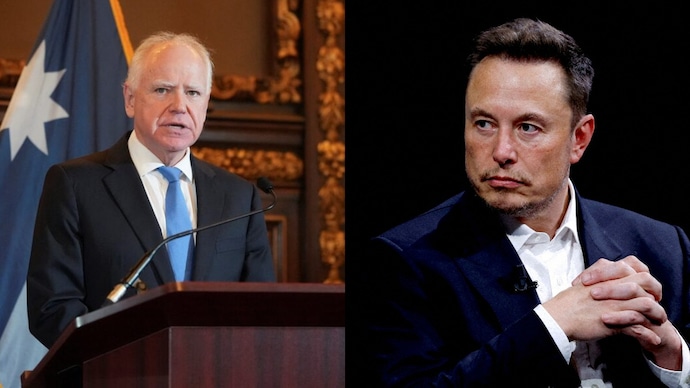
Elon Musk's AI company, xAI, now owned by SpaceX and recently rebranded as SpaceXAI, has sued the state of Minnesota over a new law that bans AI tools used to create fake nude images of real people. In the lawsuit, filed in federal court, SpaceXAI argues that Minnesota's new legislation is unconstitutional and places sweeping liability on AI companies.
Soon after the lawsuit was filed, Minnesota Governor Tim Walz took a swipe at Elon Musk, calling him a "creep." "See you in court, creep," he wrote in an X post reacting to the lawsuit.
What is Minnesota's new deepfake law?
The lawsuit challenges House File (HF) 1606, a new Minnesota law that is set to take effect on August 1. The law bars websites, apps and software from allowing users to generate realistic AI-altered nude images of identifiable people. Under the legislation, companies could face civil penalties of up to $500,000 for each violation, while victims can also take legal action against the platforms responsible.
The legal challenge comes months after Grok's image-generation feature drew widespread criticism when users created large numbers of non-consensual sexualised images of real people, including minors. One estimate suggested that around 23,000 sexualised images involving children may have been generated using the tool.
Following the backlash, xAI said it had updated Grok's safety systems to prevent such content and reiterated that it has "zero tolerance" for child sexual exploitation, non-consensual nudity and unwanted sexual content.
Why did SpaceXAI filed a lawsuit against this law?
SpaceXAI argues that Minnesota's new law is too broad and could punish AI companies even if they have strict safeguards in place to stop users from creating non-consensual deepfake nude images.
In its complaint, the company says it does not oppose banning non-consensual AI-generated nude images, but argues that the law "extends far beyond that goal" by exposing "a wide array of protected speech to civil liability and government sanctions".
The company also claims the law unfairly makes AI providers responsible whenever a user creates a prohibited image, regardless of the safety measures they have in place. According to the lawsuit, there is no safe harbour for companies that actively try to prevent misuse.
Another key argument centres on how the law defines an "intimate part". SpaceXAI says the definition is so broad that it could cover ordinary images of shirtless men, people in shorts or those wearing swimsuits. The lawsuit argues this goes "far beyond what an ordinary person would consider 'nudification'", meaning even satire, art and educational content could be affected.
To make its case, SpaceXAI has also pointed to AI-generated satirical images, including one shared by US President Donald Trump. It argues that even such non-explicit images could fall under the law. The lawsuit adds that "the examples are endless", claiming the legislation could restrict "humorous, scientific, artistic, satirical, or innocuous images" rather than just explicit deepfakes.
Finally, the company warns that the penalties could be massive. Since the law allows fines of up to $500,000 for each prohibited image, SpaceXAI says creating just 10 images could lead to $5 million in fines, while 100,000 images could result in $50 billion in liability.
Minnesota, however, says the law is meant to protect people from AI-generated deepfake nude images. The legislation was introduced by state Senator Erin Maye Quade after she learned of a case in which a man allegedly used women's social media photos to create explicit AI-generated images and videos of more than 80 women without their consent. The bill was passed with overwhelming bipartisan support and has been described as the first state law in the US specifically aimed at banning AI nudification services.
Elon Musk's AI company, xAI, now owned by SpaceX and recently rebranded as SpaceXAI, has sued the state of Minnesota over a new law that bans AI tools used to create fake nude images of real people. In the lawsuit, filed in federal court, SpaceXAI argues that Minnesota's new legislation is unconstitutional and places sweeping liability on AI companies.
Soon after the lawsuit was filed, Minnesota Governor Tim Walz took a swipe at Elon Musk, calling him a "creep." "See you in court, creep," he wrote in an X post reacting to the lawsuit.
What is Minnesota's new deepfake law?
The lawsuit challenges House File (HF) 1606, a new Minnesota law that is set to take effect on August 1. The law bars websites, apps and software from allowing users to generate realistic AI-altered nude images of identifiable people. Under the legislation, companies could face civil penalties of up to $500,000 for each violation, while victims can also take legal action against the platforms responsible.
The legal challenge comes months after Grok's image-generation feature drew widespread criticism when users created large numbers of non-consensual sexualised images of real people, including minors. One estimate suggested that around 23,000 sexualised images involving children may have been generated using the tool.
Following the backlash, xAI said it had updated Grok's safety systems to prevent such content and reiterated that it has "zero tolerance" for child sexual exploitation, non-consensual nudity and unwanted sexual content.
Why did SpaceXAI filed a lawsuit against this law?
SpaceXAI argues that Minnesota's new law is too broad and could punish AI companies even if they have strict safeguards in place to stop users from creating non-consensual deepfake nude images.
In its complaint, the company says it does not oppose banning non-consensual AI-generated nude images, but argues that the law "extends far beyond that goal" by exposing "a wide array of protected speech to civil liability and government sanctions".
The company also claims the law unfairly makes AI providers responsible whenever a user creates a prohibited image, regardless of the safety measures they have in place. According to the lawsuit, there is no safe harbour for companies that actively try to prevent misuse.
Another key argument centres on how the law defines an "intimate part". SpaceXAI says the definition is so broad that it could cover ordinary images of shirtless men, people in shorts or those wearing swimsuits. The lawsuit argues this goes "far beyond what an ordinary person would consider 'nudification'", meaning even satire, art and educational content could be affected.
To make its case, SpaceXAI has also pointed to AI-generated satirical images, including one shared by US President Donald Trump. It argues that even such non-explicit images could fall under the law. The lawsuit adds that "the examples are endless", claiming the legislation could restrict "humorous, scientific, artistic, satirical, or innocuous images" rather than just explicit deepfakes.
Finally, the company warns that the penalties could be massive. Since the law allows fines of up to $500,000 for each prohibited image, SpaceXAI says creating just 10 images could lead to $5 million in fines, while 100,000 images could result in $50 billion in liability.
Minnesota, however, says the law is meant to protect people from AI-generated deepfake nude images. The legislation was introduced by state Senator Erin Maye Quade after she learned of a case in which a man allegedly used women's social media photos to create explicit AI-generated images and videos of more than 80 women without their consent. The bill was passed with overwhelming bipartisan support and has been described as the first state law in the US specifically aimed at banning AI nudification services.
Elon Musk's AI company, xAI, now owned by SpaceX and recently rebranded as SpaceXAI, has sued the state of Minnesota over a new law that bans AI tools used to create fake nude images of real people. In the lawsuit, filed in federal court, SpaceXAI argues that Minnesota's new legislation is unconstitutional and places sweeping liability on AI companies.
Soon after the lawsuit was filed, Minnesota Governor Tim Walz took a swipe at Elon Musk, calling him a "creep." "See you in court, creep," he wrote in an X post reacting to the lawsuit.
What is Minnesota's new deepfake law?
The lawsuit challenges House File (HF) 1606, a new Minnesota law that is set to take effect on August 1. The law bars websites, apps and software from allowing users to generate realistic AI-altered nude images of identifiable people. Under the legislation, companies could face civil penalties of up to $500,000 for each violation, while victims can also take legal action against the platforms responsible.
The legal challenge comes months after Grok's image-generation feature drew widespread criticism when users created large numbers of non-consensual sexualised images of real people, including minors. One estimate suggested that around 23,000 sexualised images involving children may have been generated using the tool.
Following the backlash, xAI said it had updated Grok's safety systems to prevent such content and reiterated that it has "zero tolerance" for child sexual exploitation, non-consensual nudity and unwanted sexual content.
Why did SpaceXAI filed a lawsuit against this law?
SpaceXAI argues that Minnesota's new law is too broad and could punish AI companies even if they have strict safeguards in place to stop users from creating non-consensual deepfake nude images.
In its complaint, the company says it does not oppose banning non-consensual AI-generated nude images, but argues that the law "extends far beyond that goal" by exposing "a wide array of protected speech to civil liability and government sanctions".
The company also claims the law unfairly makes AI providers responsible whenever a user creates a prohibited image, regardless of the safety measures they have in place. According to the lawsuit, there is no safe harbour for companies that actively try to prevent misuse.
Another key argument centres on how the law defines an "intimate part". SpaceXAI says the definition is so broad that it could cover ordinary images of shirtless men, people in shorts or those wearing swimsuits. The lawsuit argues this goes "far beyond what an ordinary person would consider 'nudification'", meaning even satire, art and educational content could be affected.
To make its case, SpaceXAI has also pointed to AI-generated satirical images, including one shared by US President Donald Trump. It argues that even such non-explicit images could fall under the law. The lawsuit adds that "the examples are endless", claiming the legislation could restrict "humorous, scientific, artistic, satirical, or innocuous images" rather than just explicit deepfakes.
Finally, the company warns that the penalties could be massive. Since the law allows fines of up to $500,000 for each prohibited image, SpaceXAI says creating just 10 images could lead to $5 million in fines, while 100,000 images could result in $50 billion in liability.
Minnesota, however, says the law is meant to protect people from AI-generated deepfake nude images. The legislation was introduced by state Senator Erin Maye Quade after she learned of a case in which a man allegedly used women's social media photos to create explicit AI-generated images and videos of more than 80 women without their consent. The bill was passed with overwhelming bipartisan support and has been described as the first state law in the US specifically aimed at banning AI nudification services.

