Congress attacks Centre as Trump extends H-1B fee, tighter scrutiny

Congress accused the Modi government of appeasing Donald Trump after the US extended a steep H-1B visa payment rule. The party said tighter scrutiny and higher costs could hurt Indian IT firms, students and professionals.
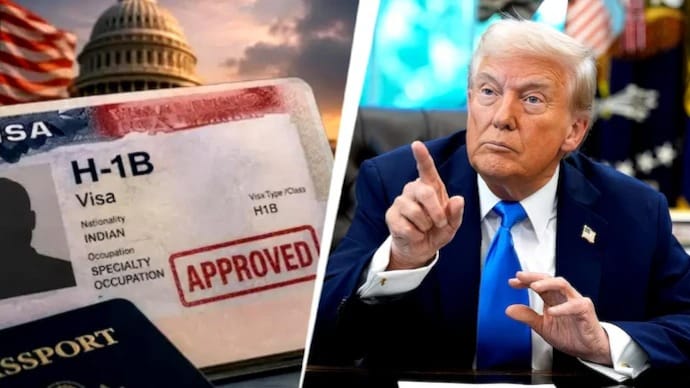

The Congress on Saturday accused the Narendra Modi government of trying to appease US President Donald Trump after the US extended by a year a requirement for a USD 100,000 payment for certain H-1B visa petitions. The opposition party claimed the move would hurt Indian IT companies, technology professionals and students seeking to enter the US workforce.
The White House said Trump had also ordered tighter scrutiny of H-1B visa applications, asking US agencies to take into account recent or planned layoffs of similarly placed American workers while reviewing petitions. It said the steps were meant to improve the programme's integrity and stop employers from using it to undercut or displace US workers.
In a post on X, Congress media and publicity department head Pawan Khera said, "Trump has extended the USD 100,000 H-1B visa fee for another 12 months -- a move that will hit Indian IT, tech professionals and the student talent pipeline hard."
Spelling out what he said would be the impact, Khera wrote, "F-1. H-1B: Harder for Indian students to enter the US workforce. Fewer jobs: Smaller firms may avoid sponsorships altogether. Talent drain: More professionals may look to the UK, Canada and Australia. Remittance risk: Lower migration could mean lower remittances to India over time."
He added, "Modi bent over backwards to appease Trump. Trump got the appeasement. India took the humiliation and the hit."
In a presidential proclamation issued on Friday, Trump said the 2025 measure imposing the USD 100,000 payment had led to a 92 per cent decrease in H-1B registrations by large IT outsourcing firms. Indians remain the largest group of beneficiaries of the US H-1B visa programme.
With the fee extension and tighter scrutiny now in place, the Congress has linked the US decision to its political attack on the Centre, while the White House has defended the measures as steps to protect American workers.